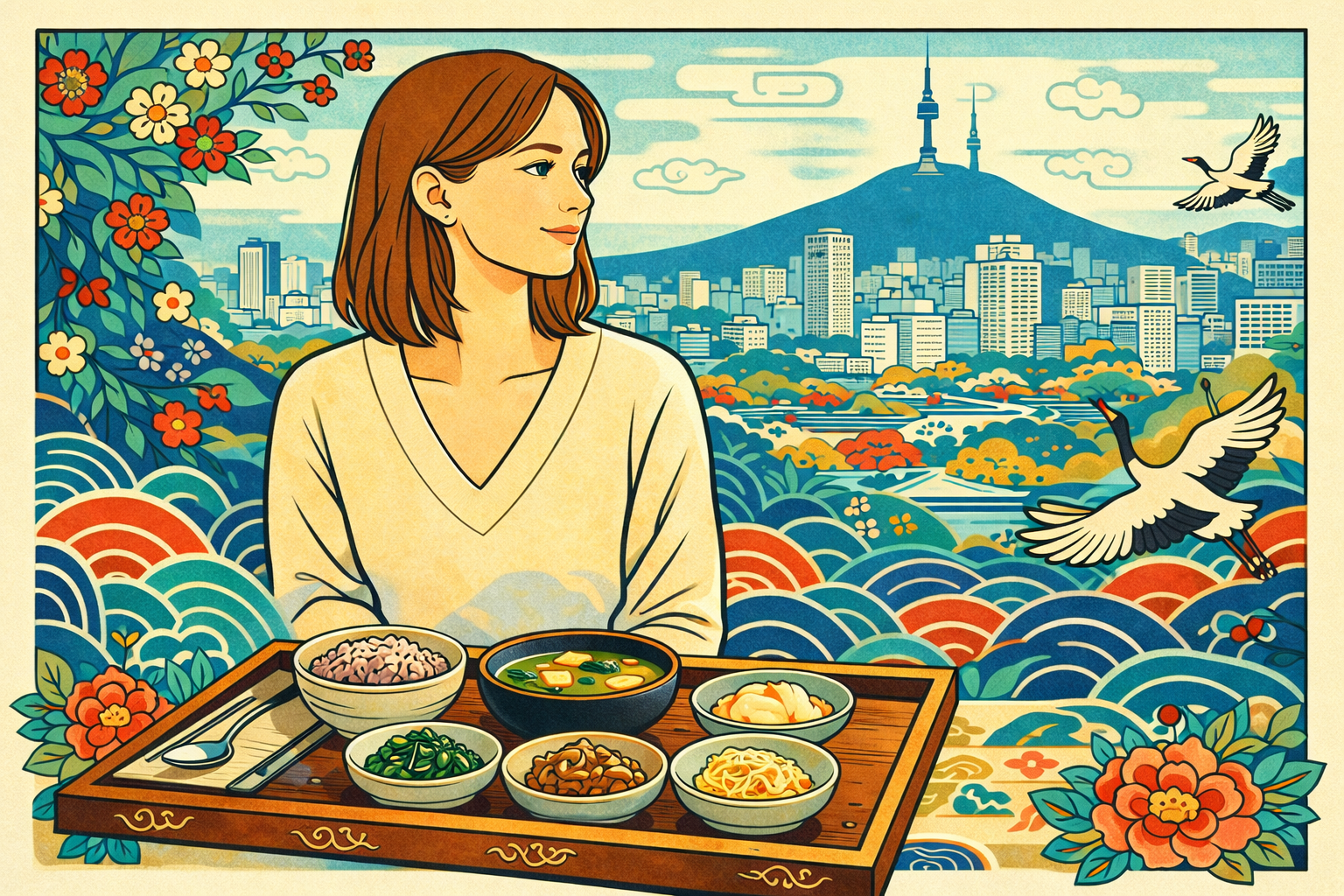
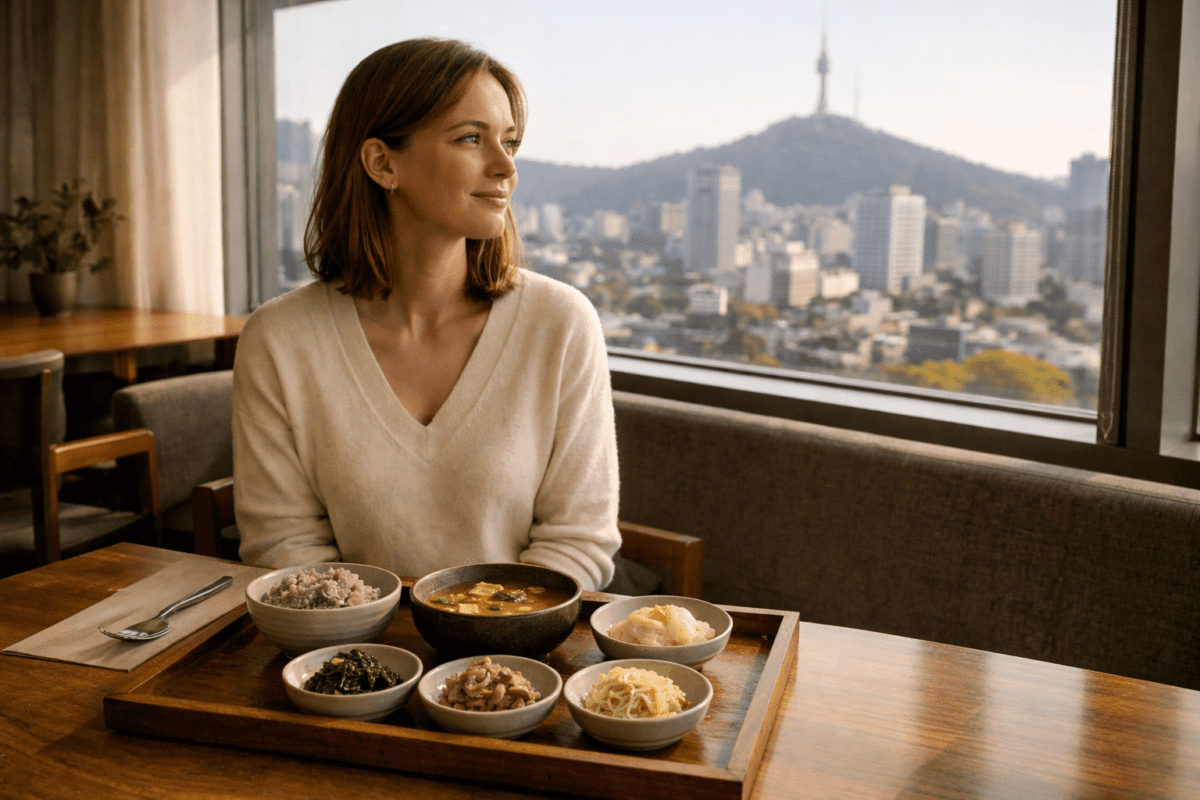
The recipe is the same. The ingredients came from the same supplier. The doenjang is the same brand. And yet the bowl of temple doenjang-guk served at the restaurant two blocks from the temple tastes different from the one served inside.
Most people notice this. Few can explain it. Monk food philosophy offers the closest answer.
What Leaves the Temple When the Food Does
When temple food moves outside — into a restaurant, a cooking class, a home kitchen — certain things travel with it. The recipe travels. The ingredients travel. The technique, if the cook learned it correctly, travels.
What doesn’t travel is the condition.
The condition is everything that surrounds the food before it reaches the bowl: the sequence that started at 3:30 AM, the silence in which it was prepared, the attention that never left the pot, the accountability of o-gwan-ge recited before the first spoonful. These are not decorative elements of the meal. They are structural. Remove them and the food that remains is technically correct and experientially incomplete.
A Korean Buddhist nun named Jeong Kwan, who appeared in Netflix’s Chef’s Table, described cooking as a form of meditation — not a metaphor, but a method. The attention brought to the ingredients is the practice. The food that results from that attention carries something that food made without it does not. This is not mysticism. It is a description of what happens when the cook’s relationship to the work changes the work itself.
What makes this claim unusual is that it cannot be tested in a laboratory. There is no instrument that measures the difference between a bowl of doenjang-guk made with full attention and one made while distracted. But the difference is consistently reported by people who have eaten inside the temple and outside it — not as a vague impression but as a specific, locatable quality in the broth. The depth arrives differently. It lands in a different part of the experience.
The Three Things That Don’t Transfer
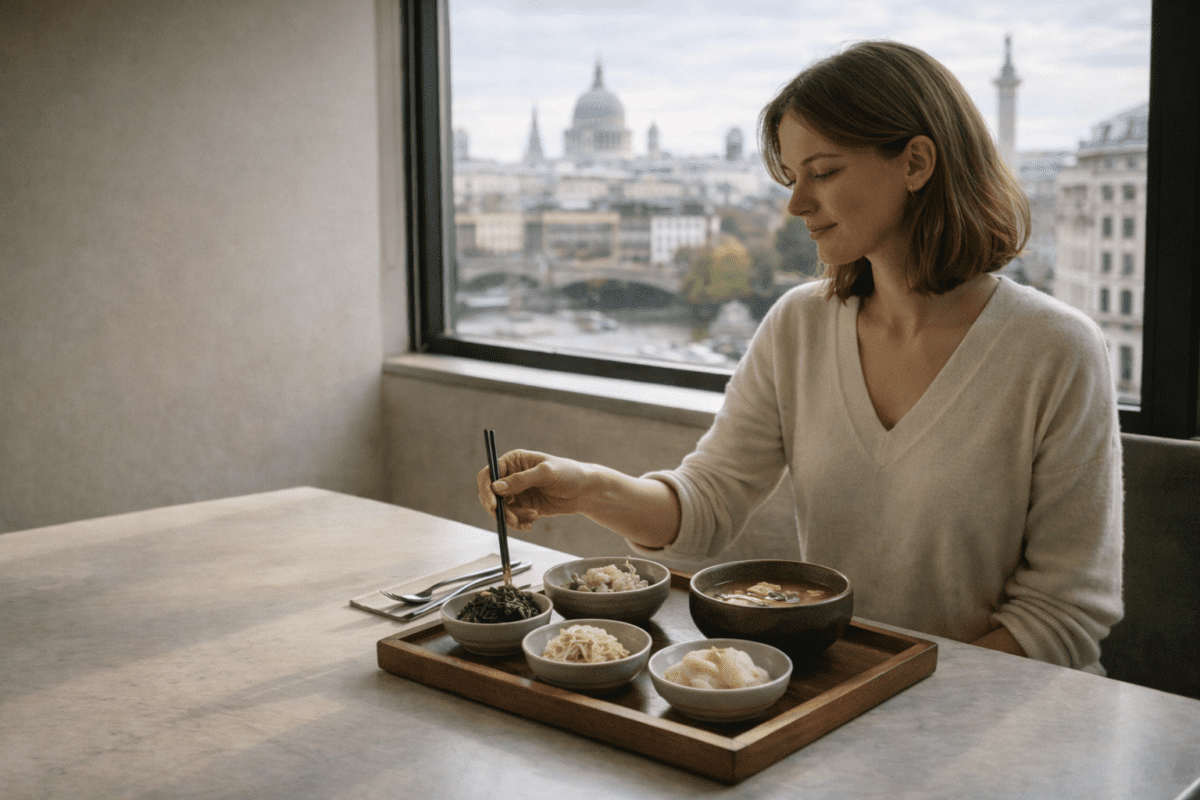
The sequence. Temple food is made in a specific order, at a specific time, with specific intervals between each step. The kelp goes into cold water an hour before the stock is needed. The namul is dressed after the stock is strained, not before. The doenjang goes in last. These intervals are not arbitrary — they are the result of centuries of refinement that discovered, through repetition, when each element is best. A restaurant kitchen compresses this sequence. The food arrives faster and something in the depth doesn’t fully develop.
The compression is not carelessness. It is the rational response to economic pressure. A restaurant that starts its stock at 2:30 AM to serve a 6 AM bowl cannot charge what the bowl actually costs to make. So the sequence is shortened, the intervals are compressed, and the result is a bowl that is very good but not quite the same. The difference is not a failure of the restaurant. It is a structural consequence of moving the food outside the condition that produced it.
The silence. The temple kitchen operates without conversation. This is not a rule about noise. It is a rule about attention. When the cook is not talking, the cook is tasting, adjusting, watching the surface of the stock for the moment the kelp has given what it has to give. The silence is the mechanism through which the cook stays present with the food. In a busy restaurant kitchen, the cook is present with many things simultaneously. The food is one of them.
Outside the temple, the silence is the first thing to go. It goes because kitchens are social environments, because coordination requires communication, because the rhythm of a commercial kitchen is fundamentally different from the rhythm of a monastic one. The food made in that environment reflects the environment. Not worse — different. The attention is distributed differently, and the bowl carries that distribution.
The accountability. Before every meal at the temple, the community recites o-gwan-ge — five contemplations that name the labor behind the food, assess whether the one eating has earned it, and commit to eating only what the body requires. This is not a ritual performed around the food. It is a ritual that changes the relationship to the food. The diner who has recited o-gwan-ge does not taste the same bowl as the diner who has not. The attention brought to eating changes what eating delivers.
In a restaurant, the diner arrives at the table having thought about other things. The bowl arrives. The diner eats. The experience is pleasant or not, remembered or not. The o-gwan-ge creates a different entry point — one where the diner has already acknowledged the labor, the ingredients, and their own relationship to what they are about to receive. The bowl hasn’t changed. The diner has. And that changes what the bowl delivers.
What Monk Food Philosophy Actually Claims
Monk food philosophy does not claim that temple food is superior. It claims that food and context are inseparable — that what surrounds the making and eating of food is part of the food itself.
This is a different claim than most food philosophies make. Most focus on ingredients, technique, or tradition. Monk food philosophy focuses on the relationship between the cook and the work, and between the eater and the bowl. The ingredient list is the starting point. What happens to those ingredients — the attention with which they are handled, the sequence in which they are combined, the silence in which they are prepared — determines what arrives at the table.
The implication is uncomfortable for anyone who wants to replicate temple food outside the temple: you cannot fully separate the food from the conditions that produced it. You can make technically excellent doenjang-guk in a home kitchen. You can source the same kelp, use the same paste, follow the same steps. What you cannot replicate is the 4 AM start, the accumulated years of the same sequence in the same space, the accountability of eating with people who have been awake since 3:30.
What you can do is bring more attention to the work. Not temple-level attention — that takes decades. But more than the attention usually brought to cooking dinner on a Tuesday. The bowl changes when the cook changes. Not dramatically. Incrementally. And the direction of the change is always toward the food tasting more like itself.
The Rhythm That Runs Beneath the Flavor
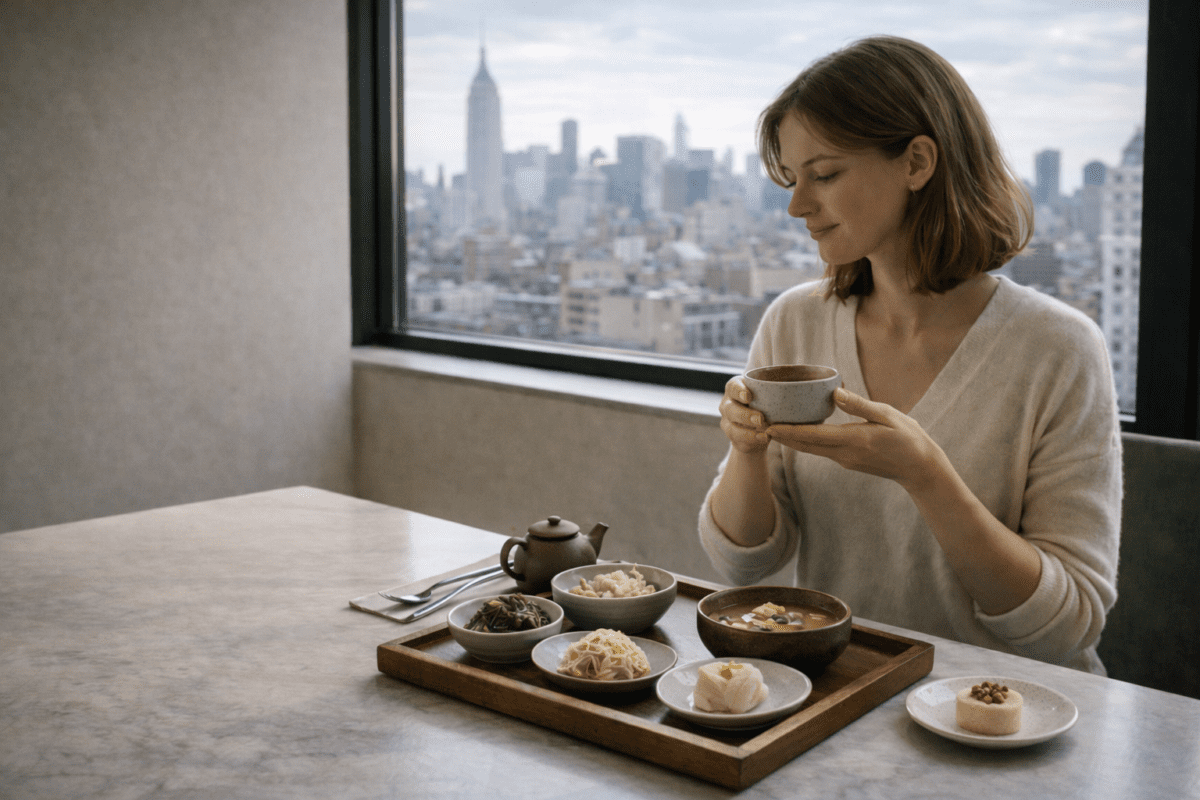
There is a rhythm that runs through all five parts of this series — through the missing garlic, the cold water and the kelp, the fermentation shelf, the 4 AM kitchen, and now this. It is the rhythm of things that take longer than expected, arrive quieter than expected, and land more completely than expected.
The o-sin-chae removal creates space for the fermented paste to carry the flavor alone. The cold-water extraction creates space for the kelp to give what heat would rush past. The jangajji sits in its jar for weeks because that is how long the brine needs to do its work. The 4 AM start exists because that is how much time the sequence requires when it is not compressed.
Monk food philosophy is the name for the understanding that runs beneath all of these decisions. Not a belief system. Not a diet. A set of conclusions about what food becomes when it is given the time and attention it actually requires — and what it loses when it isn’t.
The bowl of temple doenjang-guk served inside Bongjeongsa at 6 AM tastes the way it does because of everything that happened between 3:30 and 6. The bowl served two blocks away tastes the way it does for the same reason. Neither bowl is wrong. They are honest records of the conditions in which they were made.
She sets the bowl down. The broth is still moving slightly from being carried across the courtyard. Then it stills.
Some content in this post was created with AI assistance.