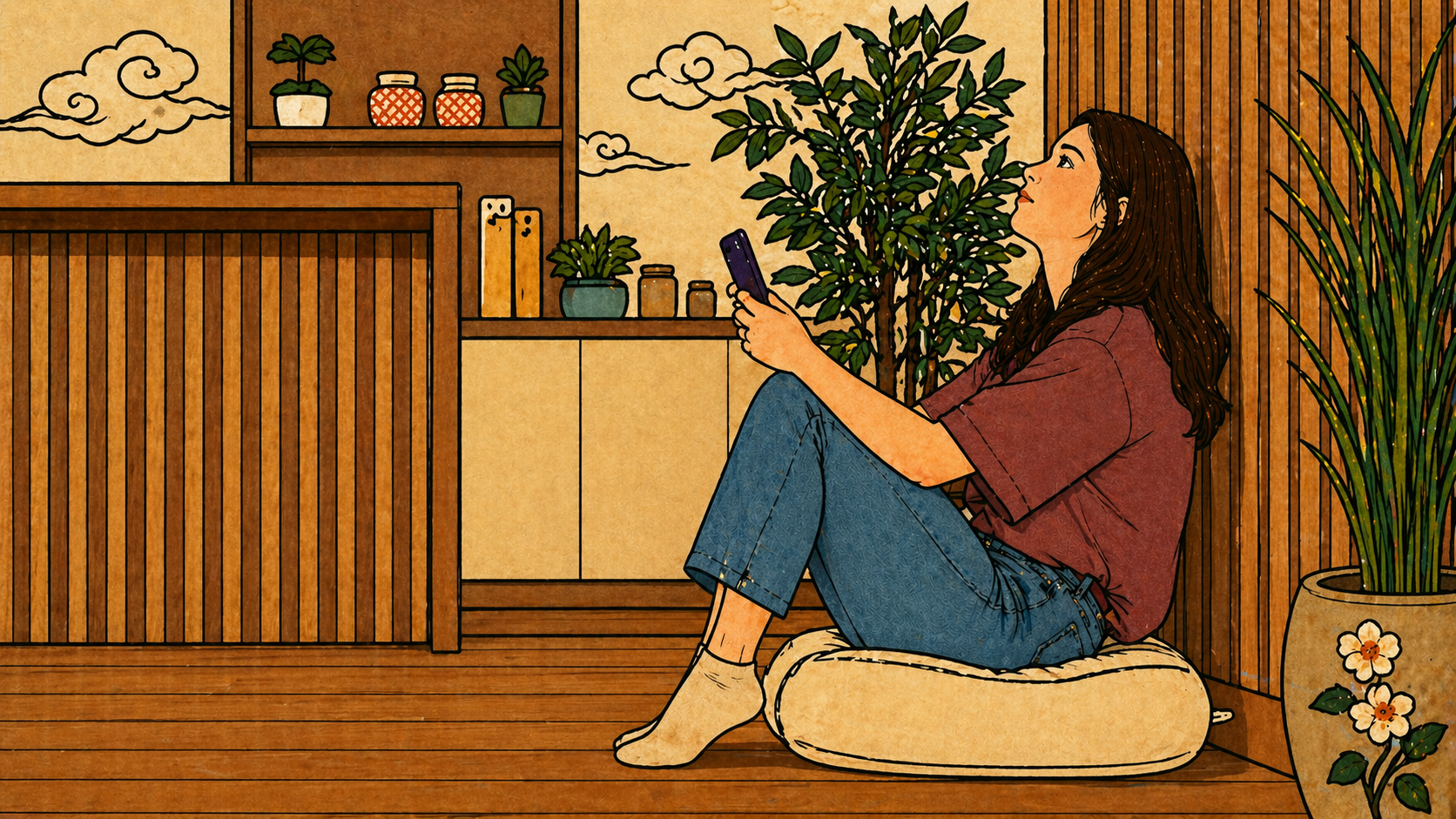

You check your phone. Three hours since you sent the message. No reply.
It’s not panic. Not yet. Just a signal — something might be off. You reread what you sent, looking for a mistake. It looks fine. Maybe they’re busy. Maybe they didn’t see it.
You wait. Then you check again.
This is anxious attachment style in motion — not a diagnosis, but a pattern your nervous system learned. A system that learned to watch, to ask, to check, because connection was never certain.
Not neediness. Not weakness. Not a flaw. This is what happens when you learn early: if I stop asking, I disappear. If I stop checking, they leave.
So you stay alert. You keep the signal alive. You read every shift, every silence, trying to know if you’re still safe.
Nothing here is broken. This is a nervous system doing exactly what it was trained to do.
The Pattern That Teaches You to Watch
Imagine an infant with a caregiver who is sometimes there and sometimes gone. Not because the caregiver is cruel. Because the caregiver has their own struggles — depression, chaos, inconsistency. The infant cries and sometimes the caregiver comes. Sometimes they don’t. Sometimes they come quickly. Sometimes it takes hours.
The infant’s nervous system learns a pattern: I cannot predict. I must stay alert.
So the infant develops a strategy: cry louder, call out more, stay close. Never fully relax, because the caregiver might disappear.
This strategy makes perfect sense in that environment. In a world where connection is unpredictable, constant vigilance is survival.
But this nervous system doesn’t stop learning when the infant becomes a teenager. It doesn’t stop when the person enters adulthood. It keeps running the same code: connection is unreliable, so you stay alert — monitoring, checking, asking to confirm they’re still there.
By adolescence, the vigilance has become automatic. The anxious attachment style person notices every shift in tone. They remember what the other person wore last time. They track response times like a data scientist. They build mental maps of what different silences mean. A three-hour delay might mean something is wrong. A change in emoji use might signal withdrawal. They’re not paranoid. They’re fluent in a language everyone else is speaking unconsciously.
The need to check their phone. The way a slow text response feels like abandonment. The constant internal question: am I still safe? Are they still here? Is this relationship still happening? The inability to simply trust that they will come back — you have to ask, or monitor, or find a way to confirm it.
None of this is simply weakness. This is anxious attachment style working perfectly in an unreliable environment — a nervous system doing exactly what it was designed to do.
The Question Under the Question

When someone with anxious attachment style asks for reassurance, they are not asking one question. They are asking a question that predates words.
The surface question is simple: Do you love me? Will you leave me? Are you still here?
The real question is older: Is connection safe? Can I trust that you will not disappear? Is there anything I can do to make you stay?
This question was formed in an environment where connection was conditional. Where the caregiver’s presence or absence was unpredictable. The infant learned to manage unpredictability by staying close, by reading signals constantly because the signals changed without warning.
The adult carrying this pattern reads all the time. They notice distance. They notice shifts in tone, in response speed, in how you hold your body. They pick up on subtleties others miss because their nervous system was trained to read micro-signals since infancy. This hypervigilance is not anxiety about their own worth. It is the learned belief that safety depends on prediction. On knowing what’s about to happen before it happens.
They don’t need reassurance to hear they’re loved. What they need is reassurance as a signal — proof the connection is still there. A data point that says: today, this person chose me. Today, I am not forgotten. Today, the pattern is not repeating.
To someone else, it’s just silence.
To you, it’s information.
Without the signal, the system gets louder. It asks again. Checks again. Because no signal means no safety. No safety means the original pattern was true all along. The unpredictability is back. The vigilance must increase. You become the thing you fear most — too much, too demanding, too needy. But they are not choosing neediness. They are responding to the oldest alarm their nervous system knows.
What Anxious Attachment Looks Like From the Outside

A person with anxious attachment style might text frequently. Not because they’re clingy, but because each text is a check-in. A way of saying: are we still connected? They might interpret a delayed response as rejection. Not because they’re fragile, but because a delay means the pattern is happening again — the unpredictability, the abandonment risk, the moment where they might disappear.
They might struggle to have relationships with people who are distant or avoidant. Not because they’re attracted to unavailability. But because an unavailable person confirms their earliest learning: connection is unreliable. With someone unavailable, the nervous system has proof that the original pattern was true. This feels painful, but it also feels familiar. It feels like home, in a broken kind of way.
They might have difficulty being alone. Not because they can’t function independently. Because being alone means no data. No signals. No confirmation that they are still connected to anyone. The silence becomes unbearable not because they’re dependent, but because silence means the alarm system has nothing to monitor. The person with anxious attachment might fill solitude with constant activity, constant reaching out, constant connection-seeking just to avoid the feeling of being invisible and forgotten.
They might apologize often. Sometimes for things that weren’t their fault. Not because they actually did something wrong. But because if they’ve done something wrong, then they’ve identified the problem. If there’s a problem they caused, then there’s something they can fix. This gives the nervous system a strategy. Control what you can. If you control the problem, you can control whether they leave.
What the World Gets Wrong About This
The world calls this neediness. Clinginess. Emotional dependence. The world says: work on being less needy, more independent, more secure in yourself.
But the problem is not the need. The need makes perfect sense. The problem is that the need was formed in an environment where reassurance was inconsistent. So even with a reliable partner, the nervous system is still asking the question it learned to ask.
This person is not broken. Their nervous system is not wrong — it’s asking the question in the wrong context. Like a smoke alarm installed in a house that caught fire once. The alarm is working perfectly. The problem is that the fire is long over, but the alarm is still sounding.
The work isn’t to stop needing connection. Connection is human. The work is to teach the system, slowly, that the signal can be trusted. That when someone says they will be back, they actually come back. That silence doesn’t mean abandonment. That distance doesn’t mean the relationship is ending.
This requires something the anxious attachment style person rarely received: consistency. Reliability. A person who shows up when they say they will. Who doesn’t disappear when things get difficult. Who can tolerate the asking and the checking without leaving.
It is slow. It requires patience from both people. It requires the person with anxious attachment style to gradually, painfully, learn that their earliest lesson was situational — not universal truth. That this context is different. That this alarm doesn’t need to sound so loud.
But it is possible.
This post was planned and edited by a human, with AI assistance.