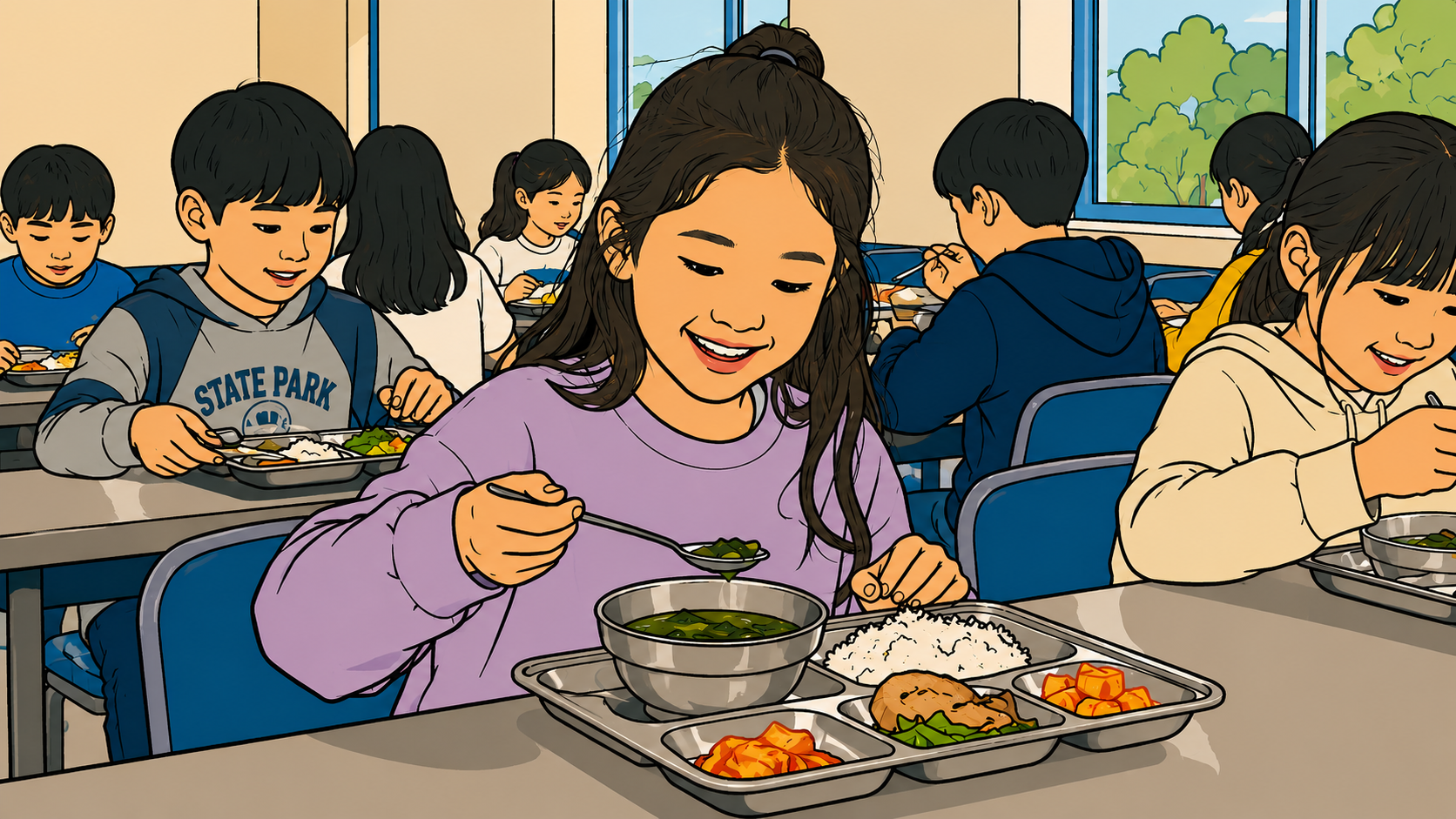
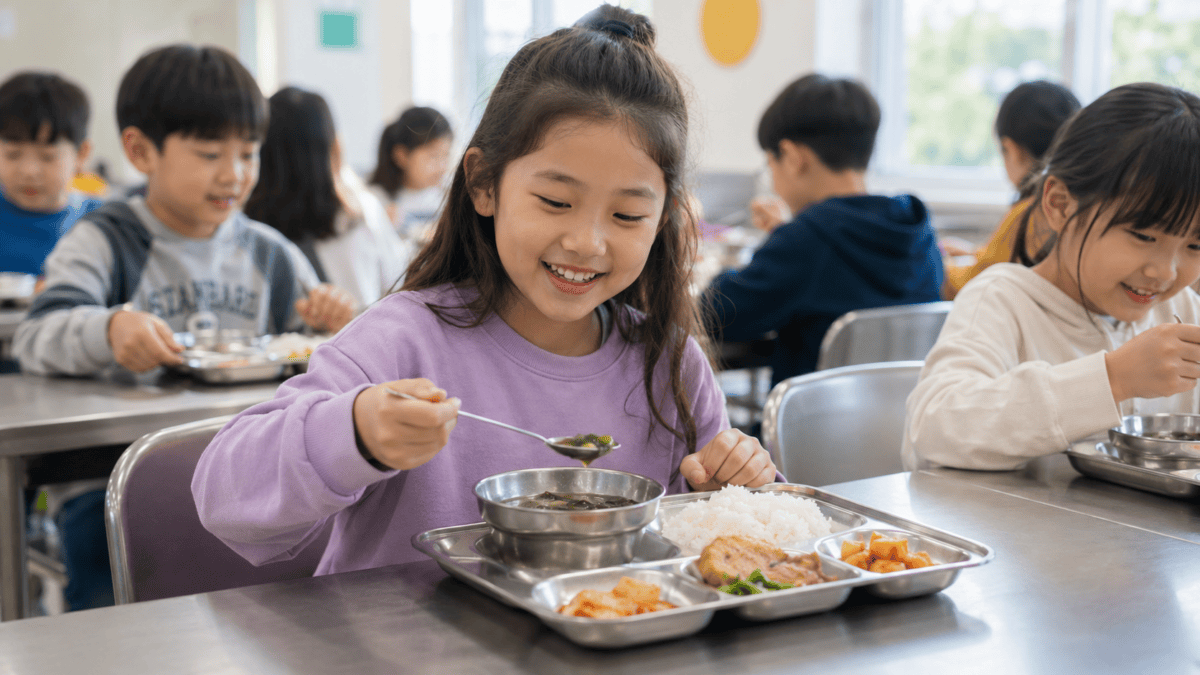
For the past few months, Korean school lunch videos have gone viral across the globe. TikTok videos with 2.8 million views. 4.2 million views. “Best lunch I’ve seen yet.” “I would eat this every day for the rest of my life.” On Reddit, a single post hit 17,000 upvotes. People from Texas, California, London—all saying the same thing. They want to live in Korea just to experience what children eat at school.
But here’s what everyone’s missing: they’re not shocked because the food looks pretty. They’re shocked because it looks delicious. Because someone cared enough to make it taste good to children who can’t pay for it. And that raises a question nobody’s asking. Why Korea. Why does this system feel so different in Korean schools.
International coverage fixates on nutrition, cost, and cleanliness. But the real architecture sits underneath. The person designing what lands on the tray is a nutritionist. And that nutritionist is often expected to think about both nutrition and taste. Many systems treat those as separate priorities.
The World Splits Nutrition From Taste
Walk into an American school cafeteria at noon. The line moves quickly. Frozen nuggets slide onto trays. Pre-made pizza, barely warmed from the box. Mashed potatoes from an industrial mixer, pale and flattened. A scoop of corn. A sealed cup of applesauce.
Everything meets the standard. Everything checks the box. But taste isn’t part of the system. Nutrition lives in a spreadsheet. Taste is treated as overhead.
There are exceptions—some districts partner with local farms, some schools bring in chefs. But those are still exceptions.
The system works because it’s honest about what it is: feeding. Not cooking. Not nourishing in the way that word implies. Feeding.
And to be fair, it solves a real problem. Millions of students need to be fed quickly, safely, and cheaply. The system delivers that. It does exactly what it was designed to do.
But that’s also where it stops.
Get the calories in. Check the nutritional boxes. Move the line. The teachers want lunch to end so class can start again. The parents want the bill to be low. The administrators want zero complaints. The system succeeds by asking nothing of itself.
Japan shares some structural similarities. They have nutritionists. They manage what students eat with precision. But it stops at baseline. Rice, soup, fish, seasonal vegetables. Clean. Repetitive. The nutritionist’s job is “hit the nutrition targets.” Not “how do we make this fish sing.” Just: does this meet the requirement. Does it check the box.
Germany, France, the UK—similar patterns appear in many places. Feeding students is a compliance item. Calories. Protein. Fiber. Check the box. Move on. The system works because it doesn’t pretend to be anything more than feeding.
Korean school lunch breaks that pattern entirely. The nutritionist doesn’t manage a menu. She designs one. She thinks like a chef, not an accountant. And here’s the strange part: she’s paid the same either way. The salary is identical whether she creates or merely manages. Yet she chooses to create.
When seaweed soup appears on a tray, the broth has been simmered multiple times. The color turns deep amber—almost bronze. When you dip a spoon in, the liquid pulls back slowly, coating the metal with weight. The flavor sits heavy on your tongue, slightly salty, slightly sweet from the natural minerals. The texture of the seaweed is tender but with structure, never mushy. This isn’t mandated anywhere. This is chosen. This is intention made edible.
How Korean School Lunch Gets Designed

Picture a nutritionist on a Monday morning, spreadsheet open. She has constraints: same staples, same budget, same 20 school days ahead.
One nutritionist described it this way: “If I repeat the same taste too often, the kids stop eating. Not because they’re full—but because they’re bored.” So she adjusts. Slightly different seasoning. A different cut. A small change no one will consciously notice—but everyone will feel.
Repetition is the enemy. Monday’s soybean soup can’t be Wednesday’s soybean soup. Thursday’s egg roll can’t mirror Tuesday’s. She’ll cut the egg slightly different. Adjust the seasoning with different ratios of salt and sugar. Change the vegetables mixed inside. Use spinach one week, zucchini another. Small moves. Imperceptible to anyone eating. Completely intentional.
This isn’t visible labor. Kids don’t notice. They don’t think “this egg roll has different proportions than last week’s.” But she knows. She keeps a mental map of what she served when, tracking patterns that no one else is tracking. She knows that choice—multiplied across 180 school days—stops the boredom of eating the same rice and soup base 180 times a year.
She’s not opening a recipe manual and following instructions. She’s thinking in real time: given what’s actually in season right now, what tastes best. What has natural flavor. What has texture. What will surprise them without confusing them. So every spring brings different vegetables than last spring. Every fall is its own fall, different from the fall before, because the harvest is always slightly different.
The photo never captures this. The spreadsheet, the decisions, the small adjustments that add up to a year. The girl eating seaweed soup today doesn’t know someone decided this was the right choice for this day in this season. But her body knows. Taste registers what thinking cannot explain. She’ll remember this meal when she’s twenty, thirty, fifty. She’ll taste it somewhere else and think: it’s not like school. It’s not as good.
Seasonality Isn’t a Rule. It’s a Philosophy.
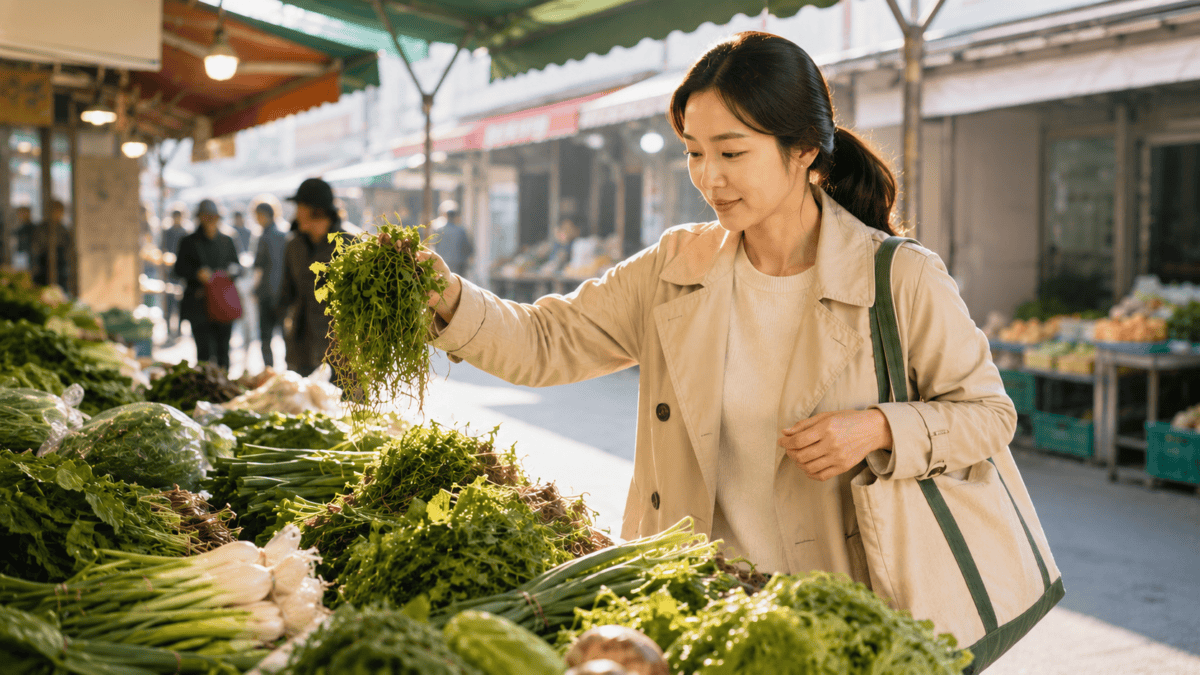
The most visible element of Korean school lunch culture is seasonality. Spring brings wild greens with sharp, almost bitter edges. Summer brings eggplant and cucumber, soft and cooling against the heat. Fall brings radish and cabbage, dense and earthy, storing energy for winter. Winter brings squash and carrot, sweet with storage.
To outsiders, this looks like a system. Like there’s a rulebook written decades ago: “March through May, serve spring vegetables. June through August, serve summer vegetables.” Clean. Organized. Predictable. But that’s not what’s happening.
Seasonal ingredients are chosen because they taste best at that moment. A spring vegetable harvested in spring has stronger flavor, better texture, more aliveness than that same vegetable frozen and thawed in January. You could serve frozen spring greens in winter. The nutritionist doesn’t. Because that would be managing nutrition, not understanding it. She’s understanding time. Understanding that children’s bodies live in seasons, and food should reflect that living.
Kids eating this meal don’t consciously think about it. They taste it anyway. The same rice. The same soup structure. But the side dishes shift with the calendar. And through that shift, they feel the year moving. They know time is passing because what they eat tastes different. Winter is not summer. Fall is not spring. The body learns this before the mind names it.
That’s the thing nobody mentions when they marvel at the photos.
What Free Actually Means
The final element that shocks the world is that it’s free. All of it.
This doesn’t simply mean the government pays the bill. Free only works if there’s a collective agreement that this meal—this actual food—is non-negotiable. It means you don’t cut the egg count to save 50 cents mid-month. It means you don’t rush the broth to save 10 minutes. It means the nutritionist’s choices aren’t overridden when the budget tightens in March or April.
Free school lunch isn’t policy. It’s a society saying: what we feed our children matters enough to collectively pay for it to be done well. Not adequately. Well. The distinction is everything.
That belief has to be strong enough to reach the kitchen. Because the minute someone thinks “this is school lunch so good enough will do,” the system collapses. The moment anyone stops choosing and starts managing, the food becomes adequate instead of alive. It becomes fuel instead of food.
In most countries, feeding students is a bare minimum responsibility. Provide nutrition. Minimize cost. Do no harm. In Korea, the expectation is different. Meals are education. What children eat teaches them something about how the world sees them. It tells them: you matter. Your experience matters. How you feel matters.
Someone Made This Choice
These meals went viral not because the photos are beautiful or the portions generous. They went viral because you can feel the choice behind every element on the tray.
A nutritionist decided: today we’re having seaweed soup. Not because it was cheapest. Not because it met some requirement. Because it was the right choice for this day. Why seaweed and not something else doesn’t matter anymore. The act of choosing—the decision to make this instead of that—is what registers in the bodies of thousands of kids eating at the exact same moment across the country.
Those small choices compound. They build a year of meals. A year of meals builds a childhood’s worth of knowing: someone thought about me. Someone decided I deserved this. Someone cared enough to choose.
Somewhere in every meal, that question is already answered — whether anyone chose it, or whether it was only ever a calculation.
This post was planned and edited by a human, with AI assistance.