

You watched the videos. You saw the trays. But you don’t know how it’s actually built. It’s not beautiful because the government said so. It’s not delicious because Korea has better food. A Korean school lunch works because someone designs the system that makes it possible. And that person operates under constraints you can’t see on camera.
The real question nobody asks is: how does this system actually function. What organizational structure allows a nutritionist to choose expensive fish without someone stopping her. What funding model makes homemade broth cost-effective instead of luxury. What decision-making process prevents a finance committee from cutting corners. How Korean school lunch works is invisible. The trays are not. This is why the world sees the result but can’t replicate the mechanism.
The Numbers That Don’t Add Up (But Actually Do)
A Korean school lunch costs approximately 5,000 to 6,000 KRW per student per day. That’s about 4 to 5 US dollars. In the United States, school lunch funding is split across federal reimbursement, local budgets, labor costs, and private contractors. That number includes labor, food, equipment, utilities, and profit margin for the contractor.
The Korean number includes all of that too. Yet the meals consistently look and taste like they should cost far more. In practice, this can mean serving grilled mackerel with four fresh side dishes on a weekday—within a budget that, on paper, shouldn’t allow it.
Here’s how: In many schools, the nutritionist works directly with the school kitchen rather than outside contractors. She works with the school kitchen. The kitchen staff typically works under the nutritionist’s planning structure. The budget doesn’t get split between a food service company’s margins and a school’s operational costs. It’s one budget, one person responsible, zero middlemen.
On a spreadsheet, the budget looks simple: food cost, labor, overhead. But in practice, the nutritionist makes hundreds of small decisions that change where the money actually goes. Some weeks the budget leans toward vegetables. Other weeks toward protein. Some months she buys premium ingredients because the season justifies it. Other months she finds ways to stretch without cutting corners.
The difference between how Korean school lunch works and how others operate comes down to one choice: does the system start with reimbursement or with nutrition. In the United States, contractors work backward from what the government pays and build downward. The Korean nutritionist works outward from what children need and builds up.
A Day in the Menu Planning Office
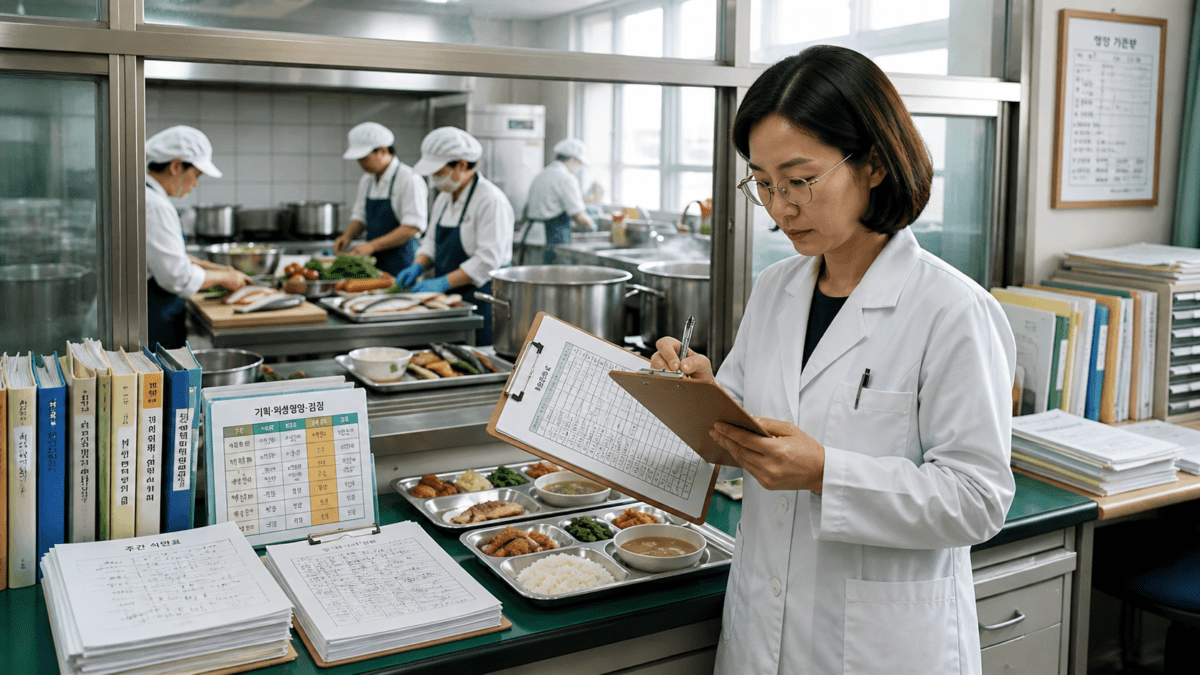
On the 15th of the month, the nutritionist sits down to plan the next month’s menus. She has a calendar. She has the previous month’s menus. She has a list of what’s in season. She has a budget number. Everything else has to be built from those constraints.
The cooks come in at 8 AM. The first lunch service is at 11:30. If she doesn’t finish by 10 AM, the cooks won’t know what to prep. The work is compressed and unforgiving.
She opens a spreadsheet. Column headers: date, main dish, soup, side dish 1, 2, 3, 4. Twenty rows for the twenty school days. Empty.
She doesn’t use recipe databases or meal planning software. She thinks. She looks at the season. She looks at what the cooks can physically do in one morning. She thinks about variety. She thinks about cost.
She types: April 1. Grilled mackerel. Soybean soup. Seasoned spinach. Glazed sweet potato. Kimchi. In practice, this means choosing fresh fish over cheaper frozen options when the season allows it.
Then April 2. Different fish? No, not this month. Braised pork. Anchovy stock soup. Seasoned bracken. Steamed egg. Pickled radish.
She’s already made cascading decisions: if April 1 is salty, then April 2 needs to be richer but with fresher sides. If the soup is light tomorrow, today’s soup needs body. By the third week, she catches herself clustering braised dishes too close. She moves things. She rewrites.
The work takes 6 hours. Not because she’s slow. Because she’s designing a year of eating that happens 180 days at a time, invisible, to children who have no choice.
The Choice That Repeats 180 Times a Year
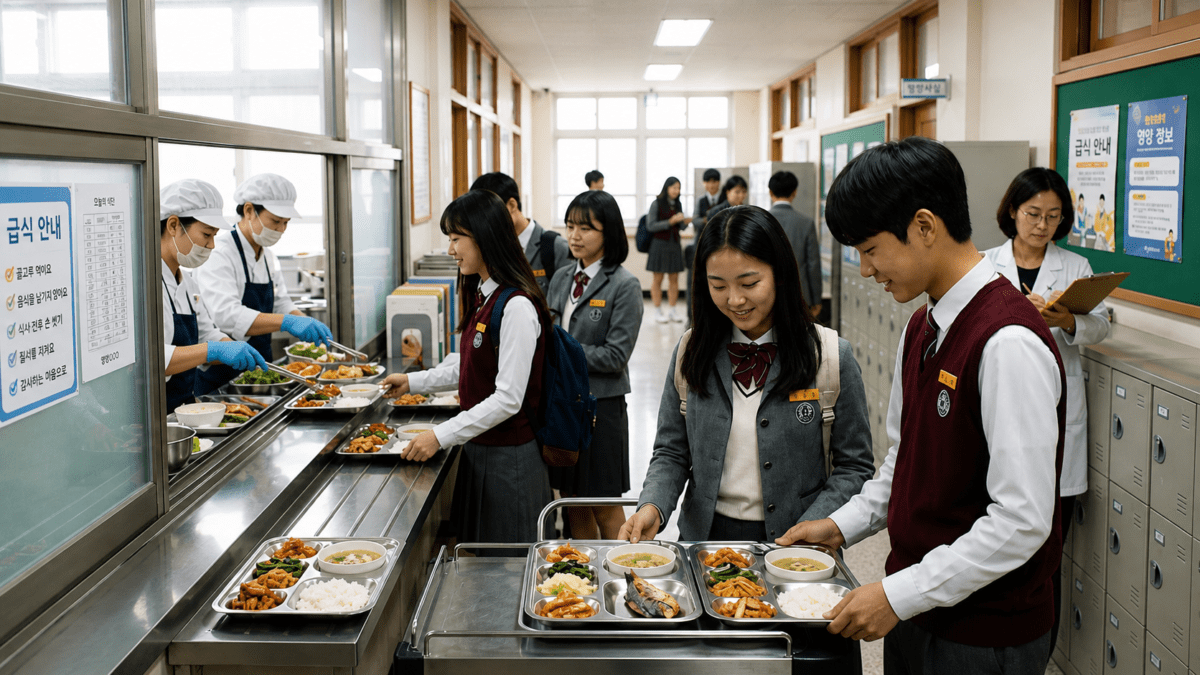
The Korean school lunch system works because of one mechanic: the nutritionist often has unusually high decision authority inside the lunch system.
In the United States, here’s what happens: A food service director approves the menu. The corporate nutritionist designs it. The school board reviews the budget. Parents complain. The principal requests changes. The food service company suggests cheaper substitutes. By the time it reaches the kitchen, six people have either approved or modified the plan.
In Korea, the nutritionist approves the menu. The principal knows it’s coming. The parents know it’s free. In practice, the nutritionist’s decision carries final authority inside the school’s lunch system. This sounds authoritarian. It’s actually the opposite. It’s what happens when a system decides that one person’s expertise is final and everything else supports that decision.
The nutritionist can buy expensive seaweed one week because she’ll use cheaper ingredients the next week. She can plan a complex soup requiring two hours of simmering because she knows the kitchen has the time. She can choose premium fish because no budget committee will reject it.
Most choices move directly from planning into execution without multiple approval layers. This creates the power to be wrong. If the meal fails, if the kids reject it, if the side dish doesn’t work, the failure is visible immediately—sometimes as simple as a tray coming back half untouched when a new dish misses. She tastes everything. She’s in the kitchen enough to see reactions. She builds feedback loops because there’s no buffer between her decision and consequence.
Why This System Works
The Korean school lunch costs 5,000 KRW per meal. The structure determines what that money buys. When the nutritionist has to work within constraints set by someone else, that constraint becomes the ceiling. When the nutritionist sets the constraint herself, that constraint becomes the floor.
When there’s no profit margin, no middleman, no contracting company taking a cut, every won either goes to food or labor or equipment. The accountant can’t create value by cutting costs. So the system flips: how good can we make this with what we have instead of how cheap can we go.
That’s not philosophy. That’s accounting. The nutritionist has authority because the structure demands it. She has flexibility because the budget is transparent. She has time because the system doesn’t require her to justify her choices to six different committees. This is how Korean school lunch works at the level nobody sees. The mechanism isn’t the menu. The mechanism is the structure that allows the menu to exist.
A Korean school lunch requires:
- A nutritionist with decision authority
- A kitchen with cooking equipment and trained cooks
- Government funding without profit margins
- Cultural agreement that children’s lunch is education
- A budget that covers actual ingredients
Change any one variable and the system collapses. If the nutritionist needs approval from a food service company, she can’t choose expensive fish. If the kitchen is just a reheating station, she can’t make broth. If the government outsources to contractors, profit margins return. If the culture treats lunch as logistics not education, budgets tighten.
The videos show a system where every element aligns. Remove one piece and it’s not worse Korean lunch. It’s not Korean lunch anymore. This is why countries can’t copy it by copying the menu. The menu is visible. The system is invisible. You can’t copy what you can’t see.
Someone Made a Choice
The girl eating seaweed soup doesn’t know that someone decided this soup was the right choice for this day. She doesn’t know that the same person chose to spend the budget on homemade broth instead of powder. She doesn’t know that the same person sat in a meeting where finance asked can we save money and said no.
But her body knows. The soup tastes like a choice. The side dish tastes like intention. The fact that lunch changes with the season tastes like someone is paying attention. When you eat something that cost less than two dollars and more thought went into it than into something that costs twenty, you feel the difference. The body recognizes intention.
In Korea, that care is structural. It’s not kindness. It’s a system where the nutritionist is given unusually broad authority to prioritize both taste and nutrition.
Next: (Part 3) How to Read Your School Lunch System Structure
Your school lunch system structure isn’t broken. It’s working exactly as designed. Here’s how to read what it’s actually built to do.
Some content in this post was created with AI assistance.