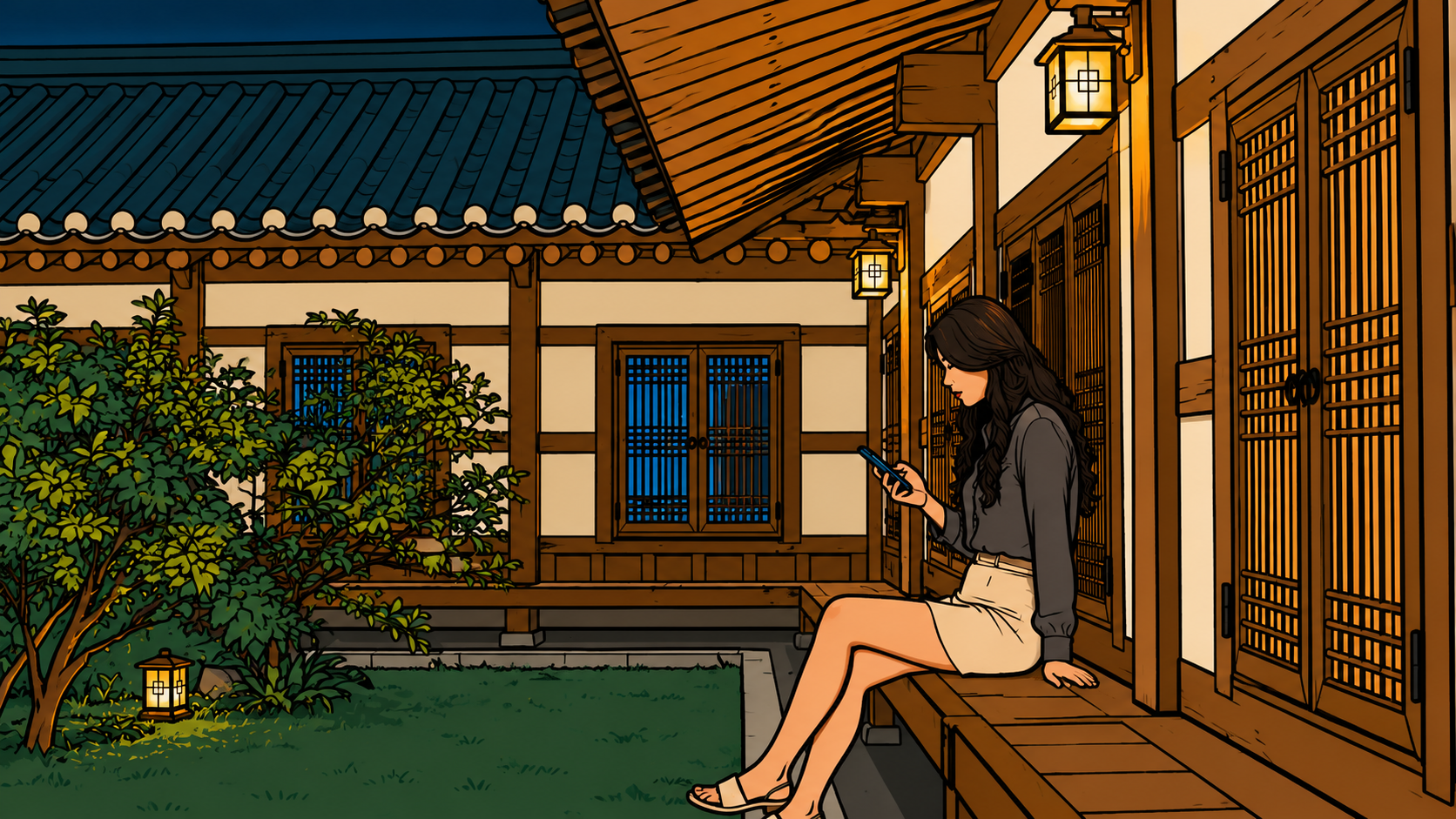

You check your balance five times before breakfast. Sometimes more. You open the app without thinking about it—the motion is automatic, like breathing. Your thumb finds the icon. The screen loads. The number appears. And then you close it.
Why you check your balance so obsessively is the strange economy of your anxiety. The act of checking gives you something—a moment of control, the illusion that you’re managing the risk. But checking and actually looking are two completely different things. One is compulsion. One is confrontation. And you’ve learned to do the first without ever doing the second.
The reason people don’t understand this pattern is simple: they assume checking is a rational act. They assume you want to see the number, want to know where you stand. They don’t realize that when you check your balance, you’re not actually trying to gather information. You’re trying to manage fear. And fear has a very specific requirement: it needs just enough reassurance to temporarily quiet, but not enough clarity to reveal the truth underneath.
The Ritual That Protects You from Seeing

Why you check your balance is a question with a hidden answer. When the ritual begins, something happens in the millisecond before you see the number. Your nervous system braces. It prepares for impact—not of the number itself, but of what the number means. Your body doesn’t care about the digits. It cares about the story those digits tell.
So the checking—the opening of the app, the waiting for it to load, the glimpse of the number—all of that is actually a way of not seeing. The ritual creates a buffer. It says: I acknowledge the danger. I’ve looked. I’ve confirmed. And then you close the app before your brain has time to process what you actually saw.
This is why people who check their balance this way report the same experience: they can’t remember what the number was. Not because they didn’t see it, but because seeing and registering are different things. You saw it with the part of your brain that’s monitoring for threat. You didn’t see it with the part of your brain that asks: what does this mean? What can I do with this? What does this say about me?
The checking is not a failure to look. It’s a successful strategy for avoiding the moment when looking would mean something.
The Moment You Can’t Bear to See

There’s a specific instant when checking your balance stops being a neutral act and becomes a weapon against yourself. It’s the moment your eyes actually register the number. Not just see it—register it. Process it. Understand what it is.
In this moment, two possibilities exist. The number could be “good”—higher than yesterday, within the safe range, still intact. You check your balance and see proof that you made it through another day. Relief floods in. Temporary, thin relief, but relief. The cycle holds. The evidence is intact.
But that relief lasts exactly thirty seconds. Because the moment you see the number is the same moment you calculate how fast it will shrink. The bills that are due. The expenses that are coming. The invisible line below which you cease to exist. And suddenly the good number doesn’t feel good anymore. It feels like borrowed time. A reprieve, not a solution.
Or the number could be lower than yesterday. Lower than it should be. And when you check your balance and see this, something in your chest collapses. Not because you can’t survive on this amount—you can, you have, you will. But because the number has become a referendum. A statement. Evidence that you’re not doing well enough. Not earning enough. Not controlling enough. Not proving enough.
So you don’t actually look. Not in the way that would make this real. Your nervous system reacts to the number like a threat: with the ancient part of your brain that says run, hide, don’t process this. You close the app. You silence the information before it becomes knowledge.
Why You Keep Coming Back: The Trap of Temporary Relief
The checking never satisfies because satisfaction isn’t actually what it’s designed to do. When you check your balance repeatedly, you’re not gathering information that will solve anything. You’re maintaining a ritual. You’re performing an act of control that feels like it might prevent catastrophe, even though catastrophe isn’t actually coming.
And here’s the mechanism: the checking works, in the sense that it temporarily quiets the anxiety. You check your balance, you get a microsecond of reassurance, and the nervous system resets. The threat is postponed. You’ve done something. You’ve acknowledged the danger and survived it. For a moment, the anxiety recedes.
But then something happens that most people don’t notice. Your nervous system recalibrates. The glimpse you just got no longer feels convincing. The safety doesn’t feel safe enough anymore. And suddenly you need to check again.
This is where the trap becomes visible: every time you check without actually looking, you reinforce the belief that the danger is real. If the money truly felt safe, you wouldn’t need to keep checking. The ritual becomes proof that something must be wrong.
And this is why the compulsion intensifies during stress. This is why you find yourself checking when anxiety peaks—in the grocery store, before a meeting, after bad news. When your nervous system is already flooded with uncertainty, the checking feels more urgent, more necessary. Your system learned long ago that catastrophe is possible, that safety is temporary, that the only way to manage risk is through constant vigilance. Stress doesn’t create this belief; it activates it. It confirms it.
So you check again tomorrow. And the day after that. And every time you check your balance without truly seeing it, you’re confirming the original premise: that safety is conditional, that vigilance is required, that the number is the only thing standing between you and disaster. You’re saying: yes, the danger is real. Yes, I need to stay alert. Yes, the only proof of safety is this number that I can’t bear to fully see.
The pattern persists because the checking is what keeps the cycle alive. It’s a self-reinforcing system. The ritual creates the very anxiety it’s designed to manage. And because your nervous system can never be certain that it has checked “enough,” the checking never stops. There is no final check that will close the loop. There is only the next one, waiting at 3 AM, before breakfast, in the moment you wake up uncertain. It’s protecting you from a confrontation that feels more dangerous than any financial catastrophe ever could.
The Question Underneath
So here’s what happens when you finally stop just checking: What would change if you actually looked? Not at the balance itself, but at what you feel when you look at it. What narrative runs underneath your fear. What version of yourself you’re protecting by not confronting the number directly.
These are the questions that most people don’t want to ask. Because asking them means understanding that the balance—no matter what it is—will never solve what you’re actually trying to solve. It means recognizing that the checking ritual itself is the thing keeping you trapped. That the control you feel you’re gaining through vigilance is built on a fundamental misunderstanding: that you must constantly prove your safety in order to exist.
But where did this conviction come from? Not randomly. Not from weakness. It was assembled in specific moments, under specific circumstances, by a nervous system trying to survive. Your system learned that worth must be demonstrated. That safety is temporary. That vigilance is the only form of protection that works. And it’s been trying to protect you ever since.
Which means the pattern didn’t begin with money. It began somewhere else entirely.
This post was planned and edited by a human, with AI assistance.