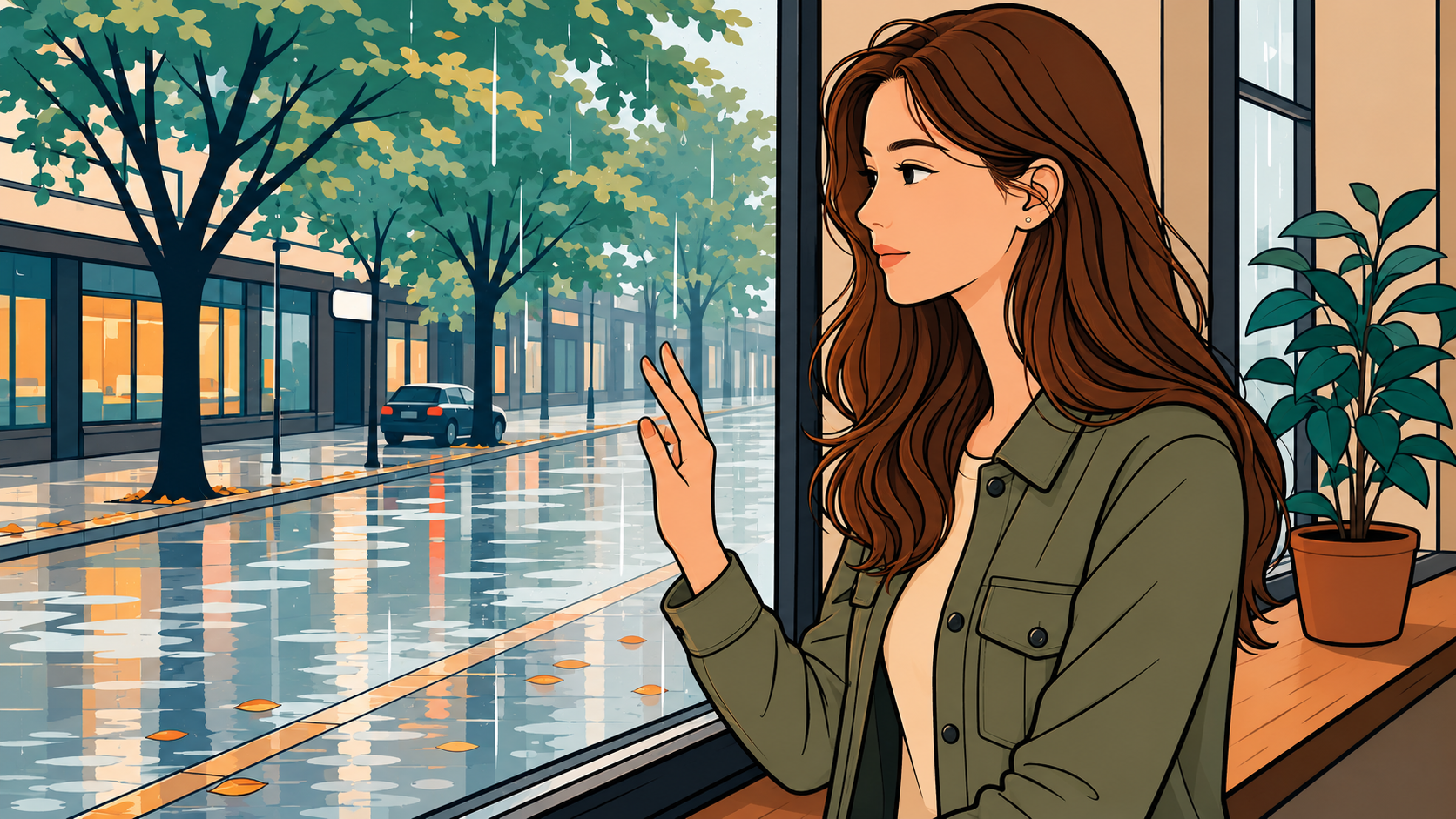

Knowing when to walk away from a relationship starts here — pulling back doesn’t always feel like avoidance. Sometimes it feels like information.
Not every distance is a pattern.
Some of it is information. The body registering something the mind hasn’t caught up to yet. A signal that something in the situation, or in yourself, needs attention before you move forward.
The problem isn’t pulling back. The problem is not knowing the difference.
Two Kinds of Pulling Away
When walking away from a relationship is the right choice, it feels different from avoidance. But there’s also the distance you create because something feels too good.
Because the closeness is real and that realness feels dangerous and the exit is right there and you’ve taken it before and it worked, in the way that avoiding things always works — temporarily, at a cost you pay later.
That’s the distance this series has been about.
And then there’s a different kind. The distance that arrives not because something is going well but because something is off. A persistent unease that doesn’t resolve. The sense that you’ve been adjusting yourself to fit a space that doesn’t quite fit you. The quiet accumulation of moments where you felt less like yourself and more like a version of yourself that was working very hard.
You know the specific texture of the second kind. The way you rehearse conversations before they happen because you’ve learned that the unrehearsed version doesn’t land well. The way you monitor your own reactions in real time, editing as you go, because somewhere along the way you learned that the unedited version was too much. The way you feel slightly relieved when plans cancel — not because you needed space, but because you needed a break from the effort of being in that particular dynamic.
That distance isn’t avoidance. It’s clarity.
The difficulty is that they feel almost identical from the inside. Both involve the pull toward space. Both involve some relief when you get there. Both can be rationalized in the same language. The difference isn’t in the feeling. It’s in what the feeling is responding to.
What Your Body Is Actually Saying
The body doesn’t lie, but it also doesn’t always speak clearly.
The constriction in your chest when their name appears — is that the fear of something good, or the recognition of something that consistently doesn’t feel right? The relief when plans fall through — is that the exhale of someone who needed space, or the exhale of someone who didn’t want to go in the first place?
These questions matter because the answer changes everything about what to do next.
One useful distinction: fear of intimacy tends to be non-specific. It activates in the presence of closeness itself, regardless of who the person is or how they’ve treated you. It’s the pattern responding to the category, not the individual.
Genuine unease tends to be specific. It’s tied to particular moments, particular behaviors, particular ways of being made to feel. It doesn’t go away when the person is kind. It’s not resolved by reassurance. It keeps returning to the same things, the same moments, the same low-level wrongness that you keep explaining away.
If you can point to specific reasons, you’re probably reading the situation. If the discomfort floats free of any specific cause and lands on whoever gets close enough, you’re probably reading the pattern.
The Situations That Deserve Distance

Some situations are genuinely asking you to pull back. Not as avoidance — as self-preservation.
The relationship where you’ve been consistently smaller. Where you’ve edited yourself not out of the careful guardedness of someone protecting something tender, but out of the learned habit of someone who has been corrected too many times. Where the version of you that shows up has been shaped more by what’s not allowed than by what’s actually true.
The connection where the terms keep shifting. Where the ground is never quite stable, not because relationships are imperfect, but because instability is being maintained on purpose — consciously or not — as a way of keeping you off-balance and therefore easier to manage. Where you find yourself constantly recalibrating, never quite sure where you stand, spending more energy on interpretation than on actual connection.
The dynamic where your discomfort is consistently reframed as your problem. Where pulling back is met not with curiosity but with pressure. Where the cost of having needs is made just high enough that you stop having them out loud. Where you’ve learned to present only the parts of yourself that don’t require anything, because the parts that do have been met, more than once, with something that felt like punishment.
In these situations, distance isn’t the pattern. Distance is the appropriate response to a pattern that belongs to the situation, not to you. The pulling back isn’t fear doing its old job. It’s you, paying attention.
How to Tell Which One You’re In

Knowing when to walk away from a relationship — or whether to stay — starts with one question: what is the pulling back actually responding to?
This is the question that actually matters.
Not “should I pull back” but “what is the pulling back responding to.“
One way to find out: imagine the discomfort resolved. Imagine the relationship became straightforwardly good — consistent, clear, present. Does the thought feel like relief or does it feel like a different kind of exposure?
If the idea of things being simple and stable feels like something you’d have to adjust to, like a room that’s too bright after a long time in the dark, the discomfort is probably about intimacy itself. The pattern running its familiar sequence.
If the idea of things being simple and stable sounds like a different relationship than the one you’re in — if getting there would require the other person to become substantially different, or would require you to keep becoming smaller — the discomfort is probably information.
There’s another way to check. Notice what happens when the other person is kind. When they’re consistent and patient and clearly present. Does the kindness land, or does it make you more anxious? Does consistency feel safe, or does it feel like pressure? For the pattern, kindness is threatening because it removes the excuse to leave. For genuine unease, kindness doesn’t resolve anything because the problem was never the absence of kindness.
The distinction between protection and avoidance is one of the most useful things you can learn to read in yourself. Think about the last time you pulled back. Not the story you told about it afterward — the actual moment. What was it responding to? The presence of something real that felt like too much? Or the persistent low-level signal that something wasn’t right, that you’d been ignoring because ignoring it was easier than knowing what it meant? It won’t always be clean. Sometimes it’s both at once. But asking the question honestly, without rushing to an answer, is usually where the clarity starts.
What This Series Has Actually Been About
Pulling back from someone you like. Almost choosing the people who make full closeness impossible. Staying in the almost because the almost is safer than the real thing.
These are patterns. They have a structure. And structures, once visible, can shift.
But the point was never to stop pulling back entirely. The point was to know why you’re doing it. To be able to tell the difference between the retreat that keeps you from something good and the retreat that keeps you from something that was never going to be good for you.
One is fear doing its old job in a new situation.
The other is you, finally, listening to yourself.
You probably already know the answer. You’ve known it for a while.
The work isn’t learning to stay in every room. Knowing when to walk away from a relationship is just as important as knowing when to stay.
It’s learning to know which rooms are worth staying in.
She closes the door quietly. Not because she has to. Because she chose to.
This post was planned and edited by a human, with AI assistance.