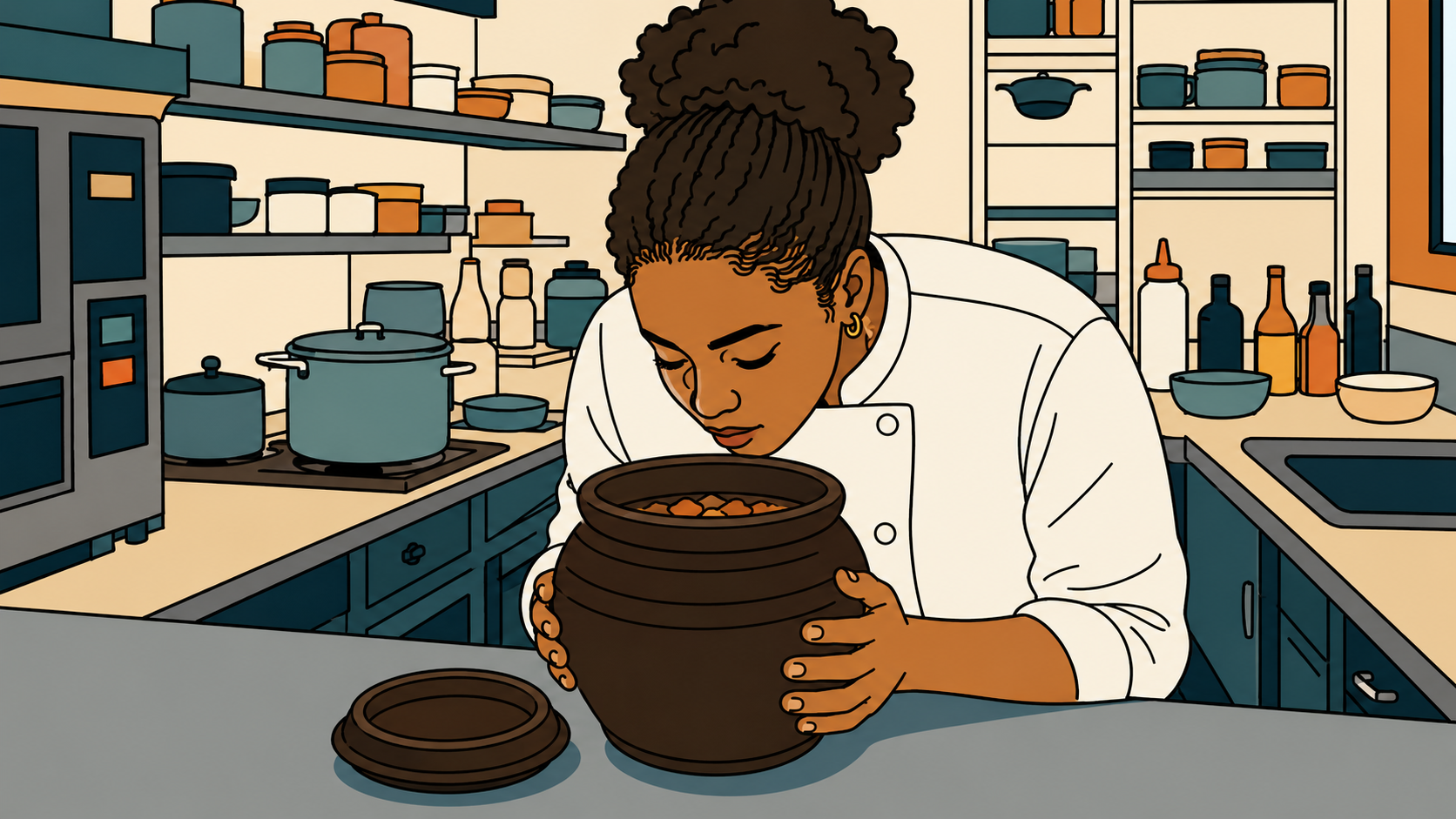
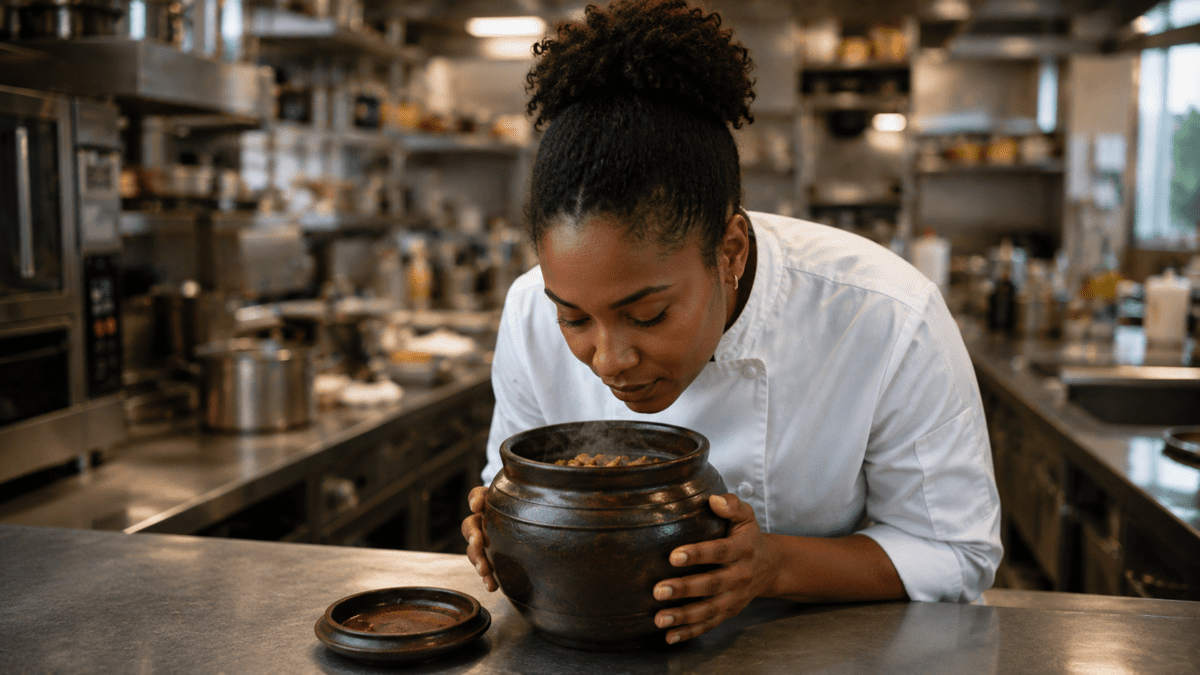
You can’t taste jang while it’s becoming jang.
This is the first thing Korean jang philosophy asks you to accept.
You can’t open the jar every day and check the progress the way you check a roast in the oven. You set the conditions — salt ratio, sun exposure, jar placement — and then you step back for months.
During those months, you don’t know if it’s working.
You hope. You watch the weather. You notice the smell shifting. But you don’t know — not really — until the day you open the jar and taste what time has done.
This is deeply uncomfortable for anyone trained to measure and control. And it’s completely normal in Korean food culture.
The Logic of Not Knowing
Here’s what’s strange about jang if you come from a recipe-based food culture.
Western kitchens worship the recipe. Follow the steps, hit the temperatures, and you’ll get the result. It’s reliable. It’s reproducible. It works.
But jang doesn’t care about your recipe.
The same salt ratio produces different ganjang (간장: gan-jang, Korean soy sauce) in a wet summer versus a dry one. The same meju block develops differently in a Seoul apartment courtyard versus a countryside jangdokdae (장독대: jang-dok-dae, fermentation courtyard). The jar responds to conditions you didn’t plan for — and the result is better for it.
Koreans have a relationship with uncertainty that looks different from the Western one. Not passive. Not fatalistic. More like — experienced. The culture has a long history of waiting through things that can’t be rushed: seasons, harvests, fermentation, grief, political change. The response isn’t to force an outcome. It’s to maintain the conditions and trust the process.
Jang is the food version of this. Not the recipe. Not the technique. The person — the attention, the repeated small acts of care over time.
Once you see this logic in jang, you notice it showing up everywhere in Korean thinking — in how seasons are read, in how timing is understood, in how patience is practiced not as virtue but as method.
What Happens When You Stop Checking
If jang could talk, it would probably say three things.
First: depth takes whatever time it takes. You can shortcut the chemistry — add enzymes, apply heat, accelerate fermentation. You’ll get something that technically qualifies as soy sauce. But it won’t have gamchil-mat (감칠맛: gam-chil-mat, layered savory depth). It won’t have that slow, layered pull. It’ll taste like the difference between a photocopy and the original.
Koreans understand this about more than food. There’s a reason Korean dramas take sixteen episodes to resolve what other shows wrap in forty-five minutes. The culture trusts slow arcs. Not because fast is bad — but because some things only become real at a certain speed.
Second: the unwanted stuff is part of the process. Mold on meju. Unexpected sourness in month two. Flavors that seem wrong at first but become essential by month six. The skill of jang-making isn’t keeping everything clean. It’s knowing which mess to keep.
Korean history is not a clean story. It’s full of occupation, division, rapid change, and things that looked like ruin before they became foundation. The instinct to sort rather than sterilize runs deep — in the jar and outside it.
Third: balance is not a fixed point. Jang is never “done” the way a cake is done. It keeps changing — in the jar, in the pot, on the table. The same doenjang (된장: doen-jang, fermented soybean paste) tastes different in July and January. The same ganjang shifts as it ages. You don’t lock in perfection. You ride the balance as it moves.
This is why Korean meals aren’t built around one dominant flavor. They’re built around tension — salty against sweet, heavy against light, fermented against fresh. The balance isn’t static. It’s alive. And it moves with the season, the person, the day. A meal that felt right in winter may need adjusting by spring. The jar understood this before the cook did.
Why This Isn’t Philosophy — It’s Lunch
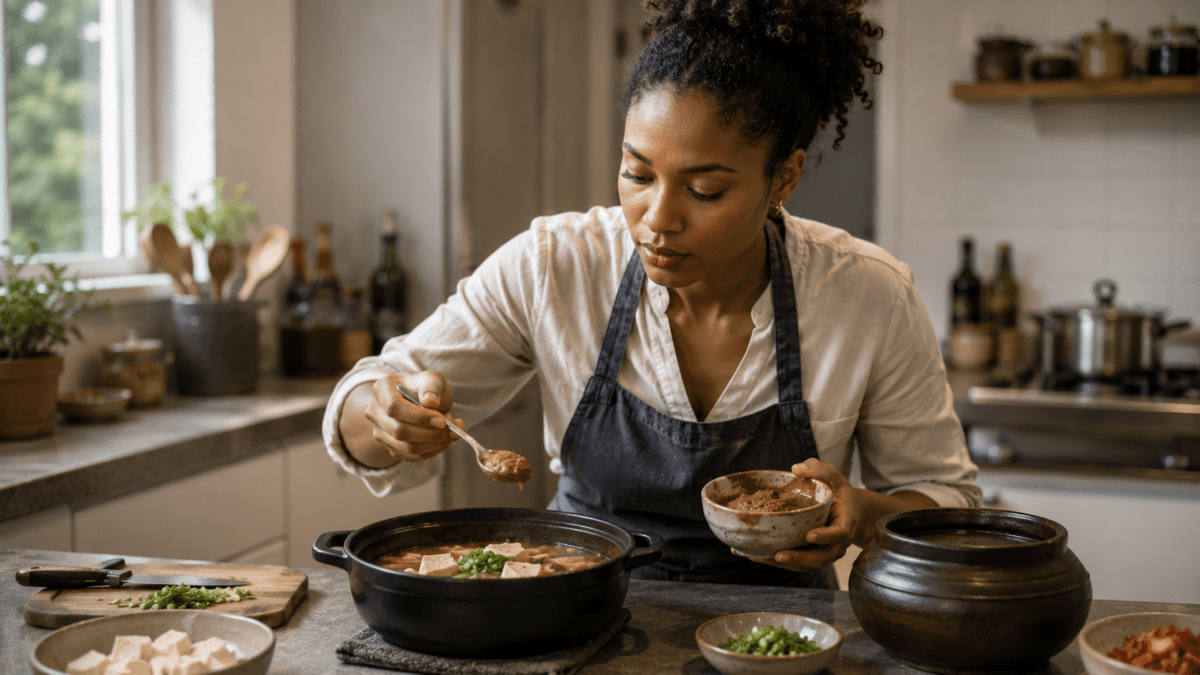
Here’s the important part: none of this is theoretical in Korea. Nobody sits at the table thinking about balance and patience and the nature of time.
They just eat.
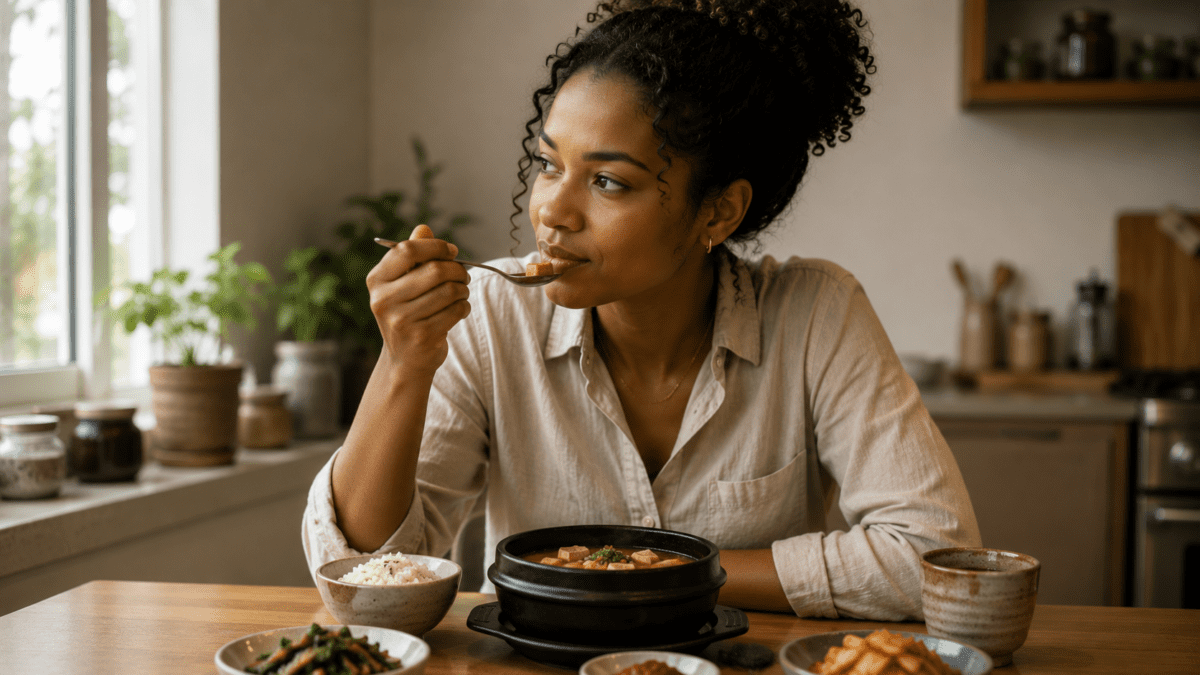
Grandmother puts out doenjang-jjigae (된장찌개: doen-jang-jji-gae, soybean paste stew), a plate of ganjang-seasoned greens, some gochujang (고추장: go-chu-jang, fermented chili paste) on the side. The meal is balanced not because someone calculated it, but because that’s how Korean food culture has always worked. The philosophy is embedded in the food. The food is just lunch.
That’s what makes jang different from a lecture. It doesn’t explain itself. It doesn’t need to. You sit down, you eat, and your body understands something your mind hasn’t caught up to yet.
The depth is already inside the meal. You just have to show up with a spoon.
Most Korean households don’t make jang at home anymore.
The jars still exist — in markets, in factory lines, in the fermentation facilities that supply every supermarket in the country. The process still happens. Just not in most people’s kitchens. Not on most people’s ceilings.
There’s a particular taste that comes from jang made in a home — shaped by the air of that specific room, the straw from that specific region, the cold of that specific winter. It doesn’t transfer to a label. You can’t replicate it at scale. The people who grew up with that taste know exactly what’s missing when it’s gone. They don’t always say it out loud. But they know.
And yet.
The factory jar went through the same process. The same wait. The same invisible transformation. A soybean that had no idea what it was becoming — sitting in a warm room, changing at a pace no one could speed up, becoming what it was always going to become.
The depth is still there. The origin is still the same. What changed is who’s waiting.
In small pockets across Korea, the old way continues. Regional jang makers who’ve been at it for generations. Families in the countryside who never stopped. And a growing number of younger Koreans who’ve circled back — not out of nostalgia, but curiosity. They want to taste what the jar produces when you actually give it time.
The World Starts Tasting
A few years ago, something quiet started happening in restaurant kitchens outside Korea.
Outside Korea, jang has begun appearing in places it rarely occupied before. Doenjang moves beyond stew. Ganjang enters dishes that were never Korean to begin with. Gochujang shows up in glazes, marinades, and sauces far from the kitchens that made it familiar.
Nobody announced this. No campaign, no marketing push. It just started showing up — the way good ingredients do when cooks are paying attention.
The thing that caught their attention wasn’t the heat or the salt. It was the depth. Ganjang wasn’t just salty. Doenjang wasn’t just funky. Gochujang wasn’t just hot. Each one had layers — and those layers kept unfolding in the dish long after the sauce was added.
That’s how jang travels. Not by replacing local food. By filling gaps that local ingredients left open. Not by being exotic — by being quietly, stubbornly good at what it does.
The deeper thing happening is that jang’s logic is spreading — the idea that fermented depth can anchor a dish the way stock or butter does in Western cooking. That the best flavors are the ones that took the time to arrive.
That reaction Western diners have — the pause mid-bite, the inability to name what they’re tasting — that’s not confusion. That’s gamchil-mat arriving. The depth that jang built over months in a sealed jar, now sitting quietly inside a bowl of stew, inside a spoonful of rice, inside a dish that never once mentioned it was there.
The next time you eat Korean food — the real texture of Korean food culture, past the heat and the color — pay attention to what stays after you swallow. That lingering pull, that warmth with weight, that flavor you can feel but can’t quite name.
That’s jang. It was there before you noticed it. It will be there long after you’ve forgotten the meal.
Somewhere, a jar is sitting. Sealed. Patient. Becoming what it was always going to become.
That has always been enough.
This post was planned and edited by a human, with AI assistance.