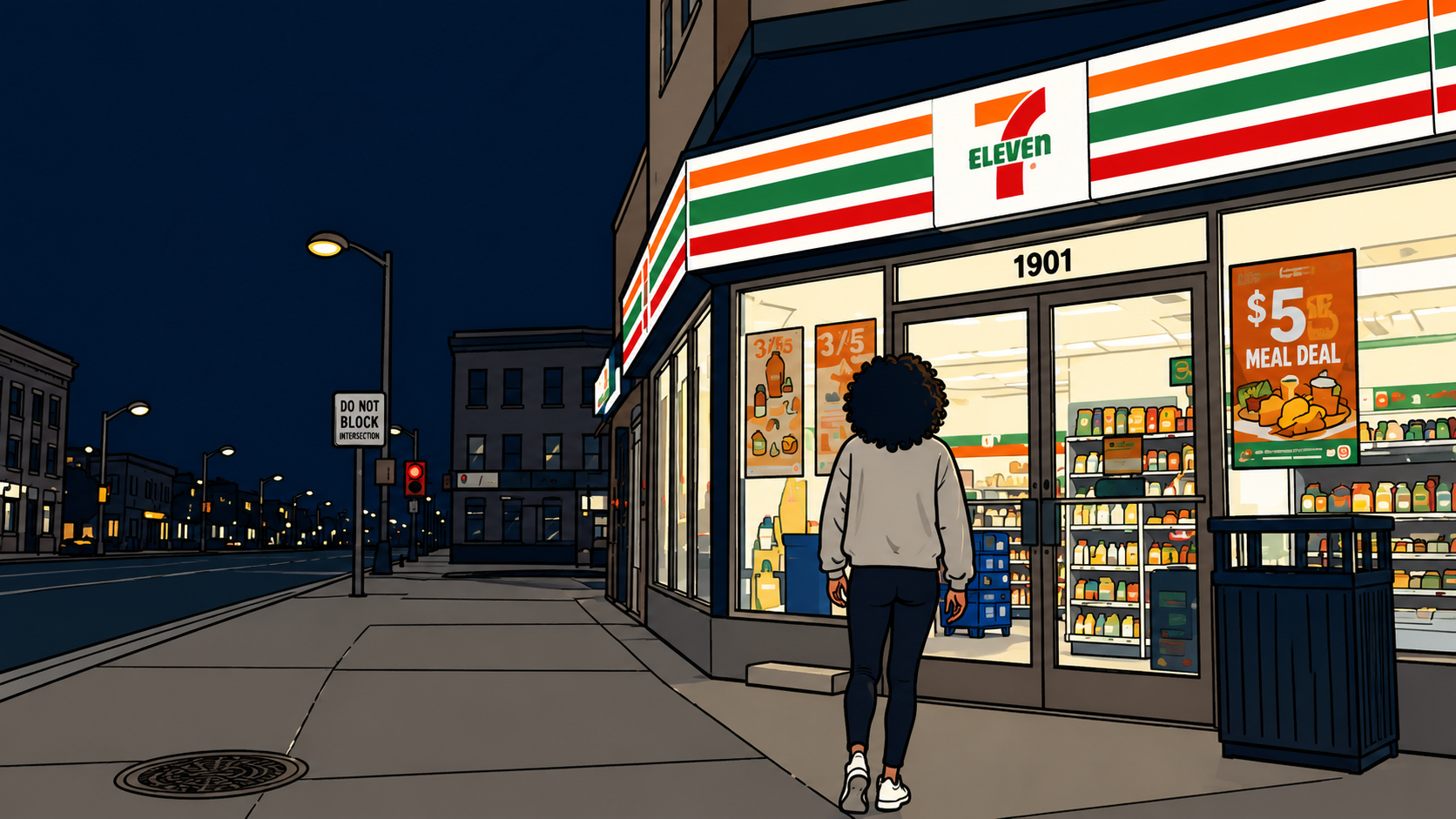
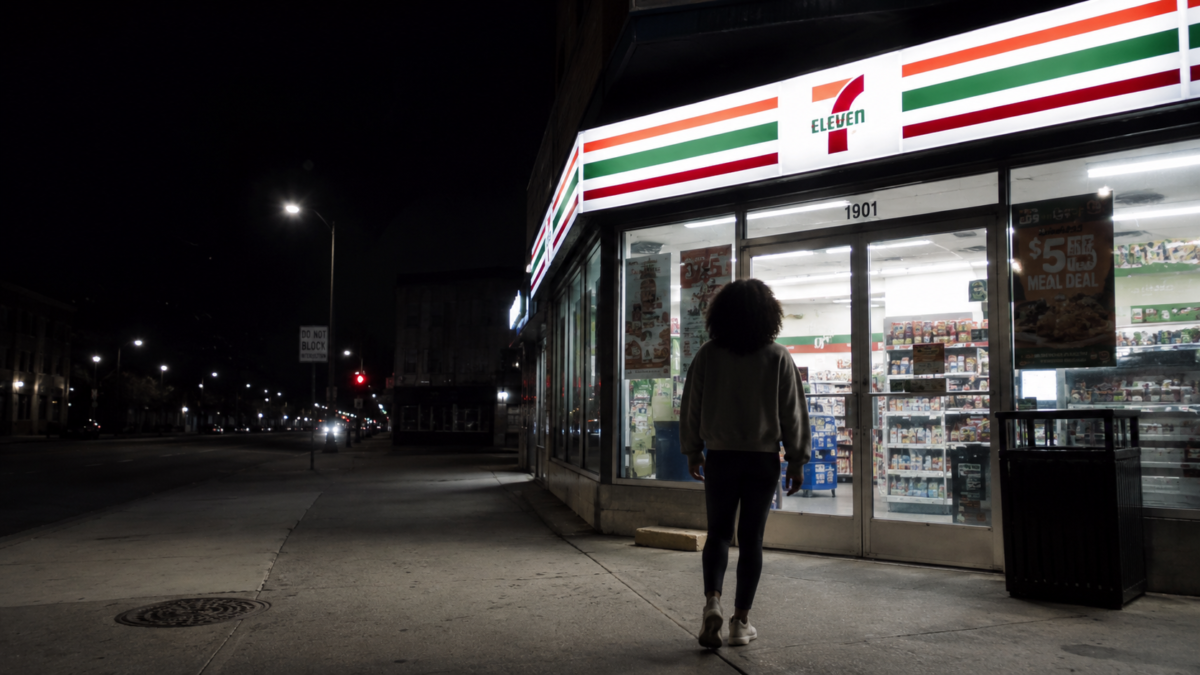
There is an hour the city forgets about, somewhere past two and before the first train, when almost everything with a door has closed it. The bars have emptied. The last buses have stopped running. The apartment windows have gone dark one by one until the street is lit by almost nothing — except, on the corner, the same square of white light it always is. That square is the whole promise of late night convenience: that no matter how far into the night you’ve gone, one door is still open, and it looks exactly like it did at noon.
Step inside at this hour and the contrast is total. Behind you the street is cold and dark and all but empty. In front of you the light is full, the shelves are stocked, the fridges are humming their steady note as if it were the middle of an ordinary afternoon. The store hasn’t noticed the hour. It never does. That refusal to acknowledge the time is the exact thing you came for, even if you couldn’t have said so.
Nobody ends up here at three in the morning by accident, and nobody quite plans it either. You’re just suddenly inside it, holding something you didn’t know you wanted, standing in the one lit room the night left running. However you got here, the door gave when you pushed it, and that was the only question that mattered.
The People the Night Sends In
The crowd at this hour is nothing like the daytime one. It’s thinner, stranger, quieter, and every person in it is carrying some small reason the daylight never sees.
A man in a rumpled suit buys a hangover drink and a bottle of water and stares at the middle distance while the clerk rings him up. A couple who’ve clearly been arguing stand at opposite ends of the snack aisle, not speaking, each pretending to choose. A delivery rider comes in to warm up for exactly as long as it takes to drink a canned coffee, helmet under his arm, then goes back out into the dark.
A student who should have gone home hours ago sits at the window counter with an energy drink and an open laptop, buying the right to stay somewhere lit.
None of them explain themselves, and the store asks nothing. This is the deepest form of late night convenience — not the products, but the permission. The permission to be awake when you shouldn’t be, to be nowhere in particular, to stand under bright light at an hour that has no name and no obligations attached to it.
They don’t talk to each other. There’s an unspoken agreement among the people of the late store that everyone is here for their own reasons and those reasons stay private. You clock each other, you keep your distance, you share the light and nothing else. And somehow that arrangement is its own kind of company.
You are alone in there, but not quite alone the way you’d be alone at home — there are other bodies moving under the same light, other people who also couldn’t sleep or couldn’t go home or simply couldn’t be anywhere else, and their silent presence takes some small edge off the hour. Nobody says a word and still, briefly, you are all in it together.
What Three in the Morning Feels Like
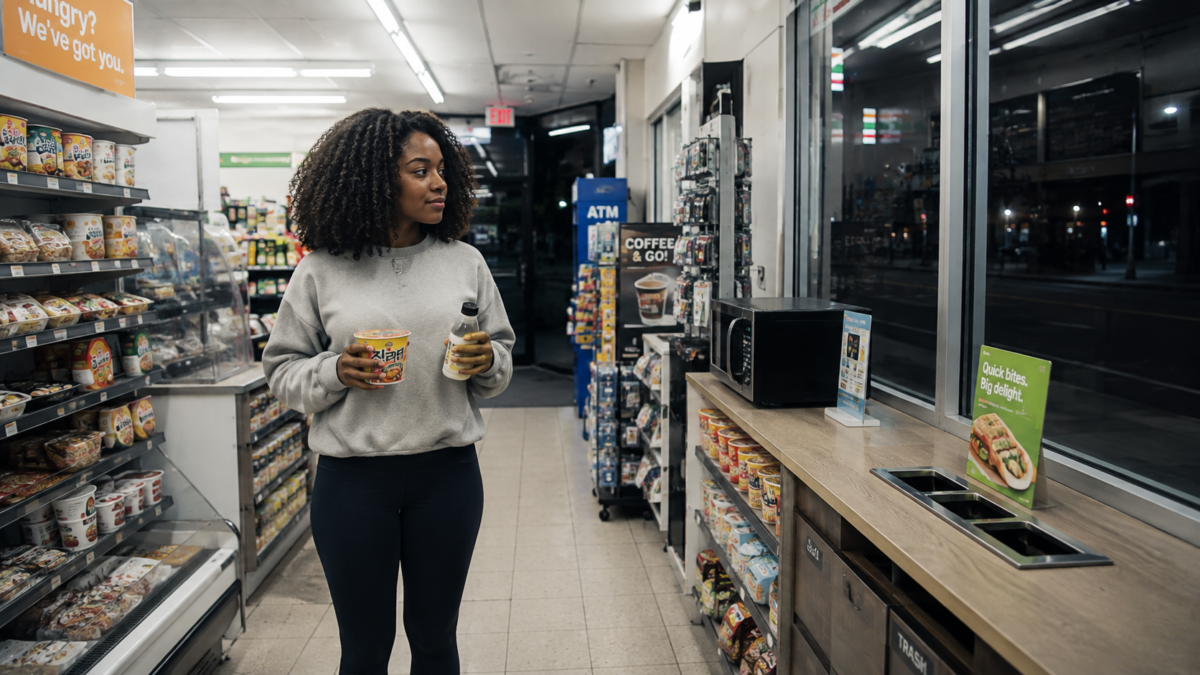
The quality of the quiet changes after midnight. The store is never fully silent — the fridges hum, the door chimes, a kettle ticks near the noodles — but the sounds arrive differently in an empty store than a full one, sharper and more separate, each one landing in a space the daytime crowd would have swallowed.
You notice things you’d never notice at noon. The specific buzz of one flickering tube of light near the back. The tick of the hot water dispenser resetting itself. The way your own footsteps sound on the floor when there’s no one else to cover them. The smell of the hot bar has thinned out to almost nothing this late, just a faint ghost of broth and fried dough hanging over an empty tray. Everything feels slightly slowed, slightly amplified, the way the world does when you’ve been awake too long.
The light itself seems to change character, though it hasn’t changed at all. At noon it’s just brightness. At three it’s a kind of shelter — the same wattage doing an entirely different job, holding a small square of daytime open against all the dark pressing in on the glass. You stand in it a moment longer than you need to, letting it do that.
Then you pay, and the transaction is the same as it always is — the beep, the receipt, the bagged drink — and for a second the ordinariness of it is almost strange against the strangeness of the hour. The clerk’s goodnight is the same flat, practiced phrase it would be at any hour, and there is something steadying in that too, the night’s oddness answered with a small unremarkable courtesy that asks nothing back.
What Late Night Convenience Actually Is
The clerk on the night shift keeps a different kind of watch. The register is quiet for long stretches, then busy in a sudden burst when the taxis change over or a group spills out of somewhere still open, then quiet again. Between customers the store just sits there, fully lit and fully stocked, ready for a rush that mostly doesn’t come.
This is the strange economics of late night convenience — a whole bright room kept running through the emptiest hours for the handful of people who’ll need it, and they always do, eventually. Someone always comes. The medicine at four in the morning. The charger for a dead phone. The single thing you cannot wait until sunrise for. The store stays open on the bet that the night will always send someone, and the night always does.
On the counter, a small television or a phone plays something low, the clerk’s one concession to the long hours. A mop leans against the back wall, the floor near the entrance still damp and shining from the last pass. Everything is a little too clean at this hour, the way rooms get when someone has had time to tidy them and nothing to do but wait.
There’s a kind of loyalty that forms toward a place that stays open like this. Not affection exactly, but reliance — the quiet certainty that whatever the hour, however far off the map of normal time you’ve wandered, that light will be on and that door will give when you push it. It’s a promise the city makes almost nowhere else anymore, and it makes it quietly, without ever once asking to be thanked for keeping the light on.
The Light That Waits
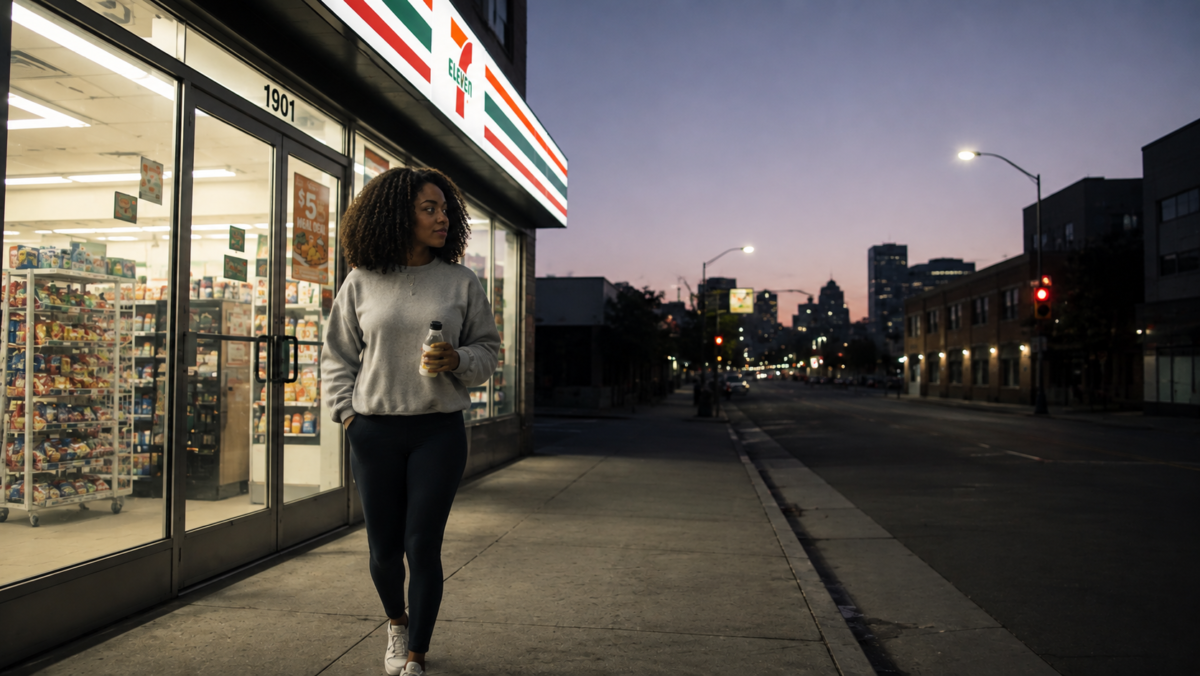
Eventually the sky starts to change. Not brightening yet, just thinning, the black going slightly grey at the edges. The first delivery truck rumbles past. Somewhere a shutter rolls up. The night is handing the street back to the day, and the store that held the light all through the dark barely marks the transition — it just keeps glowing, the same as ever, as the world refills around it.
You step out with whatever you came for, back into an hour that’s finally starting to have a name again. Behind you the store keeps its post, humming and bright, already forgetting you were there.
And some other deep night, weeks from now, when you find yourself out past the last train with nowhere lit to go, you’ll see that same square of white on some corner and walk toward it without deciding to — one more person the night sent in, drawn to the one door that never closed, the last honest promise of late night convenience glowing quietly on an empty street.
This post was planned and edited by a human, with AI assistance.