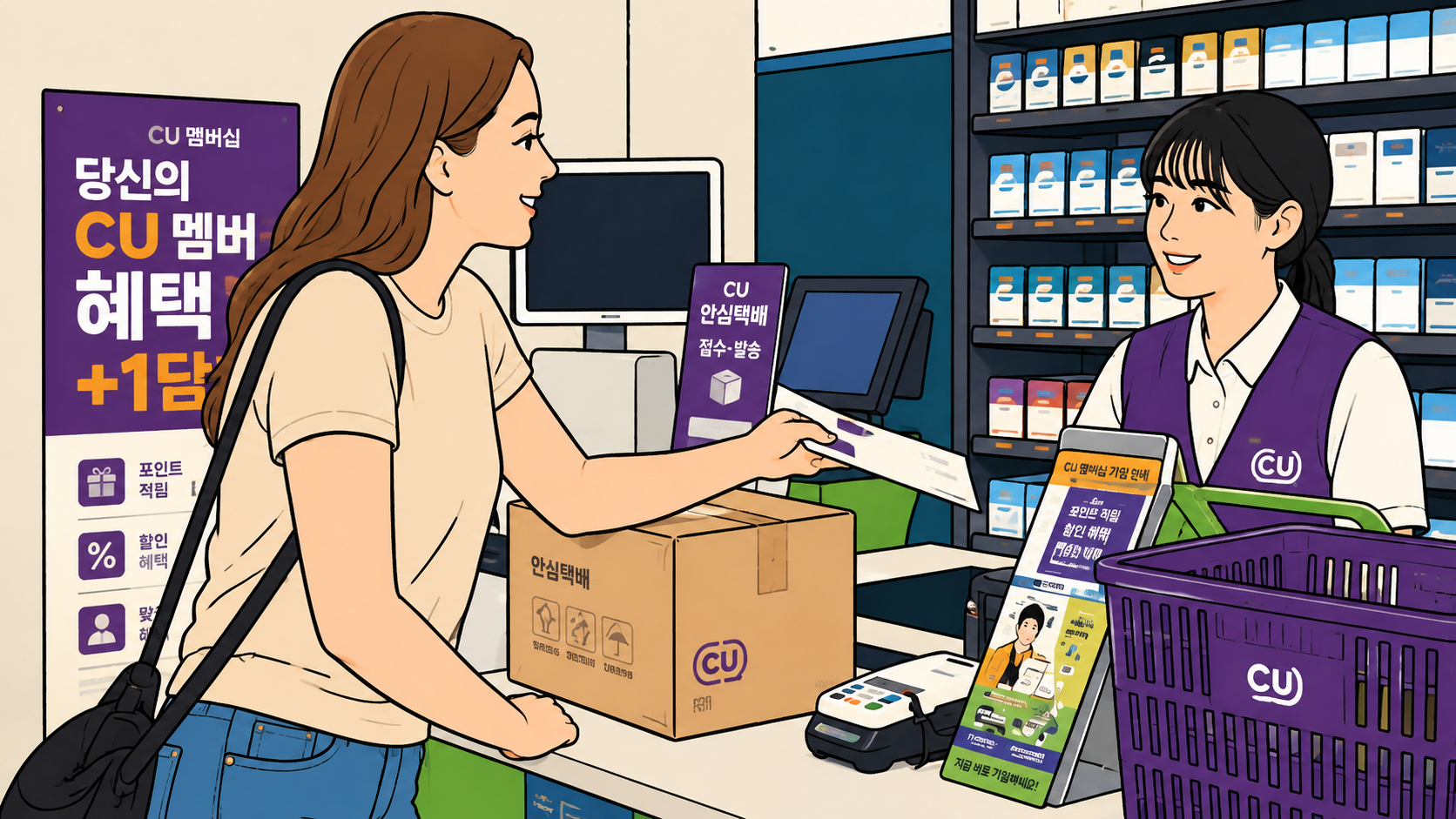
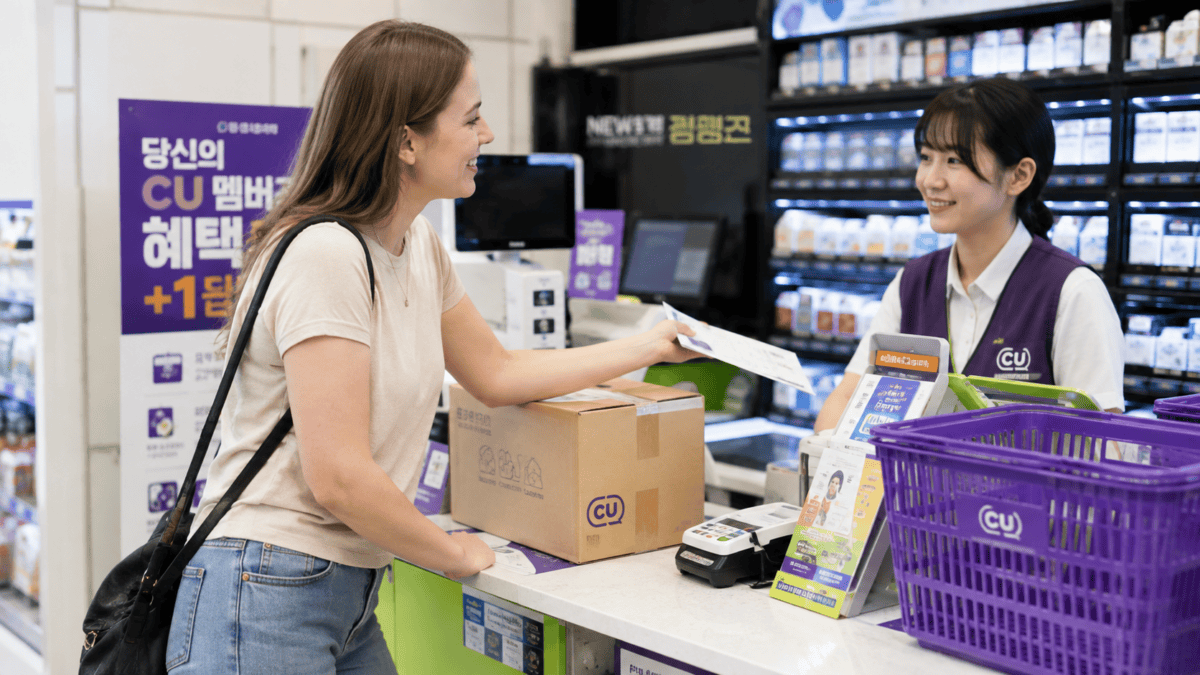
The counter is the one fixed point in the whole room. Everything else in a convenience store Korea moves — customers in and out, deliveries stacked and unstacked, the hot bar refilled and emptied — but the counter stays, and the person behind it stays, and between them they hold the small machine of the neighborhood together without anyone calling it that.
Watch a single clerk work a quiet afternoon and you start to see how much passes through that one narrow strip of counter. A parcel comes in, gets scanned, gets slid onto the shelf behind. A grandmother pays an electricity bill with a paper slip and a handful of cash. A student loads money onto a transit card. A tourist asks for directions in three broken words and a pointing finger, and gets an answer in the same currency. None of it is the store’s official business, exactly, and all of it is.
This is the part the snacks and the bright sign never advertise. The shelves are the reason you walk in. The counter is the reason the block keeps working.
The Machine Behind the Register
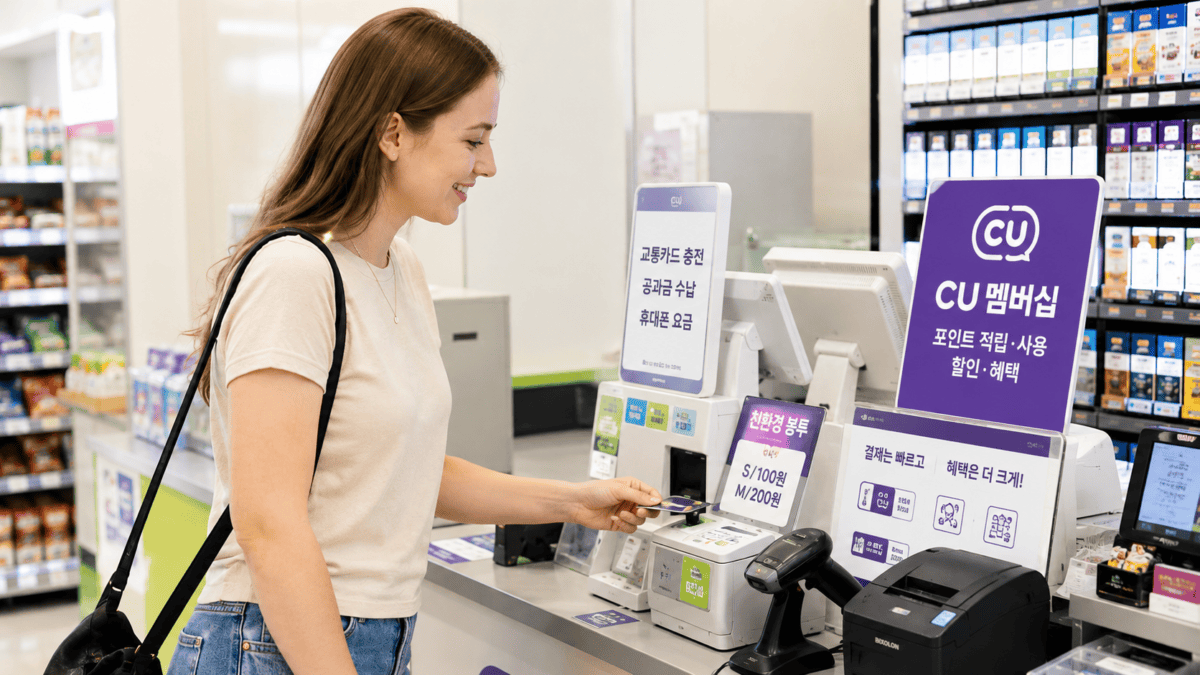
The register itself does more than ring up a drink. It’s a parcel depot, a bill window, a cash machine, a top-up point for half the cards in your wallet. The beep of a barcode is only the most common sound it makes; underneath that run a dozen other small transactions the average customer never thinks about until the one day they need one.
A delivery driver pushes through the door with a stack of boxes and doesn’t slow down — he knows exactly which shelf they go on, has known for years, and the clerk barely looks up. Someone comes to collect a package they had shipped here instead of home, because home is empty all day and the store never is. The counter absorbs all of it without ceremony. The line doesn’t even lengthen much; the transactions are quick, practiced, folded into the rhythm of the register like they belong there.
There’s a specific choreography to a busy counter. The clerk’s hands move without hesitation — scan, bag, make change, slide the receipt across, already looking at the next person before the last one has turned to go. The card reader chimes its two flat notes. The register drawer knocks open and knocks shut. A plastic bag snaps open with a flick of the wrist. It’s the sound of a small system running exactly as designed, and it runs the same in a convenience store Korea built downtown as in one at the edge of a town three hours out.
None of this speed is rushed, exactly. It’s just worn smooth, the way a path across a lawn gets worn by the same feet crossing it a thousand times. The clerk has made this change and slid that receipt so many times the motion has left the realm of thought entirely. You feel it as a kind of ease when you step up to pay — no fumbling, no waiting, the transaction closing almost before you’ve registered it opening, and you back out on the street already moving on to the next thing.
The Clerk Who Sees Everyone
Stand in a neighborhood store long enough and you realize the clerk sees more of the block than almost anyone.
They know the old man who comes in every morning for the same newspaper and the same cigarettes, the one who lingers a minute because there’s nowhere else he has to be. They know the night-shift worker who buys a single beer at seven in the morning on the way home, not the way in. They know which student is close to broke by what they stop buying. None of this gets spoken aloud. It just registers, quietly, the way weather registers — a person clocked, filed, recognized on the next visit without a word.
The recognition runs one layer deep and no deeper, and that’s exactly the arrangement everyone wants. The clerk knows your face, not your life. You can walk in looking like the worst version of yourself and no one asks. You can come in three times in one night and nobody counts. The relationship is real but weightless — a nod, a practiced hello, a receipt slid across the counter — and it asks nothing of you beyond the coins in your hand.
It is the lightest possible version of being seen. No one is keeping a record, no one will bring it up later, no one expects anything of the recognition beyond the moment it happens in. And yet it is not nothing — there is a small warmth in being a familiar face somewhere, even a place that sells you nothing but a drink and a nod.
This is a kind of intimacy most cities have quietly lost and Korea keeps by accident, built into the layout of every block. The store is the one place you can be known and anonymous at the same time. The clerk holds the door open on both, and most people never notice they’re standing in the gap between.
The Errands That End Up Here

Ask anyone what they actually use the store for and the snacks come somewhere down the list.
You come to pay a bill you forgot until the notice arrived. You come to pull cash out at an hour the banks gave up on decades ago. You come to send a package, print a document, charge a dead phone enough to get home, buy an umbrella you’ll lose by tomorrow, find a bathroom, ask a stranger in a uniform where a street is.
The store has quietly become the answer to a hundred small problems that have nothing to do with food, and it never once announced the expansion. It just kept adding, year by year, until a convenience store Korea depends on could run half a life’s logistics from one counter.
There’s something in the way it absorbs these errands without comment. A machine hums in the corner for bill payments. A screen by the register handles transit cards and event tickets. The clerk hands you a pen for the form without being asked, already reaching for it as you open your mouth. The whole place is arranged around the assumption that you’ll need something it doesn’t sell, and that it will have quietly prepared for that too.
The errands have a texture you stop noticing after a while: the smooth plastic of the counter under your forearm as you fill out a slip, the faint warmth of a receipt fresh off the printer, the small weight of a parcel handed over both hands. A minute of contact, no more, and then it’s done. And then you’re back on the street with the errand finished, faster than any office would have managed it, the small friction of the day smoothed out by a room you were only ever half paying attention to.
What a Convenience Store Korea Keeps
Late or early, empty or full, the counter holds its position. The clerk changes with the shift, the parcels change with the day, the faces cycle through in their slow uneven trickle — but the arrangement itself stays, the same fixed point the whole block keeps returning to, the way certain constants hold a life together without ever being thanked for it.
You’ll use one tomorrow without thinking about any of this. You’ll pay something, collect something, ask something, and be back outside in under two minutes, the transaction already gone from your mind. Behind you the counter will keep doing what it does — scanning, chiming, sliding receipts across the worn plastic, holding the neighborhood’s small machinery together for the next person who walks in needing something the shelves don’t sell. It asks nothing of you but the coins in your hand, and gives back a little more than it ever charges for.
This post was planned and edited by a human, with AI assistance.