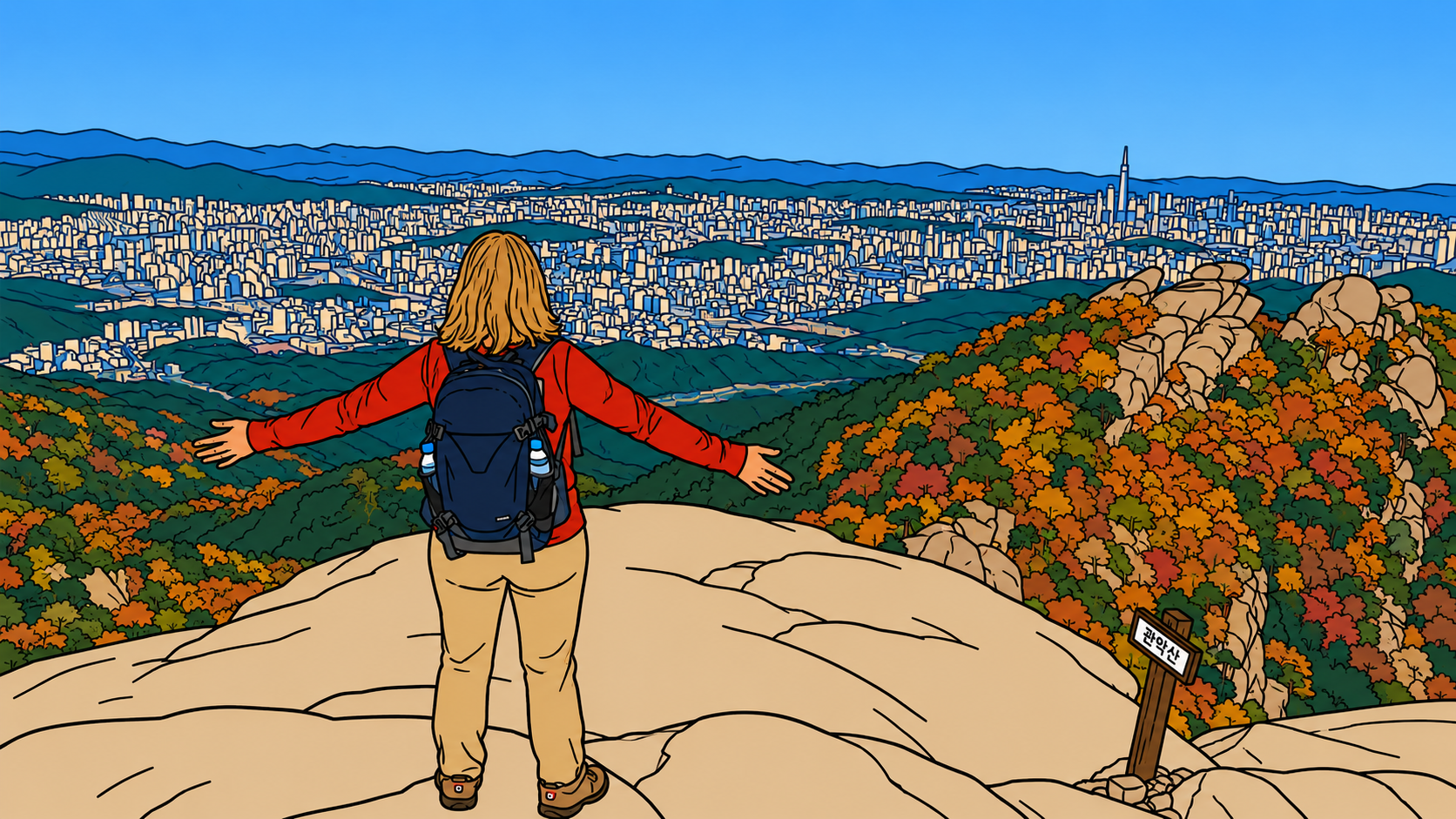
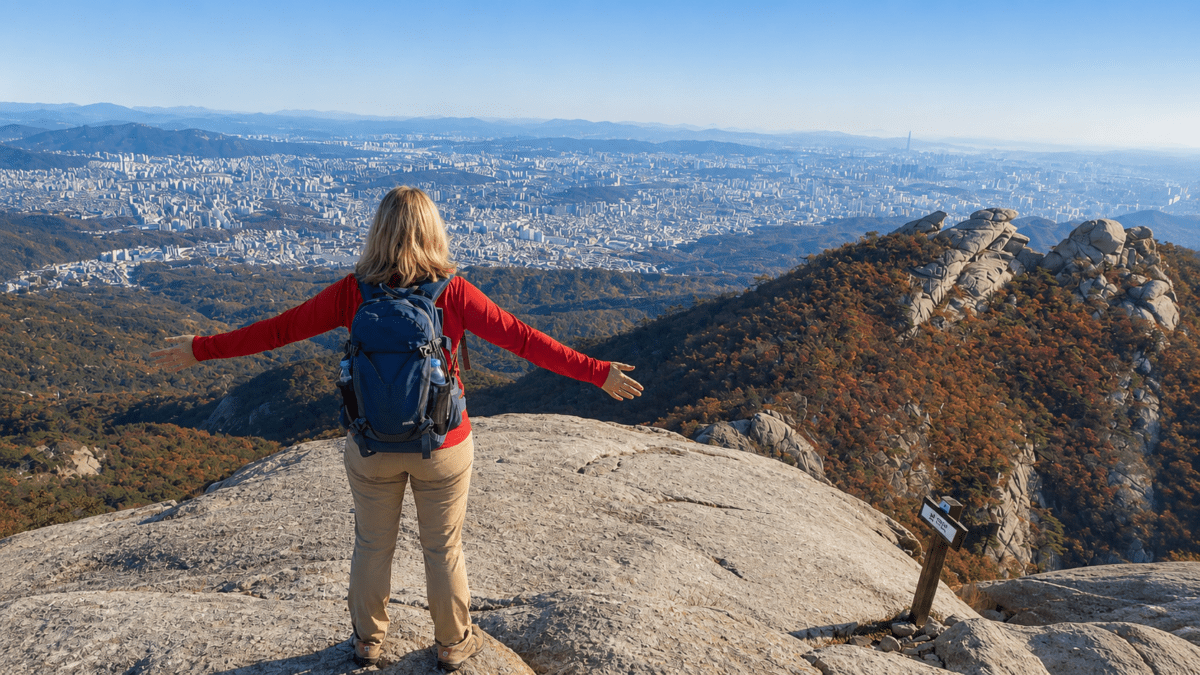
Three mountains. One river. A city of ten million people that has been sitting inside the same geography for six hundred years. This is what the mountains in Seoul actually are — the structure that was read before it was built.
From Baegundae, the whole basin opens. From Bugaksan, the palace axis runs south toward the gate. From Yeonjudae, the city that grew after the dynasty spreads without edge. Three different elevations, three different angles, the same structure underneath all of them.
The people who chose this site in 1394 were not making an aesthetic decision. They were reading a geography that already had a logic, and building inside it. That logic has not changed. The mountains are where they were. The river runs where it ran. The city has expanded in every direction, but the frame it sits inside has not moved.
Foreign hikers climbing these mountains in 2026 are walking inside a decision that was made six hundred years ago. Most of them do not know this. The mountain does not explain it. It just holds the same position it has always held, and lets the view do the work.
Why This Geography Was Chosen
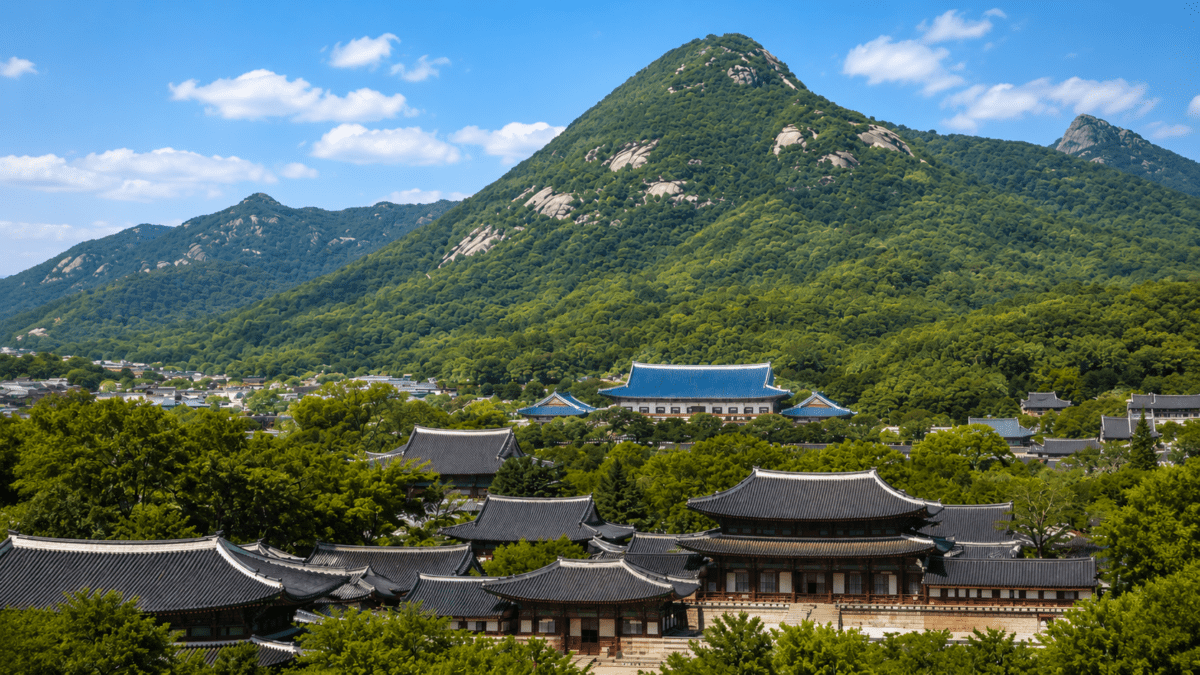
The founder of the Joseon dynasty moved the capital to Hanyang — today’s Seoul — in 1394. The site was selected according to pungsu-jiri (풍수지리: pung-su-ji-ri, the Korean system of reading land and energy), a framework for understanding how geography shapes the conditions of human life.
The criteria were not aesthetic. A mountain at the back for protection. Mountains on the left and right as flanking support. An open prospect to the south. Water in front. Each requirement answered a practical question about how a settlement survives — where the cold wind comes from, where the sun reaches in winter, where floodwater goes when the river rises. Bugaksan provided the back. Naksan and Inwangsan the flanks. Namsan the southern anchor. The Han River the water.
It was a reading of how wind moves through terrain, where water collects, which directions leave a settlement exposed and which provide natural cover. The same analysis that a military strategist would apply. The same logic that determines why certain cities survive for centuries and others do not. It has a name in Korean philosophy.
Seoul has survived for six centuries. It is now one of the largest cities on earth. The geography chosen in 1394 is still the geography the city sits inside.
The Geography That Was Read, Not Chosen
The founder of Joseon didn’t pick this site because it looked right. He picked it because someone read it.
The mountain at the back holds what would otherwise shift. The mountains on the flanks maintain the lines that define inside from outside. The southern anchor keeps the system from becoming static. The river through the center connects what the mountains separate. The city expanding outward in every direction is what happens when the conditions underneath support it — growth follows its own logic when the frame is right.
Each position in this arrangement is doing specific work. The mountain at the back is not decoration. It is the reason the capital did not fall every time the north was threatened. The ridge that carries the fortress wall is not a scenic walkway. It is the line that told the city where it ended. The southern mountain is not a hiking destination. It is the force that kept the system from collapsing inward. The river is not an amenity. It is the connection that made trade, supply, and expansion possible.
Remove any one element and the arrangement changes. This is not a metaphor applied after the fact. The Joseon court that chose this site understood the mountains as a working system, not a backdrop. Each peak had a function. Each function was readable before the first stone of the first palace was laid.
The reading came first. The city followed.
What foreign hikers feel standing on these summits — the sense that the city below was placed here deliberately, that the geography has an intention — is not imagination. It is a correct reading of a structure that was designed to be felt before it was understood. The mountains have not moved. The intention is still in them. It has been there for six centuries, waiting for anyone who climbs high enough to see it.
What the Summits Have in Common
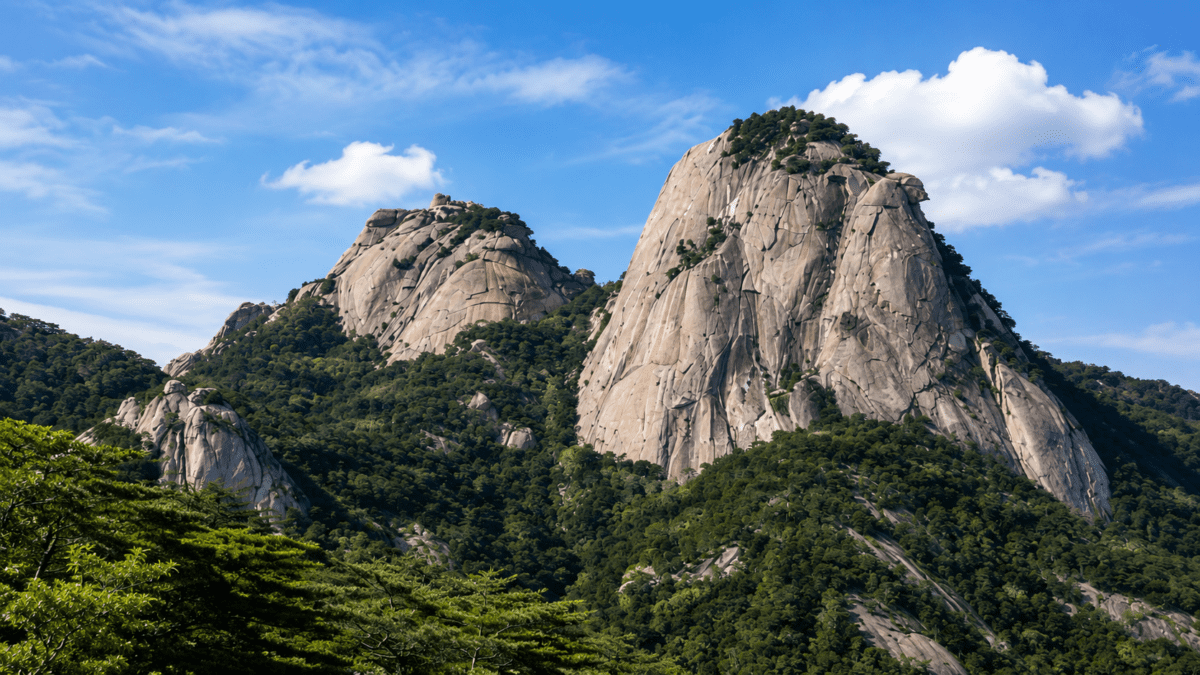
The mountains in Seoul each carry a different reading of the same city.
Baegundae, Bugaksan, Yeonjudae. Three different experiences of the same city.
Baegundae demands the most physically. The granite slabs, the steel cables, the final approach that cannot be rushed. What it returns is the widest view — the entire basin, the river, the full scale of what was built here. The mountain that guards the north shows you everything it guards.
Bugaksan asks for attention rather than effort. The wall, the palace axis, the silence above the ridge. What it returns is structure — the city as a system of relationships between mountain and palace and gate and city, all of it readable from a single ridgeline that spent decades closed and opened to find itself intact.
Gwanaksan asks for nothing in particular. It receives whoever shows up and runs them through the same ascent it runs everyone through. What it returns is belonging — the sensation of moving through a space that has absorbed the effort of millions of people over centuries, and that makes room for one more without adjustment.
Three summits. Three returns. The same city from three angles, each one true.
The City That Built Itself to Be Climbed
Seoul did not become a hiking city by accident.
The mountains were here before the city. The city was built around them. The trails that foreign hikers now access through subway exits and rental centers at trailheads are extensions of paths that have been worn into these mountains by centuries of use — by soldiers maintaining fortress walls, by monks ascending to temples, by residents for whom the mountain was never separate from the week.
The Seoul Hiking Tourism Centers at Bukhansan, Bugaksan, and Gwanaksan are run by the city. At each trailhead, hikers can rent hiking boots, trekking poles, backpacks, and cold weather gear including crampons for winter conditions. Staff provide trail guidance in multiple languages. The centers operate year-round, opening early enough to catch the hikers who arrive before the city wakes. Gear is cleaned and maintained between uses. The service is priced to remove cost as a barrier, not to generate revenue.
The logic behind this is the same logic behind the mountains in Seoul themselves. The city has understood that the peaks inside its boundaries are not amenities. They are infrastructure. The hiking centers are how a city that has maintained this relationship with its mountains for six centuries makes room for the rest of the world to join in.
What gets rented at the counter is gear. What the mountain provides cannot be rented. It has been accumulating since before the city had a name, and it is available to anyone who shows up at the trailhead and starts walking up.
The Same Structure, Still Running
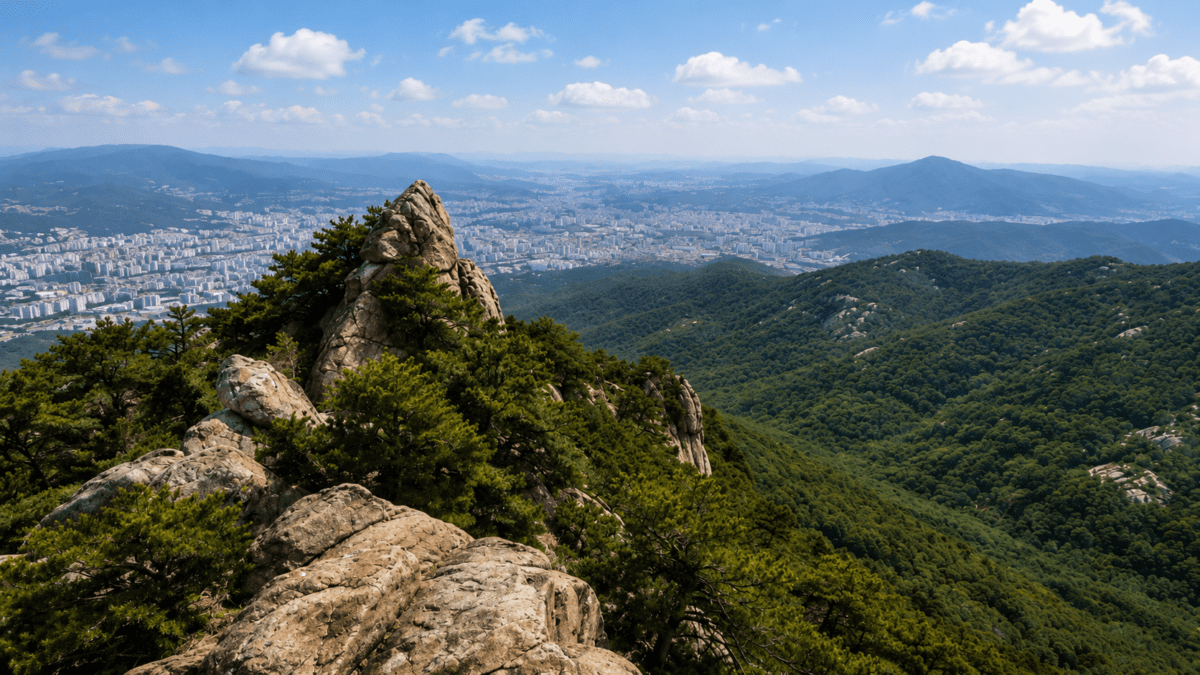
Stand on any of the three summits and look down.
The bowl is still there. The river still runs through the center. The mountains still hold their positions — north, south, east, west — around a city that has grown into one of the densest human settlements on earth without changing the frame it sits inside.
Six hundred years of history, readable from a granite ridge on a Saturday morning. A decision made in 1394, still determining the view.
The foreign hikers arriving at Seoul’s trailheads are not discovering something new. They are finding something that was here all along, waiting for more people to show up and walk inside it.
Six hundred years ago, someone read this land. The city is their answer.
The mountains have been waiting.
They are not in a hurry.
Content in this post was created with AI assistance.