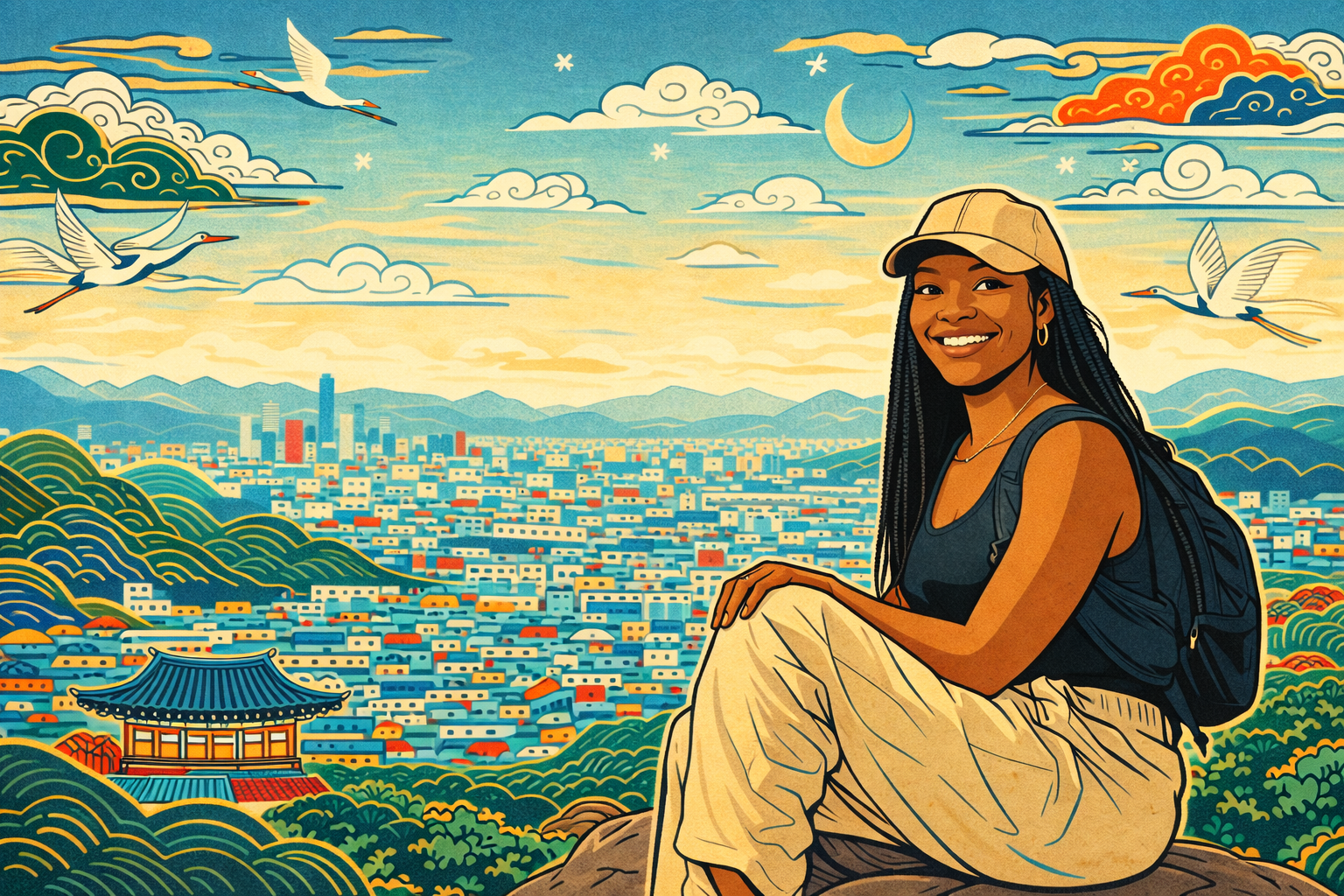
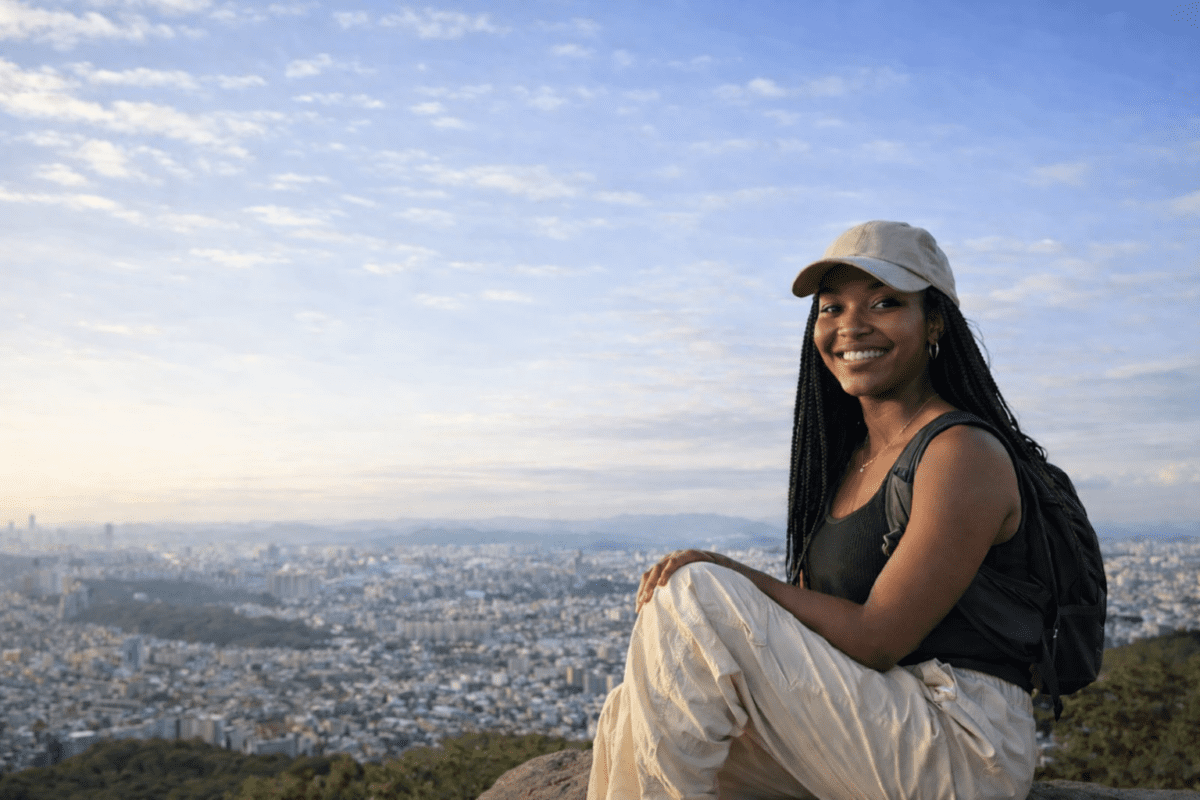
Gwanaksan hiking starts in the south of Seoul. It is not the tallest mountain in the city. It is not the most historically significant. It does not have a fortress wall or a palace at its foot.
What it has is people.
On any given morning, before the city fully wakes, the trailheads at Gwanaksan are already moving. University students from Seoul National University, whose campus sits at the mountain’s base. Residents from the surrounding districts who have been climbing this mountain for decades. Families with children who have never hiked before and seniors who have hiked every weekend for thirty years. The mountain does not sort them. It takes everyone and runs them up the same ridge.
Foreign hikers who come here expecting the grandeur of Bukhansan hiking or the concentrated history of the Bugaksan trail find something they did not know they were looking for. Not a monument. A rhythm.
The Mountain at the Base of a University
Seoul National University sits at the foot of Gwanaksan. This is not incidental.
The relationship between the campus and the mountain has been running for decades. Students who arrive in March for their first semester discover within weeks that the mountain is part of the curriculum in the way nothing official ever states. You go up when an exam is over. You go up when something needs thinking through. You go up in a group after the semester ends, with food and someone’s portable speaker, and you stay until the city lights come on below.
The mountain absorbs this without comment. It has been absorbing the energy of people in transition for as long as the university has existed. Students who graduated twenty years ago come back and find the trail exactly as they left it. The mountain held their version of it while they were gone.
Foreign hikers encounter this history as atmosphere. They cannot read the signs that mark significant spots on the trail. They do not know which rest points are traditional gathering places and which are just flat rocks. But they feel the density of use — the worn smoothness of the most-traveled sections, the informal infrastructure of stone seats and cleared ground that accumulates wherever people have been stopping in the same spot for generations.
Yeonjudae: The Summit That Earns Its View
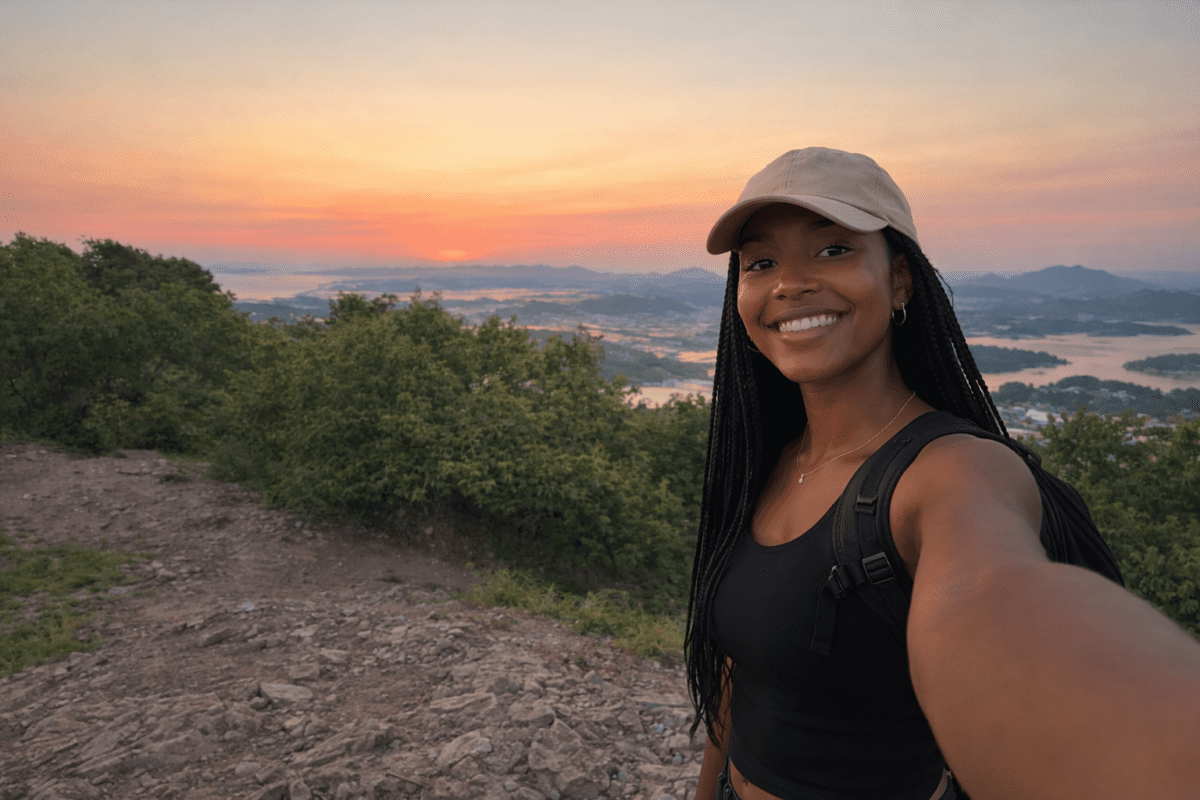
The peak of Gwanaksan hiking is Yeonjudae (연주대: Yeon-ju-dae), 629 meters. The final approach is steep — granite steps, fixed cables, sections where both hands are needed. It asks more than it appears to from below.
At the top, a small hermitage sits at the edge of the rock face. It has been there, in one form or another, for centuries. Below it, southern Seoul opens without obstruction — residential districts, the Han River in the distance, the mountains beyond the city’s edge on clear days.
The view from Yeonjudae is different from Baegundae or Bugaksan. Those summits show the historic center — palaces, the old city axis, the original geography of the capital. Yeonjudae shows the city that grew after. The districts that expanded south of the river, the infrastructure of a modern metropolis, the parts of Seoul that belong to daily life rather than to history.
From here, the city looks less like a plan and more like an accumulation. Something that kept growing because the people in it kept needing more space. The mountain watched that growth from the south the way Bugaksan watched the palace from the north. Without comment. Without moving.
What Happens at the Rest Points
The rest points on Gwanaksan are where the mountain’s social life runs.
Someone is always eating. Not snacking — eating, with the full infrastructure of a meal carried up in a backpack: rice, side dishes in small containers, sometimes a portable stove with something warm on it. The logistics of bringing a proper meal up a mountain and eating it at altitude is treated as normal because it is normal. It has been normal here for a long time.
Food moves between strangers. A piece of fruit handed to someone who has just arrived at the rest point. A cup of something warm passed without being asked for. A mandarin orange, peeled and separated into segments, placed on the stone beside someone who didn’t ask for it and won’t refuse it. The exchange is brief and requires no common language. The person receiving understands what it means. The person giving does not need it acknowledged.
This is not hospitality performed for visitors. It runs the same way whether foreign hikers are present or not, because it has nothing to do with who is watching. It is how the rest point works — as a place where the effort of the climb creates a temporary equality between everyone who has made it this far, and where that equality expresses itself in food.
Foreign hikers who experience this describe it as the moment the mountain stopped being a tourist destination and became something else. Not a cultural experience to be observed. A place they were inside of, on the same terms as everyone else.
The mountain ran this on its own logic long before anyone outside Korea started showing up to climb it.
The Daily Mountain
Gwanaksan hiking does not reserve itself for weekends.
On Tuesday mornings, the lower trails are occupied by residents doing what they do every Tuesday morning. On Thursday evenings, the paths fill with people finishing the workday by going up instead of going home. The mountain integrates into the week the way a park integrates into a neighborhood — as infrastructure, not destination.
There is no version of Gwanaksan that is closed for the season or resting between visits. It runs. The trail does not look different on a Wednesday than it does on a Saturday. The people on it are different — fewer, older on weekdays, more students on weekends — but the mountain itself makes no distinction. It receives whoever shows up and runs them through the same ascent.
This is what foreign hikers are entering when they arrive at Gwanaksan’s trailhead. Not an attraction with visiting hours. A piece of the city’s operating system that is made of granite and pine forest and has been running continuously for longer than anyone currently using it has been alive.
The Seoul Hiking Tourism Center at Gwanaksan rents gear for those who need it. Boots, poles, backpacks. The practical minimum. But what no rental counter provides is the thing that makes Gwanaksan what it is — the accumulated presence of everyone who has climbed it before, which is legible in the trail itself, in the rest points, in the way the mountain has been worn into shape by use.
For anyone trying to understand why a city of ten million people maintains this relationship with its mountains — the framework Seoul was built on runs through the daily as much as the historical.
The Descent Into the Ordinary
Coming down from Yeonjudae, the city reassembles itself below.
The hermitage disappears behind the ridge. The granite gives way to packed earth, then to wider paths, then to the trailhead. Seoul National University’s buildings appear through the trees. Then the street. Then the ordinary noise of a Tuesday in the city.
The mountain releases you back into the week without ceremony.
That is the point of Gwanaksan. Not the summit, not the history, not the view — though all of those are there. The point is the return. The mountain is useful because it gives you back to the city slightly different from how it took you. It does this for everyone. It has been doing it for a long time.
It will be doing it tomorrow.
Next: (Part 5) Seoul mountains five elements: The Chart Beneath Seoul’s Mountains
Seoul mountains five elements shaped Seoul in 1394. The same geography is still legible — from every summit, and in every step of the climb.
Some content in this post was created with AI assistance.