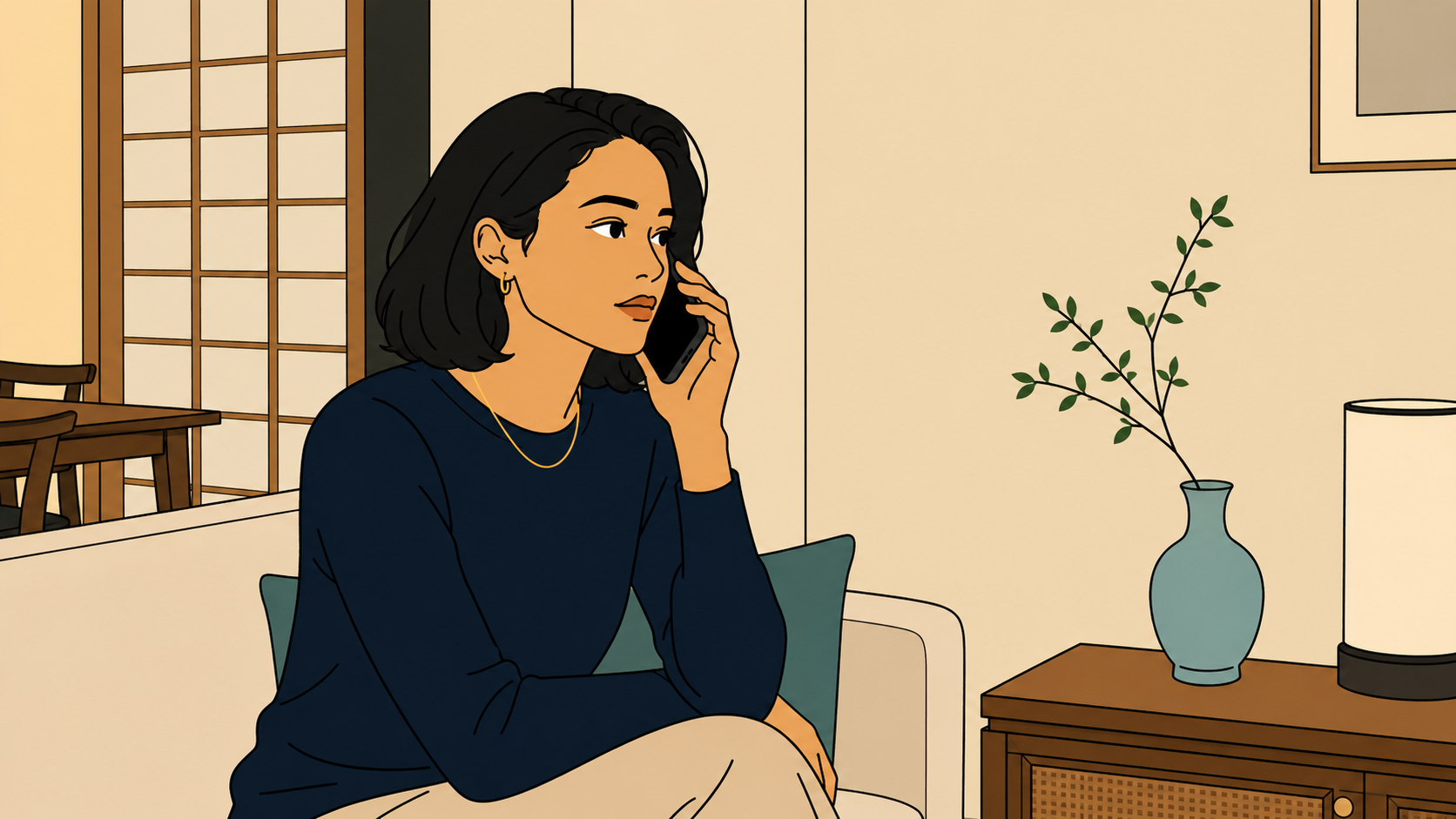

Parental pressure rarely announces itself. It comes in different shapes.
Are you happy? on a good day. Are you being realistic? on a harder one. We just want what’s best for you — which is its own kind of question, disguised as a statement.
You’ve been answering versions of it for years. You know the rhythm. You know which answers land and which ones open something up that takes twenty minutes to close. You’ve learned to move through it efficiently, the way you learn any routine you repeat often enough.
But lately, something has shifted. The question arrives the same way it always has. You answer the same way you always do. And yet, somewhere between the question and your answer, there’s a weight you can’t quite locate.
You’ve been carrying it for a while now. You just haven’t stopped long enough to look at it.
The Question You’ve Been Answering for Years
There’s a version of this question that showed up early.
Not in those exact words — it never is. It came as a look across the dinner table when you said what you wanted to be when you grew up. It came as a pause before that’s great, but have you thought about… It came as the particular tone your parents used when they talked about other people’s children — the ones who were doing something recognizable, something that made sense.
You learned to read it early. What got a nod, what got a redirect. What kind of answer made the conversation move forward and what kind made it stall in a way that was hard to recover from. By the time you were in your twenties, you’d been running this calculation for so long it happened automatically. A question lands. Something in you scans it. You produce the version of an answer that moves things along.
It works. That’s the thing. It actually works.
The call ends on a warm note. Everyone says love you. You hang up feeling like you handled it. And you did. You’ve gotten very good at handling it.
What you haven’t done — what there hasn’t really been space to do — is ask what you’re actually handling. Because the question your parents ask every time you call isn’t really about the job or the relationship or the savings account. Those are the forms it takes. Underneath, it’s always been the same question. And you’ve been answering the surface version for so long, you might have forgotten there’s anything else there.
What the Question Is Actually Asking
It isn’t are you happy — not really. Happiness is too vague to track, too hard to verify. What the question is actually asking is something closer to: are you on a path I can recognize? Are the pieces of your life arranged in a way that makes sense from where I’m standing? Is there a trajectory here — something that points somewhere, something I can describe to people without having to explain too much?
That’s not a cruel question. It comes from the same place most parental concern comes from: a genuine desire to see you land somewhere safe. The problem is that “safe,” for the generation asking, often has a specific shape. A shape that was formed in a different economy, a different set of options, a different understanding of what a life in progress looks like versus a life that’s stalled.
So the question arrives carrying all of that. And you receive it carrying all of yours — the choices you’ve made that haven’t resolved yet, the things you’re building that don’t have a name yet, the version of your life that makes complete sense from the inside and almost no sense when you try to compress it into a two-minute phone call update.
That gap — between what they’re asking and what you’re actually living — is where the weight lives. Not in the question itself. Not in your answer. In the space between the two, where the real conversation isn’t happening. Researchers who study how parents and their adult children can build strong relationships have been tracking this tension for decades.
Parental pressure and guilt tend to arrive together. The guilt isn’t because you’ve done something wrong. It’s because you can feel the gap, and closing it would require explaining something you’re not sure you have the words for yet.
The Version of You That Learned to Manage It

At some point, you stopped reacting and started managing.
It didn’t happen as a decision. It happened as an accumulation — each call teaching you something small about what works and what doesn’t. You learned that certain topics needed to be introduced carefully, or not at all. You learned the difference between sharing something and handing someone a worry they’d carry for weeks. You learned that your parents’ anxiety, once activated, had its own momentum, and that it was easier to not activate it in the first place.
So you built a version of yourself for these calls. Not fake — she knows things the edited version knows. She loves them. She’s glad to hear their voices. But she’s also strategic in ways you don’t fully acknowledge, because acknowledging it would mean sitting with something uncomfortable: that the people who know you best might be working from an outdated picture.
That’s the thing about parental pressure. The guilt doesn’t come from being dishonest. It comes from being selective. From knowing that the version of you on the phone is real, but incomplete. From carrying the gap between what you share and what you don’t — and not being sure whether the gap is protecting them, or protecting yourself, or just something that grew in the silence over years of calls that stayed on the surface.
The managing works. You’ve made peace with it, mostly.
What’s harder to make peace with is the moment, after you hang up, when you notice how tired you are. Not from the call itself. From the version of yourself you had to be for it.
When Parents Expectations and Guilt Arrive Together

You understand all of this. That’s what makes it complicated.
You know the question comes from love. You know your parents are working from a framework that made sense in their time, in their circumstances. You know the gap between what they picture and what you’re actually living isn’t anyone’s fault — it’s just what happens when two people are at different points in their lives, looking at the same thing from different angles.
Knowing all of that doesn’t make the call easier. It doesn’t make the shoulders come down. It doesn’t close the gap or dissolve the weight or make the twenty minutes feel like less work than they are.
That’s the part nobody talks about. The guilt that comes not from doing something wrong but from understanding exactly why the dynamic exists — and not being able to change it anyway. You can see the whole picture and still feel caught in it. Clarity doesn’t equal freedom. Sometimes it just means you can name what you’re carrying without being able to put it down.
There’s a shift that happens in these years — not just in the relationship with your parents, but in who you’re becoming in relation to them. The version of you that built the managed call, and the version that watches herself do it. The version that needed their approval, and the version that has quietly stopped waiting for it. All of them show up on the call. All of them hang up afterward and sit with whatever is left.
Something about this kind of distance has a structure to it — The Switch You Never Saw Coming.
What changes isn’t the question. What changes is what you do with the weight of it.
This post was planned and edited by a human, with AI assistance.