
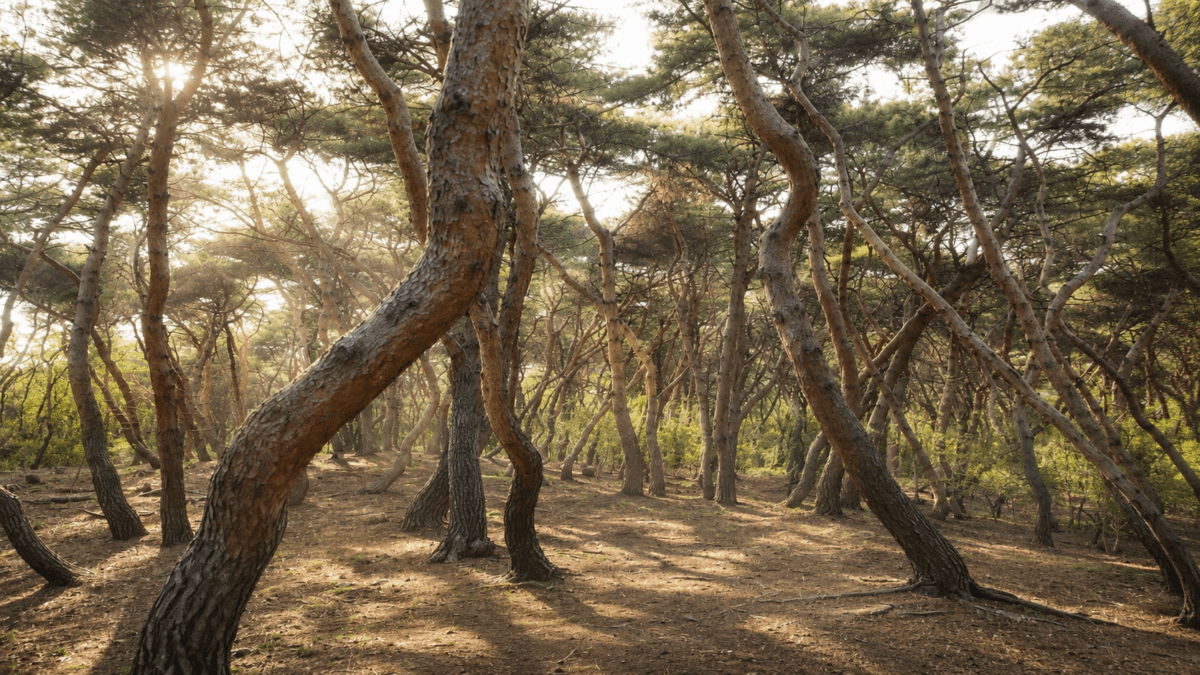
It’s mid-May and something is about to become visible. The fog of April has lifted. The year’s direction — whatever Myo quietly decided and Jin held in suspension — is now close enough to the surface that you can feel its outline, though it has not yet stepped fully into the light.
This shift has a station in K-Saju. Sa (사: sa, late spring fire), the sixth of the twelve earthly branches, is the last station where what summer will reveal can still be refined, adjusted, or withheld.
Jin dissolved the boundaries. Sa is where those boundaries begin to reform — but not yet as summer’s full declaration. This station is the threshold, the moment just before full visibility, the hour when the heat is already present but the glare has not yet arrived. A chart carrying Sa at its center runs on that same threshold logic: preparing what will soon be seen, calibrating how it will be seen, deciding what to keep veiled even as the rest emerges.
What the Snake Hour Meaning in Astrology Actually Records
Sa is the first fire branch in the twelve-station system, the point where the seasonal cycle tips from spring’s transitional earth into summer’s committed expression. The hour is 9 to 11 AM. The month spans early May through early June, bounded by the solar terms Ipha (입하: ip-ha, beginning of summer) and Mangjong (망종: mang-jong, grain in ear). The element is Fire (화: hwa) in its yin expression — contained, directional, precise in where it chooses to appear and where it chooses to remain hidden.
If Jin was the mist that obscured direction, Sa is the first sunlight that burns the mist off but has not yet become the noon sun. The heat is present. The clarity is partial. The chart with Sa at its center is reading the last interval in which preparation can still be treated as preparation rather than performance.
Sa is not personality. It is a structural month in which emergence becomes possible but selective — the person with Sa prominent moves in ways that reveal some things while keeping other things deliberately out of view. This is not deception. It is the accurate response to a station that has not yet committed to full exposure.
What Sa records is a specific kind of threshold — the one that separates what has been prepared from what will be publicly seen. Outlines sharpen. Intentions begin to take recognizable shape. The chart that holds Sa at its center is reading the moment where the year’s material is about to become legible to others, and some portion of the work is deciding which parts to let them read first.
What the Three Hidden Stems Are Calibrating

The real mechanism lives inside Sa’s Jijanggan (지장간: ji-jang-gan, the hidden stems concealed within a branch). Sa carries three hidden stems: Mu (무: mu, yang earth, the mountain), Gyeong (경: gyeong, yang metal, the blade), and Byeong (병: byeong, yang fire, the sun). This jijanggan combines earth’s grounding, metal’s precision, and fire’s emergence — one of the more structurally active configurations in the cycle.
The sequence carries weight. Mu enters first as the residue of Jin’s transitional earth — the mountain that held the fog now providing the ground from which fire can rise. Gyeong settles second, the blade that defines edges, the precision instrument that shapes what emerges. Byeong dominates last and defines the branch — yang fire in its first decisive appearance, the sun beginning to cast clear light but not yet at its peak. By the time Sa is fully active, the chart is running on grounded, edge-defined, rising heat.
Three interactions govern how Sa behaves with the rest of a chart.
SaSinHap (사신합: sa-sin-hap, combination producing water). When Sa and Sin (신: sin, early autumn metal) appear together, the combination produces water — fire’s heat and metal’s edge transforming into something cooler and more reflective. The activation depends on the surrounding chart rather than firing automatically. A chart with this pairing carries an unexpected softening capacity within its threshold energy.
SaYuChuk SamHap (사유축 삼합: sa-yu-chuk sam-hap, three-combination producing metal). When Sa, Yu (유: yu, autumn metal), and Chuk (축: chuk, frozen earth) appear together, the three branches combine into a metal structure. Sa is the starting point of this three-harmony — the initiating spark from which autumn’s precision eventually crystallizes. A chart with this configuration carries metal output that is traceable back to a spring-stage beginning, suggesting long-arc projects where the early form already contains the eventual shape.
SaHaeChung (사해충: sa-hae-chung, fire-water rupture). Sa and Hae (해: hae, late winter water) sit directly across the cycle — the rising spring fire versus the retreating winter water. When they meet, the emergent fire gets doused before it has finished rising, or the stored water gets prematurely boiled off. In practice, what was supposed to emerge in May gets challenged by residual winter material that refuses to complete its retreat — visibility contested from beneath.
InSaHyeong (인사형: in-sa-hyeong, friction within the fire-wood sequence). In (인: in, first yang wood) and Sa share a structural relationship through the fire production cycle — wood feeds fire — but when they appear together as a friction pairing, the feeding can become unstable. The tiger hour’s first movement and the snake hour’s first visibility grind against each other, producing the lived pattern of “what was initiated and what is emerging not quite matching.” The intensity of this friction depends on the rest of the chart.
These three interactions determine how the threshold actually opens — and whether it opens onto the right room. The snake hour meaning in astrology does not rest in a single event — it rests in how Sa calibrates what becomes visible, and how a chart protects or exposes the calibration determines what the reading says.
Three Ways the Emergence Misaligns
Sa has three characteristic failure modes, and they pull in opposite directions.
Premature full exposure. The chart has Sa prominent but lacks the metal-edge function that would have kept some portion of the work strategically veiled. Byeong rises without Gyeong’s shaping, and everything prepared during Myo and Jin gets shown at once, before the material has finished calibrating itself for public view. Externally this looks like someone who launches fully before the final ten percent of refinement — not from carelessness but from a structural absence of the element that would have held some of the work back. The emergence is real. What’s missing is the editorial blade that would have decided what to reveal first.
Withheld threshold. The opposite failure. A heavy earth or water configuration suppresses Byeong’s rise, and the preparation never completes its transition into visibility. The person caught here continues preparing long after the preparation should have turned into first emergence — not from perfectionism but from a structural inability to cross the threshold the branch names. Sa is asking for partial visibility. The chart is giving none.
Misaligned reveal. The subtlest failure. SaHaeChung or SaInHyeong activates, and the material that emerges is not the material that was being prepared. The year’s work and the year’s visibility come apart. In chart terms, this is the pattern where what finally becomes seen is something adjacent to the actual preparation — often a version of the project that looks right externally but has lost its connection to what was being built underneath. The threshold opened, but not onto the room that was being furnished.
Threshold work is not the same as rehearsal. Sa reads each of these failures as structural rather than as flaw of character. Premature full exposure asks for a protective edge — something that keeps a portion of the work unshown during the emergence. Withheld threshold asks for permission to appear partial before appearing complete. Misaligned reveal asks for tracing — identifying which interaction is pulling the emergence away from the preparation and whether that pull can be redirected before summer arrives.
Sa’s Position in the Four Pillars
The snake hour meaning in astrology lands differently depending on where Sa sits in the chart’s four positions — Yeonji (연지: yeon-ji, birth year position), Wolji (월지: wol-ji, birth month position), Ilji (일지: il-ji, birth day position), Siji (시지: si-ji, birth hour position). Each position changes what the threshold is actually framing.
Yeonji: Sa at the year level often correlates with a generational pattern of partial emergence — family lines or cohorts that developed traditions of selective visibility, where what gets shown publicly and what remains within the family were clearly distinguished. People with Sa at the year level often carry inherited instincts for when to appear and when to remain behind the threshold.
Wolji: This is the structurally heaviest position for Sa. Month branch sets the chart’s elemental center of gravity, and Sa as month places the whole chart in late-spring fire logic. The person tends to operate on threshold rhythm by default — always calibrating emergence, always aware of what is being seen versus what remains prepared. This is also the position where SaHaeChung carries the most weight when a Hae year arrives.
Ilji: Sa at the day level describes the person’s immediate environment and closest relationship. The partner, the home, the daily body — all run threshold logic. Skilled at selective visibility within intimacy, preserving some internal territory even inside close relationships. Relationships with a Sa day branch often sustain themselves by maintaining a small veiled area rather than achieving total transparency.
Siji: Sa at the hour level describes late-life output and the way one’s final chapter handles legacy. Careers that end with controlled partial reveals — work shared selectively, archives curated rather than fully opened, reputations shaped by what was deliberately kept hidden — often correspond to Sa at this position.
Daewoon (대운: dae-woon, the ten-year major cycle) can also land on Sa. When it does, the ten years tend to run on threshold logic regardless of what the natal chart prefers. This is the decade where the snake hour meaning may override personality, preference, and plan. A person who has spent the previous decade in Jin’s fog will find themselves in a ten-year window where partial visibility becomes the operating mode — not full emergence, not continued concealment, but a calibrated middle that the chart tends to protect.
The Honest Limit of a Sa Reading
Sa gives a relatively clear reading of three things: when the threshold window is structurally active, which of the three hidden stems is currently weighted most heavily, and whether SaHaeChung or SaInHyeong is approaching within the next two years. What Jin held in the fog is now rising to the surface, and Sa is the last station at which calibration can still be done before summer’s full exposure.
What the data does not resolve is how much of the preparation should actually cross the threshold. This is a judgment that sits partly inside the chart and partly outside it. I can read that you are inside a Sa window. I can read which stem is dominant. I cannot read how much revealing your specific situation can sustain, because that depends on variables the chart does not fully contain — who is watching, what has been promised, what the environment is ready to receive.
Sa requires more caution in reading than Chuk or In, precisely because the branch is structurally about partial disclosure. The data itself is partial by design — that is the honest limit, not a gap to be filled with false certainty.
The strategic response to Sa is narrower than at most stations. Do not reveal everything at once. Do not treat the threshold as the final performance. Identify which ten percent of the work still needs shaping before it becomes visible, and protect that ten percent from pressure to accelerate. If SaHaeChung is on the horizon, begin distinguishing now between the material that is genuinely ready for emergence and the material that still carries residue from the previous winter’s holding pattern — because the clash will force that distinction whether you prepare for it or not.
The threshold is not the arrival. Sa names the moment before, not the moment itself.
Content in this post was created with AI assistance.