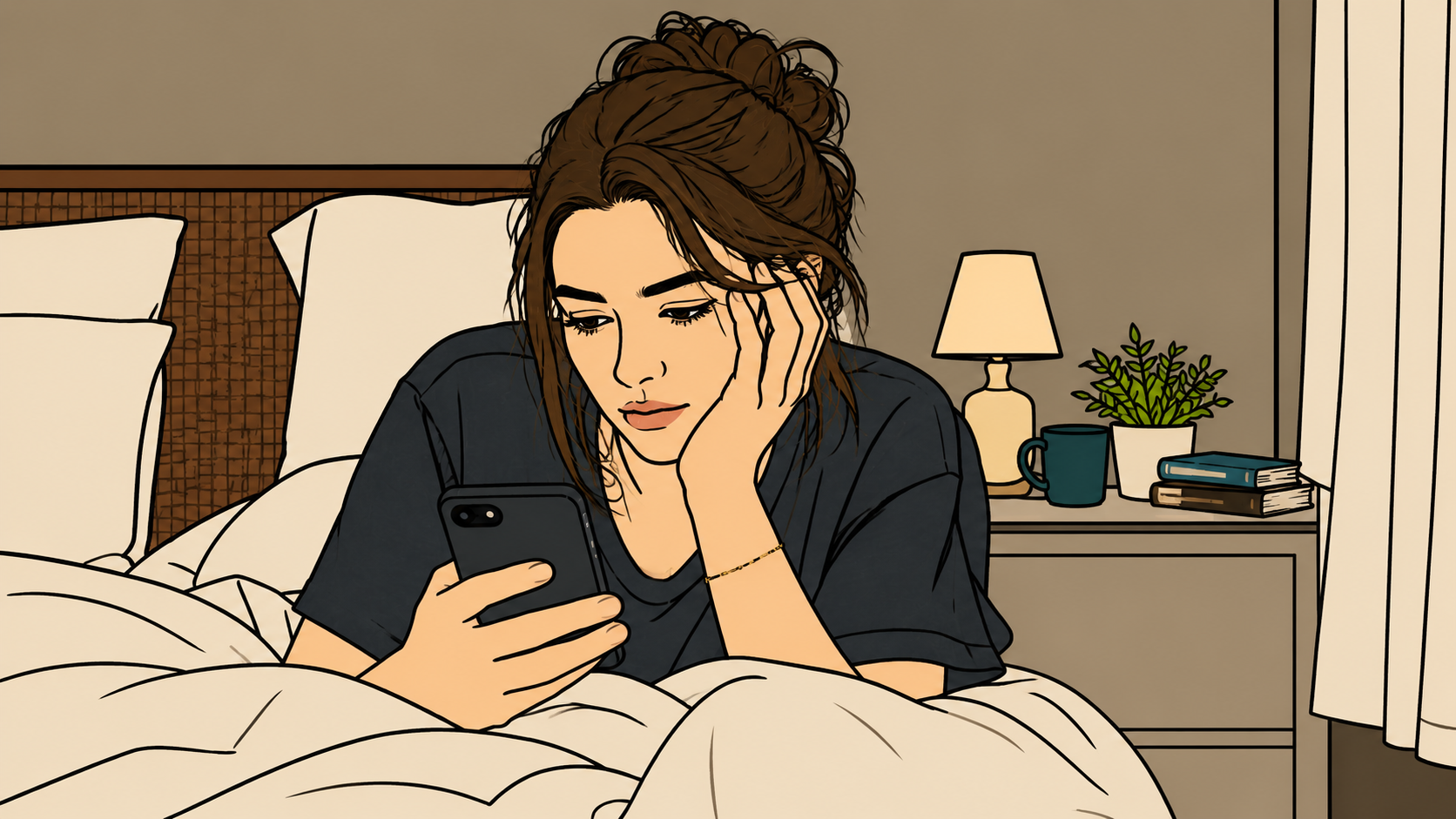

You reach toward them. Mid-reach, you pull back. You text them at midnight saying you need them. By morning, you’ve blocked their number. You make plans with conviction, then cancel with equal conviction. You’re not indecisive. You’re not playing games. You’re terrified of both closeness and abandonment in equal measure, and your nervous system can’t reconcile the contradiction.
Disorganized attachment style is a pattern where the nervous system associates both closeness and safety with threat.
This is what disorganized attachment feels like from the inside. The worst of both patterns. The person who learned that other people are both the solution and the threat.
The Pattern That Teaches You to Oscillate

Imagine an infant with a caregiver who is sometimes loving and sometimes frightening. Not abusive in the traditional sense. Just unpredictable in a way that creates genuine terror. The caregiver might be warm one moment, then suddenly harsh. Comforting one day, rejecting the next. The infant reaches for comfort and sometimes gets it, sometimes gets coldness, sometimes gets anger.
The infant’s nervous system faces an impossible problem: approach or avoid? Both. Neither. Both at once.
The infant can’t develop a coherent strategy because there is no consistent pattern to learn. With a neglectful caregiver, the infant learns: don’t ask. With a dismissive caregiver, the infant learns: be small. But with an inconsistent caregiver, the infant learns something worse. Sometimes asking works. Sometimes it doesn’t. Sometimes being small protects you. Sometimes it doesn’t. The world is fundamentally unpredictable. People are fundamentally dangerous. And yet they’re the only source of safety.
The infant faces a neurobiological contradiction that can’t be resolved. The caregiver is simultaneously the source of fear and the source of comfort. The approach system — reach for connection — activates. But the fear system also activates — this person is dangerous. Both systems fire at the same time. The infant can’t choose between fight, flight, or freeze because all three are necessary. So the infant does all of them, cycling through them, never settling.
So the infant learns to oscillate. Reach, retreat. Trust, doubt. Hope, despair. The nervous system never settles into a single protective strategy because no single strategy has ever reliably worked.
The System That Learned Contradiction
A person with disorganized attachment carries a chronically activated nervous system — always scanning, always deciding: move closer or pull away.
They may pursue someone intensely, then suddenly withdraw. Not because their feelings changed, but because closeness triggers fear. And when distance is created, another fear follows: abandonment. So they return again.
This is not a conscious choice. It is a nervous system running a pattern that was never meant to resolve.
What makes this pattern particularly painful is that the disorganized person can see it happening. They can feel themselves oscillating. They can recognize the pattern. And yet they cannot stop it. The nervous system is operating at a level below conscious control. The contradiction is baked into the cellular memory. The person is trapped watching themselves behave in ways that sabotage their own relationships.
This oscillation is exhausting for both people. They leave the conversation open for three hours, then panic when no reply comes.
Unlike the anxious person, who can tolerate reassurance, or the avoidant person, who can tolerate distance, the disorganized person cannot tolerate either for long. Reassurance feels like a trap. They receive the reassurance and then panic — this person is too close, I’m too exposed. Distance feels like abandonment. They create distance and then panic — they’re going to leave, I should have been more available.
There is no stable position. There is only oscillation.
What Disorganized Attachment Looks Like From the Outside

They might find themselves in a push-pull cycle that is utterly bewildering to observers. One moment they’re texting “I can’t live without you,” the next they’re saying “I don’t care if you leave.” The shift isn’t calculated. It’s neurological. The nervous system switches rapidly between the two poles of their original learning — safety requires both connection and distance, and neither is ever enough.
They might isolate themselves for days, then desperately reach out, then immediately regret reaching out. This cycle can repeat multiple times in a single day. The person feels as if they’re living with a saboteur inside them — someone who wants connection but is terrified of it, someone who seems determined to destroy the very relationships they desperately need.
A person with disorganized attachment style might appear chaotic to observers. They might be intensely involved in a relationship, then suddenly withdraw entirely. They might demand constant reassurance and then reject it when given. They might say “I love you” with intensity and then act like they don’t care if the other person stays or leaves.
They might have a history of relationships that begin passionately and end explosively. Not because they’re unstable, but because they’re trapped in a pattern where closeness creates panic and distance creates desperation. Eventually, the other person exhausts themselves trying to find the middle ground that doesn’t exist.
They might struggle with anger that seems disproportionate. A small rejection triggers a massive response. A minor boundary triggers panic. This isn’t because they’re overreacting. It’s because every rejection, no matter how small, reactivates the original pattern. This person abandoning me is proof that what I learned as an infant is true. People are dangerous. People leave. They might also struggle with guilt that accompanies the anger. They feel themselves exploding and hate themselves for it. But the guilt doesn’t stop the pattern — it just adds another layer of pain.
They might have difficulty with trust that goes deeper than other insecure attachment styles. An anxious person can learn to trust if reassurance is consistent. An avoidant person can learn to tolerate closeness if pressure is removed. But a disorganized person has learned that even consistency can’t be trusted. That even the safest moment can become dangerous. So they remain hypervigilant.
They might be attracted to relationships where chaos is present — another person with disorganized attachment, or someone with avoidant attachment who provides inconsistency. This feels familiar. This feels like home. Even though it’s painfully familiar.
Why This Is the Hardest Pattern to Navigate
The disorganized attachment style person faces a challenge that the other patterns don’t. They can’t be fixed by a single intervention. Consistency alone won’t help if the person doesn’t believe consistency is possible. Distance alone won’t help if the person interprets distance as abandonment. Reassurance alone won’t help if reassurance triggers panic about exposure.
The work for someone with disorganized attachment is to gradually learn that the contradiction might be resolvable. That someone can be both close and safe. That another person can want them and not hurt them. That they can be vulnerable and not destroyed. This is infinitely harder work because every cell in their nervous system is screaming: this is a trap. The nervous system has learned that safety and closeness are mutually exclusive. Healing means learning that they can coexist. It means rewiring decades of cellular memory that says: trust leads to pain.
The person with disorganized attachment needs something that is both rare and difficult: a partner who can tolerate the oscillation without becoming rigid or rejecting. Someone who can say “I see you swinging between these two fears, and I’m going to stay steady while you learn that there’s a third option — a place where closeness and safety coexist.”
It is possible to heal from disorganized attachment. But it requires patience — and the willingness to notice the pattern without immediately reacting to it.
The oscillation is not manipulation. It is a nervous system trying to solve an impossible problem with the only tools it has.
Healing begins the moment the swing is seen, even if it cannot yet be stopped.
Next: (Part 5) You Are Not One Style
Attachment styles aren’t fixed traits—they’re learned patterns your nervous system created. Understanding them is the freedom to change how you relate.
Some content in this post was created with AI assistance.