

A sound.
The sound of an expensive piano, the kind that sat in wealthy Seoul homes before the war. The sound of a young man’s hands pressing the keys, learning discipline, learning refinement. The sound of everything a colonized nation told itself mattered: culture, education, the ability to play Chopin in a language you didn’t speak.
Then the sound stops.
What comes next is not music. It is the sound of that piano breaking. Of hands that learned to obey the rules of composition deciding, instead, to break them. Of a young artist named Nam June Paik realizing that everything he’d been taught to make sound beautiful was exactly what needed to be destroyed.
This is where his story begins. Not with creation, but with breaking.
A Wealthy House in Seoul
Nam June Paik was born into a world of certainty. His family had money. They had position. They had the kind of stability that allowed a child to study piano with the best teachers, to imagine a future in classical music, to become the person that his class told him to become.
Seoul in the 1930s was a city of contradiction. Under Japanese occupation, it was simultaneously erasing itself and trying to remember. The wealthy Korean families—like Paik’s—maintained cultural and educational traditions despite the pressures of colonial rule: classical music, Japanese language lessons, the careful performance of refinement in a world that was being systematically colonized. For many wealthy Korean families under colonial rule, studying Western classical music became associated with education, refinement, and cultural aspiration. To speak Korean at home was a way of keeping something alive.
Nam June Paik learned piano. His teacher taught him discipline. His hands moved across the keys with precision, learning the rules of composition, the hierarchy of notes, the way a melody should resolve. There was beauty in this—the kind of beauty that made sense: order, structure, clarity. The beauty of a world that understood its rules and kept them sacred.
The piano itself was a sign of status. It sat in the living room like a monument—polished wood, ivory keys, the weight of European culture translated into an object. In colonial Korea, owning a piano often symbolized wealth, education, and participation in elite cultural life. It reflected a belief that Korean musicians could someday stand on international stages through mastery of classical music.
Nam June Paik’s family invested in this future. They paid for lessons. They invited other wealthy families to listen to their son play. They imagined him becoming a virtuoso, traveling to Europe, bringing honor to a nation under occupation through the universal language of music.
But something in him was already refusing. Even as a child, even as he excelled at the piano, something was asking: what if beauty isn’t order? What if the real art is in the breaking of these rules?
What War Took Away
The war came. The Japanese occupation ended and was replaced by division. Korea was split. Families were split. Everything that seemed permanent—the house, the piano, the certainty of what life would be—was suddenly temporary.
Nam June Paik’s family fled Seoul. They moved to Hong Kong, then to Japan. The family left behind much of the life they had built in Seoul as they fled during the war and political upheaval. The house stayed behind. The life that had been constructed with such care—the lessons, the future, the promise of a virtuoso son bringing honor to Korea—was abandoned in a single decision: survive or stay.
What the war took from Nam June Paik wasn’t just possessions. It was the illusion that beauty could exist separately from history. That art could be sheltered in a living room while nations burned. That a piano—polished and perfect—could protect you from violence.
He learned something that no teacher had taught him: that refinement is a luxury. That order is a privilege available only to those who haven’t been displaced. That refinement alone could not protect people from violence and displacement.
After the war, when his family eventually settled in Tokyo, Nam June Paik tried to return to music. He studied music theory. He was still trying to be the person he’d been taught to be. Still learning the rules, still training his hands to move with discipline across keys.
But something had broken that couldn’t be repaired. The war had shown him something that couldn’t be unseen: that the world didn’t care about beauty or discipline or the careful rules of composition. The world broke things. The world displaced people. The world asked: what use is a piano when you have nowhere to put it?
He understood now that beauty, if it was going to mean anything in a broken world, had to acknowledge the breaking.
Germany, Cage, and Awakening
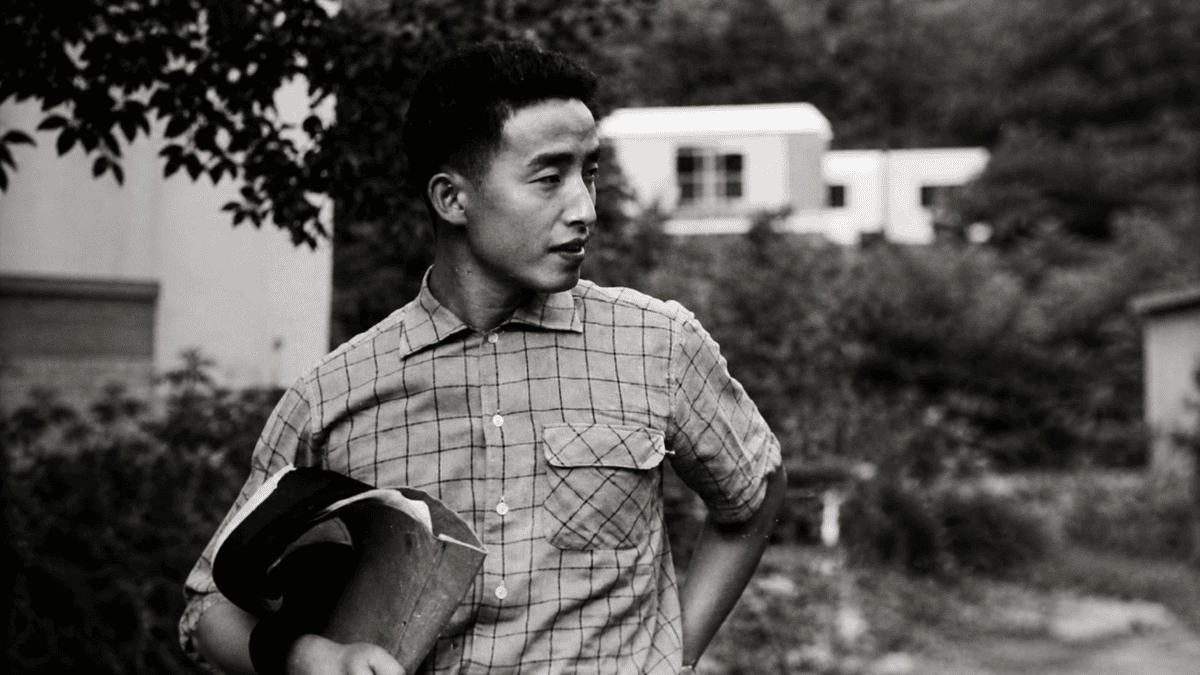
In 1956, Nam June Paik left Asia. He wanted to understand music at its deepest level, to master the form that had mastered him, to finally become the virtuoso his family had always imagined.
By the late 1950s, Nam June Paik was moving beyond the boundaries of conventional music. In Germany, he encountered John Cage.
John Cage’s ideas about chance, silence, and everyday sound deeply influenced Nam June Paik’s artistic direction. The lesson was that the ambient sounds of a room—the hum of electricity, the shuffle of an audience, the randomness of existence—were valid artistic material. Cage believed that music didn’t have to be composed by a person making choices. It could be found. It could be discovered in the noise that everyone else ignored.
For Nam June Paik, this was more than a lesson. It was permission. Permission to stop trying to make the piano sing like a dead European master. Permission to stop genuflecting before the rules he’d been taught. Permission to ask a question that changed everything: What if the piano wasn’t the instrument? What if technology—television, video, electricity itself—could become the medium through which humans experienced truth? For Nam June Paik, technology was not replacing perception. It was changing how we listen to the world, how we see it, and how we experience consciousness through media.
He began experimenting. He took a piano and prepared it—inserted objects between the strings, placed paper and metal inside, altered every aspect of its mechanism to make it produce sounds that violated its original purpose. He performed pieces where the score was instructions for movement, not notation. He created works that deliberately broke the laws of harmony and structure.
In one famous performance, “Zen for Head,” he dragged his ink-covered head across a long sheet of paper, turning the body itself into a brush.
The gesture felt less like performance and more like impact. In another, he approached the piano only to attack it—an act of destruction disguised as performance. The performance wasn’t about making beautiful sounds. It was about vulnerability, about the body, about breaking the invisible wall between the performer and the audience. It was about refusing the distance that classical music maintained between artist and listener.
Nam June Paik had found a new artistic language by transforming the tradition he’d inherited.
Making Music from What Is Not an Instrument
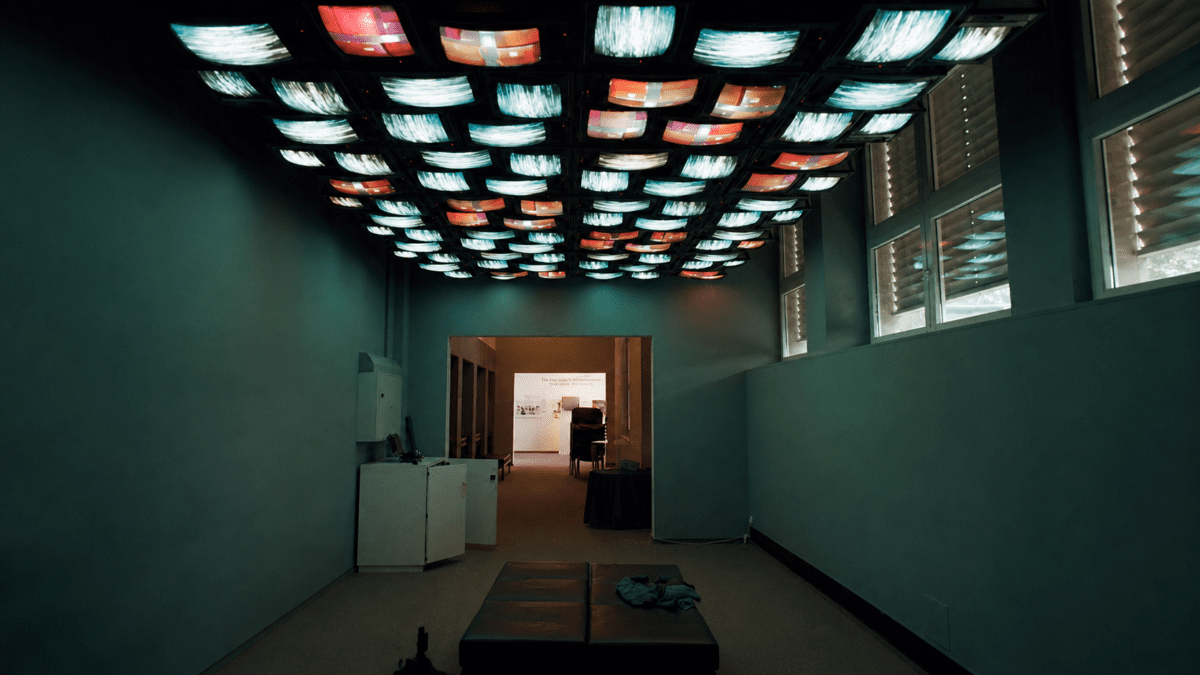
By the late 1950s, Nam June Paik was expanding beyond conventional musical composition into experimental performance and media art. He was thinking of himself as an artist—an artist who used sound, sometimes, but who was interested in something larger. Something that could only be called life.
What if music could be made from anything? What if you didn’t need a piano, or an orchestra, or a concert hall? What if the real instrument was the world itself—all of it, the broken parts especially? What if technology, which everyone feared, could be transformed into art?
He began working with television. Television was new. Television was the technology of consumer culture, of passive consumption, of people sitting in darkened rooms watching whatever corporations decided they should watch. Nam June Paik took broken TV sets, old monitors, objects that were considered trash, and he made them produce images and sounds. He connected them, arranged them, created installations where the screens became a kind of orchestra—a visual music that moved and flickered and communicated without words.
This was radical. Television represented everything that made artists nervous: technology, mass production, the erosion of individual thought. Nam June Paik took that anxiety and transformed it. He showed that art could be made from the debris of modern life. That technology wasn’t the enemy—ignorance of technology was. That a broken television screen could be as much an instrument as a piano.
His hands, which had learned precision on a classical piano, now learned to sculpt with electricity. To compose with light. To make music from the static that no one else was listening to. He was proving something fundamental: that the artist’s job wasn’t to preserve beauty from the world. It was to find beauty in the world, in whatever form it took.
Nam June Paik had become what the broken world needed: not a musician preserving a dying tradition, but an artist who understood that the only way forward was to rethink what art and technology could become together. To take what was broken and show that it could still sing.
This was a fundamental principle: when the rules no longer serve, you don’t obey them better. You break them. In Korean ways of thinking, destruction is rarely final. Structures collapse, reverse, and return in altered form. Nam June Paik’s entire artistic life was built on this understanding: that destruction is not negation. It is transformation.
This post was planned and edited by a human, with AI assistance.