June 1967. Seoul. Dawn.
Isang Yun is walking with his wife. A car pulls up. Men emerge. No explanation. No warrant. Just men who know his address, his schedule, his habits. Isang Yun’s exile begins not at a border, but in a basement. Into darkness. Into a place where questions and answers don’t follow any logic he’d ever learned.
For months, this is where Isang Yun exists—in a space where music is impossible. Where thinking itself becomes dangerous. Where every certainty he’d built—in Berlin, in concert halls, in the logic of composition—dissolves.
This is where the second half of his life begins. Not in a concert hall. In a cell.
The Black Night of Kidnapping
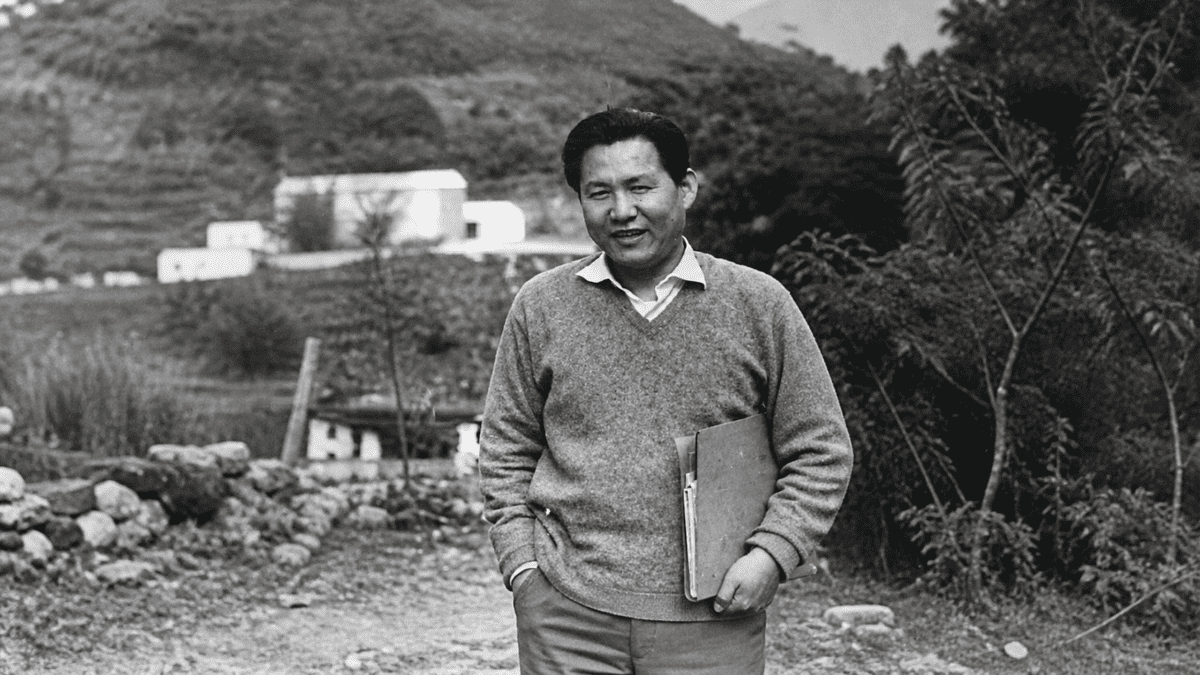
(Wikimedia Commons, Public Domain / Edited)
The specifics are simple: South Korea’s intelligence agency, KCIA, kidnapped him. They accused him of communist sympathies. The evidence was thin. The intent was clear: control the narrative of who gets to represent Korea to the world.
Isang Yun had become too successful, too independent, too unwilling to be a “Korean artist” in the way the government wanted. He was Korean, yes. But he belonged to Berlin, to the international avant-garde, to a world that transcended national borders. He’d spent decades building a reputation independent of any nation-state. His identity was musical, not political.
The government saw this as a threat. An artist who belonged to no one but his art was an artist the state couldn’t control.
In June 1967, while Isang Yun was in Seoul, they made their move. He was abducted by South Korea’s intelligence agency. Isang Yun was a prize: an internationally celebrated figure who could be forced to recant, to confess, to become a tool of state propaganda.
What happened in that basement is documented in fragments. Torture. Interrogation that went in circles, designed not to extract information but to break the person. Sleep deprivation. Physical violence. The logic was crude: make him confess to being a communist, make him recant his artistic independence, make him understand that Korea owns him, that no artist can transcend national allegiance.
Isang Yun didn’t break. But something in him fractured. The person who emerged months later was still a composer, still a thinking human. But he carried something he’d never carried before: direct knowledge of what happens when power decides that art is a threat. When beauty is treated as subversion.
The international community protested immediately. Artists signed petitions. International musicians and cultural figures demanded his release. Western governments intervened diplomatically. International musicians, composers, and intellectuals publicly protested his imprisonment. The weight of international artistic opinion pressed down on Seoul.
Under pressure, the South Korean government released him. But Isang Yun’s exile had already begun—not in a place, but in the knowledge that going back meant danger.
Isang Yun’s Exile in West Berlin
The city welcomed him back. Isang Yun’s exile had found a geography, even if it wasn’t his geography. Not out of pure ideology, though Cold War politics played a role. But because West Berlin understood something about exile. About artists forced to create in impossible circumstances. They’d seen how artists could become symbols—symbols of freedom, symbols of resistance, symbols of the human capacity to create despite oppression.
By 1972, Isang Yun had returned to his old school, the Berlin University of the Arts, as a professor of composition—not as the student he’d been in 1957, but as a master. In West Berlin, the divided city made perfect sense: he was divided too. Korean but unable to return. German-speaking but not German. Celebrated worldwide but homeless.
After returning to West Germany, he continued his career primarily in West Berlin. West Berlin became the center of his teaching and compositional career after his release. In return, he became a symbol of artistic freedom during the Cold War. It was another form of control, but a gentler one. West Germany wanted him as a symbol of artistic freedom. South Korea had wanted him to confess.
He would spend the rest of his life there—not because he wanted to, but because returning home was no longer possible. The wall between North and South Korea mirrored the wall between East and West Berlin. He lived in the shadow of a world divided.
What happened next is almost incomprehensible: he began his most prolific period. The torture, kidnapping, and permanent separation from home did not silence him. They intensified his work. During Isang Yun’s exile, he composed with a ferocity that astonished his colleagues.
In exile, Isang Yun created five symphonies. Dozens of concertos. Chamber works of increasing complexity. Each piece carried weight—not heaviness, but density. A sense that something profound was being compressed into sound.
The Berlin Philharmonic premiered his major works. His works increasingly appeared in contemporary music study programs and academic discussions across Europe. Young composers traveled to Berlin to study with him, to learn how he’d managed to transform suffering into art without making art about suffering.
The irony was bitter: the government that kidnapped him tried to control him through violence. Instead, they freed something. By attempting to destroy his independence, they revealed how unbreakable it was. By cutting him off from Korea, they forced him to create work that transcended Korea—work that belonged to all of humanity.
The Silence That Speaks
In several late works, Isang Yun explored silence not as absence, but as presence. It’s a piece where the orchestra plays fragments of melody, then stops. Long passages of nothing. Then suddenly, a sound that reverberates through the emptiness—not loud, but present, undeniable.
It’s not silence in the sense of absence. It’s silence as presence. Silence as a force that shapes what we hear. The notes that come after silence carry different weight than they would in a continuous melody. They exist against the absence.
This concept didn’t emerge from nowhere. It emerged from someone who’d been silenced. Isang Yun’s exile had taught him that what you don’t say can be as powerful as what you do. That absence itself can be eloquent.
In concert halls across Europe, audiences encountered “Silence” and understood something they couldn’t articulate. They heard the space between the notes. They felt the weight of emptiness. This wasn’t a piece about Korea’s politics or about one man’s suffering. It was a piece about the human capacity to create meaning in the presence of emptiness. To maintain voice even when silenced.
Younger composers were astonished. How had Isang Yun transformed personal trauma into universal statement? How had he avoided the trap of making victim art—art that demands pity—and instead made art of such integrity that it demanded attention?
The answer was this: he didn’t make the work about what was done to him. He made it about what he could still do. He never explained himself publicly through bitterness. He answered with music instead.
This distinction mattered more than most people realized. Trauma can be beautiful in art, but only if the artist has transcended it—transformed it into something that serves the work rather than the autobiography. Isang Yun had learned this the hard way. In a basement. Under torture. He’d learned that the only way to survive is to stop being a victim and become a creator.
A Master Without a Home
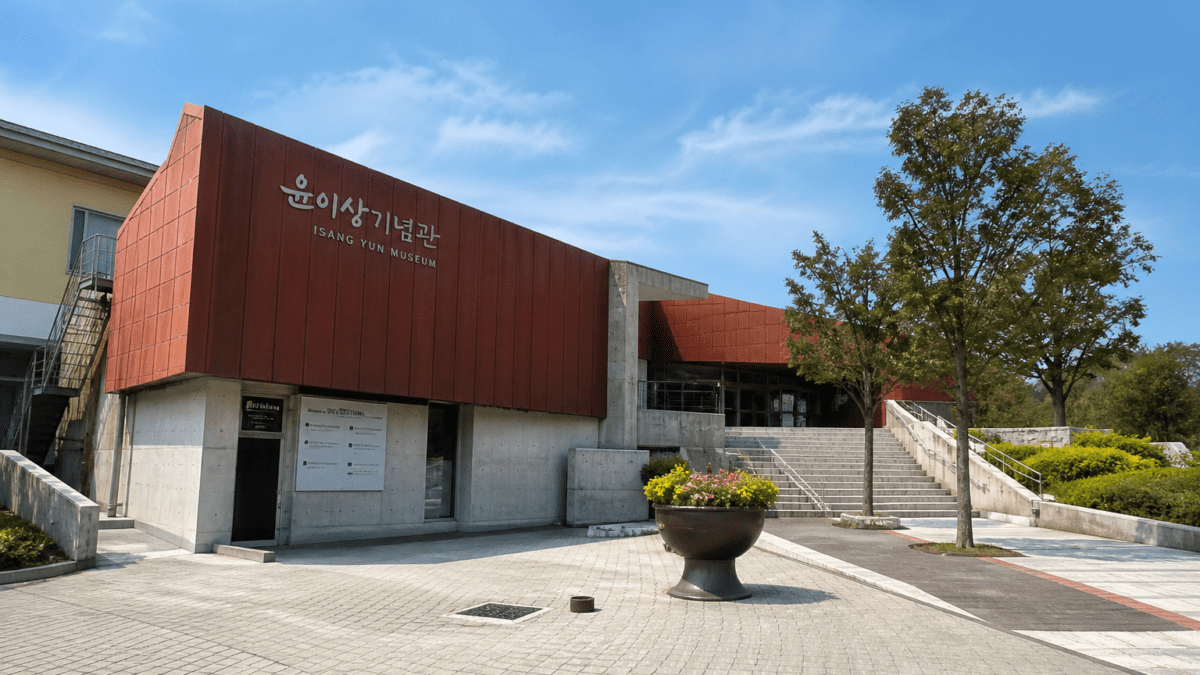
By the 1980s and 1990s, Isang Yun’s exile had become a permanent condition. He had become something contradictory: the world’s most celebrated Korean composer, living in divided Berlin, far from Korea, unable to return to Korea.
International festivals celebrated him. Universities taught his work. Conductors competed to premiere his compositions. He became one of the defining Asian composers within 20th-century contemporary music. Later generations of Korean artists and intellectuals came to regard Isang Yun as an important cultural figure—proof that a Korean artist could reach the absolute pinnacle of international recognition.
But he was a master without a home. Korea called him Korean, but wouldn’t let him return. Germany had given him refuge, but he remained Korean in spirit. Berlin was his city of work, but not his home.
This contradiction—belonging everywhere and nowhere—became the subject of his final works. Not explicitly. But listen to the late chamber pieces, and you hear someone who’d made peace with displacement. Not by forgetting where he came from, but by understanding that art transcends geography.
His last compositions grew quieter, more austere. As if he was approaching something essential. The notes became fewer. The spaces between them larger. It was as if he was stripping away everything unnecessary, everything bound to place or nation or identity, leaving only what was universally true.
When Isang Yun died in 1995, his death was marked in Berlin, in Paris, in New York, in Tokyo. The international music world mourned the loss of a master. But Korea was slower to claim him. The country that had kidnapped him, that had forced him into exile, took years to acknowledge what it had lost.
Only after his death did Korea begin to understand what it had sacrificed by driving away one of its greatest artists. Universities began offering his works. Galleries exhibited his manuscripts. In later years, South Korea gradually reassessed his legacy and the injustices surrounding the East Berlin Incident. Recognition arrived decades after the damage had already been done.
Now, his music is performed worldwide. Young composers still study him. And slowly, Korea is learning to recognize him—not as a victim of Isang Yun’s exile, but as the master who proved something essential: that art could survive anything, including the attempt to destroy it. Work created under pressure often carries a different emotional weight.
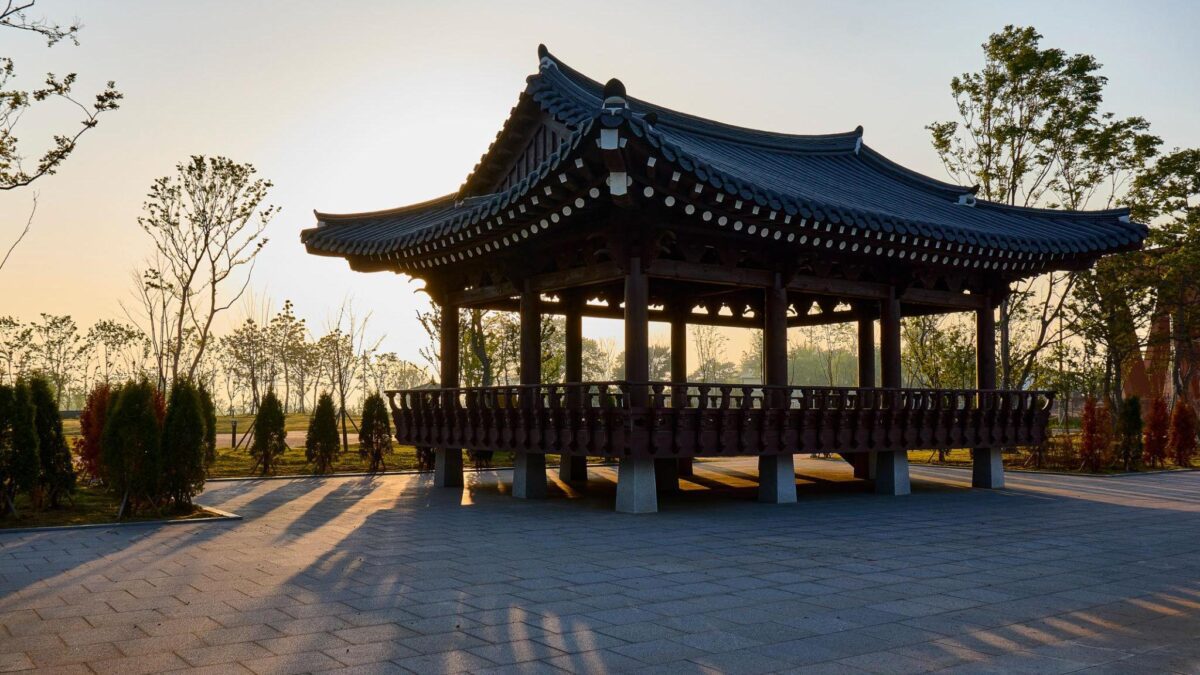
Tongyeong remembers him through a memorial and an annual music festival. Every year, contemporary music fills his birthplace. It is a space of memory.
For decades, his body rested elsewhere. In Berlin, at Landschaftsfriedhof Gatow—a cemetery in Spandau district where he was laid to rest—Isang Yun remained. Germany held his body. Korea held his memory. Even in death, the division continued.
But in 2018, twenty-three years after his death, something changed. His remains crossed the ocean. After decades of exile, Isang Yun returned to Tongyeong. He came home to the soil of his birthplace.
The exile finally came home. Not in life, but in this—in the earth of the place that never stopped calling him.
What Isang Yun proved—that an artist rooted in one tradition could reshape global understanding by refusing containment—became the blueprint for how Korean culture would speak to the world in the 21st century. Not as exotic import. As indispensable necessity.
This is how the story of Isang Yun’s exile ends: not with separation, but with return. Not in Berlin, but in the ground of Tongyeong, where the music continues.
Today, Isang Yun rests in Tongyeong, the city he long considered his true hometown. A memorial stands there—a space where visitors can approach what he created. The exile who couldn’t return to Korea is finally home.
Some content in this post was created with AI assistance.