Silence—the kind that has weight, that fills a room, that becomes the subject itself. This is Kim Whanki silence.
The São Paulo Biennial brought Kim Whanki broader international recognition. But recognition, he would discover, is not the same as belonging. The silence of New York would teach him what the applause of the art world could not: that arrival and belonging are not the same thing. That arriving at success is not the same as arriving at home.
He settled in New York because that was where the art world was. But New York was also where he was most alone.
The Language of Lines
In America, the dots continued. But something changed. They became fewer, more deliberate, more isolated. In the earlier Paris years, the dots had clustered, suggested conversation, implied relationship. In New York, they learned the language of silence. This was the beginning of Kim Whanki silence—not as a concept, but as a lived experience.
The white space grew larger. The dots grew smaller. The paintings became what they were always meant to be: not objects but voids, not statements but questions. Each canvas asked: What remains? What is enough? How much can be removed before nothing is left?
This was not the minimalism of the American artists who surrounded him. They reduced to make a statement about form, about essential geometry, about the possibility of absolute purity. Kim Whanki reduced to make a statement about loss. About distance. About the space between a person and home. About the impossibility of return.
His neighbors in the New York art world were Robert Morris, Carl Andre, Donald Judd—artists who saw reduction as a philosophical clarity, a stripping away of illusion to reveal truth. Kim Whanki’s reduction of form can also be read as a response to displacement and distance experienced during his years abroad. Not geographical homelessness, but the deeper kind: the homelessness of a person who has learned that home is not a place but a time you cannot return to.
He was painting America, though he never painted a building or a street. His later works increasingly conveyed themes of distance, stillness, and emotional restraint. Not even recognition could fill that void. Especially not recognition.
In interviews, he rarely spoke about his work. When he did, he spoke about Korean aesthetics—the principle of ma, the importance of what is not shown. But he was also speaking about something more personal: the aesthetics of loss. The beauty of what cannot be recovered.
Kim Whanki silence — The Presence of Absence
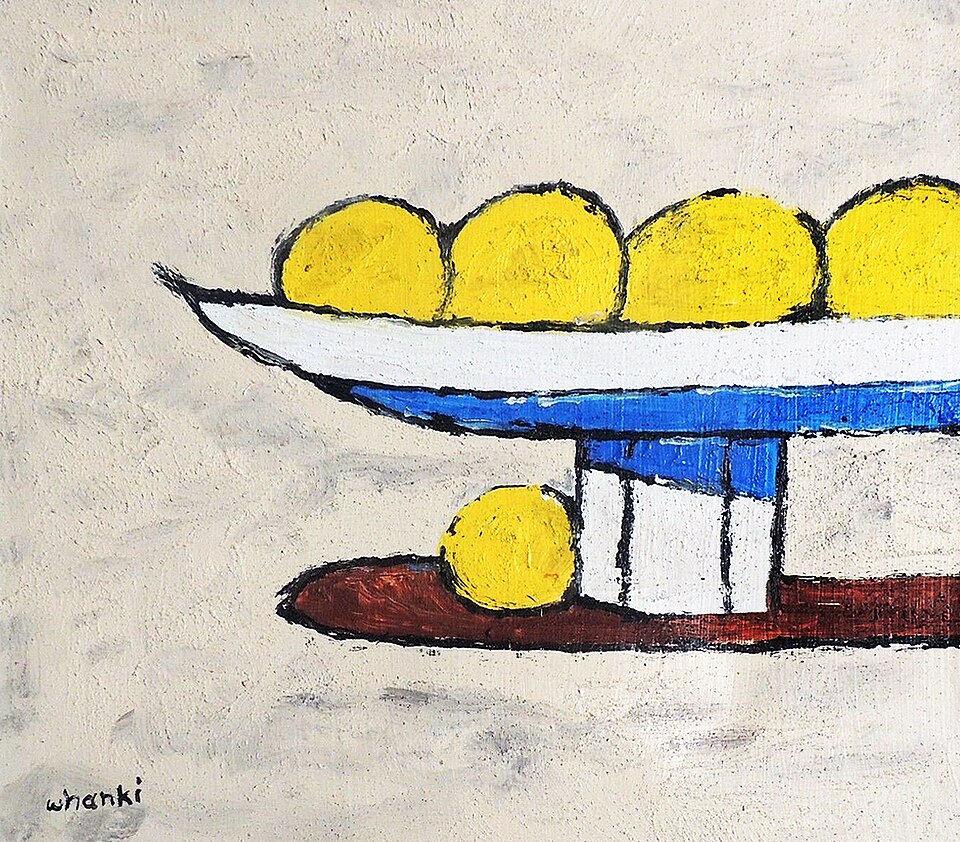
By the late 1960s and early 1970s, his paintings had become almost unbearable in their silence. Kim Whanki silence was no longer a choice—it had become the only possible response. A single dot on a canvas of white. Not a figure in space, but the memory of a figure. Not an object, but the space where an object used to be.
Other artists saw innovation. Collectors saw value. Galleries competed to represent him. But what Kim Whanki saw was the only honest thing left to paint: emptiness. The studios became quieter. The canvases became whiter. New York remained outside the window.
He continued to exhibit. His work continued to be acquired. Museums began to see him as an important figure in the history of abstract art—a bridge between Eastern philosophy and Western minimalism. This was all true. And it was all beside the point.
The paintings exceeded the categories art history tried to place around them. They were about a man who had left Korea, wandered through Paris, and ended up in New York—the center of the international art world where he spent the later part of his career. The dots were not philosophical statements. They were the last things a person can say when everything else has been taken away or given up.
His friends noticed the change. The paintings were becoming harder to look at, not because they were ugly, but because they required something of the viewer. They required you to accept silence as a complete statement. To see emptiness as full. To understand that what is absent can be more powerful than what is present.
By the early 1970s, as his health began to fail, he continued to paint—if anything, with greater intensity. The dots became even more spare. The white became even more overwhelming. The brush moved with purpose, each gesture deliberate, each mark a refusal to fade. Even as his health declined, he continued painting with remarkable concentration and persistence. To insist, with every canvas, that he was still here. That something remained. That there was still weight in a single point. This was when Kim Whanki silence burned brightest.
The paintings from these final years are among his most powerful. Not because they are technically superior, but because they burn with the intensity of someone who knows time is running out. They don’t look away from mortality. They speak about the approach of the end with a clarity that only art made by someone facing death can achieve.
Minimalism From the East
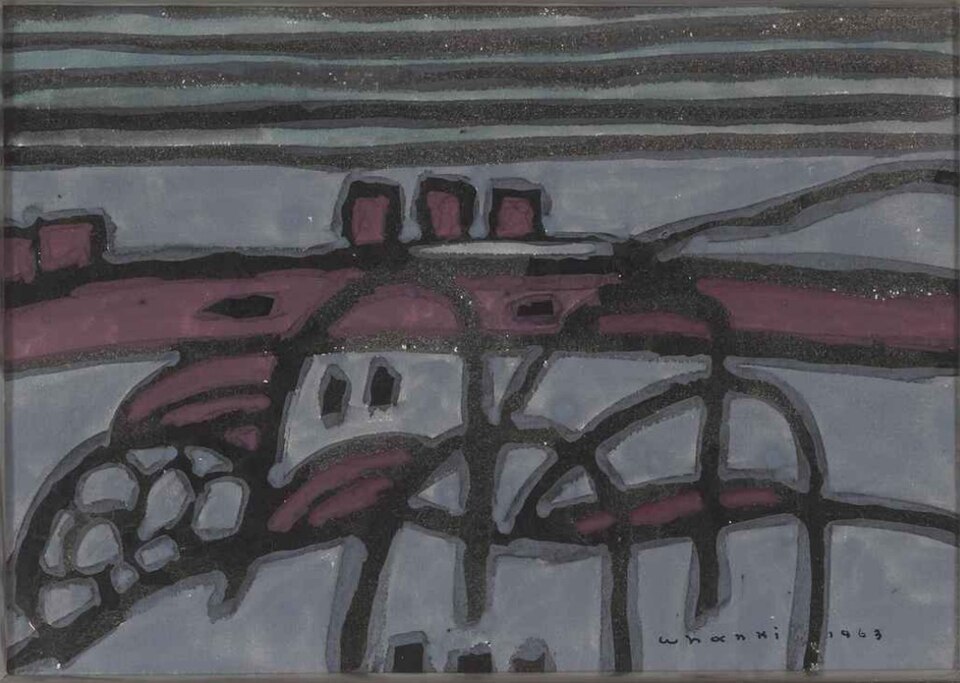
The Western art world categorized his work within minimalism. Minimalism, they said, was about reduction, essence, purity. This was accurate. But minimalism in America came from a philosophical abundance—we reduce because we can afford to be selective. Minimalism in Kim Whanki came from a philosophical scarcity—we reduce because this is all that remains.
The difference is the difference between choice and necessity. Between meditation and exhaustion. Between an artistic philosophy and a way of surviving.
The American minimalists were saying: We have stripped away everything inessential. What remains is pure form.
His paintings can feel as if everything unnecessary has been stripped away. What remains is this. This is all that is left. This single dot. This silence. This is enough because it has to be.
Korean and Japanese aesthetics understand what Western minimalism is still learning: that what you remove matters more than what you add. That the space between things is not empty—it is alive. It is the breathing room that makes meaning possible. This is the philosophy that shaped Kim Whanki: not reduction for its own sake, but reduction as an act of reverence toward what remains.
Why Now, Still
In 2026, more than fifty years after Kim Whanki first arrived in New York, his paintings feel more recognizable than ever. The silence inside them no longer feels distant or unfamiliar. The white space, the isolation of the single dot, the feeling of being surrounded by emptiness while remaining quietly present — these now feel deeply contemporary. Kim Whanki silence still speaks with clarity.
The dot is still there. The white is still vast. The silence still rings.
Contemporary audiences may now find new resonance in the emotional atmosphere of his paintings. We are learning what he knew: that you can be recognized by the entire world and still be alone. That success and belonging are not the same thing. That home is a place you can leave but never arrive at again.
His work was always ahead of us. In the 1960s and 1970s, when minimalism was being debated in terms of form and essence, Kim Whanki was already painting about something deeper: the necessity of emptiness. The power of Kim Whanki silence. Not as an aesthetic choice, but as a way of being. Not as a statement, but as a survival strategy.
You can accumulate recognition, success, achievement—and still feel the weight of a single dot as the most honest thing you’ve ever made. You can travel the world and never truly arrive anywhere. You can be seen by millions and remain completely alone.
Rather than pessimism, the paintings can be understood as meditations on silence, distance, and persistence. And honesty, when it comes from someone who has lived it, carries a strange kind of beauty.
The Kim Whanki dot is not a symbol. It is a fact. It is what remains. It is what insists. It is what speaks louder than noise, louder than words, louder than all the recognition in the world.
His paintings say: Look at this. Look at the white. Look at the single point of color. This is everything. This is nothing. This is the only thing that matters.
This sensibility continued through later Korean visual culture in quieter ways.
Designers reduced ornament until form itself carried emotion. Fashion moved toward restraint instead of excess. Artists increasingly trusted empty space, unfinished feeling, and the intelligence of the viewer.
What appeared later across Korean design, fashion, and art did not emerge from nowhere. It grew from a longer aesthetic tradition that understood silence as part of expression rather than the absence of it.
Kim Whanki showed that a painting did not need to overwhelm the viewer to remain unforgettable. A single dot could hold tension. Empty space could carry emotion. What was removed from the canvas could matter as much as what remained on it.
His paintings suggest that restraint is not limitation. It is concentration. It is the decision to leave space for feeling instead of controlling it completely.
That is why his work still feels contemporary now. The paintings do not force meaning onto the viewer. They wait. Quietly. And in that silence, something continues to remain.
This post was planned and edited by a human, with AI assistance.