
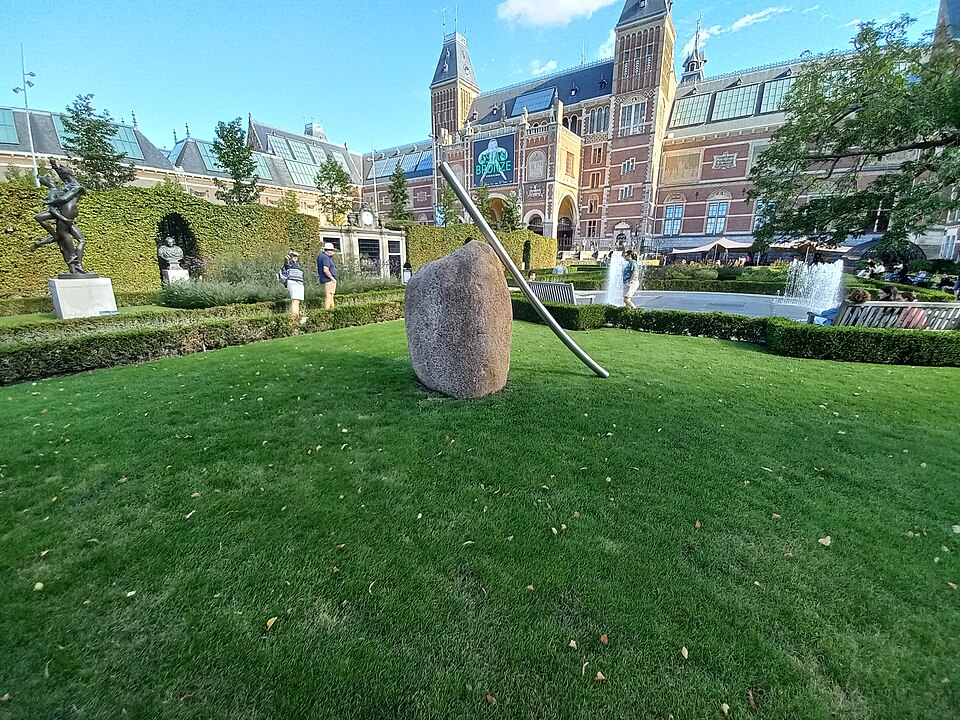
A line on a surface. Not drawn, but placed. Not created, but revealed.
What did Lee Ufan remove? Color. Gesture. The artist’s hand. The need to be seen. Each thing he took away revealed something underneath that was already there.
This is Lee Ufan reduction: not subtraction, but revelation. Remove everything else until presence becomes visible.
He was not following Western minimalism, though he learned from it. He was following something older. The understanding that what you take away matters more than what you add. That absence can speak louder than any gesture. That the space between things is alive.
Color Thrown Away
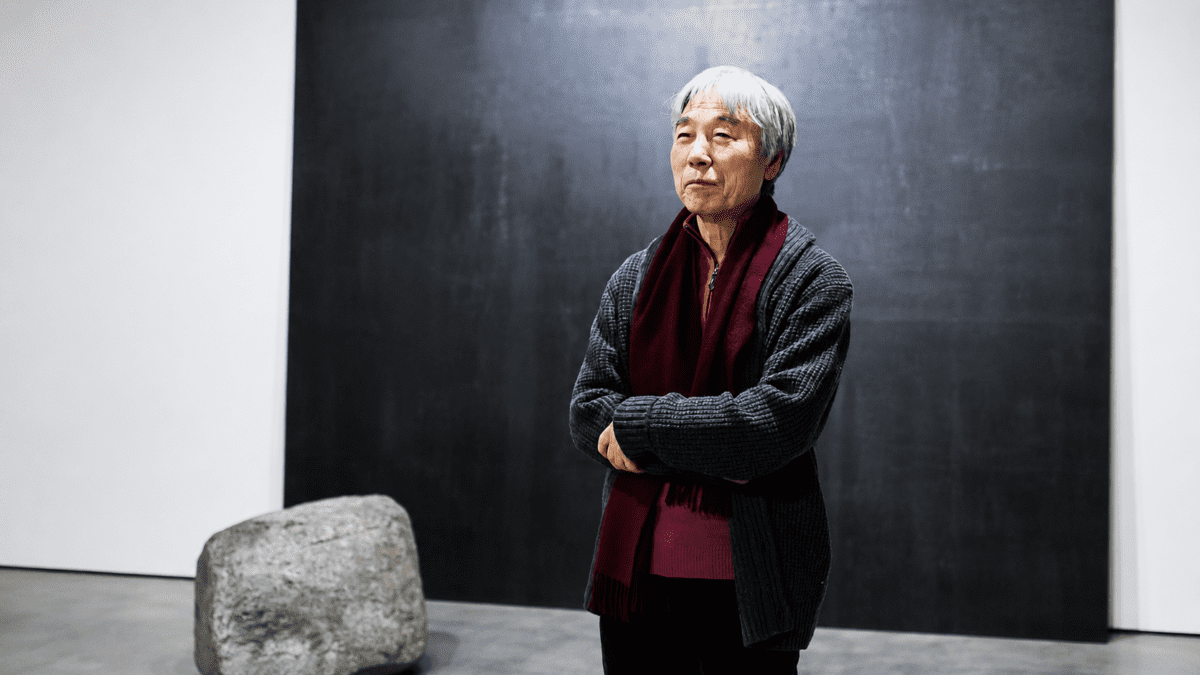
1956. Twenty-one years old. A secret crossing to Tokyo.
He arrived in a city still learning to breathe. Ruins scattered like broken teeth. Silence everywhere. The sky was often grey.
His first paintings were loud. Colors that demanded attention. Gestures that insisted on being seen. But living in Tokyo changed something. The monochrome painters around him—the artists asking what remained after everything was stripped away—these questions seeped into his work.
The color began to trouble him. It wanted too much. It insisted on mattering. So he began to remove it.
Not all at once. Slowly. Year after year, a reduction that took decades. From bold expression to stillness. From color to monochrome. From gesture to observation.
He was not trying to imitate the Abstract Expressionists in the West. Rothko filled the entire field with a single color, making it overwhelming. Newman made it sublime. These were statements about presence overwhelming the viewer.
Lee Ufan’s monochrome was different. Not intensity. A kind of restraint that asked the viewer to slow down. The canvas looked almost unfinished. Then your eye slowed down. The paper texture appeared. The grain. The imperfections. The empty space stopped feeling empty.
The paper was not a ground for the artwork. The paper was the artwork. The wall was the artwork. The space the artist created by removing everything unnecessary—that was what mattered.
A Single Line — The Meeting
By the late 1960s, Lee Ufan had arrived at what would become his defining form: the line.
A single line, or sometimes a few lines, on a monochrome surface. Canvas. Paper. Stone. The material changed, but the principle remained the same.
But this was not a line drawn in the traditional sense. It existed in the relationship between two forces: the artist’s action and the surface’s response.
The artist makes a mark. The stone receives it, resists it, accepts it in its own way. The paper answers back. Between these two forces—will and acceptance, intention and resistance—something emerges. This encounter. This meeting. This is what Lee Ufan called relationship.
In the Western tradition, a line is something the artist creates. A signature. A gesture. Proof of individual talent imposed upon the world.
In Lee Ufan’s reduction, the line is something that happens. Neither the artist alone nor the material alone creates it. The line emerges in the space where they meet. It feels negotiated, not imposed. As if the material had answered back.
This is not compromise. This is the principle of wholeness: that presence requires its opposite, that will requires resistance. The line exists precisely because it is neither the artist nor the material, but the encounter between them.
The Korean Recognition
In 1968, Kwak In-shik saw what Lee Ufan was doing.
Kwak had already spent years with raw materials—stone, glass, iron, clay, paper. Not perfecting them. Just revealing what was already there. He recognized something in Lee Ufan’s work. A kinship. The same quiet conviction that what is removed speaks louder than what is added.
In 1969, curator Kim Se-joong selected both Kwak In-shik and Lee Ufan to represent Korea at the São Paulo Biennial. A decision that said: this is not Japanese minimalism. The work did not resemble Western abstract art as much as it revealed a different relationship with emptiness. With what remains when you stop insisting.
What Kwak and Lee Ufan proved together was that Lee Ufan reduction reflected a wider Korean approach to restraint—shaped as much by their own aesthetic traditions as by international modernism. The principle that had always been present in Korean aesthetics. That restraint speaks louder than abundance. That what is absent matters more than what is present. That the space between things is alive with meaning.
This moment suggested something larger: that Korean artists were not importing foreign ideas. They were coming home to principles that had never been lost. Only waiting for the right moment to be articulated.
A Different Question
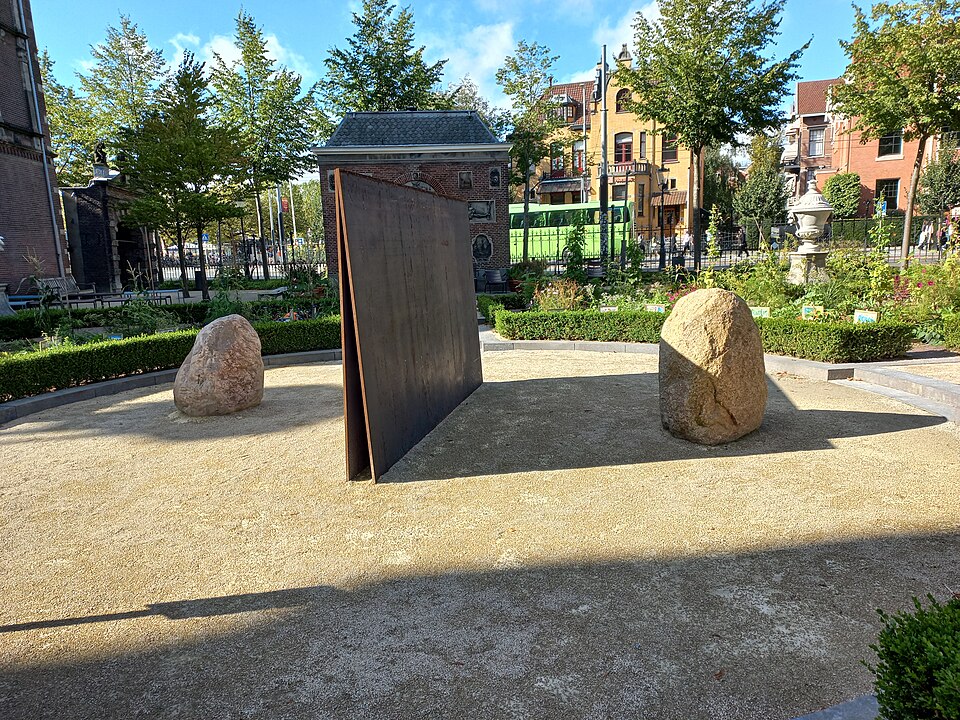
Other artists pursued similar paths in Europe and America. Carl Andre. Donald Judd. Yves Klein. But they were asking from a Western position: What is essential form?
Lee Ufan asked something different: What happens in the space between the artist and the world?
Not “What can the artist express?” but “What can the artist reveal?”
The Western minimalists reduced the object until form became clear. Lee Ufan reduced the gesture until relationship became visible. This changed how we see. But it was based on a Western assumption: that the artwork is an object, and the artist’s job is to perfect it.
Lee Ufan’s reduction pursued something else. Not the object, but the space the object creates. Not clarity through elimination, but clarity through relationship. This comes from a different tradition—from the understanding that what is not shown is more important than what is shown. The empty wall beside the line was never empty. The silence around the mark carried its own weight.
The line is present. The space is empty. Both are complete. This is not Western logic, where opposites cancel each other. This is the ancient principle: that presence and absence define each other. That the full and the empty are not enemies but partners. That wholeness requires both.
In the space where the line touches the emptiness, where the mark meets the silence, meaning emerges. Not from what is added. From what remains when everything unnecessary has been removed.
The Artwork Exists in the Meeting
By the 1970s, Lee Ufan reduction had become a complete philosophy. His writings and artworks increasingly focused on one thing: relationship.
Not the object itself, but the relationship that the object creates. Between artist and world. Between viewer and artwork. Between presence and absence. Between what is shown and what is hidden.
A line on stone. What is the artwork? The line? The stone? The space between them? The viewer standing before the work?
For Lee Ufan, the answer was all of these together, but none of them separately. Two people can stand before the same work and leave with completely different silence inside them.
Art is not something the artist makes alone in a studio. Art is something that happens. The artist creates the conditions—the line, the surface, the emptiness—but the encounter itself, the moment when the viewer stands before the work and experiences the relationship, when the viewer’s attention meets the work’s presence, that is where art occurs.
The work does not fully exist in the studio. Sometimes it only begins when someone stands still in front of it. It exists in the space between the work and the person experiencing it.
In Korea, Lee Ufan would eventually become central to Dansaekhwa, where artists reduced the image until even the act of looking began to slow down. Korean artists like Park Seo-Bo, Chung Sang-Hwa and others were creating work that synthesized Western minimalism and Eastern philosophy into something entirely new. A visual language formed through the tension and exchange between different artistic traditions.
But in these early years, in Tokyo, in the late 1960s, Lee Ufan was alone with these questions. Alone with the conviction that less was not a style choice, but a philosophical necessity. That removal was not subtraction, but revelation. That even the simplest mark could create a meaningful relationship between material, space, and perception.
Lee Ufan removed and removed until almost nothing remained. Then he discovered that almost nothing was enough.
A single line. The space around it. The silence inside you when you stand there.
Lee Ufan didn’t make art louder. He made silence audible.
This post was planned and edited by a human, with AI assistance.