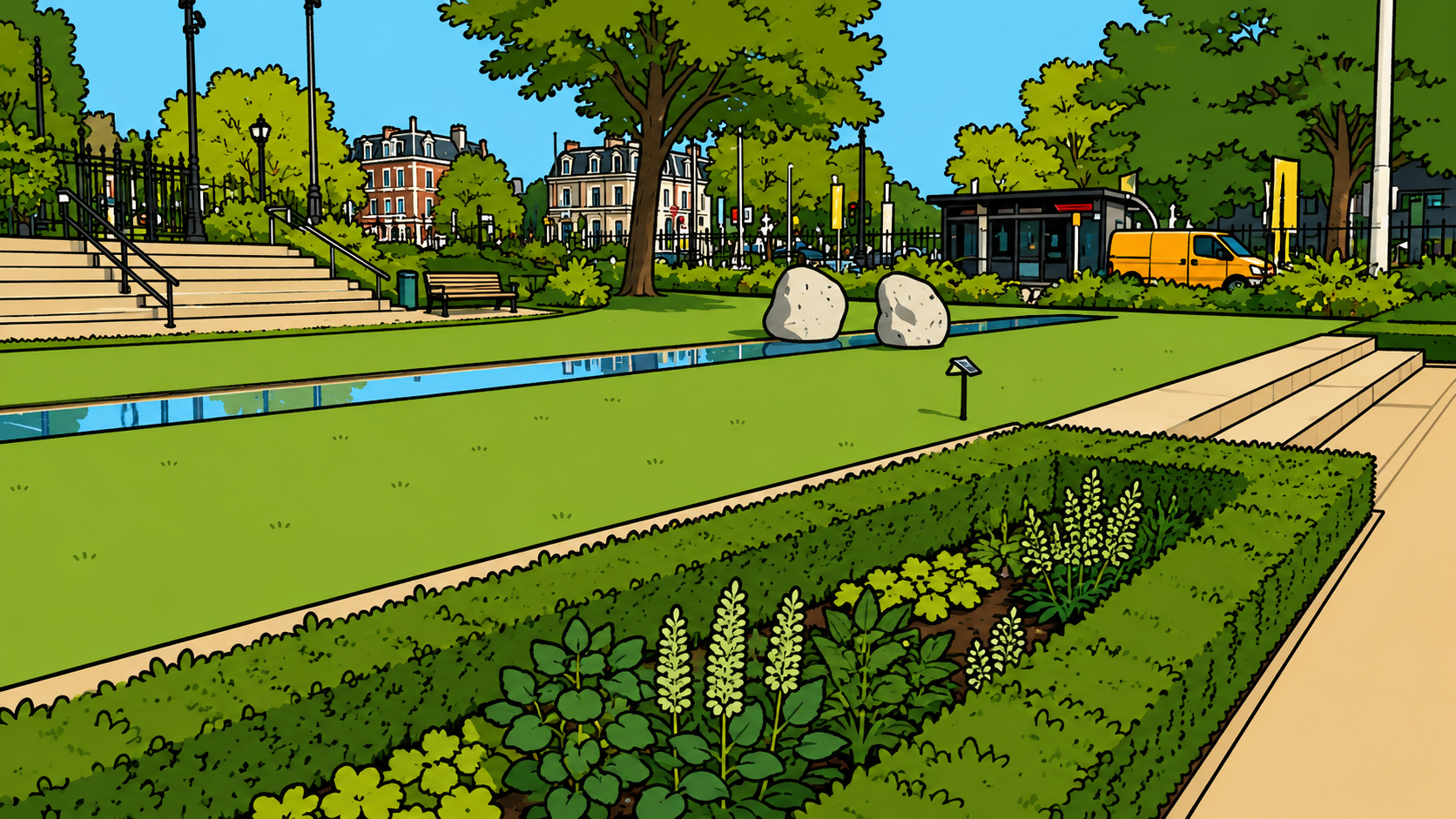
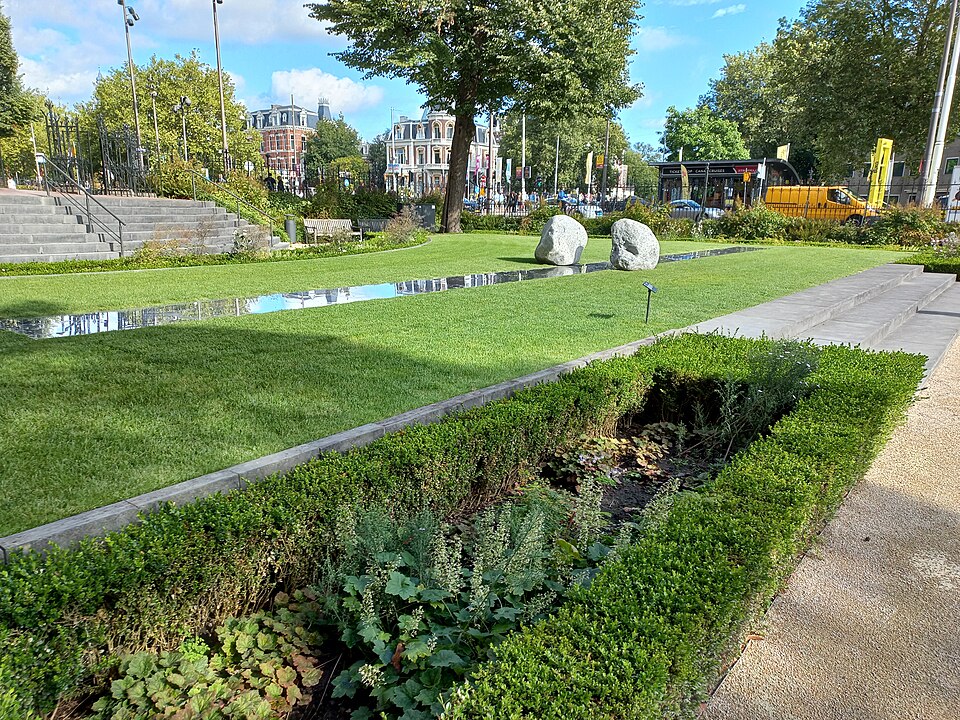
A gallery in Seoul. People walk past quickly at first. Then one person stops. Steps closer. Stands there longer than expected. No color. No gesture. No artist’s signature visible. Just a line, placed with precision, that seems to speak directly to something in the viewer’s chest.
This is what Lee Ufan silence is: the discovery that silence can be articulate. That absence can communicate. That the things we don’t say, the things we don’t paint, the spaces we leave empty—these carry more weight than anything we could fill them with.
By the 1970s, Lee Ufan had become one of the central theorists and artists reshaping contemporary Korean and Japanese art. Not from Korea, but from the margins—from Japan, from the international art stage—he spoke in a language that both East and West could understand. A visual language centered on restraint, space, the line, and the relationship between material and perception.
The Language of Line
The 1970s were the period of Lee Ufan’s full articulation. His works from this decade are among his most refined. Simpler than ever before, yet somehow more complex. More direct, yet more mysterious. It was as if he had finally found the exact language he had been searching for—a language that needed almost nothing to say everything.
What emerged was a practice centered on the line. But not the line as graphic gesture or boundary. The line as a trace of encounter. The line as proof that something happened between artist and material. The line as a trace of interaction between gesture and material.
In works like “Dialogue” and “Meeting,” he placed a single line on white paper or canvas. The line is faint but visible. It is not violent or aggressive. It does not demand attention. It speaks quietly, and the work does not chase attention. The viewer has to slow down enough to meet it halfway. In this waiting, something shifts. The viewer becomes aware of their own presence before the work. Aware of their own breathing, their own attention, their own consciousness.
This is the language that emerged from Lee Ufan silence—a highly restrained visual language that draws attention to silence and perception. A whisper louder than any shout. A minimal mark capable of directing attention toward space, material, and perception. Not because the mark contains information, but because the mark creates a space where consciousness and material meet.
The Western minimalists had also arrived at the line—but their lines were about geometry, about the demarcation of space, about the fundamental structures of visual perception. Lee Ufan’s line was about something entirely different. It was about relationship. About two presences—artist and material—meeting in a moment of attention and care. About the space between intention and execution where a new relationship emerges.
In the Dansaekhwa (단색화: dan-saek-hwa) movement emerging in Korea during the 1970s, artists like Park Seo-Bo, Chung Sang-Hwa, and others were exploring similar territory. But Lee Ufan, speaking from Japan and the international art world, articulated the philosophy. He gave language to what was being felt and made.
The Presence of Absence
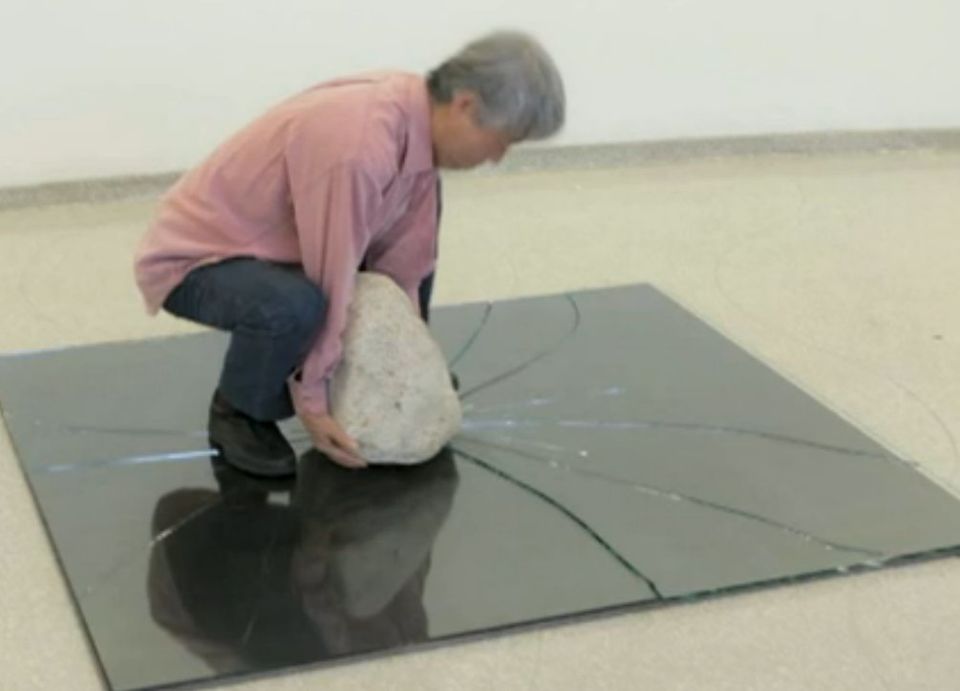
By the early 1980s, Lee Ufan had become a major figure in the international art world. His works were in museums. His philosophy was being studied. His influence was growing. But the work itself never changed. It only became more refined, more spare, more trusting of emptiness. More honest.
What is the artwork? Is it the line? Is it the space around it? Is it the viewer’s attention? Is it the moment of encounter? For Lee Ufan, the answer was always: all of these together, but none of them separately. The artwork exists in the relationship. It exists in the moment of encounter. Its meaning becomes more fully realized through the viewer’s experience.
This is what Lee Ufan silence means: not the absence of sound, but the presence of attention. Not emptiness that is empty, but emptiness that is full of possibility. Not a void that nothing can fill, but a void that the viewer’s own consciousness fills. A void that asks something of us. A void that demands our participation.
He continued to exhibit, to teach, to develop the philosophy that reduction was not loss but revelation. That the removal of elements was not diminishment but clarification. That the line on paper, the stone with a mark, the canvas with a single color—these were complete artworks. They needed nothing more. Adding anything more would only diminish them, would only cloud the clarity they achieved.
The works from the 1980s and 1990s show an artist at the height of his powers. Not because they are more complex or ambitious, but because they are more honest. More direct. More trusting of emptiness. More willing to let the viewer complete the artwork through their own act of seeing and being present.
Minimalism From the East
Call it Minimalism if you must. But the term surrenders the essential.
Western Minimalism stripped away. Ornament, gesture, decoration. What remained was the perfect object—form clarified, essence revealed. This was valuable. This changed how we see. But it was still pursuit of a single goal: perfection.
Lee Ufan pursued something else. The object mattered less than the tension surrounding it. The silence around the line became part of the work itself. Not clarity through elimination, but clarity through relationship.
This was not new. In Korea, Kwak In-shik had already understood this in 1962, when he began working with raw materials—glass, brass, iron, clay. Each material stripped not to achieve perfection, but to reveal presence. When Lee Ufan encountered Kwak’s work, he recognized what he had been searching for. Not a Western reduction, but a different principle entirely.
In works like “From Line” (1974) and “Conjunction” (1977), Lee Ufan created the meeting point between these two understandings. The line appears, barely visible. The mark exists, faint as breath. Space is full and empty simultaneously. This is not confusion. This is the simultaneous truth of presence and absence—not one canceling the other, but both necessary, both complete.
The line is present. The space is empty. Both are complete. This is not Western logic, where opposites cancel each other. This is the ancient principle: that presence and absence define each other, that the full and the empty are not enemies but partners, that wholeness requires both. In the space where the line touches the emptiness, where the mark meets the silence, meaning emerges—not from what is added, but from what remains when everything unnecessary has been removed.
Why Now, Still
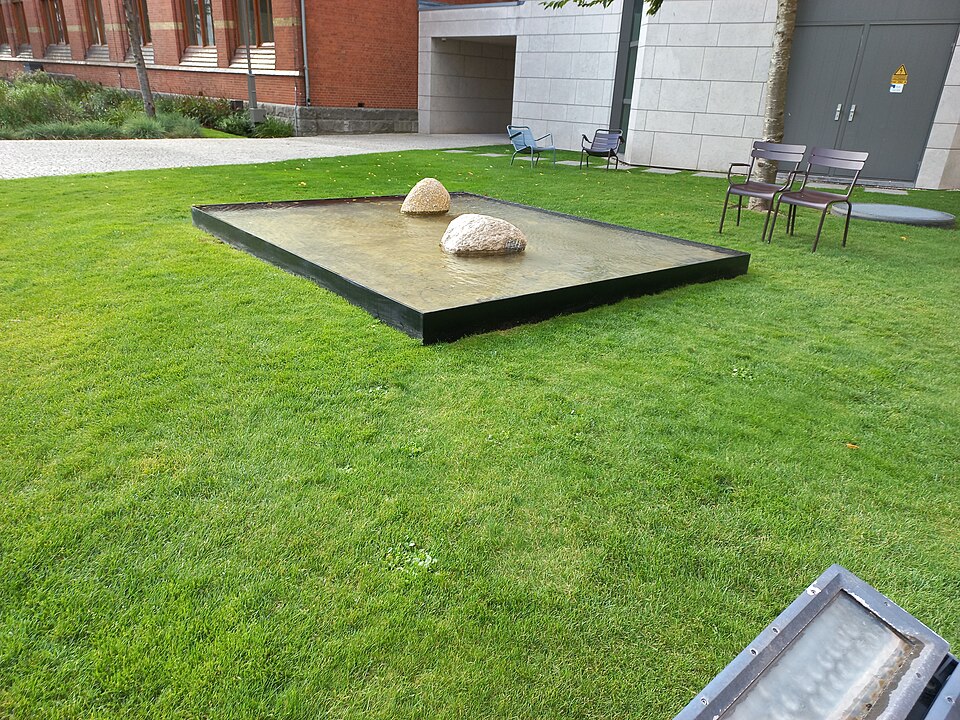
In 2026, after hours of scrolling, people enter a Lee Ufan room and suddenly realize how loud their own attention has become. With every surface screaming for recognition, with algorithms designed to keep us scrolling and clicking and engaging, Lee Ufan’s work speaks with increasing urgency.
A single line on paper. What does it ask of us? It asks for our attention. Not our outrage, not our engagement in the way that social media demands engagement. Not our consumption or judgment. Most people glance for two seconds. Then they realize the work cannot be consumed that quickly. It asks for waiting. For patience. For the kind of attention that allows something to reveal itself. That allows us to be transformed by looking.
Lee Ufan silence is not quiet. It is active. It is alive. It is a demand that we be present, be conscious, be aware of what happens in the space between ourselves and the world. It is a demand that we stop adding and start removing. Stop speaking and start listening. Stop producing and start receiving.
The works speak in an age of excess. They propose a different way of being. Not the way of accumulation and acquisition and constant addition. But the way of refinement. Clarification. Reduction to the essential. The removal of elements in order to focus attention on relationship, space, and perception.
Why Lee Ufan Matters to the Roots of Hallyu
In Korea, Lee Ufan is now recognized as a foundational figure—not just in Korean art, but in contemporary art globally. His philosophy has influenced artists across generations and continents.
But his significance goes deeper. What Lee Ufan articulated—that presence and absence are partners, that emptiness is full, that restraint contains all power—became the principle that shaped Korean culture’s voice in the global age. When contemporary Korean design refuses ornament. When Korean fashion discovers luxury in simplicity. When Korean cinema lets silence speak louder than dialogue. When Korean art trusts the viewer to complete meaning rather than explain it—they follow the path Lee Ufan and Kwak In-shik cleared.
What later appeared in Korean cinema, fashion, and design was not imitation. It was the same instinct expressed through different mediums. This is recognizing Korean philosophy and speaking it in a global language.
When K-drama reveals more through what it doesn’t show than through dialogue. When K-pop uses technology to strip expression to its essence. When K-design emphasizes emptiness and white space as active elements. When Korean artists across all disciplines trust silence over noise, restraint over abundance, the viewer’s completion over the artist’s explanation—this is not a trend. This is the recovery of a principle that had always been present in Korean aesthetics.
Lee Ufan proved that an artist need not choose between home and the world. That Korean philosophy—the understanding that less is everything, that absence is presence, that the space between things is where meaning lives—could move the entire world. Not because it was exotic or beautiful, but because it was true. Because it spoke to something the world was hungry to understand.
The quieter the work became, the longer people stayed in front of it. The message remains simple, which is why it is so difficult to achieve and so powerful when finally understood.
For those who have learned to hear it, Lee Ufan’s work speaks in a voice that grows clearer with every passing year. Complete the artwork yourself. This is how meaning is made. This is how the world is changed.
In an age where everything competes to speak louder, his work survives by refusing to compete at all. Not through the artist’s will. Through the meeting between the artist and the world.
This is what Lee Ufan taught. Long before global audiences called it minimalism, Korean artists were already treating emptiness as an active presence. And now, finally, the world is learning to listen.
This post was planned and edited by a human, with AI assistance.