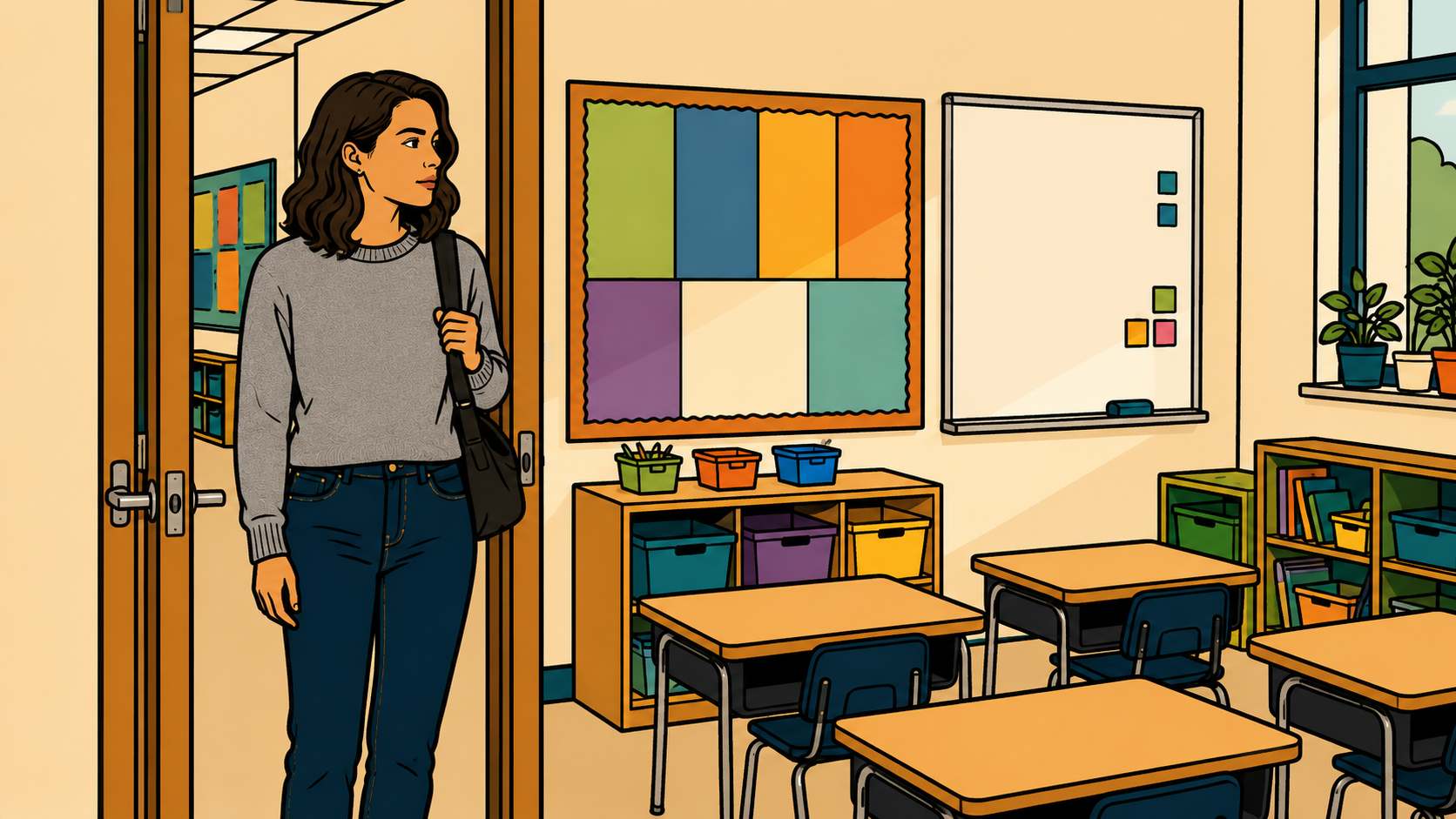
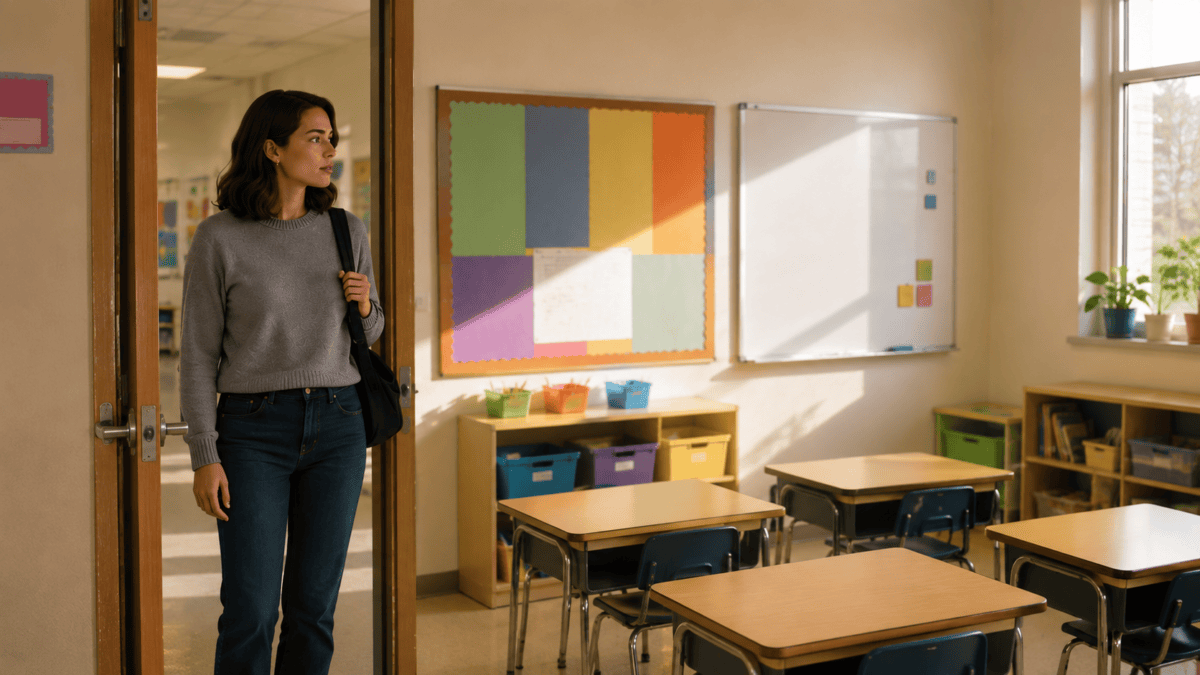
Third grade, a question about remainders, and you answered before the teacher finished the sentence.
Then the room went quiet for about four seconds.
That pause is the part people remember, though almost nobody remembers it as a pause. It gets remembered as the day you found out something about yourself. Academic validation usually starts in a moment that small. Being the smart kid begins there, and what got installed in it was not confidence. It was a price list.
The Four Seconds After You Answered
Nothing was announced. That is what makes it hard to locate later.
A boy two seats over turned around to look at you. The teacher’s eyebrows went up and stayed there for a second longer than usual. Somebody at the back said of course, not unkindly, just filing it. And then the lesson continued as if nothing had been distributed.
Something had. In those four seconds the room assigned a position, the way seating gets assigned, and everyone in it started operating on the new arrangement immediately.
Children read that assignment faster than adults think they do. What arrives is not the pleasant feeling of being praised. What arrives is a job description. There is now a thing you are, there is a thing you do to keep being it, and there is a first day.
Watch what a child does in the week after. Not celebrating. Checking. Answering a little faster the next time. Watching the teacher’s face when someone else answers. Testing whether the arrangement holds on a Tuesday when the question is harder.
A week later there is a harder question and the hand goes up before the answer is fully there. It works out. Nobody sees the gap between the hand and the answer, and that gap becomes a private space that stays private for the next twenty years.
You did not decide to be it. You were the one who answered first, and the room did the rest.
What Academic Validation Actually Paid For
The useful question is not whether the label was accurate. It is what academic validation actually paid for.
Look at what was rewarded and the price list is obvious. Speed was rewarded. Correctness was rewarded. And most of all, appearing to arrive at the answer without visible effort was rewarded, which is the one that does the long-term damage.
There was a kid in that class who got the same score you did. She got it by working through the problems twice at home, and everyone knew that, because she said so. The words attached to her were different. Hard worker. Diligent. Nobody used those words about you, and you noticed the difference before you could have explained it.
Researchers have measured what that difference does. In a set of studies from the late 1990s, fifth graders praised for being smart did worse after the first failure than children praised for working hard, and they were quicker to conclude that they simply were not good at the thing. The praise that sounded better held up worse.
Children arrive in that room with different defaults for how they move and respond, and a classroom pays out on only a few of them. Fast recall got paid. Slow, thorough, ask-three-questions-first did not, or got paid in a smaller currency with a less flattering name.
So the arrangement was never really about understanding. It was about ease, and about how it looked from the outside.
The currency was never understanding. It was ease.
How the Room Rearranged Itself
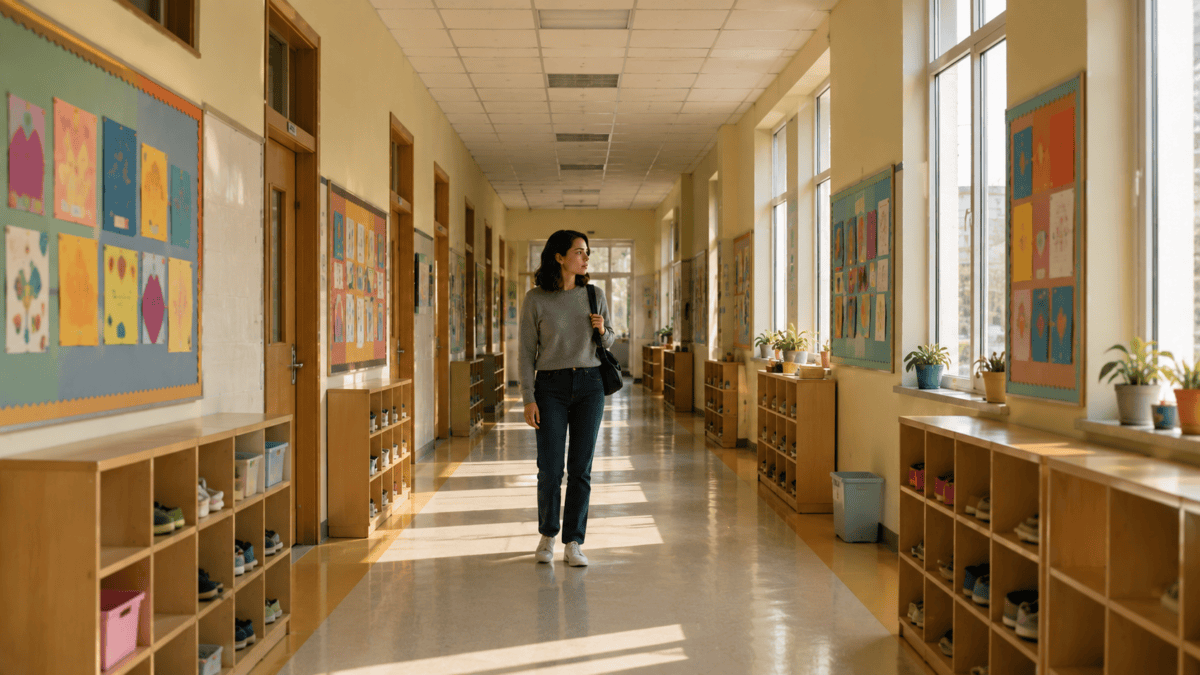
The label came with furniture.
You got moved next to the kid who was struggling, and it was framed as a favor to you, and it was not one. It was a job. You got picked first for the quiz team and last for anything requiring you to be taught something in front of others. When a new topic started, the teacher’s eyes went to you at the exact moment she wanted the class to hear the right answer quickly.
The desk next to the struggling kid is worth looking at closely. You explain the fractions again in your own words, he gets it, the teacher nods at you from across the room. Nothing about that is bad. But you are now the one who explains, permanently, in every room, and explaining is a position you take standing up while the other person sits.
And a smaller thing happened, which almost nobody notices at the time. Questions stopped coming toward you.
Not the questions on the test. The other kind. The ones where a teacher stands next to a desk and works through a mistake with a child, out loud, slowly, in front of everyone. Those went to other people. You were assumed to have it, so you were left alone with it, and being left alone became the sign that you were doing well.
Sit with the arithmetic of that for a moment. By fifth grade, the child labeled smart has had significantly less public practice at not knowing something than almost anyone else in the room. Not less ability. Less practice at the specific experience of being visibly mid-learning while people watch.
Nobody planned this. The room reorganized itself around a role, the way rooms do, and the role came with a desk and a set of duties that were never written down.
The Sentence a Teacher Said to Another Adult

There is usually one sentence you were not supposed to hear, and most people can still place the room it happened in.
A teacher standing at the classroom door, talking to another teacher or to your mother, and the phrase arrives in the third person. She’s one of the bright ones. You are four meters away, holding a bag, looking at the floor tiles, and something reorganizes.
Two things get learned at once. The first is that a file exists. The second is that the file can be read aloud without you, and that other people will make decisions based on it while you are standing right there.
After that the sentence travels. It gets repeated at a family dinner. It becomes the thing an aunt says every time she sees you for the next eleven years. It shows up in what a report card comment means, in which relatives ask about your grades first and your week second, in the way disappointment gets phrased when something goes badly.
And it becomes a way of checking whether you are still safe, which is a strange job for a compliment to do. Not whether the work was good. Whether the arrangement is still in place. Whether the room still holds.
Being the smart kid is not, at that point, something you are. It is something being maintained, by a room, by a family, by a sentence in circulation, and by a child who has understood the terms without ever being told them out loud.
None of this required anyone to be unkind. Every adult in it meant well and most of them were right about the schoolwork. The mechanism does not need a villain. It only needs a room, a role, and a child paying close attention.
You know the pause is still there because of where it shows up now. A meeting, a dinner, a group of people who have known each other longer than they have known you. Someone says something and you have the answer, and there is a half second where you decide whether to say it fast, or to wait, or to add the sentence that makes it sound like it just came to you.
You did not answer, that time or most times. You said something else, or you said it late, or you said it in the tone that makes a correct answer sound like a guess.
Third grade. Four seconds. The paper comes back face down, and you turn it over yourself, and you do not remember when you started doing that.
This post was planned and edited by a human, with AI assistance.