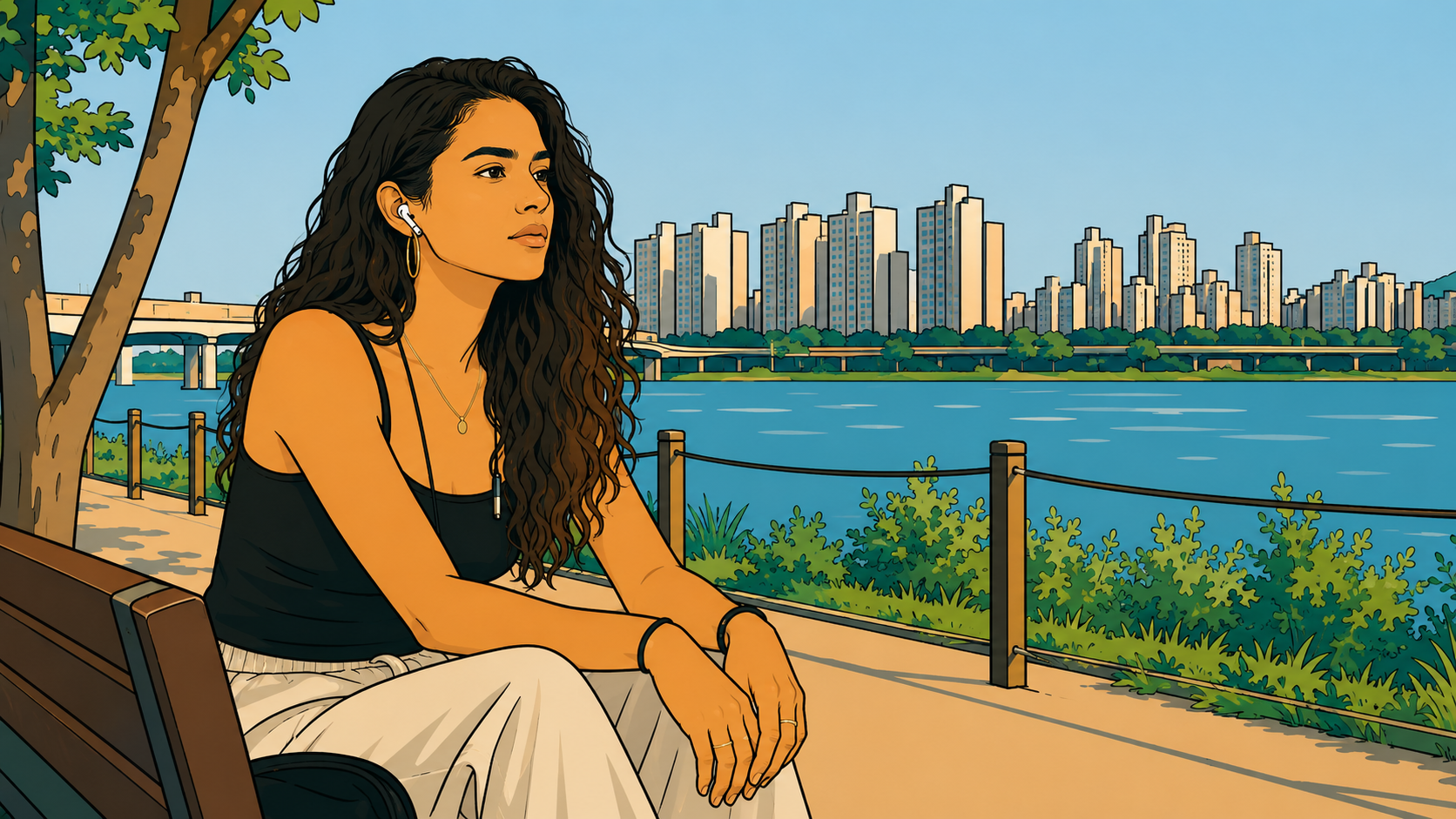

Anticipatory anxiety summons a version of you the night before something good — and it is not the version that will actually be there tomorrow.
You know this, somewhere. The person lying awake running calculations at midnight is not the person who will walk into the room, say the thing, hold the moment. That person is quieter. More present. Less rehearsed. But tonight, the rehearsing version is the only one available.
This is what good news anxiety actually does. Not the racing heart, not the worst-case scenario — something more structural. It summons a version of you that tomorrow will not need, and keeps that version running all night.
The night before something good, you’re never meeting the version of yourself that tomorrow will actually require.
Good News Anxiety and the Version That Runs at Night
Anticipatory anxiety has a specific trigger — a version of you that only surfaces under one condition.
Not stress, exactly. Not fear of failure. Something more precise: the anticipation of something mattering. When the stakes become real — when a possibility becomes a date, a time, a thing that could actually happen — a particular version activates.
This version is thorough. It prepares. It runs every scenario, checks every angle, rehearses every possible version of tomorrow until it has covered enough ground to feel like it’s done something useful. It mistakes motion for readiness. It confuses exhaustion with preparation.
You recognize this version. It’s the one that checks the same thing three times after already knowing the answer. The one that replays a conversation from two days ago looking for something it might have missed. The one that builds a complete picture of how tomorrow could go and then builds three more, just in case.
Good news anxiety doesn’t look like dread. It looks like productivity. It looks like due diligence. It looks like the responsible thing to do the night before something important. Which is exactly why it’s so hard to put down.
It is also, almost always, the wrong version for what tomorrow actually requires.
What the Gap Between Tonight and Tomorrow Is Made Of
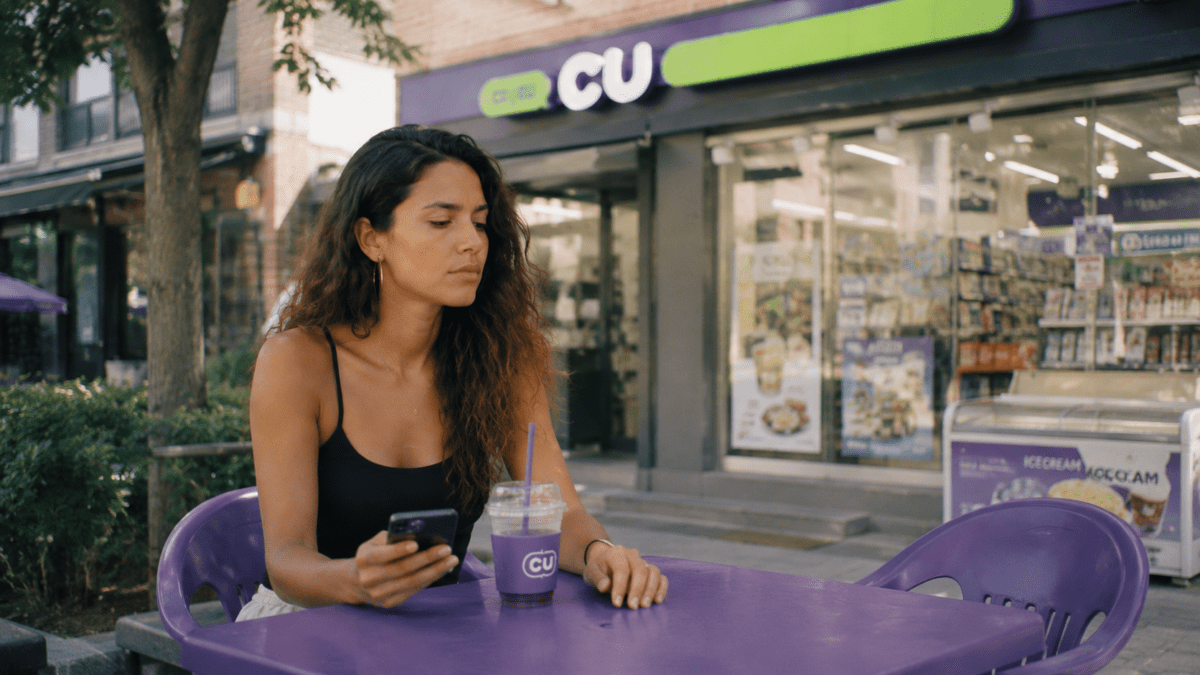
The gap isn’t anxiety, exactly. It’s distance.
The rehearsing version keeps you at a remove from tomorrow. You’ve already checked the calendar, looked at the time, replayed how it might go, and none of it has changed tomorrow by an inch. Every scenario you run is a version of tomorrow you’re watching from the outside — a film of how it might go, viewed from a seat in the back. You’re not in it. You’re observing it. Adjusting the lighting. Editing the script before anyone has said a word.
This is what good news anxiety does to anticipation. It turns presence into observation. It takes the thing you’re actually looking forward to and places it behind glass, where you can see it but not touch it, where it can’t surprise you but also can’t fully reach you.
The version of you lying awake tonight is protecting itself from full contact with tomorrow. Not because it doesn’t want tomorrow. Because wanting something fully — without the glass, without the remove — is the most exposed position there is.
Full contact means full loss, if it goes wrong.
So the system creates distance. Not enough to stop wanting. Just enough to make the wanting feel survivable. You stay close enough to feel it, far enough back to feel like you could absorb it if it fell apart.
The gap between tonight and tomorrow isn’t made of fear. It’s made of the space you keep between yourself and the thing you want most.
Why Tomorrow Never Matches the Rehearsal
There’s something worth knowing about the version that shows up in the room tomorrow.
It won’t remember most of what you rehearsed tonight. Not because the rehearsal was wasted — some of it will settle into the background, available when needed. But the version that walks through the door tomorrow will be responding to something live. Something that doesn’t follow the script. Something that requires a kind of attention that rehearsal actively works against.
Rehearsal trains you to respond to the version of events you imagined. Presence trains you to respond to what’s actually happening. They pull in opposite directions. And the night before something good, when good news anxiety is running at full capacity, the present version gets quieter and quieter.
This is why people often feel least like themselves right before something important. The most prepared version and the most present version are in direct competition. The more thoroughly you’ve rehearsed, the harder it becomes to drop the script when the actual moment arrives differently than expected — and it always does.
The moment in the room tomorrow will not be the moment you rehearsed tonight. It will be faster, or slower. Warmer, or more complicated. The other person will say something you didn’t anticipate, and the version that was ready for the rehearsed version will have to improvise anyway.
Some people whose depth-oriented processing runs longer into the night feel this split most acutely. The internal processing never quite stops. The preparation never feels finished. And good news anxiety keeps the rehearsing version running long past the point where it’s doing anything useful.
What to Do With a Version You Don’t Need Yet

The rehearsing version isn’t wrong. It’s just early.
There’s a time for the version that runs scenarios and checks angles and prepares for contingencies. That time is not midnight, lying in the dark, running the same three possibilities in rotation while tomorrow stays exactly the same size it was an hour ago.
That version is trying to make tomorrow safe before it happens. But tomorrow can’t be made safe in advance. It can only be met. And meeting it requires a different kind of readiness — not the readiness of having covered every angle, but the readiness of being willing to be surprised.
Good news anxiety keeps the preparing version active because the preparing version feels like control — and research on coping with anticipatory anxiety points in a similar direction: too much thinking is rarely solved by more thinking. If you’ve thought of everything, nothing can blindside you. If you’ve rehearsed every outcome, you won’t be caught without an answer. The logic is sound. The problem is that presence doesn’t work that way. You can’t think your way into being ready for something real. You can only show up and let it be real.
There’s also something the preparing version never accounts for: the other person in the room tomorrow. They haven’t rehearsed your script. They will say something unexpected, react in a way you didn’t model, take the conversation somewhere your preparation didn’t cover. And when that happens — when the real moment diverges from the rehearsed one, which it always does — the preparing version freezes. It was ready for the version it built. Not for the one that actually showed up.
The present version doesn’t freeze. It adjusts. It reads the room as it actually is, not as it was imagined. That’s the version tomorrow needs. And it can’t be summoned by rehearsing harder tonight.
This is the thing good news anxiety never tells you: the gap between the version that shows up tonight and the version that tomorrow actually needs isn’t a problem to solve. It’s a structural feature of caring about something. The more it matters, the more the preparing version activates. The more the preparing version activates, the further the present version recedes.
You can’t rehearse yourself into presence.
What you can do is recognize anticipatory anxiety for what it is — not preparation, not due diligence, not the responsible thing. It’s the cost of wanting something enough that losing it would actually matter. It’s the system doing the only thing it knows how to do with something it doesn’t want to lose.
Tomorrow, a different version shows up. One that hasn’t rehearsed. One that responds to what’s actually in the room. One that is, in almost every way that matters, better equipped for what tomorrow actually is.
That version has always been better at this than the one lying awake tonight.
Because tomorrow doesn’t need a rehearsal. It needs you.
This post was planned and edited by a human, with AI assistance.