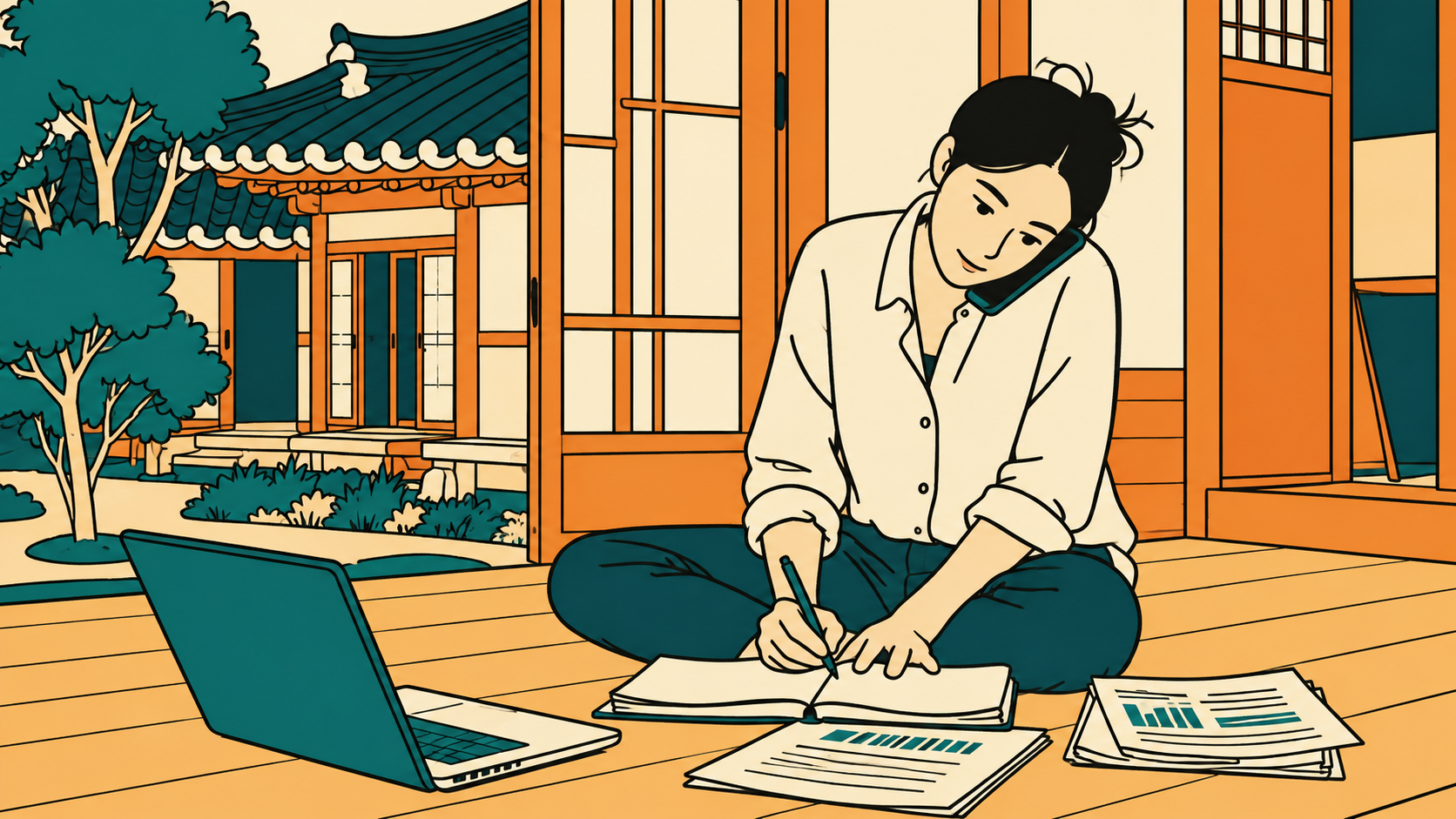

There’s a specific kind of person who never seems to fall apart.
Not because nothing hard happens to them. Hard things happen. But when it does, they’re the one everyone else calls. The one who knows what to do when the situation is unclear, who can hold the room when the room is panicking, who absorbs complexity without visibly buckling. Reliable in the way that becomes invisible — you only notice it when it’s gone.
Ask them how they’re doing and the answer is always some version of fine. Not performed fine. Just — fine. They genuinely don’t know how to answer differently, because the part of them that would register not-fine has been occupied with everyone else’s not-fine for so long it’s stopped sending signals.
This isn’t emotional suppression. This isn’t a trauma response, necessarily. Earth element meaning comes down to this in K-Saju: the force of integration running without the conditions it needs to replenish.
And if you recognized someone in that description — or yourself — this is worth understanding precisely.
The Structural Logic of Earth in K-Saju
Earth (토: to, integration force) is the third force in Ohaeng (오행: o-haeng, the five forces), and it corresponds to the center. Not a season in the way Wood (목: mok, initiation force) corresponds to spring or Fire (화: hwa, expression force) to summer — Earth is the transition point between all seasons. The moment of integration before the next phase begins.
In earth element meaning, Earth is defined by its function: to receive, hold, and process. Where Wood initiates and Fire expresses, Earth integrates. It’s the force that takes what has been generated and makes it usable — that turns raw experience into something that can be built on, that holds competing demands without collapsing under their weight.
This is why Earth energy, when it’s functioning, has a quality that’s difficult to name but immediately recognizable. Steadiness that isn’t rigidity. The capacity to be fully present with difficulty without needing to resolve it immediately. The person in the room who doesn’t add to the chaos — not because they’re checked out, but because they’ve already processed what everyone else is still reacting to.
Earth’s relationship to the other forces defines its range. Fire (화: hwa) produces Earth — expression and visibility generate the material that Earth integrates. Wood (목: mok) controls Earth — the force of initiation that prevents Earth from becoming so stable it stops moving. And Water (수: su, depth force) is controlled by Earth — grounded enough to give depth somewhere to land.
When Earth has what it needs — Fire producing into it, Wood keeping it from stagnating, Water landing within it — it builds foundations. When it doesn’t, it becomes a container that takes everything in and releases nothing.
What Earth Depletion Actually Looks Like
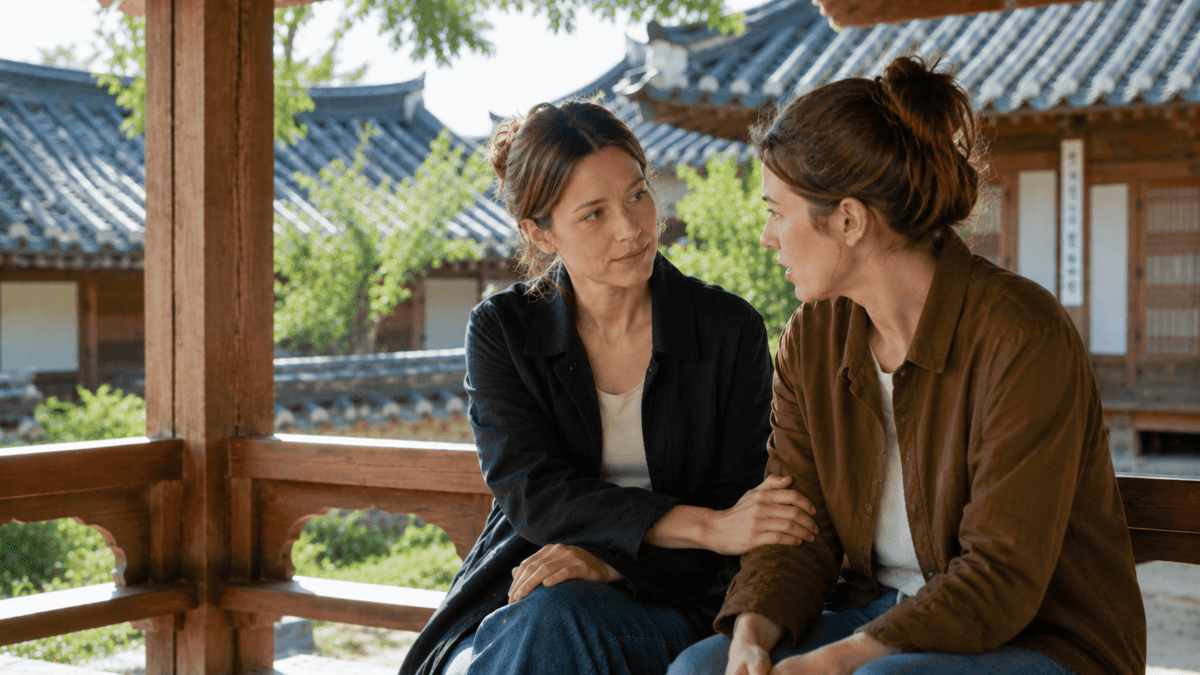
Every force has a version that looks like a strength until the cost becomes visible.
Earth’s version is the most socially rewarded of all five. The person who is always steady. Always available. Always the one who knows how to hold space, navigate complexity, absorb the emotional weight of a situation without making it about themselves. In every group — friend circle, workplace, family — there is an Earth person. And they are, almost universally, the last one anyone thinks to check on.
Because they seem fine. Because they always seem fine.
There’s a specific kind of person who has spent years being the one others come to. Not because they sought it out, necessarily — but because they were good at it, and being good at something tends to mean doing more of it. Over time, the role solidifies. They become the stable one, the reliable one, the person whose equilibrium is a resource everyone around them draws from.
What nobody accounts for is that equilibrium isn’t infinite.
The intake keeps coming — other people’s decisions, other people’s crises, other people’s needs that arrive urgent and real. And Earth processes it. That’s what Earth does. But processing requires something in return: space, stillness, the conditions for what’s been taken in to actually move through rather than accumulate. When those conditions are consistently absent — when there’s always another thing coming in before the last thing has been processed — the integration function begins to slow.
Not dramatically. Gradually. The steadiness is still there. The availability is still there. But underneath, something has changed. The processing that used to happen automatically now requires effort. The clarity that used to arrive easily now takes longer. And the sense of knowing what they actually want — separate from what everyone else needs — becomes harder to locate.
That’s Earth without space to process. Integration without the conditions integration requires.
How Earth Stops Processing
Earth’s failure mode isn’t drama. It’s a specific kind of functional depletion that looks, from every external angle, like competence.
In K-Saju analysis, Earth imbalance shows up in patterns that are almost impossible to catch without knowing what to look for. The person who is extraordinarily capable in a crisis and strangely lost in its absence. The one who knows exactly how to support everyone else’s process and has no reliable access to their own. The dynamic where being needed has become so structurally central to how they operate that periods without it feel disorienting rather than restful.
In relationships, Earth imbalance has a signature that’s easy to miss. The connection is warm, consistent, deeply reliable. Earth gives in a way that feels genuinely generous — not transactional, not performative. But over time, a specific asymmetry develops. One person is consistently the one who holds. The other is consistently the one who is held. Not because either person designed it that way — but because Earth’s capacity to absorb made it the natural container, and containers, if they’re never emptied, eventually stop being able to hold anything new.
The moment Earth reaches its actual limit rarely looks like a breakdown. It looks like a subtle withdrawal. Responses that come a little slower. Presence that’s technically there but somehow less available. The reliable person becoming slightly less reliable in ways nobody can quite name, because nothing dramatic has happened. Just a quiet, gradual closing of the aperture.
From the inside, it feels like a specific kind of distance from the self. Not sadness, not exhaustion exactly — more like arriving at the end of a day and realizing you have no memory of what you actually felt during it. You were present. You responded. You held what needed holding. But somewhere in the holding, the thread back to your own experience went slack. You were there for everything except yourself.
That’s not a mood. That’s Earth telling you the processing queue is full.
Earth element meaning reads this at the structural level. Not “why has she become less available” but “what is the force configuration that makes replenishment structurally harder than giving.” Not “why does he seem fine but feel empty” but “what conditions does this Earth-dominant chart require that have been consistently absent.”
The answer is almost always the same: Earth dominant, with Wood suppressed and Fire producing without pause.
Too much intake. Not enough initiation to create movement. Not enough Fire regulation to control the rate of input.
The force that holds everything together hasn’t been given — yet — the conditions to put anything down.
Earth to Metal — and What Wood Keeps Moving

Here’s what changes when Earth is balanced.
Earth yields Metal (금: geum, discernment force). Integration creates the conditions for discernment. What Earth has received, processed, and held becomes the material from which Metal identifies what’s worth keeping and what needs to be released. This is the cycle working — stability doesn’t become stagnation because Metal keeps moving through it, clarifying, refining, releasing.
But this only happens when Earth has actually processed what it’s received, rather than simply accumulated it. Earth holding without processing gives Metal nothing clear to work with. The discernment phase arrives and instead of clarity, there’s density — too much accumulated, none of it sorted, nowhere obvious to cut.
Wood controlling Earth is the mechanism that prevents productive stability from becoming inertia. A functioning Wood-Earth relationship means that Earth’s steadiness is periodically disrupted — not destructively, but generatively. New initiation moves through the stability, preventing it from solidifying into something that can no longer receive. Earth without Wood control eventually stops being a foundation and becomes a weight.
This is why some people remain genuinely grounded across decades of change, while others become rigidly stable — unmovable in ways that start to look less like strength and more like calcification. The Earth isn’t different. The Wood moving through it is.
When Earth Is Tested — and When It Rebuilds
Earth doesn’t fluctuate as visibly as Wood or Fire across cycles. In K-Saju, Earth is present in every transition — it’s the force that holds the space between phases. But there are Daewoon (대운: dae-woon, decade cycle) cycles where Earth becomes particularly stressed, and understanding when those cycles arrive changes how you move through them.
Earth stress cycles tend to arrive when the input rate dramatically increases — a period of rapid external change, multiple simultaneous demands, relationships or roles that require sustained holding without pause. The capacity that looked unlimited reveals its actual edges. Not in a single moment, but over months. The processing slows. The clarity dims. The person who was everyone’s resource quietly becomes someone who has nothing left to give.
It looks like answering a text three days late when it used to take three minutes. It looks like nodding through a conversation while mentally elsewhere. It looks like saying yes to one more thing because saying no has never felt like an option. It looks like canceling on yourself instead of canceling on anyone else.
Earth rebuilding cycles look different from Fire or Wood rebuilding. They’re slower. Less dramatic. The restoration isn’t a surge — it’s a gradual return of something that was always there, re-emerging as conditions finally allow. Space. Stillness. The rare experience of being the one who receives rather than gives. Time with the self that isn’t in service of anyone else’s process.
What K-Saju identifies in these cycles isn’t weakness. It’s the predictable behavior of a force that has been running beyond its sustainable conditions. Earth depleted isn’t a character failure. It’s a structural signal — the integration function asking, finally, for what it’s always required but rarely been given.
Knowing where Earth sits in your current cycle doesn’t tell you to stop giving. It tells you what the giving is costing — and what conditions need to exist alongside it for the cost to remain sustainable.
Earth Dominant: What the Configuration Requires

Earth element meaning treats Earth dominance not as a problem but as one of the most quietly powerful configurations available — the capacity to hold complexity, integrate contradiction, and remain functional under pressure is not a common structural gift.
The question is always what’s present alongside it. A chart with strong Earth and strong Wood has a built-in momentum mechanism. The stability doesn’t calcify because initiation keeps moving through it. This person holds a great deal and also starts things — their groundedness becomes a launching point rather than a resting place.
A chart with strong Earth and suppressed Wood is a different structure. The integration runs without its natural disruptor. Stability deepens into density. The processing slows not from lack of capacity but from lack of movement — nothing is initiating the release that Wood would otherwise provide. This isn’t a flaw in the person. It’s a force configuration that requires Wood to be deliberately cultivated rather than assumed.
Here is where K-Saju reaches the edge of what the structural data alone can tell us.
The chart identifies the configuration. It identifies the cycles in which Earth will be stressed and the cycles in which rebuilding becomes possible. What it asks for is specific: Wood, built in on purpose, before the cycle demands it — not summoned after the processing queue is already full.
Earth dominant with weak Wood isn’t a character flaw. It’s a structure waiting for the one piece it was never given by default.
This post was planned and edited by a human, with AI assistance.