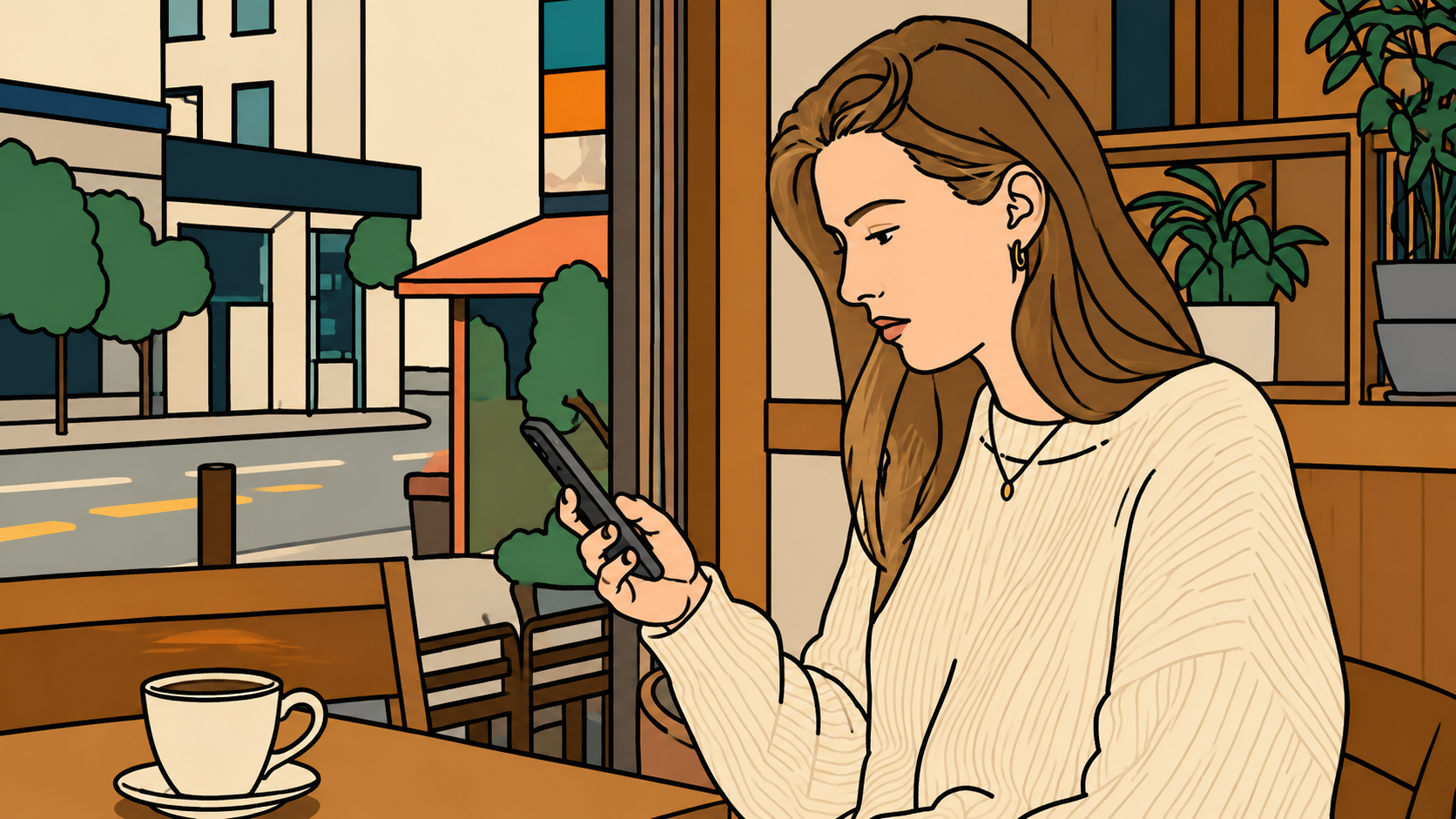

There is a message sitting in your drafts to a friend you have known for years. You typed it, read it back, and left it there. That was four days ago. You are not angry at them. Nothing happened. And yet the message will not send itself, and you have started to wonder what that means.
You reread old threads to check whether you are imagining it. You cannot tell if you are grieving something real or overreacting to nothing, and the not-knowing is its own particular discomfort.
Most people trying to name the end of friendship are not looking for a reason to leave. They are watching for the signs friendship is ending, trying to tell the difference between a bad stretch and a real ending, because those two things feel almost identical from the inside and lead to completely different decisions. Before you do anything, you need to know which one you are actually in.
A Lull Is Not an Ending
Every long friendship goes quiet sometimes. Someone has a newborn, a brutal work year, a move to another city, a season where they disappear into their own life and barely surface. That is not an ending. That is a lull, and lulls end on their own. You pick the thread back up months later and it is still warm, and neither of you has to explain the gap.
Think of the friend who went quiet for a year after a divorce and then called as if no time had passed. That was a lull. Now think of the one you still message warmly on birthdays and have nothing to say to in between. That may be an ending wearing a lull’s clothes. The first recovers the moment life loosens its grip; the second does not, no matter how much time opens up.
An ending is different, and the difference is not how much distance there is but whether there is a way back across it. In a lull, the closeness is paused. In an ending, the closeness is gone, and the pause is just where you both stopped pretending otherwise. The honest question is never whether you feel connected this month. It is whether the connection could return if the circumstances did.
This is really a question of timing more than feeling, and reading which phase it’s actually in will tell you more than any single interaction can. A friendship at a low point in an ongoing cycle looks, in a snapshot, exactly like one that is over. You cannot judge it from the snapshot. You have to know where it sits in the arc.
What Actually Changed
To tell them apart, stop looking at how you feel and look at what changed.
There are two kinds of change, and they have different endings. The first is circumstantial: you moved, they had kids, one of you switched careers or time zones and the easy proximity that fed the friendship dried up. Circumstantial distance is often survivable. The friendship did not break; the conditions that made it effortless did, and effort can sometimes replace them.
The second kind is directional. This is when the two of you start wanting different things, valuing different things, becoming different people, not through any fight but through the ordinary drift of two lives growing in separate directions. Directional change is the one that usually does not come back, because there is no schedule you can fix and no visit that resolves it. You have not grown apart in distance. You have grown apart in kind.
A quick test: imagine the circumstance reversed. If they moved back tomorrow, or the brutal season ended, would the friendship snap back into place, or would you still be reaching for things to say? Circumstance is about logistics; direction is about who you have each become. Logistics can be renegotiated. You cannot schedule your way back into wanting the same things.
Name which one you are dealing with. Be honest, because it is tempting to file a directional ending under circumstance so you do not have to face it. “We are just both busy” is true far less often than it is used.
The Signs You’re at the End of Friendship — and Keep Explaining Away

Your body usually knows before you admit it.
Watch for the tells you have been talking yourself out of. You feel relief, not disappointment, when they cancel. The effort has quietly become one-directional, and you are the only one who reaches out, or you have stopped and noticed they never picked up the slack. Conversations that used to run for hours now need topics, and the topics run out. You catch yourself performing warmth you do not feel, or bracing before you see them instead of looking forward to it.
There is also the slow version, the one that never announces itself. No fight, no rupture, just an absence that never became an event, one unanswered thread at a time, until the friendship is less a relationship than a memory you are both being polite about. That kind of fade is its own experience, and it deserves its own careful look, but even a fade leaves signs if you are willing to read them.
Notice, too, what you no longer share. You stop telling them the real news first. Something big happens and they are not the call you make; they are the one who hears it later, or from someone else. When a person slides from your inner circle to your announcements list and neither of you ever decided it, that is information.
None of these, on its own, means the end. Everyone cancels. Everyone has off months. But when you line them up and they all point the same way, you are no longer looking at a rough patch. A friendship rarely ends in a fight. It ends in a series of things you let slide.
This Is a Read, Not a Verdict

Here is what this stage is not: it is not the decision.
Noticing the end of a friendship is not the same as ending it, and you do not have to do anything today except see clearly. That distinction matters, because people who skip it tend to make one of two mistakes. They panic at the first cold month and cut someone who was only busy, or they ignore a year of evidence because facing it feels like failure. Both come from refusing to just look.
So look. Lay out what changed, whether it is circumstance or direction, and whether the signs cluster or scatter. Notice that how a friendship ends will shape what it costs you later, which is exactly why it is worth being deliberate now instead of letting it happen to you by default. The loss of a close friend can cost as much as any breakup, and it deserves the same clear eyes.
And give the read a little time before you act on it. One clear-eyed look on a bad week is still a single data point. Sit with what you noticed for a couple of weeks and see whether it holds. Real endings stay visible; the ones you invent on a lonely night tend to dissolve by morning. If it is still there in two weeks, it was never the lonely night talking.
You do not have to decide today whether this friendship is over. You have to decide something smaller and more useful first: to stop guessing, and to see where it actually stands right now. Once you can name where it is, you can decide what to do about it. That decision is the next thing. For now, the work is only to read the season you are in, and to stop calling an ending a rough patch just because that is the easier word.
This post was planned and edited by a human, with AI assistance.