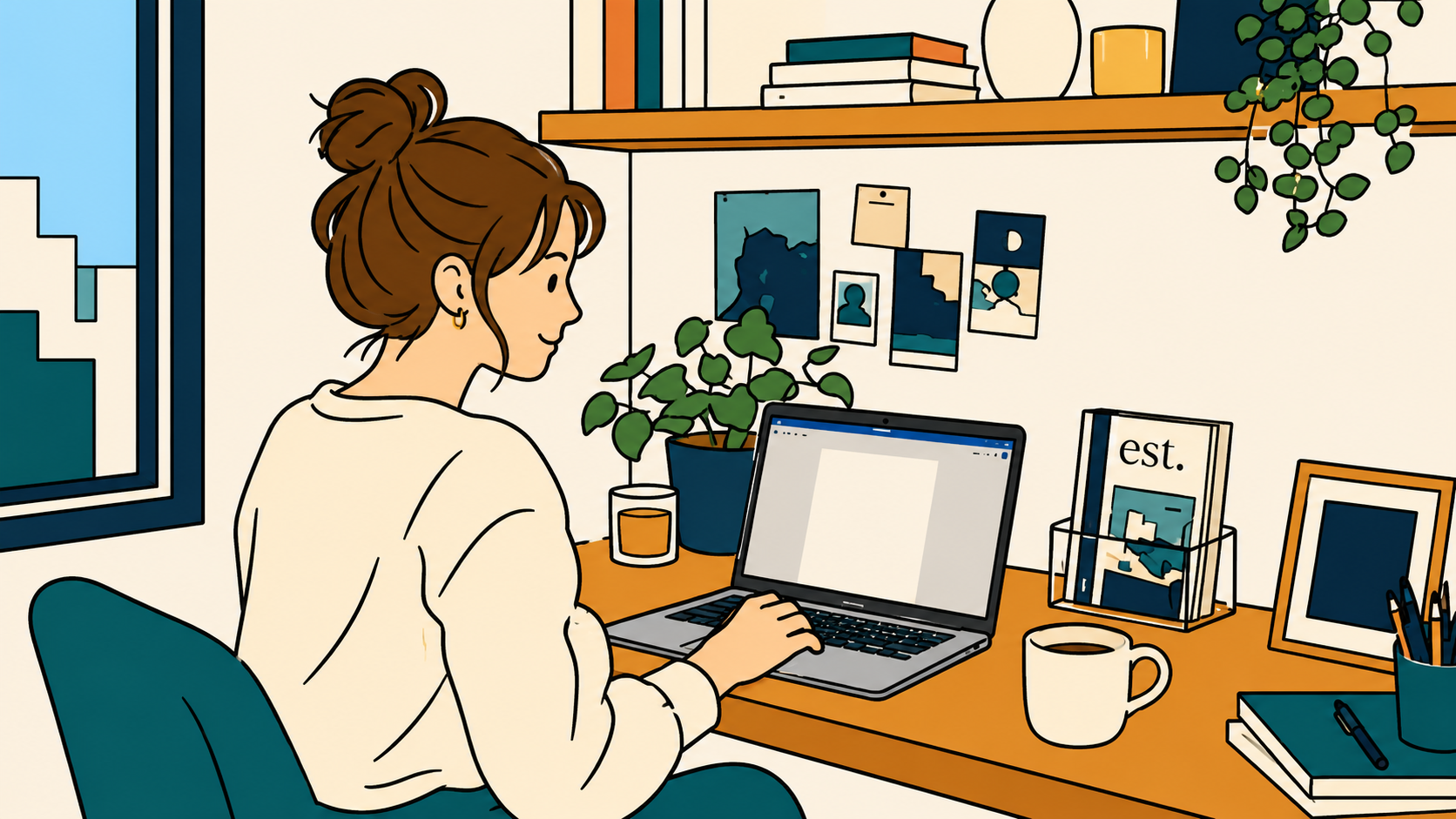

You open the laptop. The cursor blinks in an empty document for a second, then you close it again, telling yourself you’ll start tonight after dinner. Or tomorrow morning, when your head’s clearer. Or this weekend, when you actually have a real chunk of time to focus. Sound familiar? You’re not lazy, and this isn’t really about how to stop procrastinating through willpower — you’re just waiting to be ready, and that feeling keeps not showing up on schedule.
Here’s the part nobody tells you: readiness isn’t something that arrives before you start. It’s something you build by starting. But when you’re stuck in the loop of waiting for the right moment, that fact feels almost annoying to hear. Like, no, I really do need to feel ready first. Except you don’t. You just think you do, and that thought has been doing a really good job of keeping you exactly where you are.
It’s not even that you’re avoiding the thing on purpose. You’d probably tell anyone who asked that you’re definitely doing it, just not yet. You’ve got the tabs open. You’ve got the playlist ready. You’ve got every condition lined up except the one that actually matters, which is starting. And somewhere along the way, “soon” turned into a holding pattern you’ve been circling for weeks.
And the annoying thing is, you’re not even sitting around doing nothing while you wait. You’re busy. You’re tired at the end of the day. You have a real, full life happening around this one thing that keeps getting pushed to the edge of it. So it doesn’t feel like avoidance from the inside. It feels like timing. It feels like you’re a person who’s simply waiting for things to line up, the same way you’d wait for traffic to clear before pulling out. Except traffic clears on its own. This doesn’t.
The Project That Waits for the Right Mood

Maybe it’s the email you’ve had drafted for three weeks. Maybe it’s the workout plan you screenshotted and never opened again. Maybe it’s the business idea you’ve described to four different friends without writing a single sentence of an actual plan. Whatever it is, you have a version of it. The thing that’s been “in progress” for so long it’s basically become a personality trait at this point.
The pattern is always the same. You wait for the mood to hit. You wait to feel inspired, or clear-headed, or like today is finally the day. You scroll for a little inspiration first, just to get in the zone. Forty minutes later you’ve watched a bunch of unrelated videos and the document is still sitting there, untouched, cursor still blinking. You keep waiting to be ready instead of just opening the file, and no amount of advice on how to stop procrastinating gets past that, because it always feels like the more responsible move.
It’s not that you don’t want to do it. You clearly do, or you wouldn’t keep thinking about it every single day. It’s that you’ve quietly decided the project needs a green light from your own emotions before it’s allowed to start. And your emotions, being emotions, don’t really run on a schedule that cares about your deadline. They show up when they want to, which is usually right after you needed them to.
How to Stop Procrastinating When “Not Ready Yet” Sounds Reasonable
This is the part that makes it so easy to keep doing. “I just don’t want to rush it” sounds responsible. “I want to do it right” sounds mature. “I’m not in the right headspace today” sounds self-aware, like you’re being thoughtful instead of avoidant. None of it sounds like procrastination, even though that’s exactly what it is wearing a slightly nicer outfit.
The line moves every time you get close to it, too. You tell yourself you’ll start once you’ve finished researching. Then once your schedule clears up a little. Then once you’re less tired, less stressed, less distracted by whatever else is going on. There’s always a next condition waiting right behind the one you just met. And the wild part is, each one feels completely legitimate in the moment. You’re not lying to yourself on purpose. You’ve just gotten really good at finding reasons that sound like wisdom instead of what they actually are, which is a way to keep the start line just out of reach.
You’ll even catch yourself saying it out loud to other people. “I’m working on it.” “I’m getting there.” You believe it when you say it, too, which is honestly the most convincing part of the whole thing.
What makes “not ready yet” so hard to catch is that it never feels like a no. It’s really just waiting to be ready, dressed up as patience, on a timeline nobody else can see. You’re not refusing the thing. You’re postponing it with full confidence that you’ll get to it eventually, and that confidence is exactly what lets you off the hook today.
The Research Phase That Never Closes
This is the more sophisticated version of the same thing. Instead of obviously avoiding the task, you research it. You read. You watch the videos. You bookmark the articles. You open fourteen tabs comparing options for something you haven’t technically started yet. At some point you could probably teach a short class on how to begin this project, except for the part where you’d actually have to begin it.
Research starts as a real tool. It’s useful, it’s smart, it makes sense to look something up before you commit. But somewhere along the way it quietly turns into a hiding place. As long as you’re “still figuring it out,” you don’t have to face the version of you that might mess it up. You get to feel productive without ever being exposed to an actual result. The notes app fills up with plans for a plan, the bookmarks folder gets a new subfolder just for this, and the plan itself never moves an inch.
There’s a strange comfort in staying in this phase. It feels like progress because you’re doing something, you’re just not doing the thing. You can spend an entire evening “preparing” and walk away feeling oddly accomplished, even though nothing in your actual life changed. Underneath it, you’re still just waiting to be ready — you’ve just found a version of it that looks like productivity instead of avoidance. The research isn’t the problem. The fact that it never has an end date is.
What Starting Actually Requires

Here’s the thing that flips it, though. Readiness was never really about your mood lining up with the moment. It’s not a feeling you’re supposed to wait around for. It’s something that shows up after you’ve already started moving, not before. You don’t get the green light first and then go. You go, and the green light catches up somewhere along the way.
You don’t need to feel calm to send the email. You don’t need to feel motivated to open the document. You need to do the smallest physical version of the thing — type one sentence, put on the shoes, hit send on the message you’ve been sitting on — and let the rest catch up after. Some people would call that discipline. Really, it’s just timing you create for yourself instead of one you keep waiting on someone else to hand you.
This doesn’t mean every plan benefits from rushing in blind. Some pauses really are useful, the kind where you’re letting an idea sit so it can actually take shape. The difference is how it feels from the inside. A useful pause feels calm. This kind of waiting feels restless, a little guilty, the same loop playing on repeat with no actual movement underneath it. One is patience. The other is just delay wearing patience as a disguise.
So the next time you catch yourself thinking “I’ll start when I feel ready,” try noticing that for what it is. Not a fact about how you work. Just a sentence that’s been quietly buying you time. Waiting to be ready was never the requirement. Starting was. The file’s already open. You don’t need permission from your own mood to type the first line.
This post was planned and edited by a human, with AI assistance.