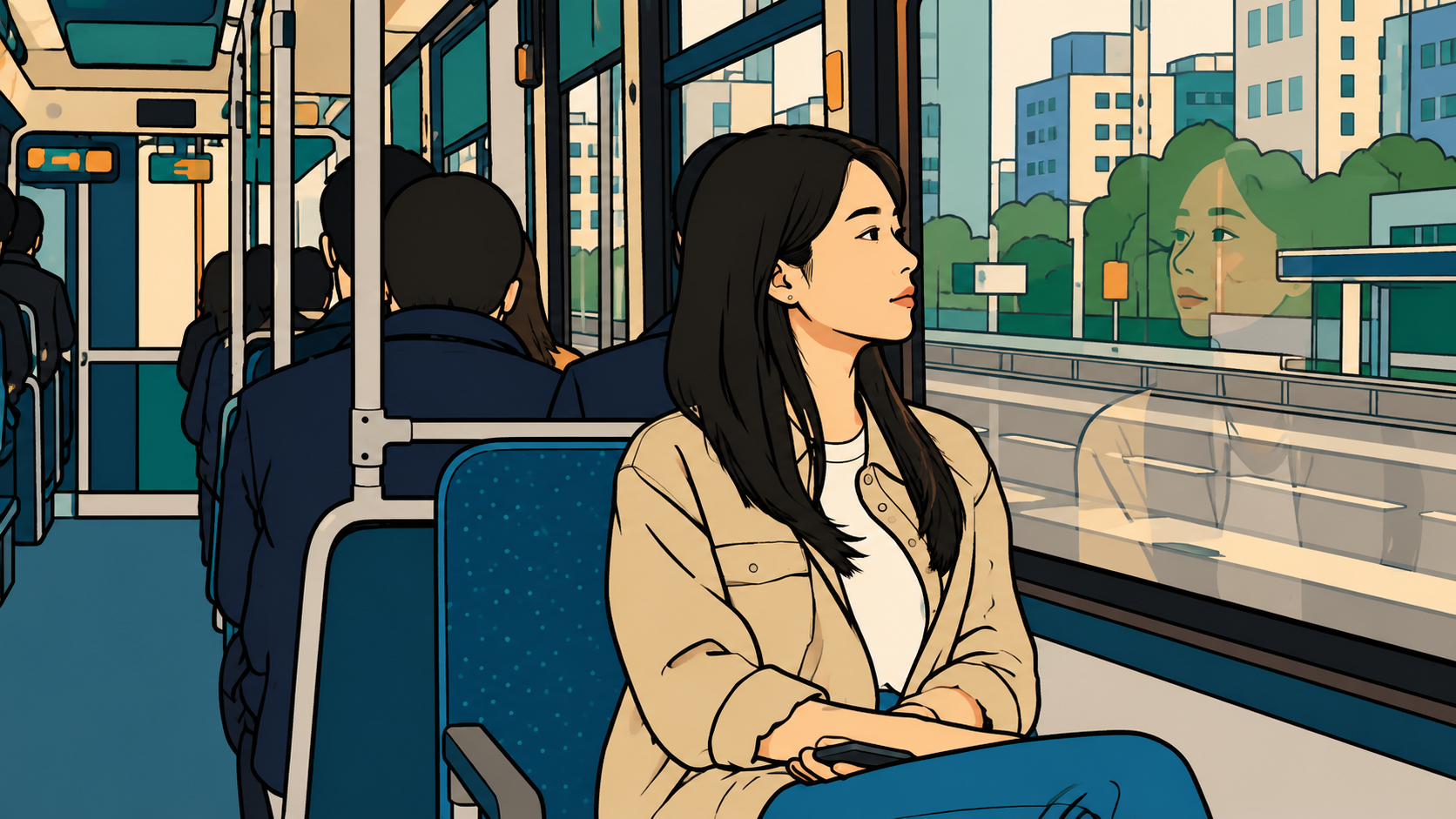

Everything up to now assumed you were the one holding the decision. This part is for the other seat, the one nobody wants: the friendship ended, and you did not get a vote. Losing a friend is hard in any form, but losing one you did not choose to lose, on someone else’s timing and for reasons you may never be told, is a particular kind of hard, and it deserves its own map.
The advice that helped you decide to end a friendship does not help you here, because none of it applies when the choice was made without you. This is a different problem, and it needs different tools.
Maybe the replies got shorter and then stopped. Maybe there was a last conversation you did not know was the last. Maybe one day you simply realized the plans had quietly stopped being made, and that you were the only one still trying to make them. However it happened, you are here now, on the receiving end of an ending you did not author.
When You Didn’t Get a Say
There is a specific helplessness in being the one who was left.
You reread the last messages looking for the moment it turned. You run the timeline backward, hunting for the thing you said or did not say. You keep your phone a little closer than usual, and you notice your stomach drop each time it buzzes and it is not them. None of that is weakness. It is what happens when something important ends without your consent and without a reason you can hold.
The mind reaches for a cause because a cause would mean control: if you can find the mistake, maybe you can fix it, maybe you can prevent the next one. So you audit yourself. You replay the joke that landed wrong, the text you took a day to answer, the evening you talked too much about yourself. Some of that reflection is useful later. Most of it, right now, is just your brain trying to turn a loss it cannot control into a problem it can solve.
Part of what makes it so disorienting is that our culture gives friendship breakups no script. When a romance ends, everyone understands the grief. When a friendship ends, people expect you to shrug it off, which leaves you carrying a real loss with none of the permission that comes with the more recognized ones. So let this be the permission: what you are feeling is proportional. You did not overreact by caring.
The Explanation That Isn’t Coming

When you’re losing a friend this way, the hardest part, for most people, is the not-knowing.
You want a reason. You deserve one, in some fair version of the world. But the reason often never arrives, and it is worth understanding why. Sometimes the other person cannot put it into words. Sometimes they avoid conflict so completely that vanishing feels easier to them than a sentence. And sometimes they checked out so long ago that, to them, there is nothing left to explain. None of those are about your worth. They are about their limits.
The question that loops the loudest is usually “what did I do?” Sometimes the honest answer is nothing that deserved this. People are allowed to leave, and some of them leave badly, and neither of those facts requires a crime on your part to explain it.
At some point the waiting itself becomes the wound. You refresh the thread, you draft messages you do not send, you assemble theories from thin evidence. But the silence is itself the answer, and continuing to interrogate it only keeps you employed as a detective on a case that closed without you. Chasing the reason carries a hidden cost. Every theory you build, every message you draft and delete, keeps the friendship active in your head long after it ended in fact. You stay tethered. Deciding to stop looking is not giving up on the truth; it is refusing to let an unanswered question run your days.
The closure you are waiting for is not coming from them. The only closure available is the kind you give yourself, by deciding that the absence of a reason is, in fact, the reason.
Whether to Reach Out, or Let It Stand
There is one decision here that is genuinely yours, and it is worth making on purpose rather than on impulse: whether to reach out once, or to let it stand.
Reaching out can make sense when there is a real chance this was a misunderstanding, when the friendship was close enough that you would regret never trying, or when you simply need to know you left nothing unsaid. If you do it, do it cleanly. Send one honest, non-accusatory message, something like a plain “I have noticed the distance between us, and I would rather ask than assume. I would love to understand what happened.” Then let go of the outcome, because you are only responsible for the reaching, not the response.
A few guardrails if you do reach out. Do not send it at midnight, do not send it after a few drinks, and do not send a paragraph that has quietly become a case for the prosecution. One message, calm, in daylight. And resist the urge to route it through mutual friends or to hand them a version of the story to hold. This is between the two of you, and keeping it there protects everyone’s dignity, including yours.
And be ready for that response to be nothing. If they have already made their choice clear, if the friendship was draining or unsafe, or if you can feel that another message would be chasing rather than asking, letting it stand is not defeat. It is dignity. Either way, the rule is the same: you get one attempt, made in good faith, and then you stop knocking on a door someone has decided to keep closed.
What Losing a Friend Doesn’t Mean

Here is the reframe to carry out of all of this, because the story you tell yourself about being left will shape how long it takes to heal.
Being left is not a verdict on your worth. A person’s decision to withdraw ran on their own structure, their own capacity, their own crowded and complicated life, far more than it ever ran on your value as a friend. People leave for reasons that live entirely inside them: fear, exhaustion, a season they are in, a limit they hit. You were often just the person standing there when their limit arrived.
the silence is itself the answer It does not mean the friendship was fake. Something can be real for years and still end. It does not mean you failed, or that you are difficult to love, or that you should have seen it coming. And it does not mean you have to be fine. You are allowed to grieve it, fully, even though the loss has no name and no ceremony and no one sent flowers.
Practically, treat it like the loss it is. Name it out loud to someone you trust instead of minimizing it. Mute or unfollow so you are not fed a daily update on a life you are no longer part of. Put the freed-up time into something that genuinely matters to you rather than into surveillance. Grief moves faster once you stop feeding it new material.
So do the small, firm things. Make your one attempt or make your peace. Stop refreshing the thread. Let the silence be theirs to carry rather than yours to decode. And grieve the friendship for exactly what it was worth to you, which is a number only you get to set, and which the way it ended does not lower by a cent.
This post was planned and edited by a human, with AI assistance.