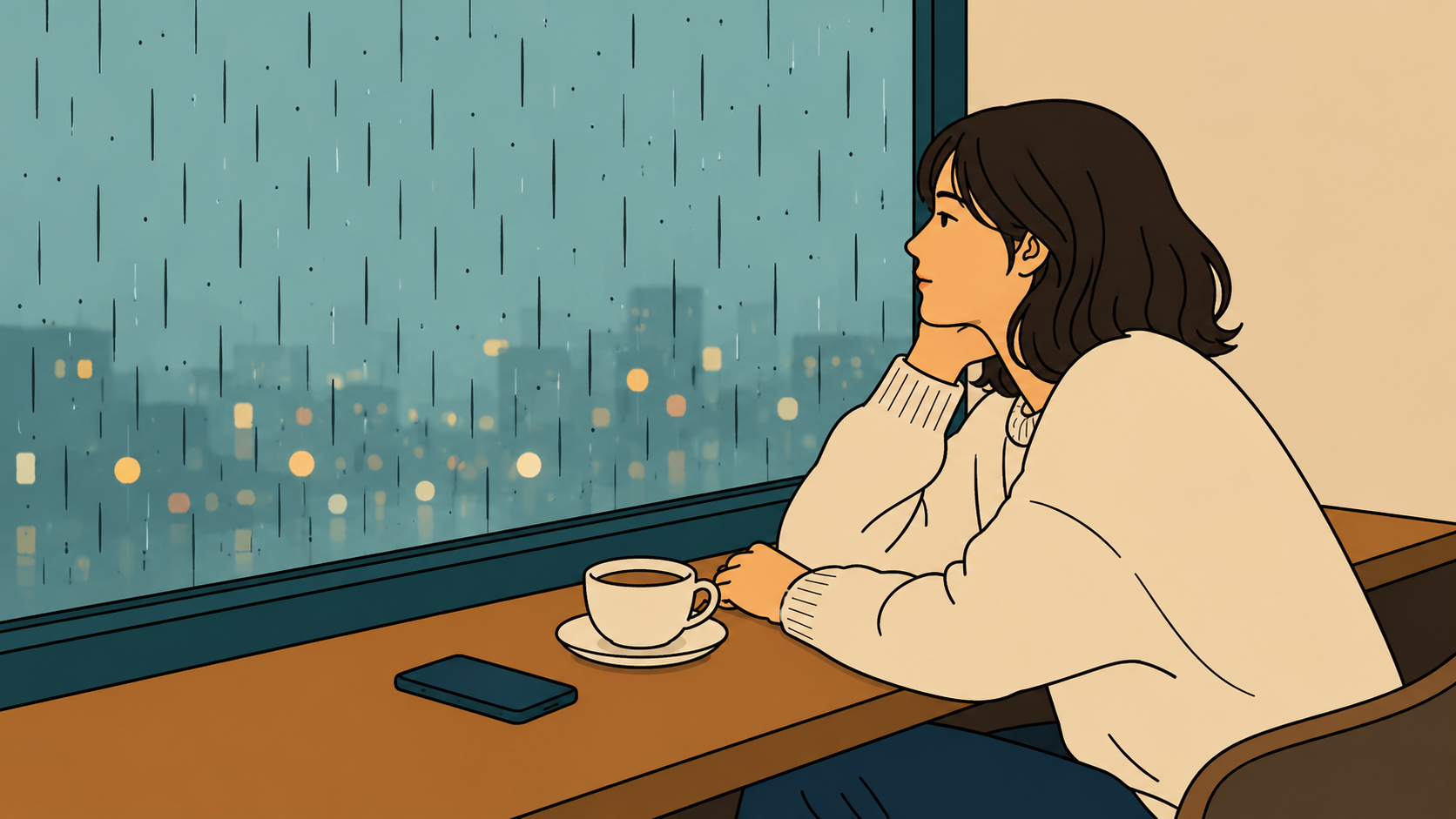

It happens fast.
Pulling away from someone you like doesn’t announce itself. It arrives as a temperature change — something quiet that rearranges itself before you’ve had time to name it.
One conversation goes longer than expected. They remember something small you mentioned two weeks ago — not the big things, the small ones. The name of your childhood dog. The city you almost moved to. You’re walking back to your car and realize you’ve been smiling for the last twenty minutes without noticing.
Then something shifts.
It’s not a thought exactly. More like a temperature change. Something inside quietly rearranges itself, and by the time you get home, you’re already looking for the exit.
The Text You Take Three Hours to Answer
It’s not that you don’t want to reply. You read it the moment it came in. You know exactly what you want to say — something easy, something warm, the kind of reply that would move things forward naturally.
But you set the phone face-down and walk to the kitchen. Pour water you don’t drink. Come back to the same screen. Read the message again. Put the phone down a second time.
Something about answering feels like agreeing to something you haven’t fully decided yet. Not a bad something. That’s the part that makes it complicated.
So you wait. Not because you’re playing a game. Because the speed of your own feelings startled you, and slowing the outside down is the only lever you have right now. An hour passes. Then two. By the time you reply, the moment has cooled just enough to feel manageable. Safe. The warmth is still there, but you’ve put some distance between yourself and it.
You tell yourself you were just busy.
What You Do With the Good Ones
Here’s the part nobody talks about: this doesn’t happen with everyone.
With the ones who don’t quite reach you, you text back immediately. Plans are easy. Canceling is easier. There’s no static, no second-guessing, no lying awake at 1 a.m. running the conversation back looking for the moment it went wrong.
It’s specifically the ones who get close that trigger the retreat.
Which means the pulling back isn’t about them. It was never about them. The clearer the signal, the louder the noise inside. You feel it before you can name it — that specific tension of wanting something and immediately wanting to want it less. Of reaching toward something and then, almost in the same motion, pulling your hand back.
The ones who don’t affect you get your full attention. The ones who matter get the edited version.
The Version of You That Shows Up First
There’s a version of you that appears in the early days of something new. She’s curious. A little guarded, but genuinely open. She asks good questions. She laughs without monitoring herself. She texts back within minutes and doesn’t think twice about it.
Then she notices she’s enjoying this too much.
And she starts editing.
The unguarded laugh becomes a measured smile. The question she actually wants to ask gets replaced by something safer, something that couldn’t be misread. She’s still in the room, still responding, still technically present — but she’s moved two steps back from the window, just in case.
She leaves a little space between every response. Not enough to be noticeable. Just enough to feel like she could still walk away clean if she needed to. She checks the tone of her messages before sending. She waits a beat before answering calls. She reads his last message three times before deciding it doesn’t mean what she hoped it meant.
She tells herself she’s being realistic. That she’s just not getting ahead of herself. That this is what mature people do — they don’t rush, they don’t assume, they keep things measured.
What she doesn’t say — even to herself — is that the measuring started the moment she realized she actually cared. That the distance isn’t caution. It’s a response to something that already landed.
She’s not being dishonest. She’s being careful with something she doesn’t yet know how to hold. The edited version isn’t less real. She’s just more expensive to maintain — and she knows it, and she keeps doing it anyway.
The Night You Talked Yourself Out of It

You remember a specific night. Not a fight, not a rejection. Just a quiet evening where things were going well — maybe too well — and you lay in bed afterward constructing reasons why this probably wouldn’t work.
His schedule. The distance. The way he said that one thing that could mean two different things depending on how you read it. The fact that you don’t really know him yet. The fact that you’re starting to.
The reasons weren’t wrong exactly. But you’d assembled them with unusual speed, like someone who already knew the verdict and was working backward to build the case. A defense prepared before any charge was made.
By morning, you’d half-convinced yourself. By the following week, you’d created just enough friction to make the distance feel mutual. You responded a little slower. You made plans a little vaguer. He pulled back too, eventually. Not because he wanted to. Because you’d made it the only available move.
It worked. The feeling became manageable. The door stayed open just enough that you couldn’t call it closed, but not so open that anything could really come through.
Which was the problem.
The Logic Behind Pulling Away From Someone You Like

Pulling back from someone you like isn’t irrational. It follows a logic that’s been working for a long time, probably longer than you’ve been paying attention to it.
At some point — not necessarily a single moment, more like a slow accumulation of moments — getting close became associated with losing something. Control, maybe. Or a version of yourself you’d worked hard to maintain. The one who doesn’t need too much. The one who can leave without it costing her anything.
So the system learned: when the signal is good, increase the distance. Not to punish. To protect. To stay ahead of whatever comes next.
The problem is that the system can’t distinguish between a genuine threat and something that just feels like one. It runs the same protocol either way — the same waiting, the same editing, the same carefully maintained space. You end up most distant from exactly the people who gave you the least reason to be.
There’s a name for this kind of pattern — the way the gap between what we want and how we move toward it follows a recognizable structure, not just a personal failing. That feeling has a shape. And once you can see the shape, it stops feeling like a character flaw and starts feeling like something that was learned. Which means it can change.
What You’ve Known All Along
You’ve probably already identified the pattern. You’ve watched yourself do it more than once, maybe more times than you can count. You know the texture of it — the slight relief when someone stops trying, the guilt that follows almost immediately after, the recycled question of whether you’re just not ready or whether ready is a place you’ve been driving toward for years without getting any closer.
You know what it feels like the morning after you’ve created distance that didn’t need to exist. The way you check his profile not because you want to reconnect but just to confirm he’s still there. The way you replay the last conversation looking for the moment you could have done it differently — and find it, every time, and do nothing with that information.
Knowing the pattern and being outside it are two different locations.
And the quiet recognition that it happened at all.
Some content in this post was created with AI assistance.