

Two women sit across from each other at a café, catching up after months apart. One of them looks different, and the other can’t figure out why. Not the hair. Not the makeup. Something in the face, lighter and clearer, but nothing you could point to.
She almost asks, then doesn’t, because there’s nothing specific to ask about. This near-invisible difference is the whole aim of the subtle aesthetic, and achieving it costs more than any dramatic change ever would.
The hardest thing to do well is the thing no one notices. That’s the paradox sitting underneath the entire Korean approach to this work.
The Mirror Test: What You See vs. What Others See
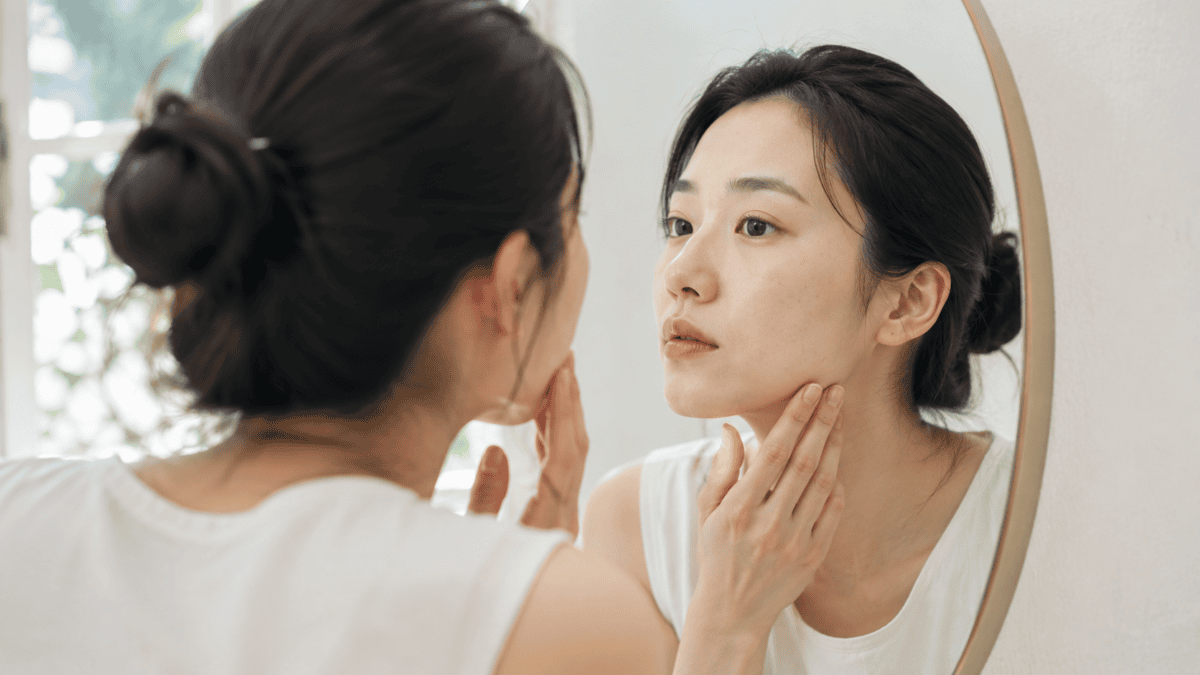
Stand in front of the mirror the week after and you see it clearly. The jaw a little cleaner, the cheek a little lifted, the tired shadow gone. You see it because you know exactly where to look, because you’ve studied this face your whole life.
Other people see something different, and something less specific. They don’t register the jaw or the cheek. They register that you look well. Rested, maybe. Like you’ve been sleeping better or just came back from somewhere. The change lands on them as an impression, not a detail, and that gap between what you see and what they see is exactly where the subtle aesthetic does its work.
This is the test that separates good work from obvious work. If the people around you can name what changed, something went too far. The mark of success is that they feel the difference without being able to locate it. You look like yourself, clearly, but like yourself on a better day, and no one can quite say why.
A dramatic result fails this test immediately. Everyone sees it, everyone knows, and the face announces what was done before the person says a word. The refined result does the opposite. It hides inside the ordinary range of how a face can look, close enough to your baseline that it reads as nature rather than intervention. Getting that close to the line without crossing it is the entire skill.
Think about the faces you can read at a glance, the ones where the work is obvious. Something in the tightness, the shine, the way the features sit a little too still. You clock it in half a second without meaning to, and once you’ve seen it you can’t unsee it. The refined result is the one that never triggers that half-second read. It slips past the part of you that scans for it, and that is far harder to achieve than any visible change.
Subtlety Costs More Because It Requires Knowing When to Stop
Here’s what people misunderstand about price. More dramatic doesn’t cost more. Restraint costs more. The expensive thing is knowing exactly when to stop, and stopping there even when you could do more.
Anyone can overdo it. Push the treatment further, add another round, chase a bigger change. That’s the easy direction, and it’s where inexperience always drifts, because more feels like more value. The subtle aesthetic runs against that instinct. It asks the practitioner to do less than they’re capable of, to leave room, to resist the pull toward a visible result that would actually be a worse one.
That restraint is built on judgment, and judgment is what you’re paying for. Knowing the exact point where enough becomes too much takes years to develop. It can’t be rushed or bought cheaply, because it lives in the hands and eyes of someone who has done this thousands of times and learned, mostly from watching others go too far, precisely where the line sits.
The cheaper version of this work almost always overshoots. Without the trained restraint, the safe move is to give a visible result, something the client can obviously see and feel they paid for. It satisfies in the moment and betrays itself within weeks, when the face settles into something that reads as done rather than rested. The refined result asks the client to trust a process whose success is measured by how little it shows.
So the premium isn’t for more product or more time. It’s for the discipline to stop early, for the confidence to leave a result that looks like almost nothing happened. You pay for the restraint, and the restraint is the rarest part.
How the Subtle Aesthetic Became Korea’s Signature
Walk into an established Seoul clinic and the first thing you notice is what they talk you out of. Not into. The doctor looks at your face and, as often as not, suggests less than you came in asking for. That instinct, repeated across thousands of clinics, is how the subtle aesthetic became the thing Korea is known for.
The reputation is built on restraint rather than transformation. A clinic that sends people back out looking obviously worked on doesn’t last, because the whole market has calibrated toward natural. Word moves fast, and the clinics that survive are the ones whose clients look rested, not redone. Their best advertising is a face no one can read.
This creates a culture where the doctor’s authority shows up as caution. The confidence to say that’s enough, or you don’t need that, is what marks the experienced hand. A less sure practitioner gives clients what they ask for. The trusted one tells them where to stop, and that guidance is the actual product, more valuable than any single treatment.
The result is a whole ecosystem tuned toward the same quiet standard. Clinics compete not on how much they can change a face but on how little they can change it while still making a difference. The subtle aesthetic became a signature because an entire industry agreed, more or less, that the best work is the work that disappears into the person.
You can hear it in the consultation room. The client points to a photo, asks for more, and the doctor sets the photo down and talks about balance instead, about what this particular face actually needs, which is usually less. The conversation is a gentle negotiation downward, the expert steering away from the dramatic thing the client thinks they want toward the quiet thing they’ll be glad they got. That redirection, repeated all day, every day, is the culture maintaining itself one face at a time.
The Revelation Takes Weeks Because That’s How Trust Is Built
The morning after, almost nothing has changed, and that’s by design. The real result arrives slowly, over three weeks, as the deeper layers do their work and the face settles into a more natural-looking result. This slow reveal isn’t a limitation of the technology. It’s the point.
A change that arrives gradually reads as natural in a way a sudden one never can. If you looked different the next morning, everyone would know something happened overnight. Because the difference emerges over weeks, it blends into the ordinary drift of how a person looks day to day. No single morning shows a jump. The face just seems to be having a good stretch, and then a better one.
This pace builds a different kind of trust between the person and their own reflection. You watch the change arrive slowly enough that it feels earned, like something your body did rather than something that was done to it. By the time the full result settles in, it doesn’t feel like a procedure anymore. It feels like you, caught up and rested, the way you look when everything is going right.
The slowness also protects the secret. There’s no dramatic before and after, no single day the change announces itself. Just a gradual settling that no one around you can time or trace. Weeks later a friend says you look great, and means it, and has no idea why, and neither of you needs to name it.
The two women at the café finish their coffee. One of them still can’t say what looks different, and lets it go, and the afternoon moves on. That not-quite-knowing, that impression without a detail, is the whole thing working exactly as intended.
This post was planned and edited by a human, with AI assistance.