
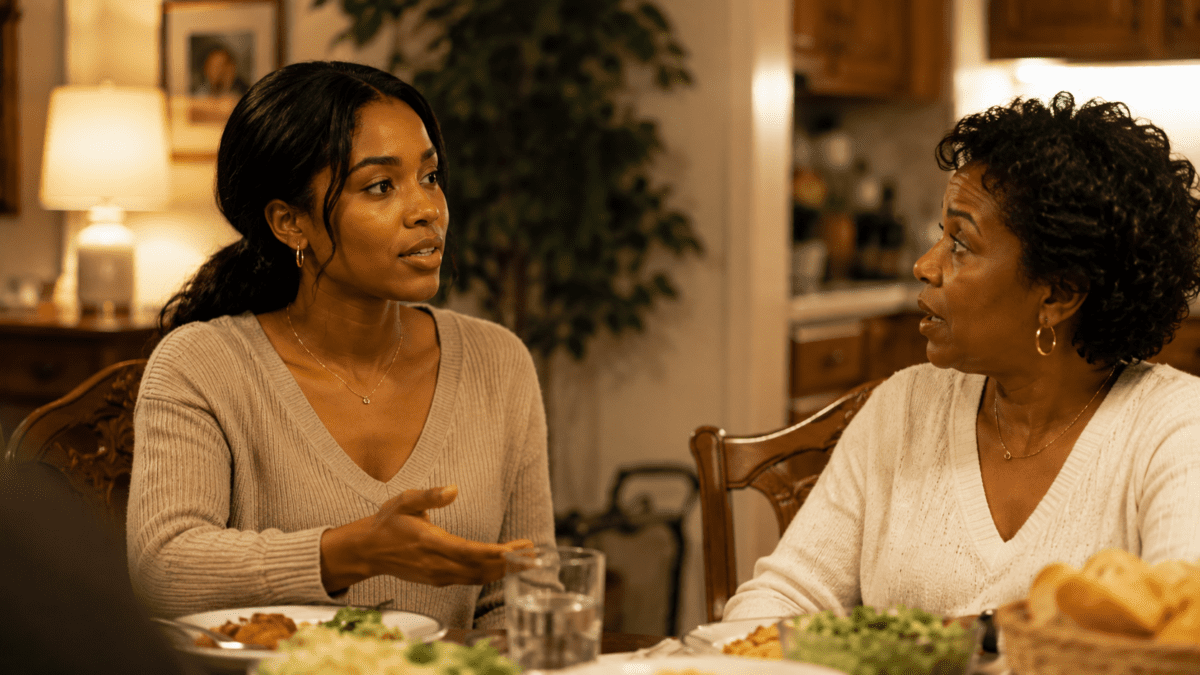
You switched majors. Or you didn’t. Maybe you stayed because leaving felt like defeat, so you finished and promised yourself you’d never use it. Or you sat with the decision a little longer—and eventually chose something different. The specific choice matters less than the fact that you made one. For the first time, you chose based on what you actually needed instead of what everyone else could tolerate.
What matters now is what happened after.
But changing your mind doesn’t feel like relief. It feels like failure first. Then comes the reckoning with what your wrong major lessons taught you: you can trace the pressure, the timeline, the exact moment when someone else’s certainty became your decision. You understand it all now, intellectually. But understanding doesn’t quiet the voice insisting you should have resisted. That you weren’t strong enough. That choosing yourself means choosing weakness.
That voice—the one that taught you perseverance was a virtue and quitting a character flaw—doesn’t leave just because you know where it came from.
But something is different now, even if you’re still sorting out what it is.
Your Wrong Major Lessons — What They Taught You
You thought the wrong major choice would cost you everything. That four years of your life would be wasted. That you’d graduate into nothing. That you’d ruined your career before it started. That your parents would lose respect for you. That you’d lose respect for yourself. You’ve been making calculations for months or years about the cost of this being wrong—calculating how much time you’d lost, how far behind you’d be, how much harder it would be to recover.
But something strange happened. You started paying closer attention to what didn’t happen.
Your brain didn’t disappear. Your intelligence is still there. The critical thinking that made you raise your hand in that class—that didn’t come from the major. The ability to see through surface-level explanations, to question what doesn’t make sense, to insist on honesty in your own thinking—that came from somewhere else. Maybe it came from the years of sitting in classes and not listening and being forced to understand how to learn despite disinterest. Maybe it came from the experience of having to hide what you actually felt and getting very good at reading situations for what was really being asked.
Your sense of what you do and don’t want became clearer, not hazier. This is one of the wrong major lessons nobody talks about. Most people don’t really know at seventeen. You’re not particularly behind. What’s different is that you know what you don’t want more clearly than most people ever will. You’ve lived inside a choice that wasn’t yours and you can feel the difference between that and choosing for yourself. Not everyone gets that education.
Your capacity for honesty got deeper. You spent four years learning how to perform certainty. That same skill, inverted, means you can now recognize performance in other people. You can feel when someone is choosing based on their own need versus when they’re just going through the motions. You’re more suspicious of things that come with artificial urgency attached. You’re slower to let external deadlines override your own judgment. You’ve built up an immunity to certain kinds of pressure because you’ve seen what happens when you absorb it uncritically.
And your relationships—the ones that mattered, anyway—didn’t end. The friendships that were only held together by shared misery dissolved, which was right. The ones that were real survived the conversation where you said “I’m not fine.” Your parents eventually stopped being angry about your choice and started asking questions about what you actually wanted. Not immediately. Not perfectly. But they came around. Because the question “What do you want?” is harder than “Why are you quitting?” but it’s also more important.
You didn’t waste four years. You spent four years learning what the cost of non-choice actually is.
The Difference Between Carrying and Being Crushed
There’s something about surviving a wrong choice that teaches you the difference between performing and choosing. You’re softer with yourself now. Not in a weak way. In the way that comes from knowing exactly how much pressure you can take before you break. You know your own breaking point now. You know what happens when you ignore it. You know the cost.
This means you say no more. Not aggressively. Just plainly. When someone asks you to commit to something you’re not sure about, you say “I need to think about it.” When you feel pressure attached to a decision, you notice it now. You’ve trained yourself to hear the difference between your own voice and the voices telling you what to do.
It doesn’t mean you never doubt yourself. It means when you doubt yourself, you sit with the doubt instead of swallowing it. You ask yourself if the doubt is yours or if you’ve absorbed it from someone else. You’ve gotten good at that distinction. Most people never have to practice it, so most people aren’t good at it.
You’re different too in the small moments. You were at dinner with your parents last week and your mother asked what you thought about something—something unrelated to your major, something completely ordinary. And you realized you had an actual answer. Not a safe answer. Not a performance of an answer. Just your own thoughts, spoken plainly.
She looked surprised. And then she listened.
That conversation wouldn’t have happened without the years you spent learning how to swallow your own voice. You had to know what voicelessness felt like in order to value having a voice this much. You had to feel the weight of the wrong choice in order to understand the lightness of choosing yourself.
The Year Everything Got Quiet

Senior year is different after you make the choice. Or junior year if you switched earlier. Or five years later if you took longer. The timeline doesn’t matter. What matters is what happens to the urgency.
Once you’ve made the real choice, the constant anxiety quiets down. Not completely. But the stone in your chest gets lighter. The dread that used to start on Sunday afternoon—that chronic anxiety about the week ahead—softens. You’re still nervous. You still have moments of doubt. But it’s the normal kind. The kind that everyone has. Not the crushing kind that feels like you’re living inside a structure that’s slowly suffocating you.
Classes still require effort, but the effort feels different. It’s not effort in service of performing commitment. It’s effort in service of understanding something you actually care about. The difference is small but total. When you care about what you’re learning, even the hard parts feel connected to something. They have meaning. They’re not just hoops.
And you realize that you hadn’t actually been lazy all those years. You hadn’t been weak. You hadn’t been uncommitted. You had been chronically, consistently exhausted. There’s a difference between not trying and not being able to try because all your energy is going into not falling apart. You had been putting out enormous effort just to seem like you were fine. Once you stopped having to perform, you had energy again.
Your grades might improve. They might not. It depends. But your relationship with learning shifts. You start asking questions again. You start getting curious. You start having thoughts about things that aren’t purely functional. You remember what it felt like to actually care about knowing something.
The year gets quiet because you’re no longer fighting yourself every single day. The internal conflict stops being so loud. You have all these resources—all this energy, all this capacity for thinking, all this drive—that had been going into resistance. Now they’re just available. For thinking. For trying. For becoming someone more like yourself.
A Regular Tuesday

You’re in class. It’s just a regular Tuesday in a regular semester. The professor is talking about something and you’re actually listening. You’re not checking the clock. You’re not wondering if you’ve wasted your life. You’re just here. Present. Thinking. Taking notes because something in what she’s saying connects to something you care about.
Someone asks a question and you know the answer. It’s not an answer from the textbook. It’s an answer you built from your own thinking. And the professor says “that’s right” and moves on. It’s not a moment. It’s just a regular Tuesday where you had a thought and you shared it and it mattered.
You think for a second about seventeen-year-old you. About the form on the screen and the blinking cursor and the deadline. About what she chose because she couldn’t say no. About the four years after that. About the pressure and the silence and the weight.
And you’re grateful. Not for the choice. But for what came after it. For the version of yourself you became while you were stuck inside a choice you didn’t make. For learning how to find your own voice by listening to its absence. For knowing now—with absolute certainty—what it feels like when you’re choosing versus when you’re performing.
The cursor on your screen blinks. Your own cursor now. Your own choice. And you start typing.
Content in this post was created with AI assistance.