
By the time the Joseon dynasty ended and Korea moved into the twentieth century, ondol was everywhere. The system had survived two millennia, a class system that tried to contain it, and a Little Ice Age that forced it into every home regardless. The floor was warm. That was the constant.
What changed was what burned underneath it.
Wood had always been the fuel. Then wood became increasingly scarce. By the late nineteenth century, the hills around Korean cities had begun to lose much of their tree cover, stripped by centuries of ondol heating and cooking fires. When the modern era arrived, Korea needed a replacement.
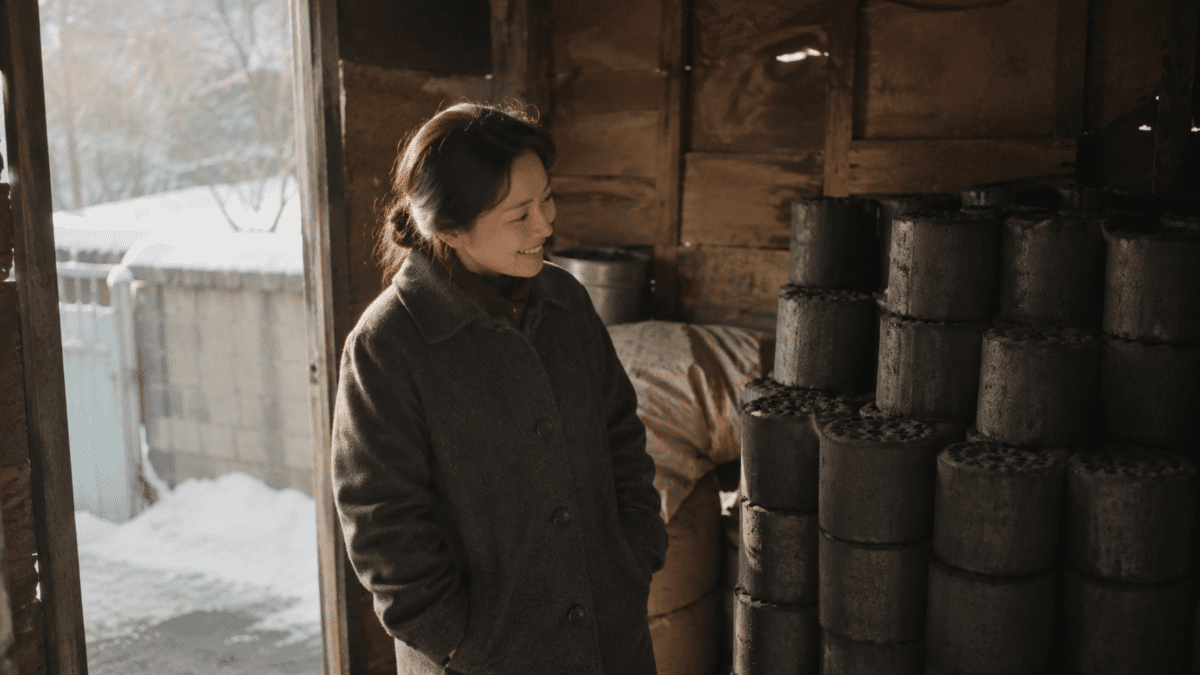
What it found was yeontan Korean coal briquette — a compressed cylinder of coal dust, roughly the size of a dinner plate, with nineteen holes punched through it in a honeycomb pattern (연탄: yeon-tan). Set it in the agungi and it burns for several hours, typically around six to eight hours, slow and steady, long enough to keep a floor warm through the night.
For roughly two decades, yeontan became a central part of Korean winter life.
The Fuel That Kept the Floor Warm
Yeontan arrived in Korean homes in the 1960s as the country industrialized. It was cheap, widely available, and compatible with existing ondol infrastructure — the agungi that had burned wood could burn coal briquettes with minimal modification. For families who had struggled to keep a wood fire going through a Joseon winter, yeontan was a practical solution to a real problem.
The yeontan Korean coal briquette’s design was deliberate. The honeycomb holes — typically nineteen in a standard block — allowed controlled airflow, slowing the burn and extending the heat. A single yeontan could keep an ondol floor warm for hours. Stacked in the courtyard and cycled through the agungi on a daily schedule, they made winter manageable in a way that wood gathering never quite had.
Distribution networks built around yeontan transformed Korean neighborhoods. The yeontan delivery man became a fixture of urban life — a figure who appeared in alleyways with a cart stacked high with briquettes, leaving a coal-dust trail through the neighborhood. Families stacked their winter supply against the outer wall, counting the blocks, calculating how long the season would last.
By the 1970s, yeontan Korean coal briquette was the standard fuel for ondol heating across urban Korea. By 1988, it was present in 78% of South Korean households. The floor was warm. The system worked. And somewhere in the chemistry of incomplete combustion, a problem was building that no one could see or smell.
The Gas Nobody Could Smell
Wood smoke announces itself. It stings the eyes. It fills the room with visible evidence of its presence. Carbon monoxide does none of these things.
When yeontan burned incompletely — a cracked gorae (고래: go-rae) channel, a poorly sealed joint, a draft that pushed combustion gases back toward the living space — colorless, odorless carbon monoxide entered the room. The people sleeping on the warm floor had no warning. No smell. No irritation. The gas displaced oxygen in the bloodstream quietly, and the body registered nothing until it was too late.
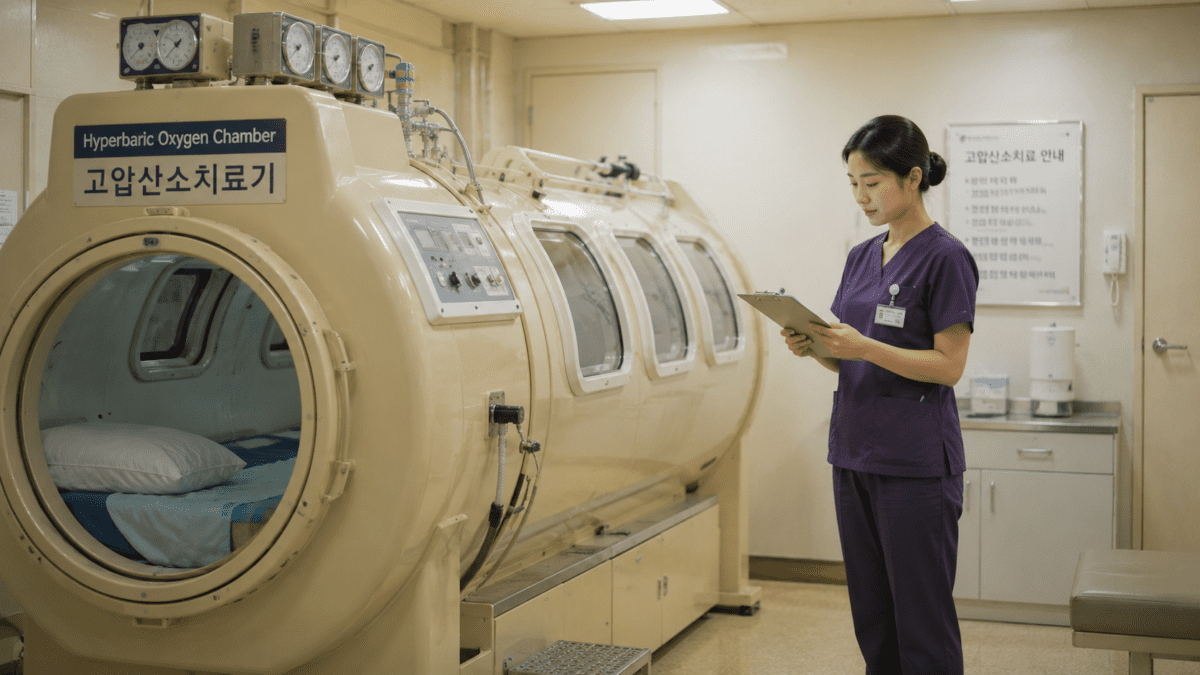
Carbon monoxide poisoning from yeontan became a regular feature of Korean winters. Hospitals in the 1970s and 1980s kept iron lungs — high-pressure oxygen chambers — on hand as standard equipment. A patient placed inside and given pressurized pure oxygen could purge the carbon monoxide from their blood. Small hospitals, large hospitals, it didn’t matter. The chamber was there because it was needed.
The particular danger of yeontan was that its risk increased with age. Older agungi systems developed cracks. Gorae channels settled and shifted. Seals that had held for years failed. Families who had used the same system safely for a decade found themselves at risk from the same floor that had kept them warm. The gas didn’t announce the change. Neither did the floor.
Awareness spread. Ventilation habits changed — windows cracked open even in bitter cold, a small sacrifice of warmth against the larger risk. But ventilation was mitigation, not solution. The underlying problem was structural.
The numbers accumulated quietly. Korean public health records from the 1970s and 1980s document that carbon monoxide fatalities were reported regularly during winter months — concentrated in older housing stock where agungi systems had aged beyond safe use. The pattern was consistent: victims found in the morning, the floor still warm beneath them. Government health campaigns ran alongside the hospital infrastructure. Neither fully solved it. What ultimately resolved the problem was the shift to a new fuel and heating system.
The System That Replaced Itself
The transition away from yeontan wasn’t a single decision. It was an accumulation of pressure — public health records, hospital admissions, policy discussions — that eventually produced a technical solution.
Hot water boiler systems had existed as a concept before Korea adopted them at scale. The principle was straightforward: heat water in a central boiler, circulate it through pipes embedded in the floor, recover heat through the same stone-and-surface logic that gudeul (구들: gu-deul, baked stone) had always used. No combustion gases in the living space. No cracked channels carrying carbon monoxide toward sleeping families. The heat source was sealed off from the floor entirely.
Through the 1980s and into the 1990s, Korea built this system into its housing stock. Not selectively. Not in premium developments only. Apartment complexes, single-family homes, new construction and retrofits — the hot water ondol system became the standard. Building codes eventually required it. The infrastructure of urban gas supply expanded to support it.
The numbers tell the story cleanly. In 1980, yeontan accounted for the majority of residential heating fuel in Korea. By 1995, urban gas connections had expanded to cover most of the country’s apartment stock. By 2000, the hot water ondol system was effectively universal in new construction. Carbon monoxide fatalities from heating systems dropped in direct proportion. The transition took roughly fifteen years. The result was a country where the floor is warm and the air is clean.
Korea didn’t export the problem. It resolved it — and then standardized the resolution across an entire country’s housing supply. That scale of adoption is rare. Other countries use underfloor heating. Few countries have made it a standard across most homes, regardless of type or income level, within a single generation.
The yeontan delivery man disappeared from the alleyways. The iron lung stayed in the hospital storage room, used less and less. The floor stayed warm.
The Floor Korea Built for Keeps
Walk into a Korean home in January. Remove your shoes at the entrance — not as ceremony, but because the floor is where you live, and it’s clean, and it’s warm. Sit down. The heat comes up through the surface evenly, without a sound, without a visible source.
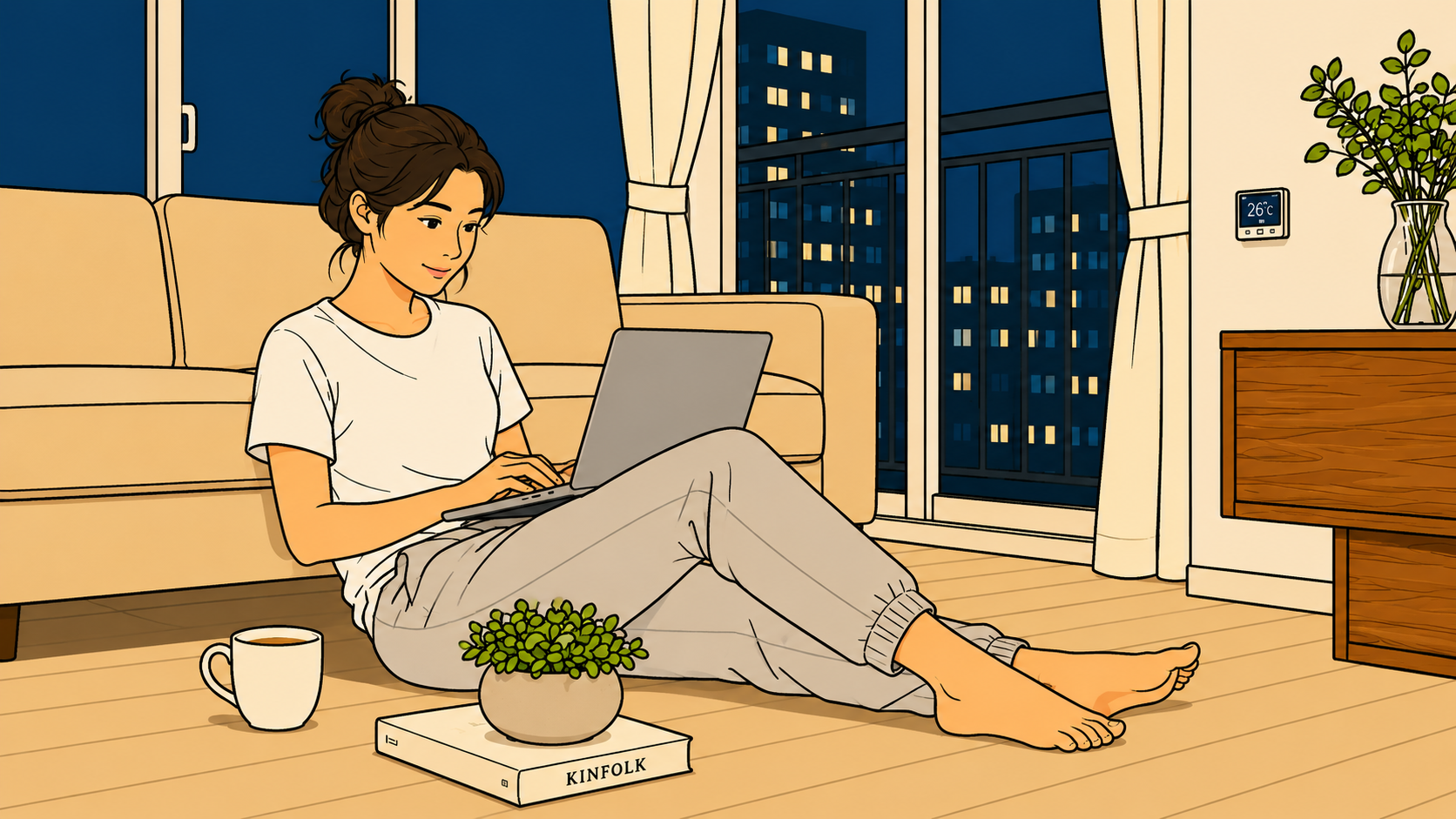
This is what the modern ondol system produces: winter as a managed interior condition rather than something to be survived. Outside, Seoul in January is a serious cold. Inside, Koreans wear t-shirts. Children do homework on the floor. Families eat on low tables, sleep on mats, conduct the same ground-level life that the gudeul made possible two thousand years ago.
The boiler on the wall controls it now — a digital panel that sets floor temperature by zone, adjusts schedules, monitors gas consumption. The gorae channels beneath a modern apartment are plastic pipes rather than stone channels, hot water rather than smoke. The surface is tile or wood rather than oiled hanji. The agungi is gone.
The logic is identical.
Underfloor heating is standard in most Korean homes. The system that started as a survival technology in a Manchurian winter, that moved through two thousand years of wood fires and class hierarchies and coal briquettes and carbon monoxide, arrived here: a warm floor in every home, reliable enough to be invisible, standard enough to be unremarkable.
Outside, the wind. Inside, the floor holds.
Content in this post was created with AI assistance.