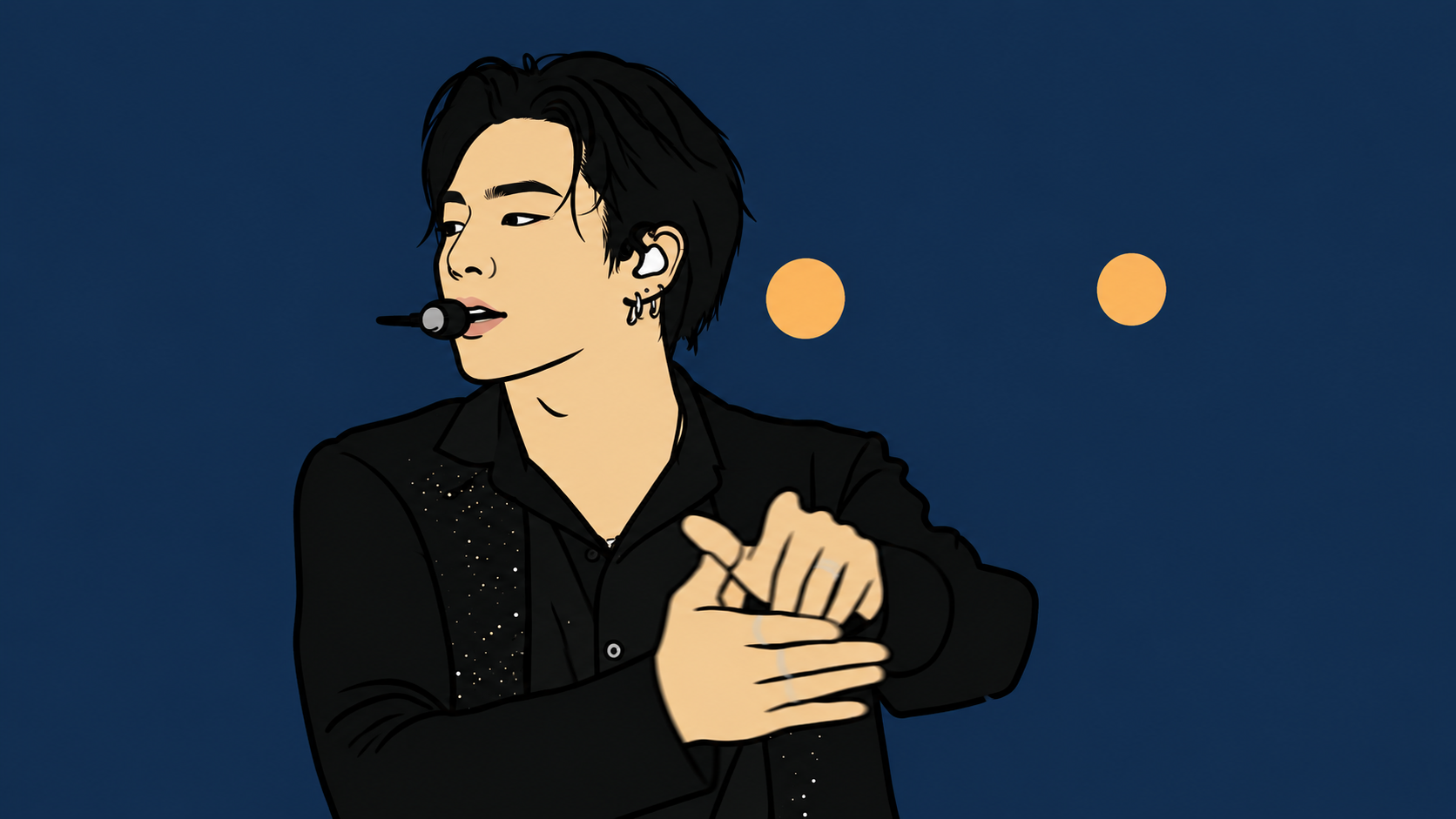
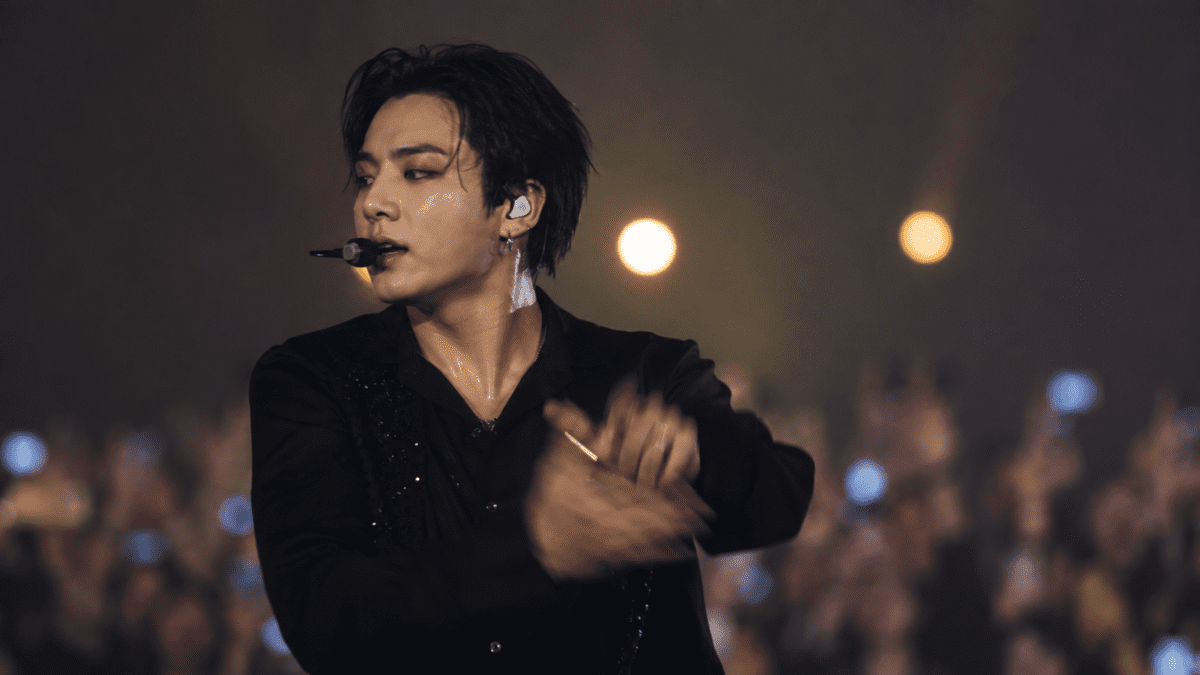
Korea did not set out to redefine masculinity. It was not a campaign or a movement. It was just what Korea already was, suddenly visible to people who had never seen it before.
The visibility came from K-pop. The music traveled first, then the aesthetics, then the questions. Why do these men look like this? Why does it work? Why does it not look weak?
Korean masculinity redefined itself not through argument. The answers were always there. The world just hadn’t asked the questions yet.
What K-Pop Exported
K-pop did not invent the Korean male aesthetic. It transmitted it.
The man on stage in full makeup, executing choreography with the precision of someone who has rehearsed the same eight counts ten thousand times, is not a product of the entertainment industry. He is a product of a culture that has understood for over a thousand years that discipline and beauty are not opposites. The industry packaged it. The culture produced it.
What traveled west was not just music. It was a model of masculinity that the West had no existing category for. Not feminine — the training involved is brutal and the physical demands are extreme. Not traditionally masculine in the Western sense — the aesthetics don’t conform to that template. Something else. Something that required a new frame.
The frame already existed. It was just in Korean.
Consider what the training actually involves. Years of dance rehearsal that continues through injury. Vocal training that does not stop for illness. The physical conditioning required to perform a two-hour show at full intensity, night after night, across a world tour that crosses multiple time zones and does not pause for exhaustion. These are not the conditions of a soft life. They are the conditions of an athlete — one who happens to wear makeup on stage, because in Korea, those two things have never been understood as belonging to different people.
The idol who walks offstage after a performance and the recruit who walks out of a gas chamber are both answering the same question: what does it take to keep going when stopping would be easier? The answers look different. The question is the same.
Where Korean Masculinity Redefined the Frame
Western masculinity has always had room for the decorated man — but under specific conditions. The rock star. The athlete in war paint. The performer whose makeup is understood as costume, as stage persona, as something that comes off when the show ends.
What it has not had room for is the man for whom the makeup is not a costume. For whom polish and endurance belong to the same identity, not to different ones. For whom showing up prepared — fully, visibly, without apology — is what strength looks like.
This is the gap that Korea fills. Not by arguing for a new definition of masculinity. By demonstrating one that has been operational for centuries.
The distinction matters. A costume is temporary. It marks a threshold — you put it on to become something else, and you take it off to return to what you were. The Hwarang did not put on a costume before battle. They were the same men in the same faces that they were every other day. The makeup was not a transformation. It was a continuation. What they brought into battle was what they already were — the accumulated discipline of training, study, and preparation, made visible on the surface in the same way it was made visible in everything else they did.
This is what the Western frame cannot accommodate. It keeps looking for the seam — the place where the performance ends and the real person begins. In the Korean model, there is no seam. The preparation is the person.
The Hwarang wore flowers into battle. The soldier reaches for concealer before the interview. The idol steps onto the stage in full makeup after years of training that would end most careers before they started. These are not three different things. They are the same understanding, expressed across fourteen centuries.
What Happens When Two Frames Meet

The comment sections did not disappear. “Gay-pop” is still typed. The reaction videos still occasionally produce the raised eyebrow, the uncomfortable laugh, the joke that tries to process something it doesn’t have language for.
But something else is also happening.
Men in Western countries are buying skincare products. The global men’s grooming market is growing, and Korea is leading both the consumption and the innovation. Young men outside Korea are watching tutorials on BB cream application. The aesthetics that once prompted mockery are now prompting questions — and then purchases, and then habits.
This shift does not happen through argument. Nobody is persuaded into a new understanding of masculinity by being told their old one is wrong. What happens instead is slower and more durable. A person sees something that doesn’t fit their existing category. They watch it long enough to notice that their category is the problem. They adjust.
This is what K-pop has done at scale. Not by challenging Western masculinity — that would have produced resistance, not curiosity. By simply being visible, over years, in a form that is impossible to dismiss as weak once you know what it costs to produce. The mockery requires ignorance. The ignorance is becoming harder to maintain.
Ten years ago, a Western man buying BB cream was making a statement. Now he is making a purchase. The distance between those two things is the distance Korea has traveled in Western consciousness — from curiosity to option to habit. The frame is shifting. Not because Korea argued for it. Because Korea showed up, kept showing up, and let the work speak.
Korea never needed to make the case. It just needed to become visible.
The Soldier and the Stage
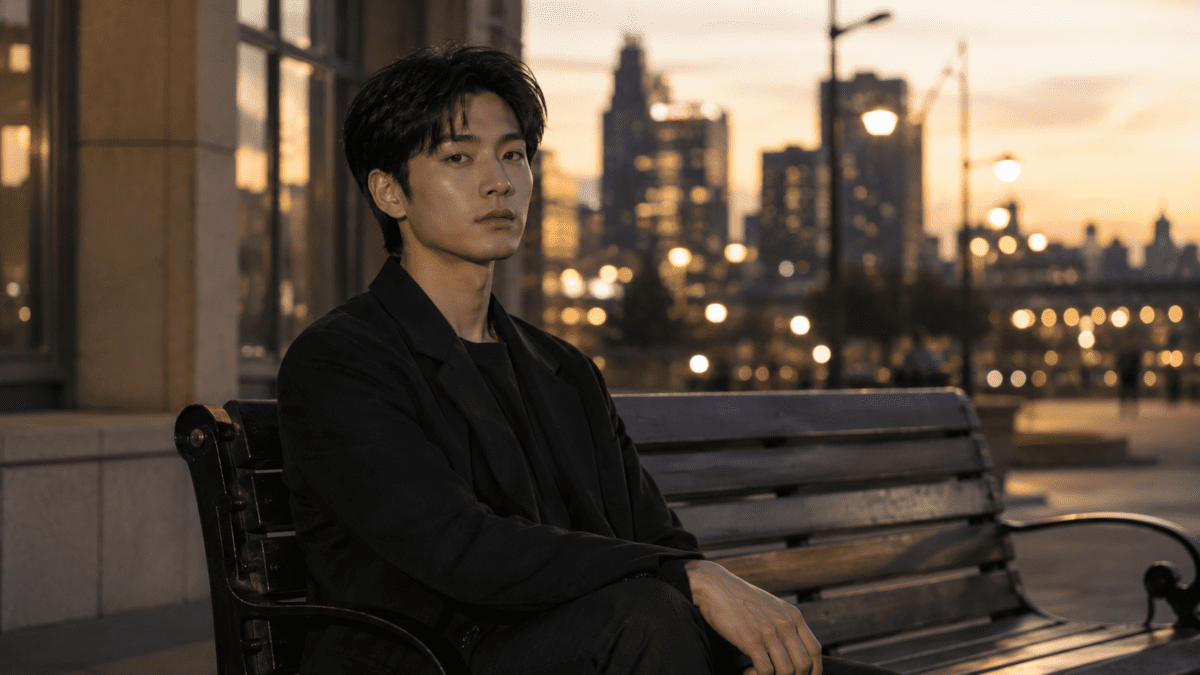
The frame that started this — the assumption that a man in makeup is soft — required a world where the barracks and the stage were inhabited by different kinds of people.
Korean masculinity redefined this. Korea has always produced one kind.
The man who completes eighteen months of service and the man who holds an arena of fifty thousand people are drawing on the same resource. Not the same skill. The same capacity — for discipline, for presence, for showing up fully in a situation that demands everything and accepts nothing less.
Consider what both situations actually require. Eighteen months of showing up before dawn, day after day, in conditions that do not improve because you want them to. The body and mind rebuilt through repetition until the option to quit has been removed. The stage requires something identical. Fifty thousand people watching. The lights, the sound, the weight of the moment. The body that has been pushed to its limit in rehearsal now asked to perform as if it hasn’t been. The face that shows nothing of the cost.
These are not different tests. They are the same test, administered in different rooms.
The Hwarang understood this. They built an institution around it. The institution lasted centuries, and when it dissolved, the understanding it carried did not dissolve with it. It moved into the culture and stayed there, surfacing in the barracks and the interview room and the concert stage, generation after generation, in different forms but recognizable to anyone who knows what they’re looking at.
A man who has been through eighteen months knows what he is capable of. That knowledge changes how he carries himself — in the barracks, in the interview room, on the stage. It is not performed. It is just there, underneath everything, in the way a person moves when they know they have already survived something real.
The world is beginning to know what it’s looking at.
That is why it is watching.
Content in this post was created with AI assistance.