
Every culture has sent men into battle with something on their faces.
Native American fighters painted red and black before combat. Celtic warriors stained their skin blue with woad. Maya and Aztec soldiers covered themselves in color and feather, reaching for something beyond the human. The patterns were different. The purpose was the same: to mark the threshold between ordinary life and the moment that required everything.
But these were temporary. War paint for war. When the battle ended, the color came off. The face underneath returned. The painting was a costume, not an identity.
To understand why Korean men wear makeup today, start with the Hwarang.
The Hwarang
The Silla dynasty — sixth and seventh century Korea — created an elite youth order drawn from noble families. They were trained in combat. They were also trained in poetry, music, philosophy, and ritual. The combination was not incidental. It was the point.
Their name meant “flower boys.” The name was not ironic.
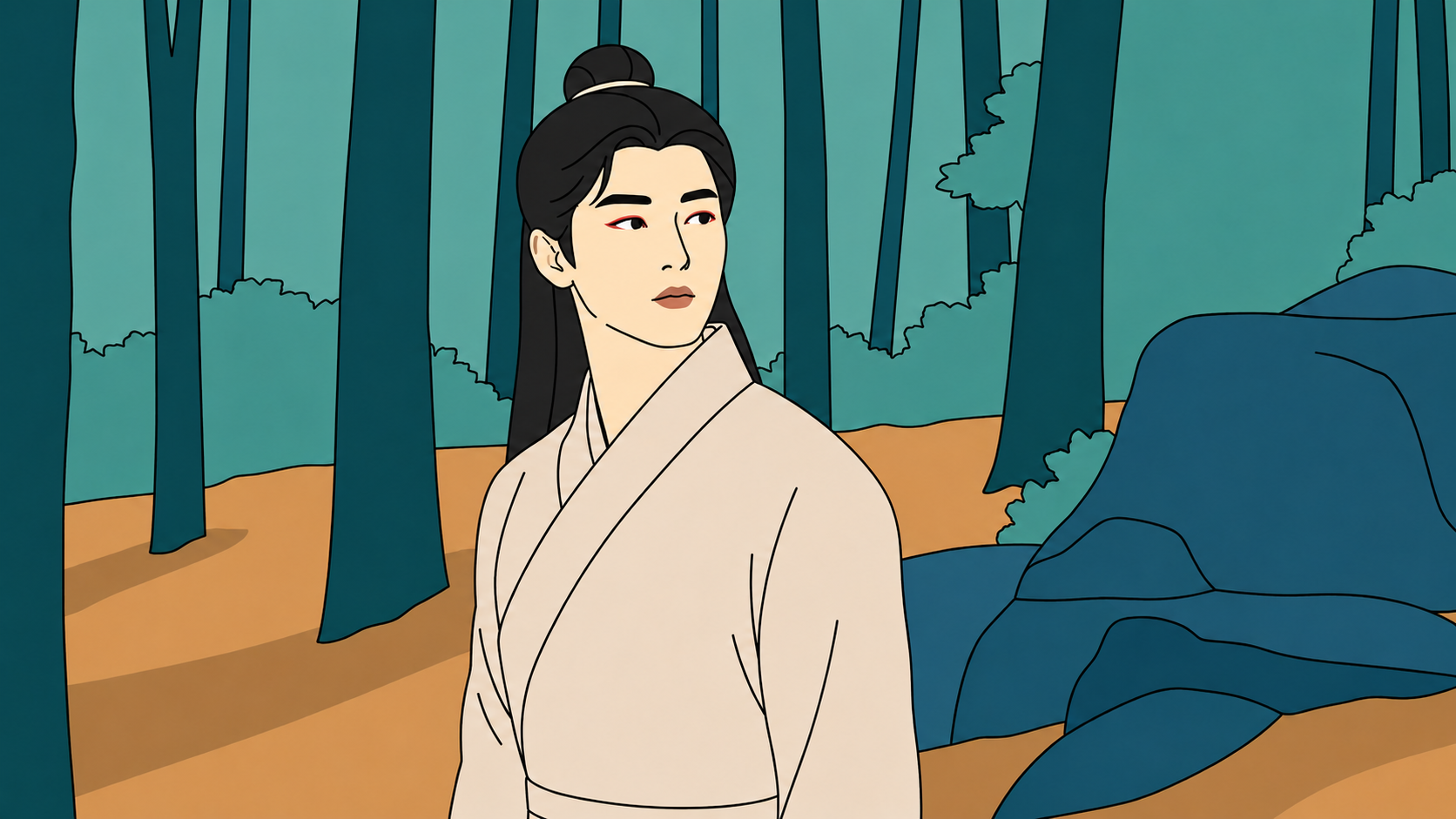
The Hwarang (화랑: hwa-rang) practiced a daily makeup ritual as part of their training. White powder laid across the face for a pale, even complexion. Eyebrows drawn thick and dark, defined with deliberate weight. Eyes rimmed in red. Lips colored red. The features sharpened and made unmistakable — a face that could be read from a distance, that announced its presence before a word was spoken.
Their hair was adorned with seasonal flowers. They carried fragrance into battle alongside their weapons.
This was not war paint. War paint is applied before combat and removed after. The Hwarang wore makeup — actual cosmetics, a named and codified practice — as a constant, daily ritual. In peacetime and in war. In the training ground and on the battlefield. The face they wore into combat was the same face they wore everywhere else.
This practice was not merely aesthetic. In military training and in ritual ceremony, the makeup ritual was understood as a visible declaration of resolve — the outward sign of an internal commitment that had already been made. The man who completed the ritual was not the same man who had begun it. The process changed something. That was the point.
Few warrior traditions on record combined it this way. Not paint. Not ritual marking. Makeup — the kind that signals not temporary transformation but permanent identity.
The Hwarang stand out as a rare case. Early records describe them being powdered and adorned before the name Hwarang was given.
What the Makeup Actually Did in Battle
The assumption — that a man who wears makeup cannot be a serious fighter — collapses against the Hwarang’s record.
They fought on the frontlines of Silla’s campaigns. The battles that unified the Korean peninsula ran through them. The kingdom’s survival depended on what they could do in combat, not on what they looked like doing it.
So what was the makeup for?
It was not vanity. It was not performance for an audience. It was a technology of the mind.
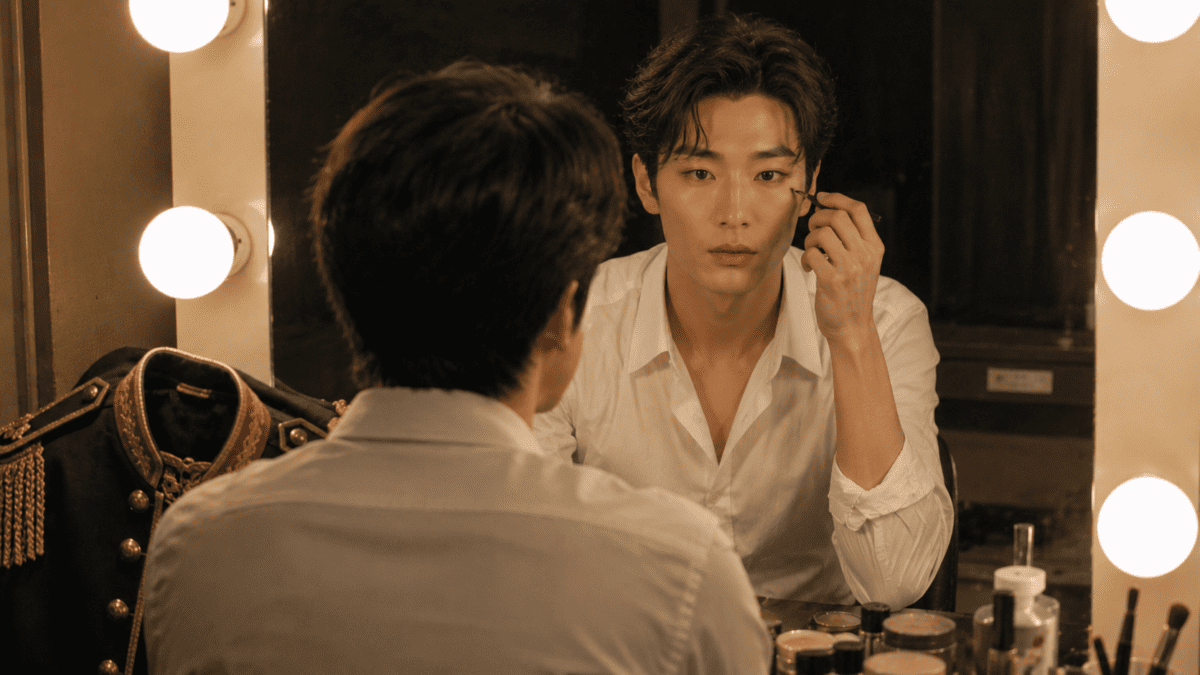
Before combat, the process of applying powder, color, and fragrance was a ritual of focus. The body stills. The breathing steadies. The mind moves from the chaos of anticipation into something more concentrated. Anyone who has ever prepared for a high-stakes moment — an exam, a performance, a confrontation — knows this mechanism. The external act of preparation changes the internal state.
Among the unit, the shared practice created solidarity. Every man in the formation had gone through the same ritual. The same powder, the same flowers, the same fragrance. This was not a uniform in the military sense — it was something closer to a shared language. A visible signal that said: we are the same, we are ready, we will hold.
But there is something else the makeup did that is harder to articulate. It held a man’s identity stable under pressure. In the moments before combat, when the body runs on adrenaline and the mind reaches for anything familiar to anchor itself, the ritual of preparation was that anchor. The face in the reflection was recognizable. The hands that had performed this ritual a hundred times knew what to do. Familiarity under extreme conditions is not a small thing. It is the difference between a man who holds and a man who breaks.
The cosmetics did not make the Hwarang fragile. They made them cohesive. And cohesion, in combat, is survival.
The Dual Training
What made the Hwarang distinctive was not the makeup alone. It was what the makeup represented.
The Hwarang trained in two directions. Physical discipline — combat, endurance, the development of a body that could function under extreme pressure. Intellectual and aesthetic cultivation — poetry, music, philosophy, the development of a mind that could hold complexity without breaking.
These were not considered separate pursuits. They were understood as two expressions of the same underlying quality: the capacity for discipline. A body trained to endure and a mind trained to perceive were not in tension. They were the same thing, approached from different angles.
The makeup was the visible sign of this dual commitment. It marked a man who had cultivated both — who had not chosen between strength and refinement but had understood them as inseparable.
This is the frame that “gay-pop” cannot accommodate. It requires a world where beauty and strength are opposites — where choosing one means abandoning the other. The Hwarang lived in a different world. Not a softer world. A more complete one.
What the Hwarang understood — and what their training was designed to produce — was a man who could not be reduced to a single register. Not purely warrior, not scholar, not artist. All of these, held together by a discipline that refused to treat them as contradictions. The flowers in the hair were not a concession to softness. They were evidence of a completeness that martial training alone could not produce.
A man who can write a poem and then walk into battle without flinching is more dangerous than a man who can only do one of those things. Not because the poetry makes him fight better in any technical sense. Because the capacity for both — the discipline required to develop both — produces something that neither produces alone. The Hwarang knew this. They built an institution around it. The institution lasted centuries.
Why Korean Men Wear Makeup Today
The Hwarang makeup warriors dissolved as a formal institution centuries ago. The practice did not.
What they embodied — the coexistence of physical discipline and aesthetic expression, the understanding that how you present yourself is part of how you prepare — runs through Korean culture in ways that are visible once you know what to look for.
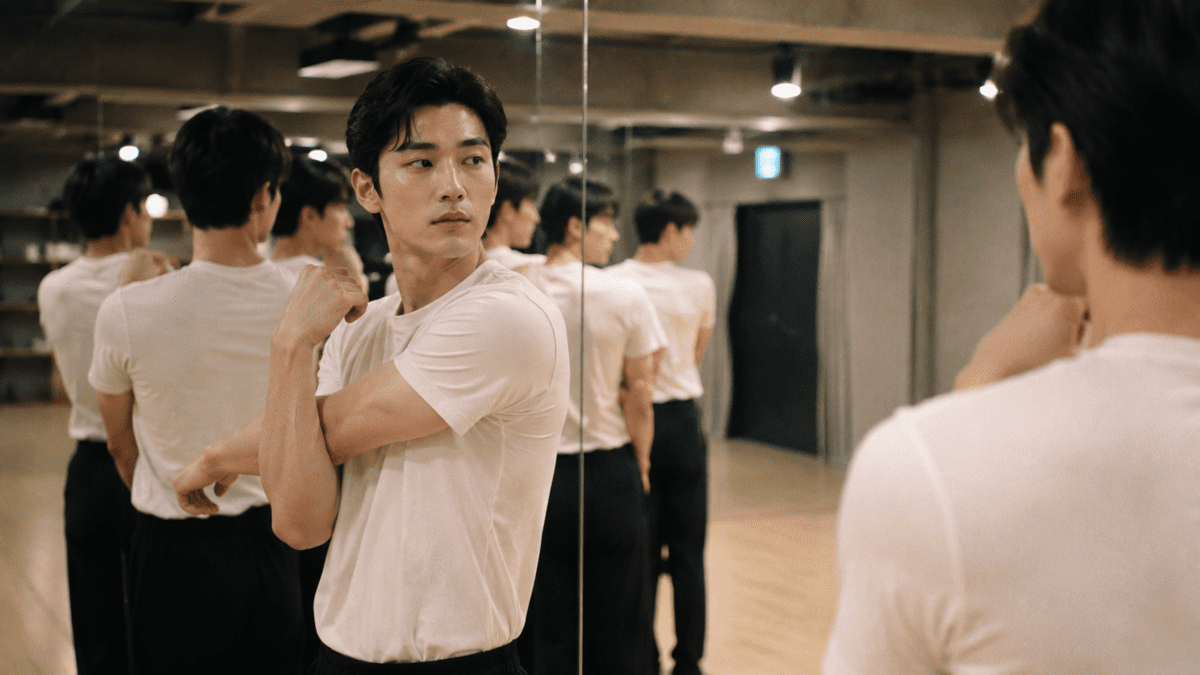
The Korean man who completes eighteen months of military service and reaches for concealer before a job interview is not doing two separate things. He is doing one thing, expressed in two different contexts. The Hwarang would have recognized it immediately.
The K-pop idol who trains for years until the body becomes an instrument of precision, then steps onto a stage in full makeup to perform for an arena — this is not a modern invention. It is a very old Korean idea, wearing new clothes.
Consider what that training actually produces. Years of choreography rehearsed until the body moves without conscious instruction. Vocal training that continues through illness and exhaustion. The discipline required to perform at full capacity in front of tens of thousands of people, night after night, without the performance showing the cost. This is not soft work. It is the same category of demand as military training — different in content, identical in what it requires of the person doing it.
The Hwarang trained in poetry and philosophy not because these things were pleasant, but because they believed a man who could only fight was incomplete. The idol who can dance and sing and write and perform is working from the same premise. Completeness is not weakness. It is the harder achievement.
Beauty here has never been the opposite of strength. For over a thousand years, it has been one of strength’s faces.
The warriors who proved it wore flowers in their hair.
This post was planned and edited by a human, with AI assistance.