
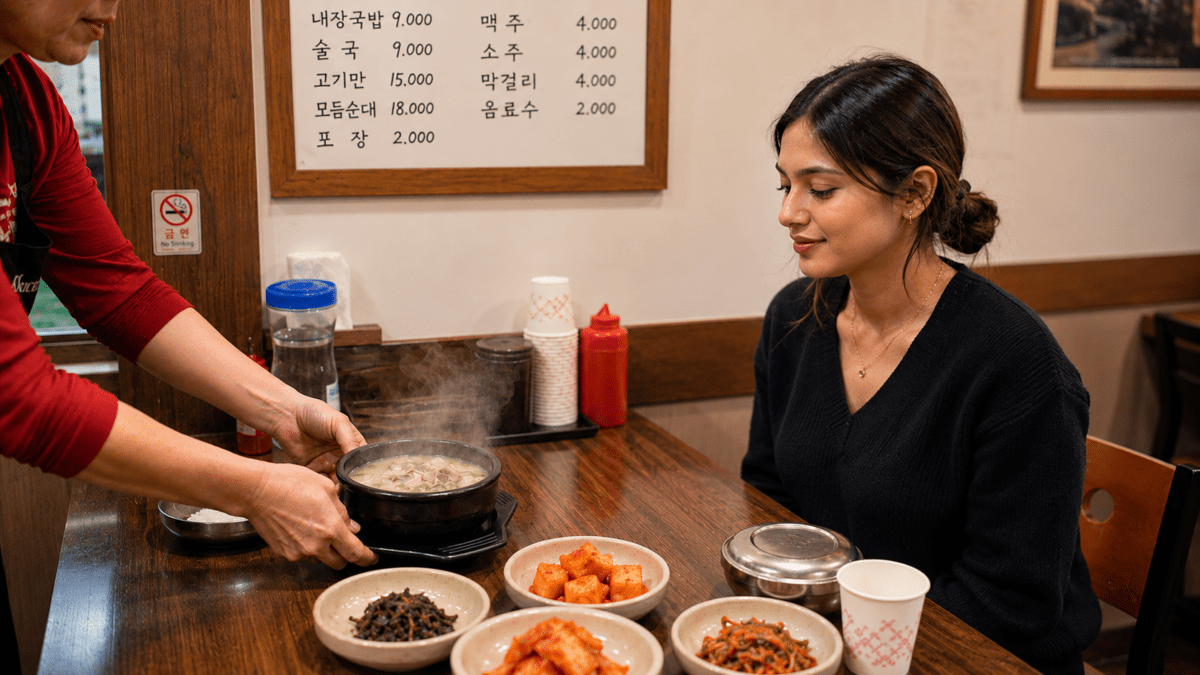
Bone broth has become a wellness trend in the West. People simmer bones for hours, pour the result into jars, and call it a health ritual. It gets sold at cafes. It has its own hashtag.
Korea has been doing this for centuries. It just never called it a trend.
Seolleongtang (설렁탕: seol-leong-tang, Korean bone broth soup with rice) and gomtang (곰탕: gom-tang, Korean meat broth soup with rice) are the two bowls that built Seoul’s gukbap culture. Both start with a pot and time. Both end with rice already in the broth. But they are not the same bowl — and the difference between them goes deeper than colour.
One is the philosophy of the bone. The other is the philosophy of the meat. Both have been running, in the same kitchens, for longer than most food trends have existed.
Korea Was Already Doing This
Bone broth became a thing in the West around 2013. Paleo dieters started simmering bones overnight, pouring the liquid into mugs, and drinking it like coffee. By 2015 it had its own cafes in New York. By 2020 it had its own aisle in health food stores.
Korea looked at all of this and said nothing. Its version of Korean bone broth had been on the table since the Joseon era — just with rice in the bowl.
The difference is context. In the West, bone broth arrived as a health supplement — something you add to your routine. In Korea, broth was never optional.
The Korean table is built on three things: bap (밥: bap, rice), guk (국: guk, soup or broth), and banchan (반찬: ban-chan, side dishes of meat, fish, or vegetables eaten alongside rice). Rice is the center. Banchan surrounds it. But guk is what pulls the meal together — it softens the rice, warms the stomach, and balances the salt of the side dishes. Remove it and something is missing that no amount of banchan can replace. It’s the force that holds a meal together.
This is why Korea developed two entirely different bowls from the same starting point — bones, water, and heat — and why both of them are still on the menu today.
Seolleongtang and gomtang both start the same way — an animal, a pot, water, and time. After that, everything diverges.
Seolleongtang takes the long route. Bones go in — ox leg, spine, head — and the pot stays on low heat for ten hours or more. What comes out is white and opaque, the colour of something that has given everything it had. Rich, milky, and completely unseasoned. The customer finishes it with salt at the table.
Gomtang takes the shorter one. Meat and offal go in instead — brisket, tripe, shank. Three to four hours later, the broth is ready and still clear. The flavour is cleaner. The seasoning is soy sauce, not salt. The bowl looks almost light by comparison.
Same pot. Same animal. It started from the same place, but ended somewhere completely different. Nothing about it looked dramatic, but something in the process had quietly split the result in two. Two completely different results, depending on what went in and how long it stayed.
The White Broth
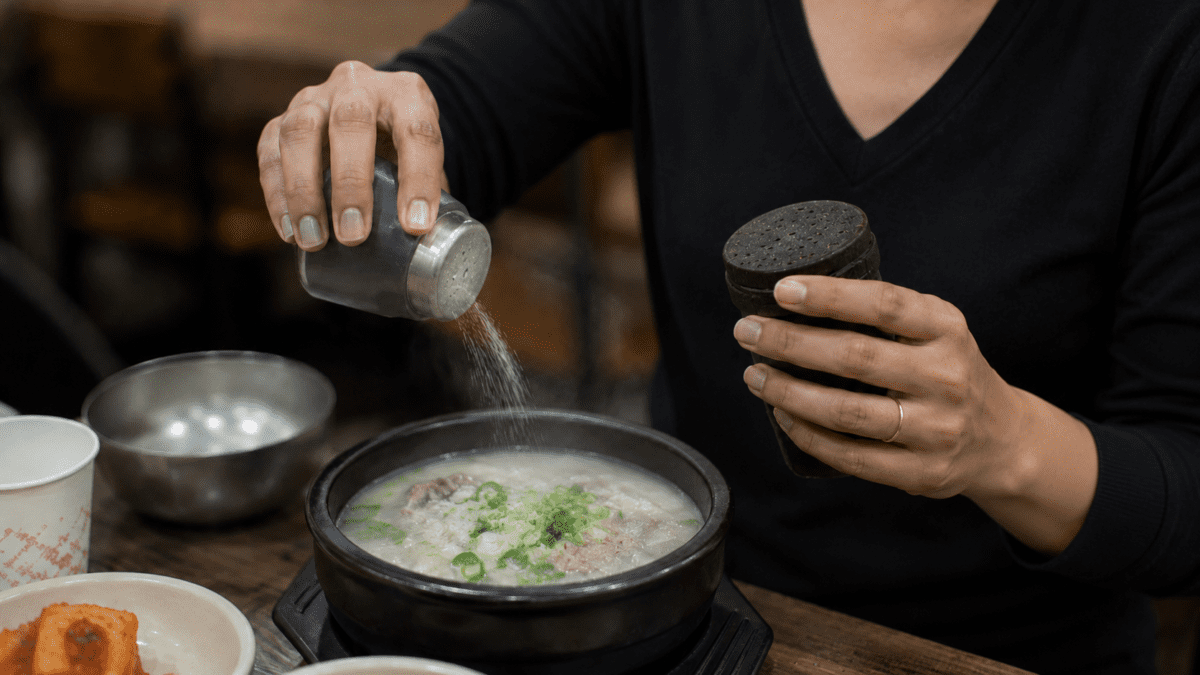
Seolleongtang starts before anyone arrives. Ox bones — leg, spine, head — go into cold water and the heat comes on low. There is no shortcut here. The broth turns white not from milk or cream or any added ingredient, but from time. Collagen breaks down. Fat emulsifies. The bone releases what it has been holding, slowly, over ten hours or more.
By the time the first customer sits down, the hard work is already behind the counter. The broth is ready. The rice goes in already cooked. A handful of green onion on top. Salt and pepper on the side — the customer seasons their own bowl.
This is the part that surprises people unfamiliar with seolleongtang. The bowl arrives completely unseasoned. No soy sauce, no fermented paste, no spice. Just the broth, the rice, and the bone’s long work. The flavour is there — deep, clean, faintly sweet — but it asks you to meet it halfway.
For regulars, this is the appeal. A bowl that trusts the diner to finish it. For first-timers, a pinch of salt and a few shakes of pepper are enough to unlock what the broth has been building since before dawn.
Many regulars add a small portion of somyeon (소면: so-myeon, thin wheat noodles) to the bowl — a quiet addition that stretches the meal without changing its character. The broth absorbs the noodles the same way it absorbs everything else. Slowly, and completely.
Seolleongtang is Seoul’s bowl. It has been associated with the capital since the Joseon era, when the broth was made from every part of the animal that could be put into a pot. Nothing was separated out. Everything went in together. The result was a bowl that could feed many from one animal — fast to serve, slow to make, and deeply satisfying in a way that shortcuts never replicate.
The Clear One
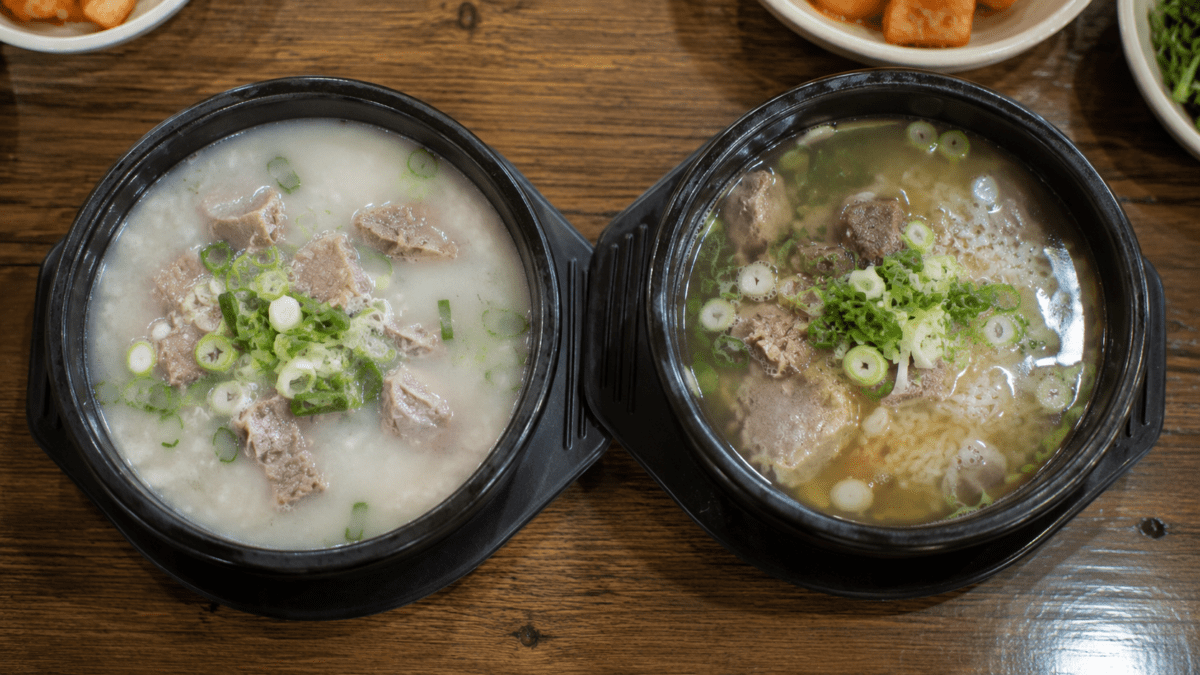
Gomtang doesn’t need ten hours. The meat goes in — brisket, shank, tripe, intestine — and the pot comes to a simmer. Three to four hours later, the broth is ready. It never turns white. It stays clear and golden, the colour of the meat rather than the bone.
This is the first thing people notice when the bowl arrives. Where seolleongtang is opaque and milky, gomtang is transparent enough to see the bottom. The two bowls look like they come from different kitchens. They come from the same one.
The flavour is different too. Gomtang is cleaner on the palate — less dense, more precise. The meat gives a different kind of depth than the bone does. Not richer, just different. Where seolleongtang lingers, gomtang finishes cleanly and leaves you wanting another spoonful for a different reason.
Seasoning matters more here. Gomtang is traditionally finished with soy sauce rather than salt — a small difference that changes the character of the bowl entirely. The soy adds colour and a layer of umami that the clear broth doesn’t carry on its own. Chopped green onion, a few threads of egg garnish, and the bowl is complete.
Naju gomtang (나주곰탕: na-ju gom-tang), from South Jeolla Province (전남: jeon-nam), is known for its exceptionally clear broth and generous cuts of meat. Hyeonpung gomtang (현풍곰탕: hyeon-pung gom-tang), from North Gyeongsang (경북: gyeong-buk), runs closer to seolleongtang in colour — the lines between the two bowls blur depending on where you are in the country.
Both bowls came from the same animal. Both had been running since the Joseon era. The only question was what you put in the pot — and how long you were willing to wait. Korea answered that question two different ways. Both answers are still on the menu. Both are still correct.
On Every Corner
Walk down almost any street in Seoul and there will be a seolleongtang or gomtang restaurant within a few minutes. The signs are simple — no photographs of the food, no elaborate menus, just the name of the bowl in large letters. Inside, the tables are close together. The smell of broth hits before the door closes behind you. No reservation needed. No dress code. Sit down, order, and the bowl arrives before the table has settled.
In America, the hamburger is what you grab when you need something fast, cheap, and everywhere. In Seoul, that bowl is seolleongtang or gomtang. No planning required. No special occasion. Just sit down, order, and eat. The difference is that this Korean bone broth has been here longer than any burger chain — and it took all night to make.
A bowl of seolleongtang costs around the same as a fast food meal. So does gomtang. Both come with banchan already on the table. Both arrive hot. Both fill you properly without demanding much from your wallet or your schedule.
For locals, this is just Tuesday. For visitors, the accessibility is the surprise. A meal that looks like it should take effort to find — this much broth, this much time in the kitchen — turns out to be as easy to order as anything else on the street.
Some bowls are not about choosing. Walk into any seolleongtang or gomtang restaurant in Seoul and the menu is short. White or clear. Salt or soy. The decision takes seconds. Coming back takes no decision at all.
Content in this post was created with AI assistance.