
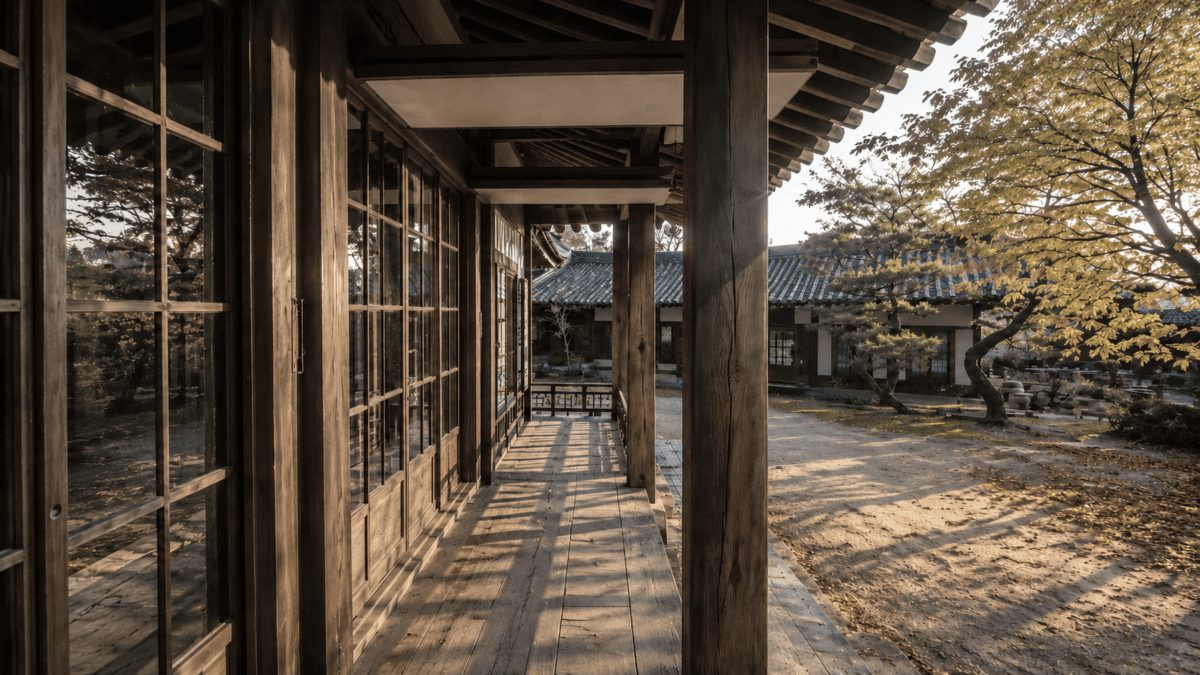
It’s late September and the light has tilted. By 5 PM the sun is no longer high — it casts long shadows across the courtyard, warms the tile roofs from a low angle, and begins the slow work of deciding what the day will keep and what it will release into evening.
The sunset cycle meaning in astrology names this shift: Yu (유: yu, autumn peak metal), the tenth of the twelve earthly branches, is where Sin’s preliminary evaluation becomes the final decision about what the year actually harvests.
Sin began the judgment. Yu completes it. The first cutting of early autumn has already happened. Yu is where the remaining material gets sorted for the last time before winter — some things kept with precision, other things released with the same precision, and both actions carrying the same structural weight. A chart carrying Yu at its center runs on that same final-sorting logic: refining rather than initiating, deciding rather than collecting, the hour when accuracy matters more than volume.
What the Sunset Cycle Meaning in Astrology Actually Records
Yu is the second metal branch in the twelve-station system — the one that completes what Sin began. The hour is 5 to 7 PM. The month spans early September through early October, bounded by the solar terms Baengno (백로: baeng-no, white dew) and Hallo (한로: han-lo, cold dew). The element is Metal (금: geum) in its yin expression — refined, precise, quiet rather than forceful.
Yu carries the purest yin metal structure in the entire cycle. Its jijanggan contains only Sin (신: sin, yin metal, the gem) as the dominant stem, with Gyeong (경: gyeong, yang metal, the blade) appearing briefly at the start. This is structurally parallel to Myo (묘: myo, spring wood), which contains only Eul (을: eul, yin wood, the vine). Just as Myo is the purest yin wood branch, Yu is the purest yin metal branch — and the two branches sit directly across the cycle in mutual opposition.
If Sin was the first cool current that began asking questions, Yu is the long shadow at the end of the day that has already decided what the answer is. Same cutting function, different stage. Sin evaluates. Yu refines. The chart with Yu at its center is reading the moment when the broad judgment of early autumn narrows into the specific decisions that will define what the year actually preserved.
Yu is not personality. It is a structural month in which refinement becomes the primary function. The person with Yu prominent will spend this window making the final distinctions — not because they have become harsh but because the positional cycle now requires the last cut to be exact. Yu does not cut broadly. Yu cuts precisely.
What Yu records is a specific kind of last decision. The harvest is happening. The storage chambers are filling. But the question of what makes the final cut — what actually gets kept for winter rather than discarded at the threshold — is now being answered. The chart that holds Yu at its center is reading the interval in which imprecise keeping ends and precise keeping begins.
The Pure Metal Logic of Yu’s Structure
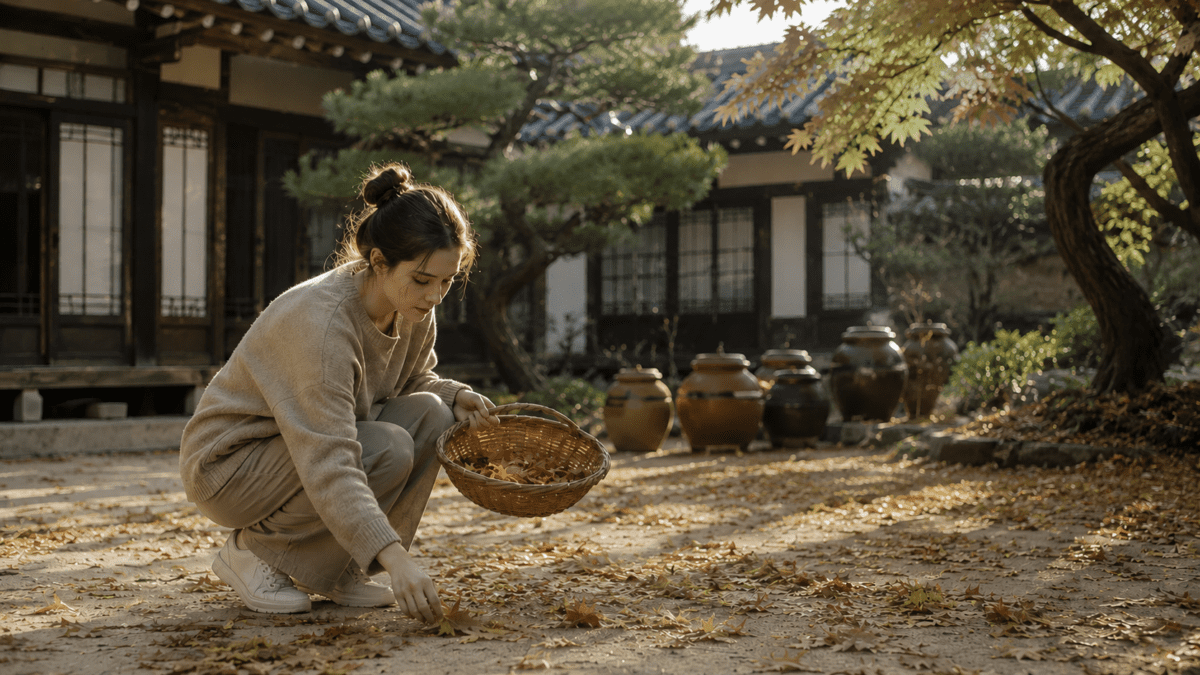
The real mechanism lives inside Yu’s Jijanggan (지장간: ji-jang-gan, the hidden stems concealed within a branch). Yu carries two hidden stems: Gyeong (경: gyeong, yang metal, the blade) for a brief opening interval, and Sin (신: sin, yin metal, the gem) as the dominant stem that defines the branch. This makes Yu one of the structurally simplest branches in the cycle — no earth, no water, no fire, no wood. Metal only.
The sequence matters. Gyeong enters first as the residue of Sin’s initial cutting — the blade that did the preliminary work and is now handing off to something more refined. Sin dominates last and defines the branch — yin metal in its most concentrated form, the gem that does not divide broadly but separates with exact precision. By the time Yu is fully active, the chart is running on pure metal logic. Nothing else is present to soften, ground, or extend the function. The simplicity is the mechanism.
Three interactions govern how Yu behaves with the rest of a chart.
SaYuChuk SamHap (사유축 삼합: sa-yu-chuk sam-hap, three-combination producing metal). When Sa (사: sa, late spring fire), Yu, and Chuk (축: chuk, frozen earth) appear together, the three branches combine into a strong metal structure. Yu is the center of this three-harmony — the refined metal that late spring fire initiated and winter earth will eventually store. A chart with this configuration carries metal output that is traceable through the full year: spring started the cut, summer shaped it, autumn refined it, winter will preserve it.
MyoYuChung (묘유충: myo-yu-chung, wood-metal axial clash). Myo (묘: myo, spring wood) and Yu sit directly across the cycle — spring’s purest yin wood against autumn’s purest yin metal. When they meet, the clash runs along the growth-refinement axis itself. This is the opposition of the two structurally simplest branches in the cycle, both single-stem dominant, both yin, exactly opposed. This clash is structurally persistent, often producing a year where what was softly committed to in spring comes under precise evaluation in autumn. The softness of Myo’s quiet decisions meets the exactness of Yu’s final cut, and neither one can easily absorb the other.
YuYuHyeong (유유형: yu-yu-hyeong, self-friction). When two Yu branches appear in the same chart — or when a Yu Sewoon (세운: se-woon, the annual cycle) lands on a natal Yu — the metal compounds. Two instances of pure yin metal occupy the same structural space and begin competing against each other. The person caught in this pattern experiences the sensation of two refinement functions running simultaneously in different directions — each one pulling toward a different final decision, neither one willing to defer. In chart terms, this is the year where what seemed like a single clear choice splits into two equally precise but incompatible options.
These three interactions determine whether Yu’s precision lands cleanly or turns against itself. The sunset cycle meaning in astrology does not rest in the cutting itself — it rests in what the refinement produces when nothing else is present to modify it. How a chart receives or resists Yu’s final sorting determines what the reading says.
Three Ways the Final Refinement Breaks

Yu fails in three ways, and the first and last are mirror images of the same problem.
Cutting past what should have stayed. The chart has Yu prominent but lacks the earth or fire structures that would give the metal context. Sin dominates without anything to temper its precision. Externally this looks like someone who applies the refinement function so exactingly that even material that had earned its place gets released — not from harshness but from a structural inability to stop cutting once the cutting has begun. The precision is real. What’s missing is the recognition that some things required rough keeping rather than refined keeping, and that pure yin metal can sometimes separate what should have remained joined.
The decision that will not come. The opposite failure. Sin is present but suppressed — often by a heavy fire configuration that threatens the metal’s form, or by a water surplus that absorbs the metal’s function into flow rather than decision. The sunset arrives and the final separation does not happen. Sin’s preliminary judgments remain provisional. The material carries forward into Sul and Hae without the precise sorting that Yu was supposed to perform. In practice, this looks like a person who reaches the structural deadline for final decisions and simply does not decide — not from indecisiveness as a character trait but from a structural inability to activate the refinement function when everything around it is pulling in other directions.
The self-collision of two refinements. The subtlest failure. YuYuHyeong activates, and the chart tries to perform two final separations at once. The first refinement and the second refinement pull the same material toward different conclusions — each one structurally valid, neither one willing to defer to the other. In chart terms, this is the year where the person cannot decide not because the judgment is unclear but because two equally clear judgments are active simultaneously. The keeping becomes impossible because the letting go becomes impossible, and vice versa.
This is where the sunset cycle meaning in astrology reads each of these failures as structural rather than character flaw. Final refinement is not the same as initial judgment. Cutting past what should have stayed asks for softening around the blade — earth or fire that gives the metal context rather than leaving it purely self-referential. The decision that will not come asks for clearing of the suppressive material — identifying what is preventing Sin from performing its function. The self-collision of two refinements asks for sequencing — recognizing that both decisions may be valid but cannot be made in the same moment, and that one must temporarily defer to the other.
Yu in Each Chart Position
The sunset cycle meaning in astrology lands differently depending on where Yu sits in the chart’s four positions — Yeonji (연지: yeon-ji, birth year position), Wolji (월지: wol-ji, birth month position), Ilji (일지: il-ji, birth day position), Siji (시지: si-ji, birth hour position). Each position changes what the final refinement is actually sorting.
Yeonji (연지: yeon-ji): Yu at the year level often corresponds to a generational pattern of refinement and precision — family lines or cohorts that developed traditions of exact sorting, distinguishing valuable material from residue with particular care. People with Yu at the year level often carry inherited instincts for knowing exactly what to keep rather than needing to learn the distinction as a skill.
Wolji (월지: wol-ji): This is the structurally heaviest position for Yu. Month branch sets the chart’s elemental center of gravity, and Yu as month places the whole chart in final refinement logic. The person tends to operate on exact-decision rhythm by default — always making the last cut, always distinguishing between what will serve and what has completed its function. This is also the position where MyoYuChung carries the most weight when a Myo year arrives. The clash lands on the chart’s center of gravity, and whatever soft spring commitments the chart has been carrying come under the precise evaluation they were always eventually going to face.
Ilji (일지: il-ji): Yu at the day level describes the person’s immediate environment and closest relationship. The partner, the home, the daily body — all run refinement logic. Comfortable with precision, skilled at making small but exact distinctions within intimacy, sometimes experienced by others as particular in ways that require explicit explanation. Relationships with a Yu day branch often work best when the refinement function is understood as care rather than criticism — the partner who distinguishes carefully is not judging, but preserving what actually matters.
Siji (시지: si-ji): Yu at the hour level describes late-life output and the way one’s final chapter handles legacy. Careers that end with exact sorting — curated selections, precise archives, refined reputations shaped by what was deliberately kept rather than what was left undone — often correspond to Yu at this position.
Daewoon (대운: dae-woon, the ten-year major cycle) can also land on Yu. When it does, the ten years tend to run on refinement logic regardless of what the natal chart prefers. This is the decade where the sunset cycle meaning may override personality, preference, and plan. A person who has spent the previous decade in Sin’s preliminary evaluation will find themselves in a ten-year window where the broad judgments get refined into exact ones. Not as additional harshness, but as the structural requirement to make the final decisions that the preliminary decade prepared for.
The Paradox at the Edge of Yu’s Reading
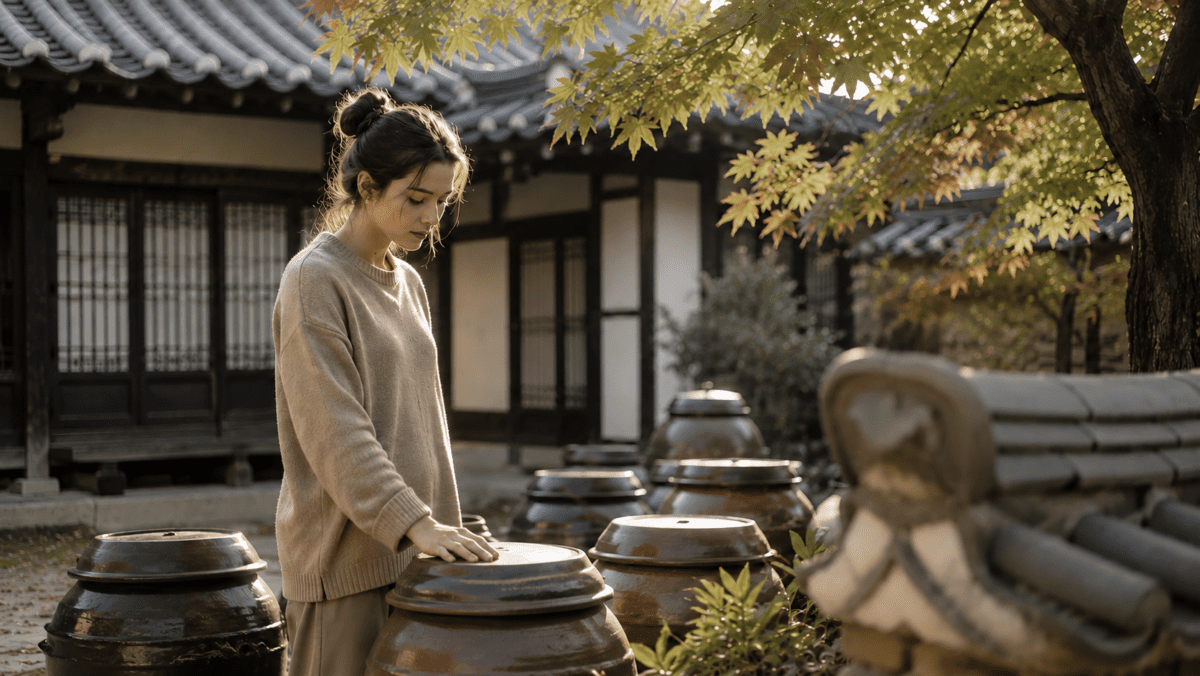
Yu gives a reading of three things with reasonable clarity: when the refinement window is structurally active, whether the metal is operating with or without tempering material, and whether MyoYuChung or YuYuHyeong is approaching within the next two years. What Sin began evaluating is now being resolved, and Yu is the station at which the chart makes the final distinctions that will define what the year actually preserved.
What the data does not resolve is whether the final refinement is happening at the right moment. This is the specific difficulty the sunset cycle meaning in astrology has to confront directly: the refinement function is structurally designed to activate at the sunset hour of the year — but sometimes the material being refined has not actually finished developing, and sometimes the external conditions are forcing a refinement that the chart would have preferred to delay. I can read that you are inside a Yu window. I cannot read whether what is being refined is ready for refinement, or whether the cut that is about to be made will be remembered as precise or as premature.
The paradox lives here. Yu’s precision is its strength. Yu’s precision is also its risk. The blade that cuts exactly can cut exactly wrong — separating what should have remained joined with the same exactness it uses to separate what had to be divided. Yu requires a specific kind of caution: the refinement function is most reliable when it is performing its structural task and most dangerous when it is performing the structural task of a different station. A Yu reading that confirms a decision already made is doing one kind of work. A Yu reading that confirms a decision that should have been made at a different window is doing something else entirely.
The strategic response to Yu is narrower than at most stations and requires a specific kind of self-honesty. Before making the final cut, ask whether the material has actually completed its development or whether it is merely ready to be judged. These are not the same question. Something that is ready to be judged may not be ready to be released. If MyoYuChung is on the horizon, begin examining now which soft spring commitments carried forward into the year are actually worth the precise evaluation Yu will perform — because the ones that were never going to survive will be cut whether you prepare or not, and the ones that might survive deserve to be given their chance before the blade arrives.
The keeping and the letting go are not opposites. They are the same act, performed with the same precision, on different parts of the same material. What the data cannot tell you is which part is which. That distinction is yours to make — and the chart names the window in which the distinction finally becomes possible.
Content in this post was created with AI assistance.