
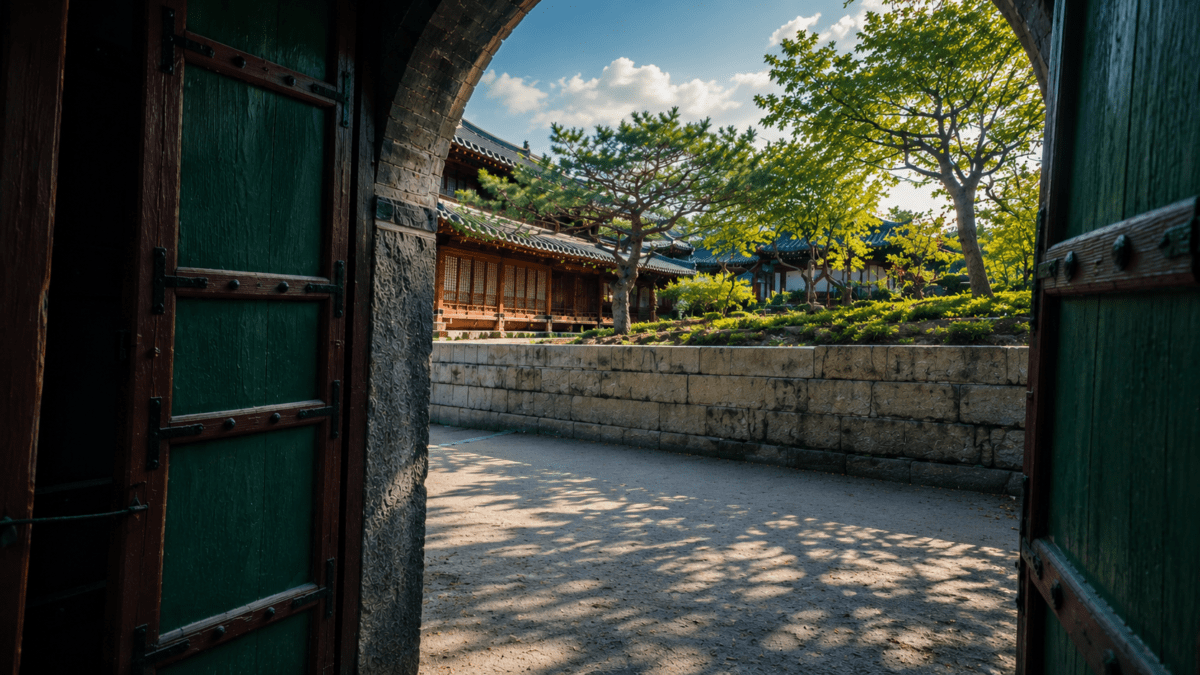
It’s mid-August and a specific thing has changed. The heat of the afternoon is still present, but sometime in the last week a cooler current has started moving through — felt first in the early morning, then sometime around dusk, and now, unmistakably, in the air between the warm surfaces and the sky.
The meetings that were comfortable in July have begun to carry a different weight. The work that Mi absorbed without judgment is now being looked at with different eyes.
This shift has a station in K-Saju. Sin (신: sin, early autumn metal), the ninth of the twelve earthly branches, is where the holding of late summer ends and the first evaluation of what was stored begins.
Mi absorbed everything. Sin does not. Sin is the first metal branch in the cycle — the blade that decides what was actually worth keeping from what the earth had simply been willing to hold. A chart carrying Sin at its center runs on that same evaluating logic: reviewing, judging, separating the material that can serve the coming autumn from the material that was only being stored out of inertia.
What the Autumn Transition Cycle Meaning Actually Records
Sin is the first metal branch in the twelve-station system — the point where the seasonal cycle tips from summer’s holding into autumn’s judgment. The hour is 3 to 5 PM. The month spans early August through early September, bounded by the solar terms Ipchu (입추: ip-chu, beginning of autumn) and Baengno (백로: baeng-no, white dew). The element is Metal (금: geum) in its yang expression — direct, clarifying, specifically designed to separate rather than preserve.
If Mi was the afternoon that kept the heat without asking questions, Sin is the first cool current that begins to ask which parts of that heat actually earned their place. Same afternoon hours, different task. Mi stores. Sin evaluates. The chart with Sin at its center is reading the moment when what was held has to begin answering for itself.
Sin is not personality. It is a structural month in which evaluation becomes the primary function.
The person with Sin prominent will spend this window looking at what the previous season produced with a different kind of attention — not because they have become critical but because the positional cycle now requires discrimination. Trying to operate Sin as if it were still Mi is one of the common misreadings of this branch.
What Sin records is a specific kind of first reckoning. The harvest has not yet begun. The full autumn has not yet arrived. But the question of what will actually make it through the coming seasons has started to press. The chart that holds Sin at its center is reading the interval in which preservation ends and evaluation begins.
The Generative Chain Compressed Into Sin’s Branch

The real mechanism lives inside Sin’s Jijanggan (지장간: ji-jang-gan, the hidden stems concealed within a branch). Sin carries three hidden stems: Mu (무: mu, yang earth, the mountain), Im (임: im, yang water, the river), and Gyeong (경: gyeong, yang metal, the blade).
Of these three, Gyeong is the dominant stem — the one that actually governs Sin’s sustained expression. Mu provides the earth from which the metal emerges. Im carries the water that the metal will eventually generate downstream. Gyeong is the blade that defines what Sin actually does.
The sequence reflects a complete generative chain compressed into a single branch. Mu enters first as the residue of Mi’s stored earth — the ground that metal is about to emerge from. Im settles in the middle, present not as active water but as the potential that Sin’s metal will produce once it is fully active.
Gyeong dominates last and defines the branch — yang metal in its first clear appearance, the blade that separates what kept its value from what did not. By the time Sin is fully active, the chart is running on earth that gave birth to metal, metal in its decisive form, and water held in reserve.
Three interactions govern how Sin behaves with the rest of a chart.
SaSinHap (사신합: sa-sin-hap, combination producing water). When Sa (사: sa, late spring fire) and Sin appear together, the two branches form a water-producing combination. The activation is conditional rather than automatic, depending on the supporting stems and the surrounding chart. From Sin’s perspective, this combination softens the cutting function — transforming Gyeong’s blade into something that reflects and cools rather than divides sharply. A chart with this pairing is often read as carrying unexpected mercy within its evaluating function.
SinJaJin SamHap (신자진 삼합: sin-ja-jin sam-hap, three-combination producing water). When Sin, Ja (자: ja, midnight water), and Jin (진: jin, spring earth) appear together, the three branches combine into a strong water structure. Sin is the starting point of this three-harmony — the metal that produces the midnight water that Jin eventually contains. A chart with this configuration carries an evaluation function that ultimately generates depth rather than simply cutting — the judgment becomes a resource for winter rather than a closing of the year.
InSinChung (인신충: in-sin-chung, wood-metal axial clash). In (인: in, first yang wood) and Sin sit directly across the cycle — spring’s first movement against autumn’s first judgment. When they meet, the clash runs along the growth-reckoning axis itself. This is one of the more structurally forceful clashes in the cycle, comparable in weight to the other axial oppositions. In practice, this looks like a year where what was initiated in early spring comes under evaluation in late summer — the first wood of the year having to answer to the first metal of the year, often producing a sense of “what I started is now being judged before it has finished.”
These three interactions determine how Sin’s blade is directed — and whether it cuts cleanly. The autumn transition cycle meaning in astrology does not rest in the cutting itself — it rests in what Gyeong’s blade chooses to separate and what it chooses to leave intact. How a chart directs or misdirects Gyeong determines what the reading says.
Three Ways the Evaluation Breaks

Sin’s evaluating function breaks in three specific ways, with different structural causes.
The blade that cuts too much. The chart has Sin prominent but lacks the earth and water structures that would temper the metal’s force. Gyeong dominates without Mu’s grounding or Im’s reflective capacity. Externally this looks like someone who applies the evaluating function to everything in sight — cutting away material that was actually ready to serve the autumn simply because the blade is sharp and the cutting is available. The judgment is real. What’s missing is the discrimination within the discrimination — knowing what deserved to be kept even as other things deserved to be released.
The blade that will not cut. The opposite failure. Gyeong is present but heavily suppressed — often by a strong fire configuration that threatens the metal’s form, or by a weak earth base that cannot support the blade’s function. The evaluating moment arrives and nothing gets evaluated. The stored material of Mi carries forward into full autumn unchanged, and the chart enters the harvest season without having done the preliminary work of separation. In practice, this looks like a person who reaches the structural deadline for judgment and simply does not judge — not from kindness but from a structural inability to activate the discriminating function.
Judgment under axial rupture. The subtlest failure. InSinChung activates, either natally or through Sewoon (세운: se-woon, the annual cycle), and the evaluation gets contested by the first movement of the year. What Sin is trying to judge is not accepting the judgment — the spring-origin material fighting back against the autumn-origin reckoning. In chart terms, this is the year where an early-year initiative resists its own necessary evaluation, and the person oscillates between cutting and restoring without arriving at either.
First evaluation is not the same as final harvest. Sin reads each of these failures as structural rather than character flaw.
The blade that cuts too much asks for tempering — the earth and water that would make the metal discriminating rather than merely sharp. The blade that will not cut asks for support — the structural conditions under which Gyeong can perform its evaluating function without being overwhelmed. Judgment under axial rupture asks for patience — recognizing that the spring material pushing back is itself information, and that the evaluation may need to be revisited rather than forced.
Sin Across the Four Pillars
The autumn transition cycle meaning in astrology lands differently depending on where Sin sits in the chart’s four positions — Yeonji (연지: yeon-ji, birth year position), Wolji (월지: wol-ji, birth month position), Ilji (일지: il-ji, birth day position), Siji (시지: si-ji, birth hour position). Each position changes what is actually being evaluated.
Yeonji (연지: yeon-ji): Sin at the year level often corresponds to a generational pattern of evaluation and selection — family lines or cohorts that developed traditions of judging what previous generations accumulated, separating what to preserve from what to release. People with Sin at the year level often carry inherited instincts for knowing what to keep and what to let go rather than needing to learn it as a skill.
Wolji (월지: wol-ji): This is the structurally heaviest position for Sin. Month branch sets the chart’s elemental center of gravity, and Sin as month places the whole chart in evaluating logic. The person tends to operate on reckoning rhythm by default — always assessing, always separating, always clarifying what belongs from what does not. This is also the position where InSinChung carries the most weight when an In year arrives. The clash lands on the chart’s center of gravity, and whatever spring-origin material the chart has carried forward comes under direct evaluation.
Ilji (일지: il-ji): Sin at the day level describes the person’s immediate environment and closest relationship. The partner, the home, the daily body — all run evaluation logic. Comfortable with clarity, skilled at distinguishing what serves from what does not, sometimes experienced by others as difficult to stay close to because the evaluating function never fully pauses. Relationships with a Sin day branch often work best when the evaluating function is acknowledged openly rather than absorbed silently by the partner.
Siji (시지: si-ji): Sin at the hour level describes late-life output and the way one’s final chapter handles legacy. Careers that end with decisive sorting — archives separated into what is kept and what is released, reputations shaped by what was deliberately declined rather than what was pursued — often correspond to Sin at this position.
Daewoon (대운: dae-woon, the ten-year major cycle) can also land on Sin. When it does, the ten years tend to run on evaluating logic regardless of what the natal chart prefers. This is the decade where the autumn transition cycle meaning may override personality, preference, and plan.
A person who has spent the previous decade in Mi’s holding function will find themselves in a ten-year window where accumulation slows and discrimination becomes the primary task. Not as loss of warmth, but as the structural requirement to decide what the accumulated material is actually for.
What Sin’s Evaluation Cannot Determine

Sin gives a reading of three things with reasonable clarity: when the evaluation window is structurally active, which of the three hidden stems is currently most weighted, and whether InSinChung is approaching within the next two years. What Mi absorbed is now being reviewed, and Sin is the station at which the chart begins deciding which of the year’s accumulated material will actually serve the coming seasons.
What the data does not resolve is what should be kept and what should be cut. The chart can tell you that the evaluation function is active. It cannot tell you the content of the judgment. Two people with identical Sin placements can arrive at very different conclusions about what the summer actually produced — one seeing value where the other sees only residue. The chart shows the mechanism of discrimination. It does not show the specific discriminations the mechanism will make.
Sin requires more caution in reading than the branch’s apparent decisiveness suggests. The cutting function looks clear from the outside. What is being cut and what is being preserved often depends on material outside the chart’s direct view — the relationships, the commitments, the history that the chart does not fully contain.
The strategic response to Sin is a specific kind of attention. The evaluation is going to happen whether you participate consciously or not. The question is whether you engage with it deliberately or let it run on default. Review what Mi accumulated during the last three months, and identify which portion carries genuine value for the autumn and which portion is being kept only because nothing has yet made the decision to release it.
If InSinChung is on the horizon, begin distinguishing now between the spring-origin commitments that have matured into something worth preserving and those that were never going to survive the evaluation anyway. The reading here opens rather than closes — the judgment is yours to make, and the chart names the window in which it becomes possible rather than the answer it will produce.
Content in this post was created with AI assistance.