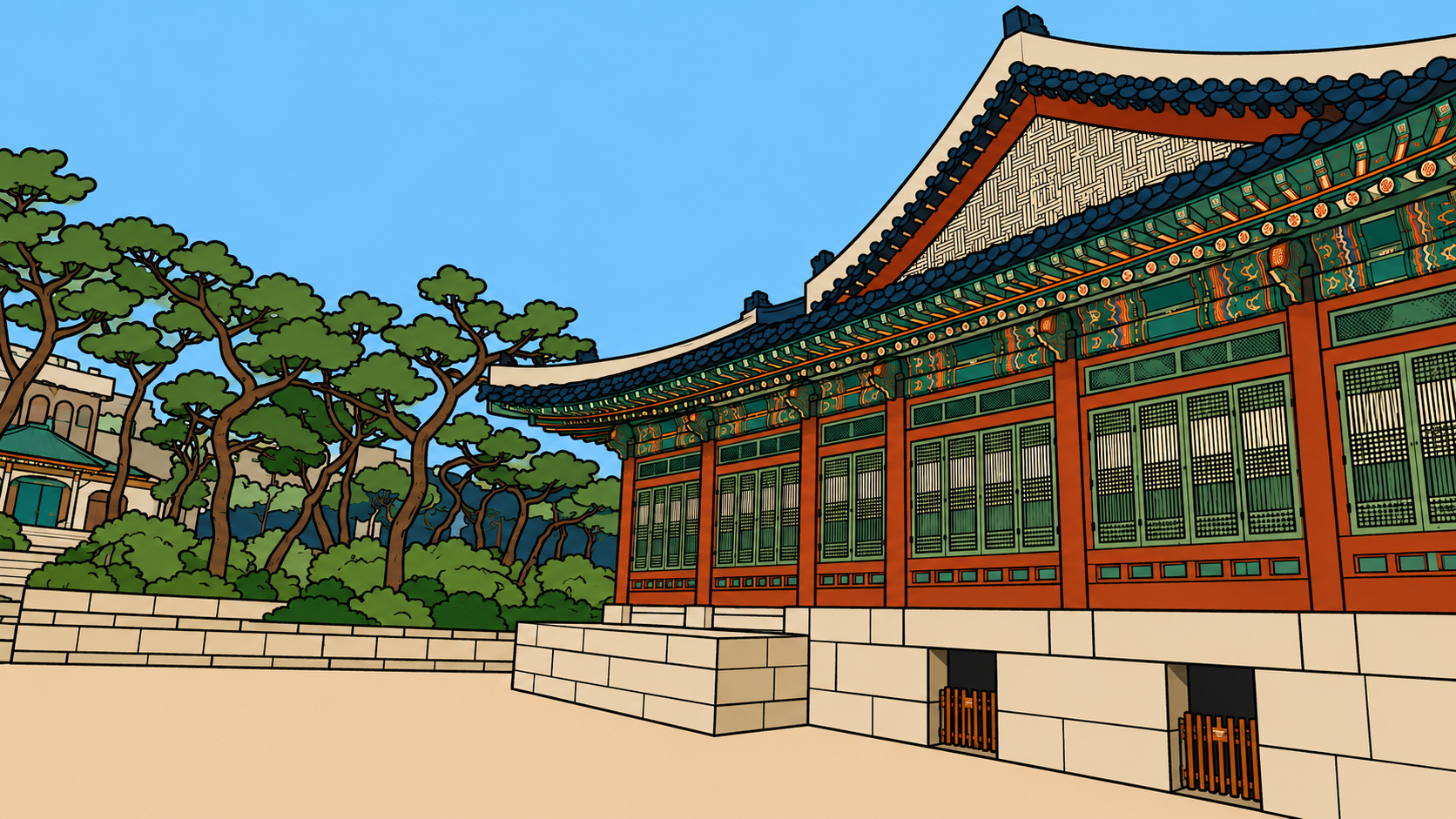
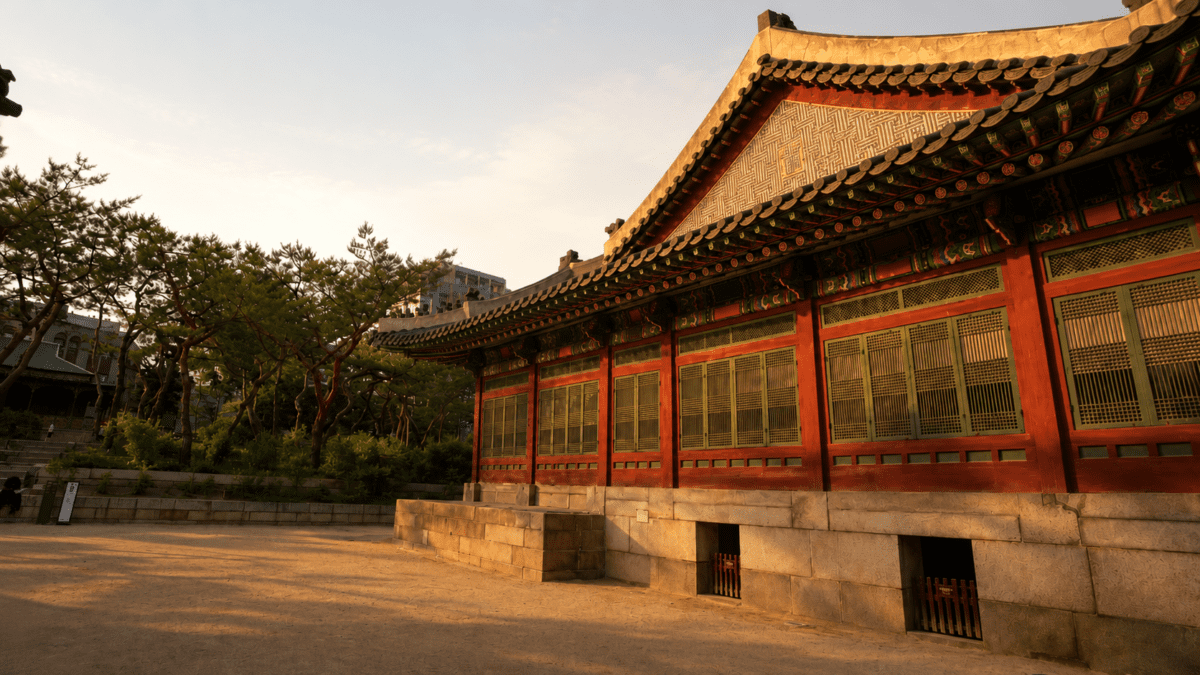
It’s late July and the day has not cooled but something has turned. By 2 PM the sun is no longer directly overhead. The heat is still heavy on your skin, but the angle has changed — the light now comes from slightly west, casting the first real shadows since noon.
This shift has a station in K-Saju. Mi (미: mi, late summer earth), the eighth of the twelve earthly branches, is where the peak has already passed and the work of the year is no longer to reach further but to hold what has been produced.
O was the peak. Mi is what comes after. The heat that O generated has not left. The light that O carried has begun to tilt. A chart carrying Mi at its center runs on that same holding logic — keeping some of what summer made and letting go of the rest, absorbing the residue into a form the rest of the cycle will eventually use.
What the Afternoon Cycle Meaning in Astrology Actually Records
Mi is the second earth branch in the twelve-station system — the one that receives what summer produced. The hour is 1 to 3 PM. The month spans early July through early August, bounded by the solar terms Soseo (소서: so-seo, minor heat) and Ipchu (입추: ip-chu, beginning of autumn). The element is Earth (토: to) in its yin expression — receptive, slow, specifically designed to hold what came before rather than generate what comes next.
If O was the noon sun at full exposure, Mi is the stretch of afternoon where the heat is no longer increasing but has not yet begun to retreat. Same fire, different stage. O radiates. Mi absorbs. The chart with Mi at its center is reading the moment when the body of summer is still warm but the structure underneath has started to shift toward storage.
Mi is not personality. It is a structural month in which holding becomes more important than producing. The person with Mi prominent will spend this window keeping what was made and letting go of the rest rather than making more — not from laziness but from the positional fact that Mi’s work is containment, not output. Trying to operate Mi as if it were still O is one of the most common misreadings of this branch.
What Mi records is a specific kind of afterward. The peak has passed. The output is in. Now the question is whether what was produced can actually be held, or whether it slips through before the earth has hardened enough to keep it.
The Three Stems Running the Storage Chamber
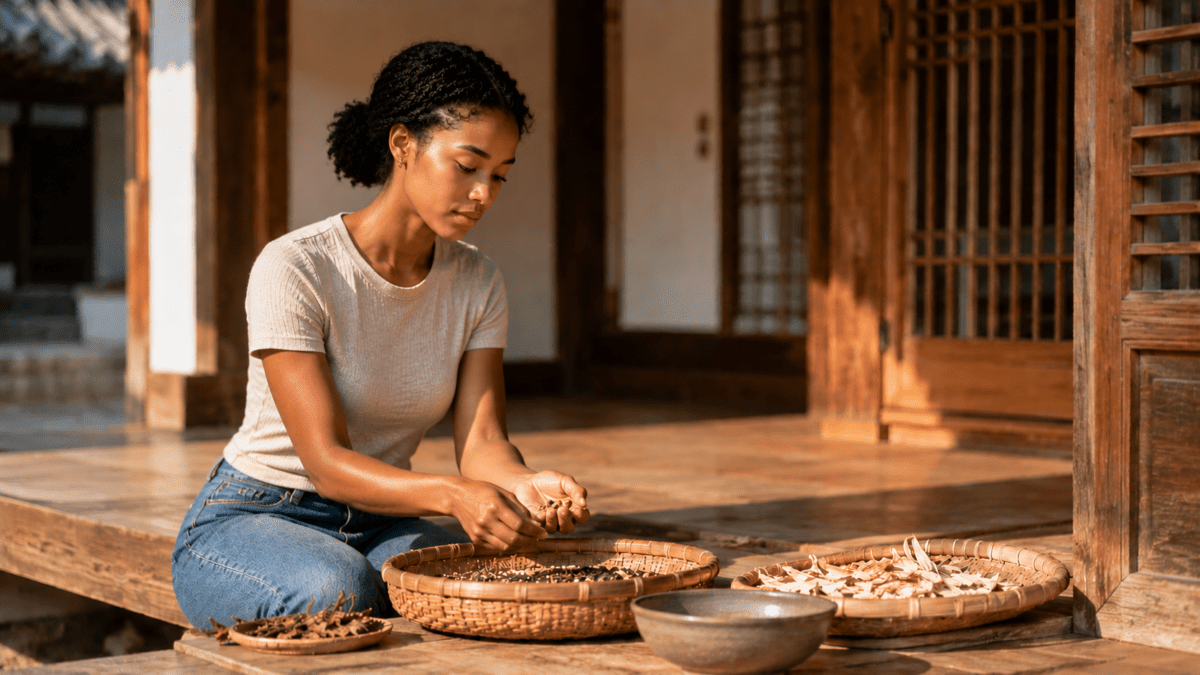
The real mechanism lives inside Mi’s Jijanggan (지장간: ji-jang-gan, the hidden stems concealed within a branch). Mi carries three hidden stems: Jeong (정: jeong, yin fire, the candle), Eul (을: eul, yin wood, the vine), and Gi (기: gi, yin earth, the field). Of these three, Gi is the dominant stem — the one that actually governs Mi’s sustained expression. Jeong carries the residue of summer’s fire. Eul holds the remaining wood energy from spring’s growth. Gi is the yin earth that receives both and decides what to keep.
The sequence matters. Jeong enters first as the residue of O’s internal flame — the heat that has not yet cooled. Eul settles second, carrying what spring started and summer brought to fullness. Gi dominates last and defines the branch — the cultivated field that absorbs the fire, preserves the wood, and stores both for the turn into autumn. By the time Mi is fully active, the chart is running on warm residue, mature growth, and receptive earth, with Gi quietly in charge.
Three interactions govern how Mi behaves with the rest of a chart.
OMiHap (오미합: o-mi-hap, combination linking to fire). When O and Mi appear together, the two branches form a fire-aligned combination. The transformation does not always complete fully — this combination behaves more like “sun and moon” than “fire generating fire,” with the actual change conditional on surrounding stems and branches. From Mi’s perspective, this combination extends summer’s heat into the afternoon rather than allowing it to cool — a chart with this pairing often carries warmth that lingers well past the structural peak.
HaeMyoMi SamHap (해묘미 삼합: hae-myo-mi sam-hap, three-combination producing wood). When Hae (해: hae, late winter water), Myo (묘: myo, spring wood), and Mi appear together, the three branches combine into a wood structure. Mi is the storage end of this three-harmony — the earth that receives what winter’s water began and spring’s wood developed. A chart with this configuration carries long-arc wood energy that traces back to the previous winter, suggesting growth projects where the final storage form was already implied in the initial seed.
ChukMiChung (축미충: chuk-mi-chung, earth-earth storage clash). Chuk (축: chuk, frozen earth) and Mi sit directly across the cycle — winter’s frozen storage against summer’s warm storage. When they meet, both storage systems compete. Chuk’s preserved winter material and Mi’s absorbed summer material try to occupy the same structural space, often producing a year where what is being held from the past conflicts with what is being stored in the present. This is one of the earth-axis oppositions — less dramatic than the water-fire clashes (JaOChung) but structurally persistent, a tension that does not erupt but slowly destabilizes both storage chambers.
These three interactions determine what Mi keeps, what it loses, and what it holds by accident. The reading does not rest in the heat itself — it rests in whether Gi’s receptive earth can hold what Jeong’s residual fire is passing into it. How a chart protects or overloads Gi determines what the reading says.
Three Ways the Storage Fails to Hold

Mi’s storage function fails in three ways, each requiring a different response.
The afternoon that won’t end. The chart has Mi prominent but the earth is so heavy that it refuses to release the summer heat even when autumn structurally arrives. Jeong’s residue keeps burning at low intensity indefinitely. Externally this looks like someone who cannot acknowledge that the peak has passed — continuing to operate on summer output logic when the positional cycle has already shifted. The output of the year is real. What’s missing is the recognition that maintaining the peak posture past the structural window begins to erode the very thing that was produced.
Premature cooling. The opposite failure. The earth of Mi is too thin, or other branches pull too strongly toward autumn, and the heat dissipates before it can be properly stored. The produced material of summer slips through the storage chamber before Gi has fully absorbed it. In practice, this looks like a person who finishes the peak season with almost nothing to show — not from failure at the peak but from a structural inability to hold what the peak generated. The summer was productive. The afternoon did not keep it.
Storage vessels in collision. The subtlest failure. ChukMiChung activates, either natally or through Sewoon (세운: se-woon, the annual cycle), and the chart tries to store winter material and summer material simultaneously. Chuk’s preserved cold and Mi’s absorbed heat compete for the same structural capacity. Neither storage completes. In chart terms, this is the person whose holding function cannot decide what to keep — retaining contradictory residues from different seasons and finding that none of them become usable material for the next cycle.
Afternoon storage is not the same as afternoon production. Mi reads each of these failures as structural rather than character flaw. The afternoon that won’t end asks for permission to step down from peak posture — acknowledging the structural shift rather than fighting it. Premature cooling asks for strengthening of the earth — building the storage capacity before the peak arrives rather than after. Storage vessels in collision asks for letting go — identifying which residue the current window can actually hold and releasing the other to be addressed later.
Mi’s Structural Weight by Chart Position
Letting go lands differently depending on where Mi sits in the chart’s four positions — Yeonji (연지: yeon-ji, birth year position), Wolji (월지: wol-ji, birth month position), Ilji (일지: il-ji, birth day position), Siji (시지: si-ji, birth hour position). Each position changes what the storage chamber is actually holding.
Yeonji (연지: yeon-ji): Mi at the year level often corresponds to a generational pattern of holding and preserving — family lines or cohorts that developed traditions of keeping what previous generations produced, rather than perpetually generating new material. People with Mi at the year level often carry inherited instincts for knowing what to keep rather than needing to learn it as a skill.
Wolji (월지: wol-ji): This is the structurally heaviest position for Mi. Month branch sets the chart’s elemental center of gravity, and Mi as month places the whole chart in storage logic. The person tends to operate on afterward rhythm by default — always receiving what just happened, always calibrating what to keep from what to release. This is also the position where ChukMiChung carries the most weight when a Chuk year arrives. The clash lands on the chart’s center of gravity, and whatever winter material the chart has been holding comes into direct conflict with what summer is currently storing.
Ilji (일지: il-ji): Mi at the day level describes the person’s immediate environment and closest relationship. The partner, the home, the daily body — all run storage logic. Comfortable with accumulation, skilled at holding what others release, sometimes overextended by absorbing too much from the surrounding field. Relationships with a Mi day branch often sustain themselves through patient preservation rather than constant renewal, though they can become vulnerable when the stored material is not periodically reviewed and released.
Siji (시지: si-ji): Mi at the hour level describes late-life output and the way one’s final chapter handles legacy. Careers that end with preserved archives, held collections, or curated repositories — work that is kept rather than publicly distributed — often correspond to Mi at this position.
Daewoon (대운: dae-woon, the ten-year major cycle) can also land on Mi. When it does, the ten years tend to run on storage logic regardless of what the natal chart prefers. This is the decade where the afternoon cycle meaning may override personality, preference, and plan. A person who has spent the previous decade in O’s peak exposure will find themselves in a ten-year window where production slows and holding becomes the primary task. Not as loss of capacity, but as the structural requirement to keep what the peak produced so that the eventual autumn has something to harvest.
What Mi Cannot Tell You About What It Holds

Mi gives a reading of three things with reasonable clarity: when the storage window is structurally active, which of the three hidden stems is currently most weighted, and whether ChukMiChung is approaching within the next two years. What O produced is now being absorbed into Gi’s receptive earth, and Mi is the station at which the chart decides what will be kept and what will slip through before autumn arrives.
What the data does not resolve is whether what is being stored is actually worth storing. This is a judgment that sits outside the chart entirely. I can read that you are inside a Mi window. I can read which stem is dominant. I cannot read whether the material being absorbed into the storage chamber is material the rest of your life will need, or whether it is residue that should have been released rather than kept. The chart shows the mechanism of holding. It does not show the value of what is held.
Mi requires more caution in reading than the branch’s apparent calm suggests. The storage function looks stable from the outside. What is being stored is harder to assess. Certainty about a Mi reading without examining what the surrounding chart is actually passing into the storage chamber is premature. Mi readings can look like descriptions of peaceful consolidation when the underlying material being held is unresolved from an earlier window.
The strategic response to Mi is narrower than at most stations. The peak has passed. The question is not how to extend it but what to keep from it. Review what the last three to six months actually produced, and identify which portion of that output is worth absorbing into long-term structure. Practice letting go deliberately rather than letting the storage chamber decide by default.
If ChukMiChung is on the horizon, begin distinguishing now between the summer material that has genuinely integrated and the winter material the chart has been holding unresolved — because the clash will force that distinction whether you prepare for it or not.
The afternoon is not empty. It is full of what the peak left behind. What the data cannot tell you is which parts of that fullness are going to matter.
This post was planned and edited by a human, with AI assistance.