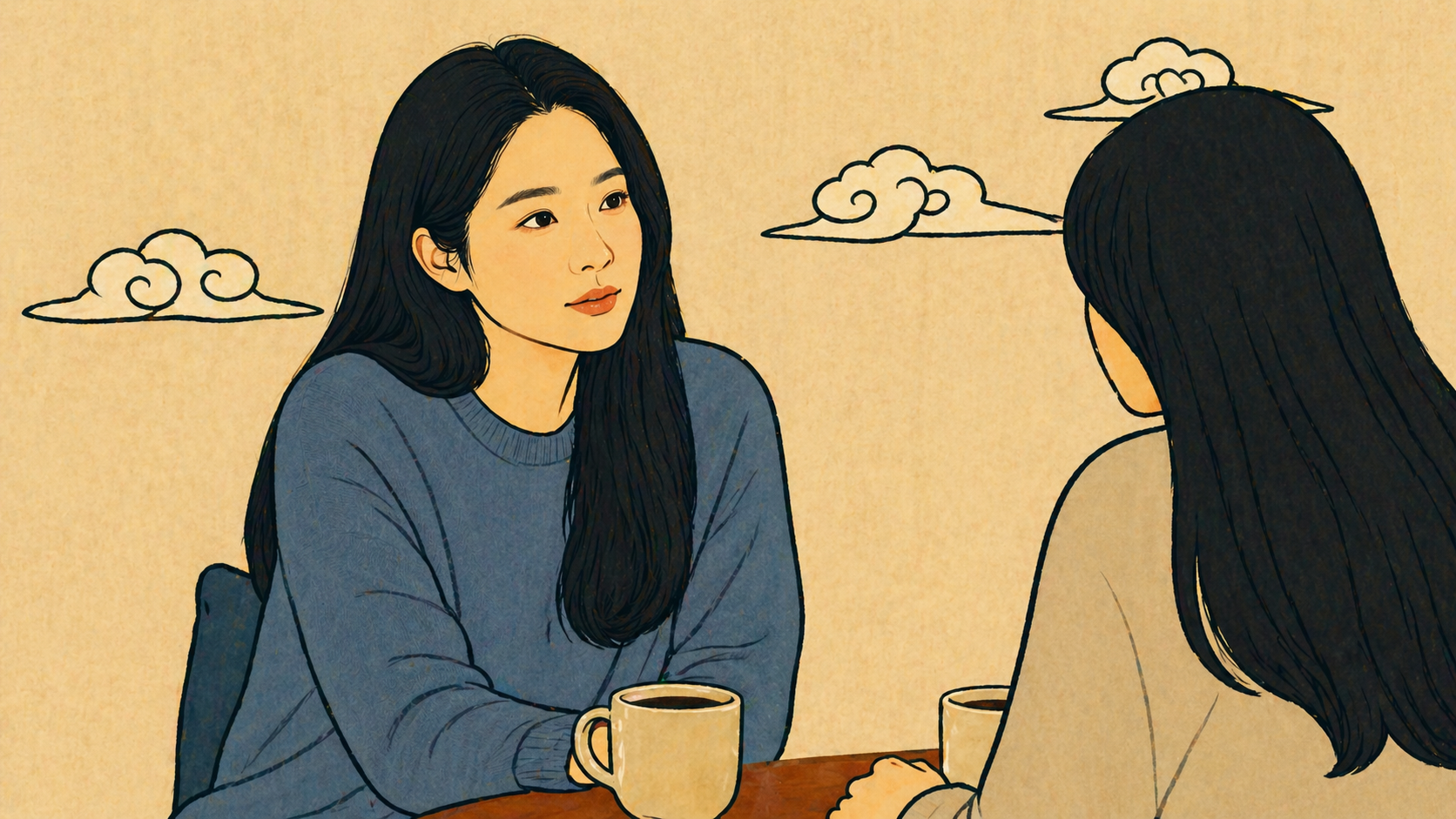

Some people sit across from you, and you feel safe — even without a word or a touch. This is attachment style — in real life.
Not comforted. Not soothed. Held. As if the distance between you matters less than your actual presence in the room — that you are seen, that your confusion or joy or silence is fine, that nothing about being near them requires you to be smaller or faster or more certain of yourself.
Other people drain the room the moment they relax into it. They need constant confirmation that you are still there, still paying attention, still choosing them. The attention you give them is never quite enough. Or they disappear entirely into their own world and you become background noise, a utility that exists only when summoned.
And some people oscillate wildly between these two — clinging one moment, distant the next, unable to predict which version will show up or how long it will stay.
Most of us describe this as personality. Or chemistry. Or just how love happens to work — some people are easier to be around, some people are harder, and you take what you get.
But there is something else running underneath these patterns. Something deeper than personality. Something that shows up the same way every time, in every relationship, until you recognize it for what it is.
The Pattern That Starts Before Words

Imagine an infant. The infant needs nothing from you except one thing: to be held when it’s in danger, and to be let go when it’s learning to move.
That’s the whole arrangement. Hold when afraid. Release when ready.
Most infants get something close to this. Their caregiver senses the fear and comes. The infant cries and the caregiver appears. The infant falls and reaches back, and the caregiver is there. The infant gradually learns that danger has a solution, that the world is navigable, that other people can be trusted with the terrifying moments. Slowly, the infant stops needing to be held so constantly. The need to check back becomes less urgent. By age three, the child plays alone in a room knowing an adult is nearby. By age six, the child attends school. This is not independence. This is the confidence that comes from being reliably held when it mattered.
Attachment style is built on a simple pattern: being supported when you need it, and given space when you’re ready. Everything that comes later grows from this.
When something goes wrong with it, nothing else fixes it.
A caregiver who was never there creates one kind of problem. An infant who needed to be held learns instead that danger has no solution, that asking is pointless, that the world is something you navigate alone. This infant grows up believing that needing another person is a weakness, that independence is survival, that letting someone close will always end in abandonment.
A caregiver who couldn’t let go creates a different problem. An infant who reached for independence was pulled back, was told the world was too dangerous, was rewarded for staying small. This infant learns that the world is only safe if you stay attached, that separation is abandonment, that the person you love will leave if you’re not vigilant enough.
A caregiver who was inconsistent creates the worst kind. An infant never learns the pattern. Sometimes the caregiver appears, sometimes they don’t. Sometimes they hold, sometimes they push away. The infant learns that other people are unpredictable, that your own needs contradict theirs, that safety and danger can arrive from the same source. This infant grows up unable to trust the signal — is this person safe or not? Do they want me close or do they want me gone? The only way to survive is to keep reading, keep adjusting, keep hoping this time will be the one where it makes sense.
None of this is about blame. None of this is about what caregivers intended. It’s about what an infant’s nervous system learns when you repeat the same pattern over and over: the world is this kind of place, and people are this kind of reliable or unreliable.
The Two Directions You Can Move

There is a rhythm that runs through every relationship. Sometimes you need closeness. Sometimes you need independence. Sometimes you need to be understood. Sometimes you need to be left alone.
A person who was held and released at the right moments knows how to read this rhythm. When they need someone, they can ask. When someone needs them, they can show up. When they need space, they can take it without shame. When someone needs space, they can give it without abandonment.
This is not because they are skilled or mature or have figured out the secret. It is because their nervous system learned early: It is safe to need people. And it is safe to be independent. Both exist. You don’t have to choose one and sacrifice the other.
A person who was never held learns a different logic: needing people is dangerous. Independence is the only safety. So they cannot ask. They never text first. They interpret a slow reply as abandonment. They withdraw before they can be withdrawn from. They cannot let someone see the moments when they are small or uncertain or afraid. When someone gets close, they feel suffocated and create distance. This person will be drawn to another person who seems totally self-sufficient, who asks for nothing, who appears to need no one. This looks like compatibility. It is actually two people agreeing never to need each other.
A person who was never released learns yet another logic: independence is abandonment. Closeness is survival. So they cling. They monitor. They check their phone constantly. They interpret distance as rejection. They need constant reassurance that they haven’t been forgotten. When someone needs space, they panic. This person will be drawn to someone who seems to complete them, who can solve the fear of being alone, who makes it possible to stop being vigilant. This looks like romance. It is actually one person using another to manage terror.
And a person whose caregiver was inconsistent never settles into either. They oscillate. They need and then they push away. They trust and then they test. They appear to be commitment-phobic or emotionally unstable or just difficult. What they actually are is someone whose nervous system learned: you cannot predict what will happen. So you have to keep adjusting your behavior to survive the next moment.
What Safe Looks Like
Someone with a secure attachment style — steady, not extreme — rarely feels like the most exciting person in the room.
They don’t pursue relentlessly or withdraw mysteriously. They don’t make you prove yourself or apologize for existing. They are not exciting because they are not in crisis. Their life is not a story where you are either the hero or the villain. You’re just a person, and they are just a person, and the space between you is enough.
This steadiness is not contentment. It’s not resignation. It’s something much rarer: it’s the freedom to actually see another person because you’re not too busy managing your own terror.
A steady person can listen to you be afraid without becoming afraid that you’ll leave. They can listen to you want something they can’t provide without becoming defensive. They can be wrong without it meaning they are unlovable. They can ask for what they need without assuming the answer is no. They can say no without assuming the other person will hate them.
This is not because they are perfect or have no fears. It is because their nervous system learned very early: it is possible for two people to want different things and still be connected. You can disagree and still love each other. You can need different things and still be in the same room. A steady person can be sick and not apologize for needing care. They can be busy and not feel guilty for unavailability. They can hear “I need space” and trust that space doesn’t mean goodbye. They can say “I’m scared” and believe you’ll stay. They can make a mistake and repair it without spiraling into shame. They can watch you succeed without jealousy or fear. They can fail and still believe you won’t leave.
This is possible to learn later. It is infinitely harder. But it is possible.
Next: (Part 2) Anxious Attachment Style: The Need That Never Gets Answered
Anxious attachment style isn’t neediness. It’s a nervous system shaped by unpredictability—why you check, ask, and feel silence as abandonment.
Some content in this post was created with AI assistance.