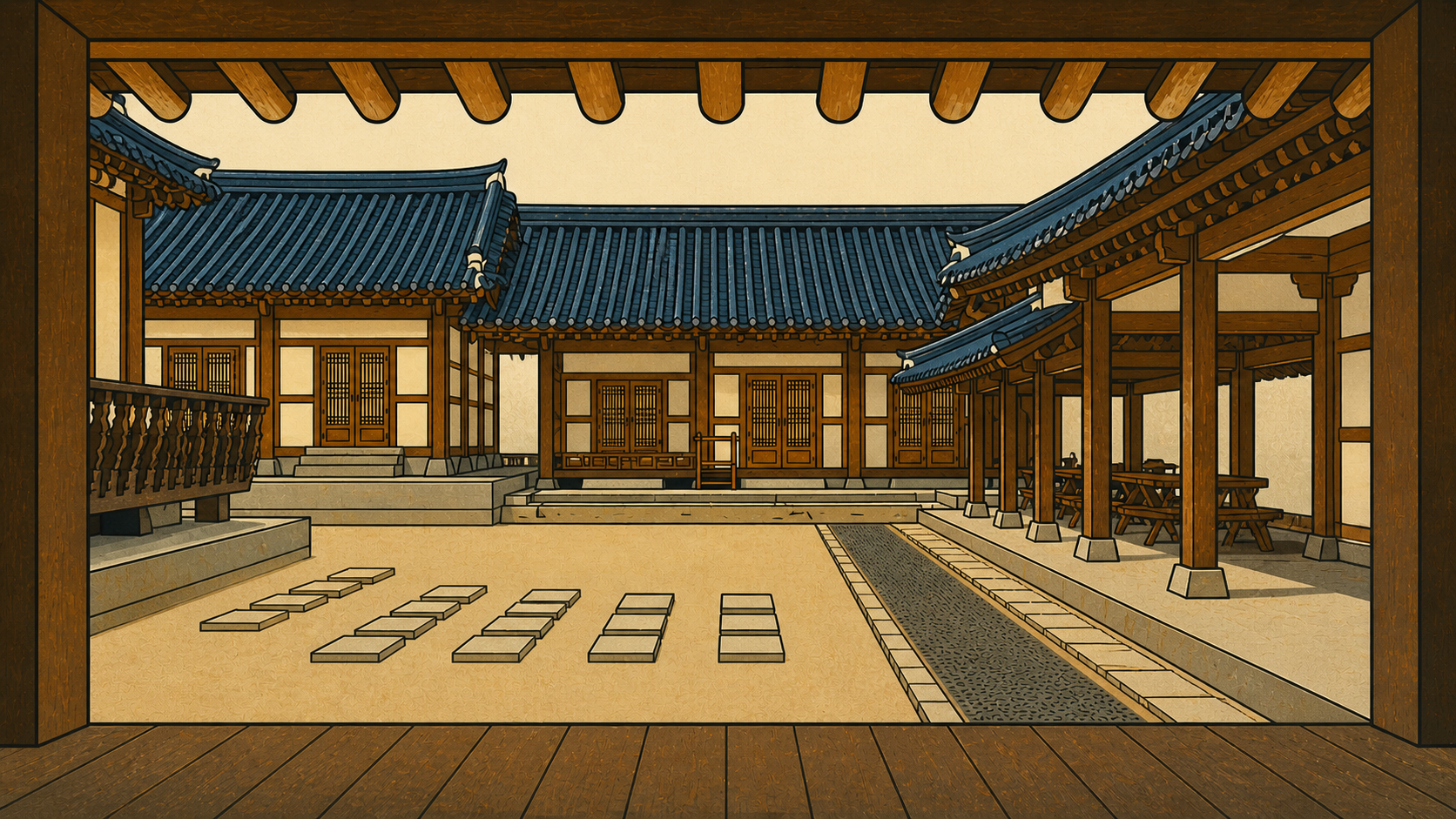
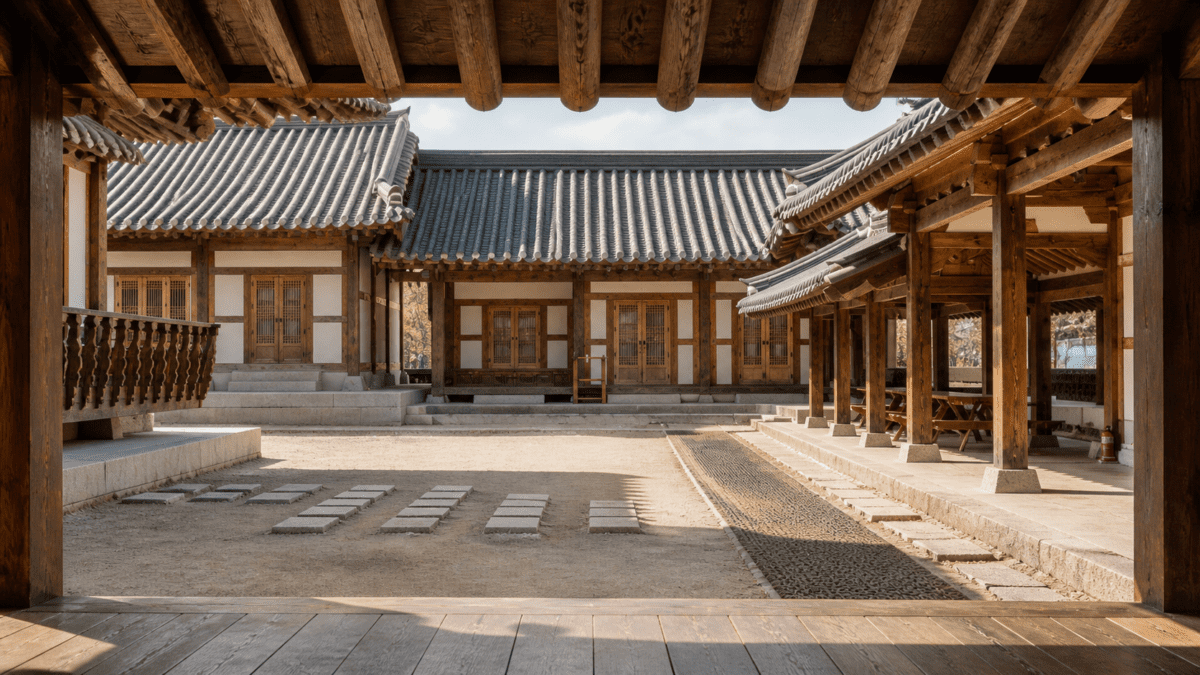
A wife. A husband. A maid. A son. Four people in one house. Nothing extraordinary happens. The wife does laundry. The maid cooks. The husband works. The son studies. They sit at the same dinner table. They share the same walls.
Then something shifts. Not dramatically. Not with violence announced in advance. The shift happens in how they look at each other. In what they want. In what they can’t have.
This is The Housemaid. This is what happens inside a home when structure—who has money, who has authority, who has choice—becomes the only logic that matters.
What the Housemaid Shattered
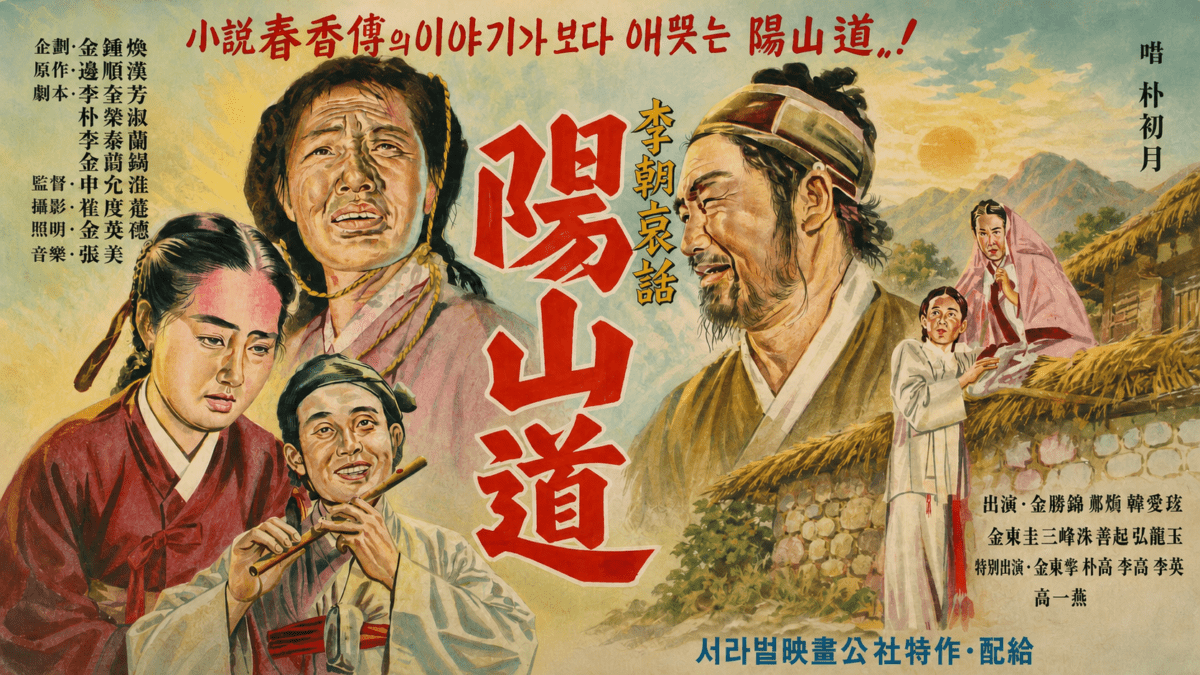
(Wikimedia Commons, Public Domain / Edited)
When The Housemaid was rediscovered decades later and began appearing at international film festivals, critics outside Korea didn’t know what they were watching. The film had no political message. No moral conclusion. It didn’t tell audiences what to think about family, or marriage, or women’s roles.
Instead, it showed. And showing, it asked a question: What if the problem isn’t individual people making bad choices? What if the house itself is the problem?
A woman in a house. Not rich, but respectable. A wife. She’s married to a man with money. She has a son. She manages a household. By every measure, she has what women are supposed to want. Security. Status. A home.
A maid enters. She’s younger. She’s hungrier. She’s looking for something—it’s not entirely clear what. Maybe it’s security. Maybe it’s to be noticed. Maybe it’s to matter. Maybe it’s just to not be invisible in a way that makes invisibility feel like erasure.
The wife watches the maid. The maid watches the wife. The husband doesn’t notice that neither is watching him—he’s too absorbed in his own position to see what’s happening on the ground. The son watches all of them, learning by observation what his future will require him to become.
What unfolds isn’t a plot twist. It’s a logic. The logic of a closed system where four people have four different amounts of power, and that unequal distribution becomes the entire story. She looks at the door. She doesn’t move. She knows she can’t. In this house, money decides who leaves. This was radical. Not because it was angry. But because it was precise.
The Staircase, the Rat, the Fire

The house has a staircase. Kim Ki-young films it repeatedly. She takes a step. Stops halfway. Listens. Then turns back. The staircase goes nowhere and everywhere at once. It’s just stairs. But it carries the weight of every decision made in this house—who can leave, who must stay, who belongs, who is tolerated.
Watch how she moves. Not with purpose. With hesitation. The staircase is both escape and trap. It’s the only way out and the only thing that stops her from leaving.
A rat appears. It gnaws at the walls. The sound is constant. Unwanted. It can’t be stopped, only endured. Like desire when you’re supposed to be content. Like hunger when you’re supposed to be grateful. Like the need to escape something you can’t name because naming it would require admitting the structure is the problem, not you.
Fire spreads. It consumes everything. It doesn’t discriminate between the guilty and innocent. It doesn’t care about your intentions or your suffering. It just burns.
These aren’t metaphors Kim Ki-young inserted to make his point. They’re what he sees when he looks at a house. A home is a machine. It operates on rules. The rules decide what each person can want, can have, can become. And once the machine is set in motion, it doesn’t stop because someone realizes it’s unfair. It stops when there’s nothing left to consume.
The Pattern That Repeats
Kim Ki-young didn’t make The Housemaid once. He made it again. And again. Different women entered different houses. The outcome changed shape but never direction. The structure remained.
What fascinates him—what he spends decades filming—is that the structure doesn’t need anyone to enforce it. The wife doesn’t need to be told she’s dependent. She already knows. She learned it long before the maid arrived. The maid doesn’t need permission to hunger. Hunger is her condition. Poverty is her structure. The husband doesn’t need to understand what’s happening. His position insulates him from having to. He can remain oblivious because obliviousness is a luxury his position affords.
This is what separates Kim Ki-young from every other filmmaker of his era. He refuses to blame individuals for the shape their lives take. He doesn’t ask: Why doesn’t the wife leave? Why does the maid steal? Why does the husband ignore what’s happening?
Instead, he asks: Given the structure, what else could happen?
And the answer is: Nothing. Nothing else. It repeats because nothing has changed. You can replace the wife with a different woman, the maid with someone else, the son with another child. The house keeps producing the same ending. It will produce the same desires, the same betrayals, the same small violences that feel inevitable because they are inevitable within the system.
This is the most unsettling thing about his films. They offer no hope that individual transformation matters. They offer no possibility that if people just understood each other better, everything would be fine. People understand each other. Nothing changes.
How the West Discovered What It Didn’t Know It Needed
For decades, The Housemaid existed in a strange limbo. It wasn’t forgotten—it was never known. A handful of scholars discussed it. A few directors had heard rumors. But it wasn’t taught in universities. It didn’t appear at major festivals. It existed in the margins of cinema history.
Then something shifted.
Starting in the 1990s, archivists and film scholars began the work of restoration. The Housemaid was cleaned up, preserved, shown again. International film festivals began programming it. Venice. Berlin. Cannes. Critics who had never heard of Korea, who knew nothing of its history, watched the film and recognized something that transcended geography.
The film increasingly appeared in academic discussions and film study programs after its international rediscovery. Not as a curiosity. As essential. Students studying narrative structure, character development, visual language—they all encountered Kim Ki-young. They learned that you could tell a complete story without moral instruction. That you could film people with precision and let the audience draw their own conclusions. That coldness, properly executed, could be more revelatory than empathy.
Directors began openly citing him. Critics and filmmakers later noted thematic and stylistic parallels between Kim Ki-young’s work and that of internationally recognized directors such as David Fincher and Michael Haneke. Other filmmakers—some famous, some not yet—recognized in his work a permission structure. Permission to make films that didn’t comfort audiences. Permission to show systems without offering solutions.
Critics started writing about him differently. Not as a foreign curiosity. As a necessary voice. International film magazines published essays. Academic journals began running scholarly analyses. Universities offered seminars devoted entirely to his filmography.
What was remarkable wasn’t that he was discovered. It was the speed at which his absence became obvious. Once people saw The Housemaid, they couldn’t believe it had been invisible. They couldn’t believe film history had been written without him.
The question that hung over this rediscovery was simple: How did the world miss this for so long? And the answer was equally simple: Because Korea was a country the West didn’t pay attention to. Because a film about domestic conflict in a non-Western home seemed too specific to matter. Because the man who made it never sought international recognition or adapted his vision to make it more palatable.
He just kept making films the way he saw them. And eventually, the world caught up.
Why This Matters Now
You watch The Housemaid and you see a wife who can’t leave because leaving would mean admitting the life she built was wrong. You see a maid who can’t refuse because refusing would mean homelessness. You see a son who can’t protect anyone because protection requires power he doesn’t have. You see a husband who doesn’t have to choose—the structure chooses for him, and he benefits from that choice.
None of them are bad people. None of them made a single catastrophic mistake. They’re operating inside a logic where their options were always already limited. They’re responding to conditions set by something larger than themselves.
This is what Kim Ki-young understood that most filmmakers didn’t: that the real story isn’t in the drama. It’s in the mechanism. How does a system stay in place? Not through violence. Not through coercion. Through the ordinary choices people make when they believe they have no other option.
And once you see it—once you understand how a structure reproduces itself through people who think they’re acting freely—you can’t unsee it. You watch films differently. You watch relationships differently. You watch your own life differently.
Because the question becomes: What structure am I inside? And what does it allow me to want, to have, to become?
Director Park Chan-wook later described him as “one of the most influential directors” for his own work. Director Bong Joon-ho has repeatedly acknowledged Kim Ki-young as a major influence on his work. When international filmmakers finally discovered Kim Ki-young’s work in the 1990s, they recognized they had found the blueprint for how to show systems without apology. The cold observation of human beings trapped inside structures became the language through which Korean cinema would speak to the world.
A filmmaker trained in medicine who used cinema to examine the structures shaping human behavior. A filmmaker who spent 40 years asking: What does a closed system do to the people inside it?
The answer is still being discovered.
Some content in this post was created with AI assistance.