

A man in his late thirties sits in the clinic waiting room, checking work emails, dressed like he’s between meetings because he is. He booked the appointment himself, told no one, and will be back at his desk within the hour.
Nothing about the visit will ever come up in conversation. This quiet, unannounced choice is where male beauty procedures live — non surgical skin treatments booked and forgotten — and the silence around them isn’t shame. It’s the whole reason they work for him.
For men, the absence of evidence isn’t a nice feature. It’s the thing that makes the decision possible at all.
The Problems Only Men Notice: Tired Eyes, Softening Jawlines, Fading Presence
He noticed it in a photo from a work event. Not older, exactly. Just tired, in a way that didn’t match how he felt. The eyes heavier than he expected, the jaw a little soft, the whole face reading as worn down before the day had even ended.
These are the specific things men start to see, and they see them mostly in professional contexts. The tired eyes in the video call thumbnail. The jawline that used to be sharper in the ID badge photo. The sense of fading presence in a meeting where he used to command the room. It rarely registers as wanting to look younger. It registers as wanting to look like he’s still fully in the game.
The concern is almost never about beauty in the way the word usually lands. A man doesn’t typically think about his face as something to make attractive. He thinks about it as something that either projects capability or quietly undercuts it. When the tiredness starts showing, it feels less like aging and more like a leak in the signal he’s trying to send.
That framing matters, because it changes what the treatment is for. He isn’t chasing a look. He’s closing a gap between how sharp he feels and how worn he appears, a gap that started costing him something in rooms where presence is currency. The problem is specific, and so is the fix he’s quietly looking for.
He does the research the way he researches anything, late at night, alone, reading in private. What he finds is that male beauty procedures have quietly become ordinary, common enough that the clinic will treat his visit as routine, rare enough in conversation that no one he knows has ever mentioned doing it. Both of those facts reassure him. It works, and no one talks about it. That’s the exact combination he was looking for without quite knowing it.
Why Male Beauty Procedures Stay Invisible
The whole thing works for him because nothing shows. This is not a minor detail. It is the entire structure that makes the decision available to a man who would never consider anything obvious.
Non surgical skin treatments depend on leaving no trace, because a visible result would defeat the purpose completely. If the change were noticeable, it would invite exactly the attention he’s trying to avoid, the questions, the raised eyebrow, the sense of having done something that needs explaining. The invisibility isn’t a bonus. It’s the precondition. Without it, he simply wouldn’t be here.
Because nothing shows, nothing has to be said. He doesn’t have to tell his colleagues, his friends, or anyone at home. There’s no bandage to explain away, no obvious difference to account for on Monday. The choice stays entirely his own, sealed inside a face that looks exactly like it always has, just less tired. For a man who values keeping his private decisions private, this is everything.
The silence isn’t secrecy in the guilty sense. It’s more like discretion, the same discretion he’d apply to anything personal. He’s not hiding something he’s ashamed of. He’s simply keeping a private matter private, and the treatment cooperates by refusing to announce itself. These treatments fit this need precisely because they ask nothing of him afterward, not even an explanation.
This is the part that outsiders miss. The lack of visible evidence isn’t a limitation men tolerate. It’s the specific feature that makes the whole thing possible for them. Where a dramatic result would be a dealbreaker, the quiet one is exactly what lets him walk in the door.
Survival in the Workplace, Not Vanity at Home

Frame it as vanity and you miss what’s actually happening. For most of these men, the calculation is professional, not personal. It’s about how they read in the rooms where careers are made.
The modern workplace runs partly on presence, on the impression of energy and sharpness that a face communicates before a word is spoken. A man who looks perpetually tired reads as someone slipping, whether or not that’s true. In a competitive environment, that impression carries a cost, and closing that gap starts to look less like grooming and more like maintaining an edge. Non surgical skin treatments become a professional tool, filed alongside the good suit and the confident handshake.
This reframes the decision entirely. He’s not doing it to feel beautiful at home. He’s doing it because the video calls are relentless, because the younger colleagues look fresh, because the client across the table reads tiredness as a signal about capacity. The face is part of the professional package now, whether anyone admits it or not, and he’s managing it the way he manages everything else that affects his standing.
There’s a coldness to this framing that men find easier to accept than the language of beauty. Survival, edge, presence, standing. These are words he already uses about his career. Slotting a quick, invisible treatment into that vocabulary makes it something he can do without any internal conflict, the same way he’d optimize anything else that matters to the work.
The result is that the whole thing sits comfortably inside his professional life rather than his personal one. It isn’t vanity he’s hiding from his family. It’s a business decision he sees no reason to discuss, as routine and unremarkable to him as anything else he does to stay competitive.
Quiet Revolution: The Moment Masculinity Included Taking Care of Yourself
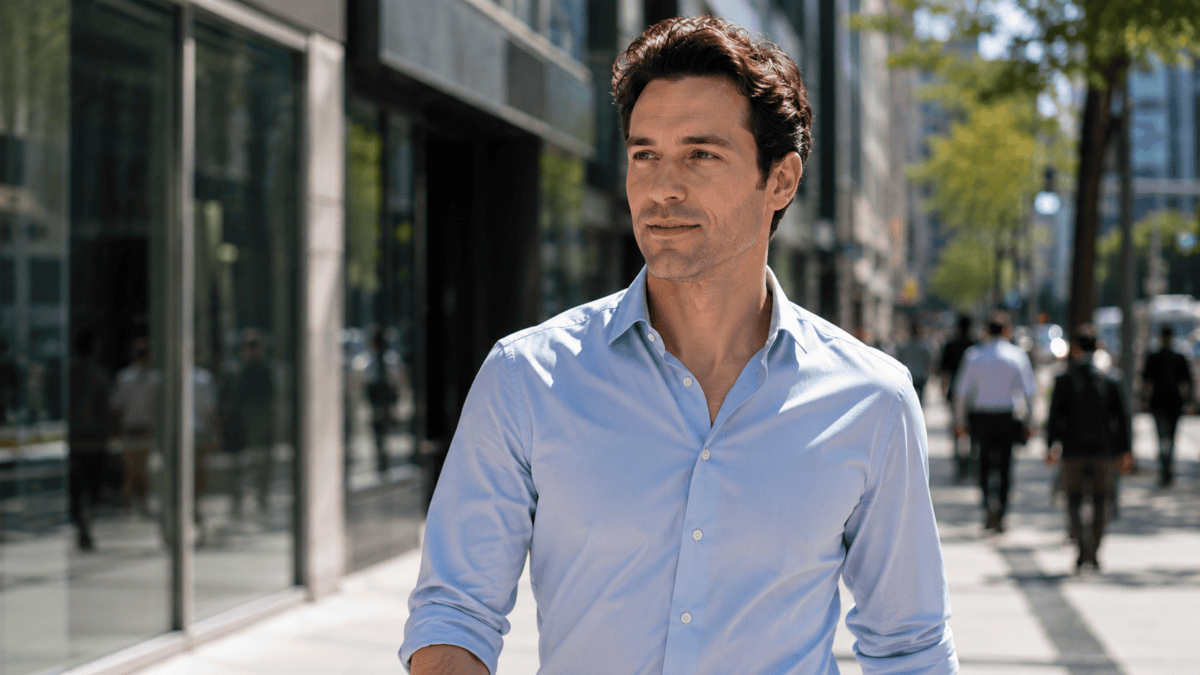
Something has shifted, quietly, in what it means to be a man managing his own face. Not loudly, not with any announcement, but in the growing number of men who book these appointments and go back to work like nothing happened.
The old definition of masculinity treated any attention to appearance as a weakness, something unmanly to admit. The new one, still mostly unspoken, folds self-maintenance into competence itself. Taking care of how you present isn’t vanity in this frame. It’s the same discipline a man applies to his fitness, his wardrobe, his career, another domain he manages because managing it is what capable people do.
What makes this a real shift rather than a trend is how it reframes the relationship between strength and care. Not showing weakness, in the old code, meant ignoring the signs of wear and pushing through. In the new one, not showing weakness can mean quietly addressing them before they become visible. The care is invisible, and the invisibility is what keeps it consistent with everything else he believes about being a man.
None of this gets discussed openly, and that’s part of how it spreads. There’s no movement, no campaign, no men talking loudly about their treatments. There’s just a steady, silent accumulation of individual choices, each one private, each one leaving no trace. The revolution is quiet by design, made of men who decided, one at a time, that taking care of themselves belonged inside their idea of being men.
The numbers say this more clearly than the men ever will. Male beauty procedures have moved from something rare and whispered about to something common and simply not mentioned, and that shift happened without a single public conversation. Millions of quiet decisions, none of them announced, adding up to a change in what men do without any change in what men say. The silence didn’t slow it down. The silence is how it grew.
The man from the waiting room finishes his emails, has his twenty minutes, and heads back to the office. No one will ever know, which is exactly how he wants it, and exactly why it worked.
This post was planned and edited by a human, with AI assistance.