Avoiding bank account anxiety doesn’t start with a decision. You already know what’s in there.
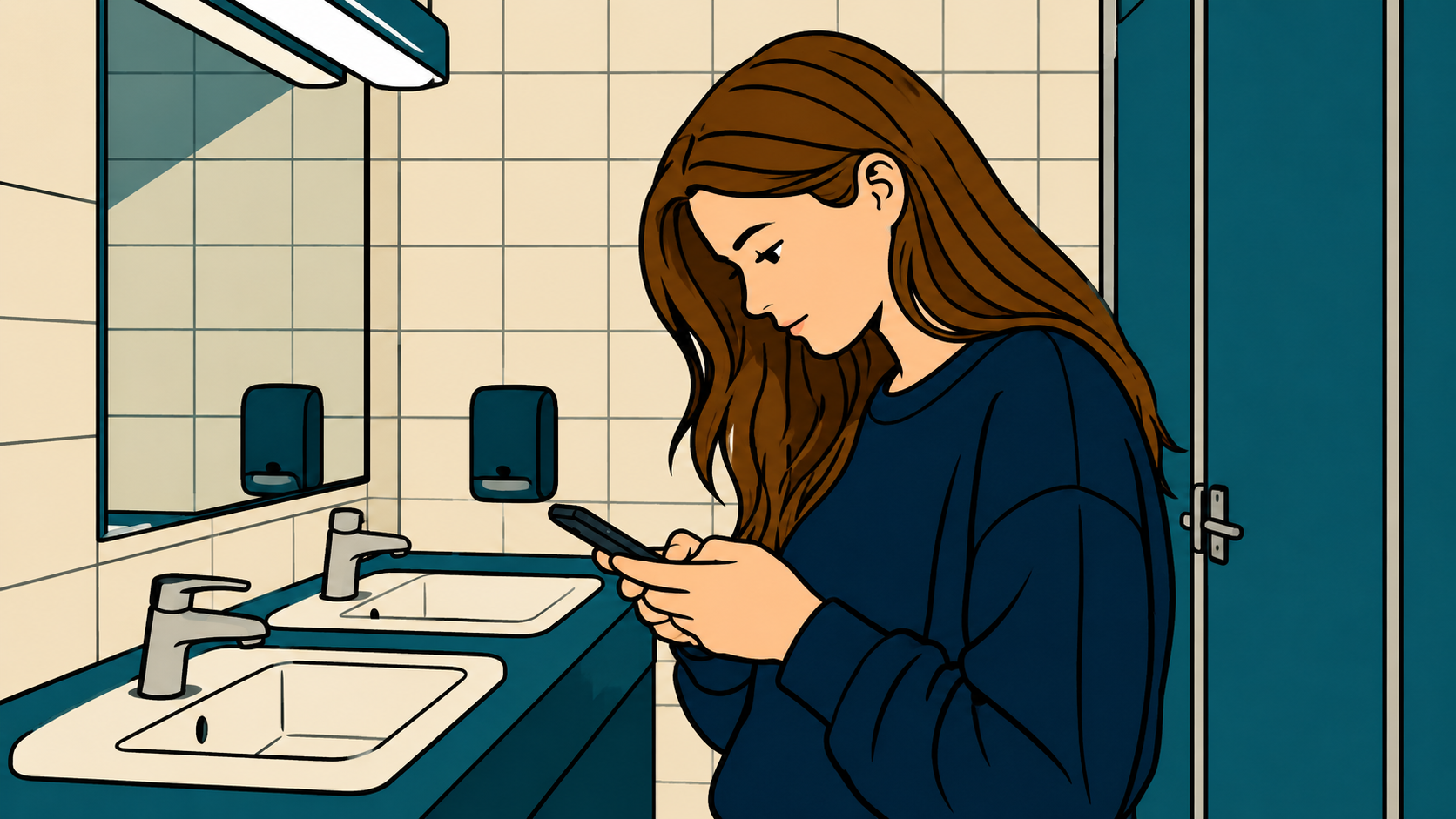
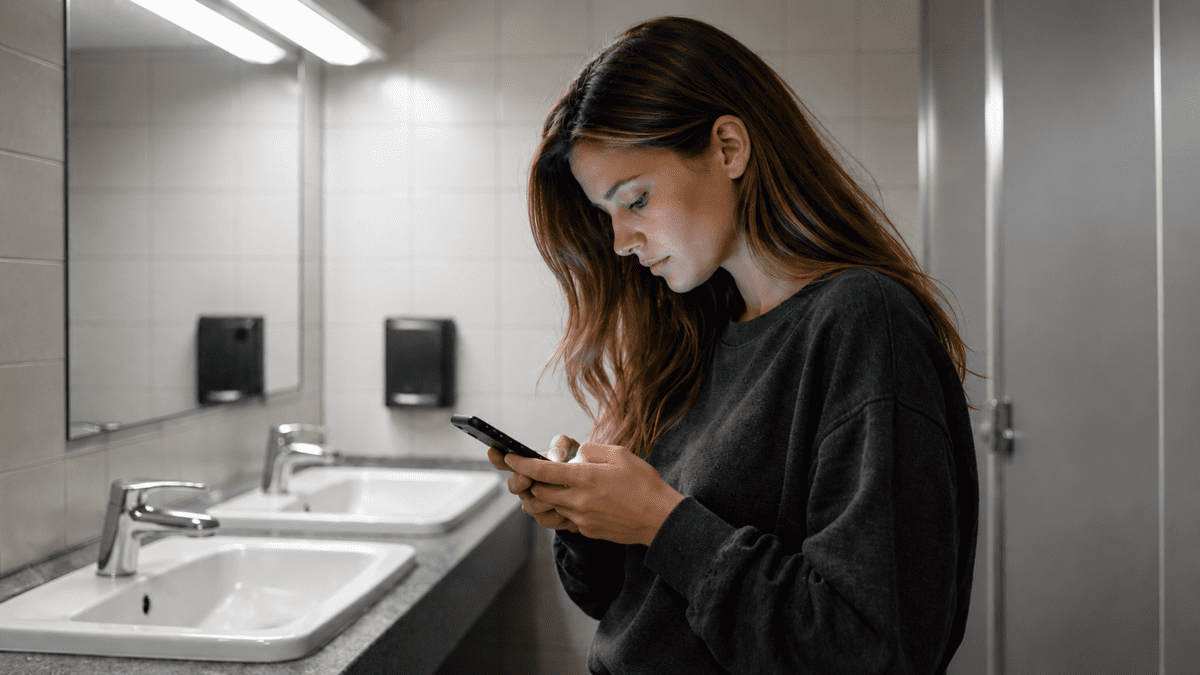
You checked it last night. You checked it this morning before you got out of bed. You checked it in the bathroom at work, screen brightness turned all the way down so nobody standing behind you could see.
You know the number. You know it the way you know your own address — automatically, without having to think.
And yet.
The Check That Changes Nothing

At 9 PM you open the app.
The number is exactly what you knew it would be. You close it. You put the phone down. Forty minutes later, you pick it up again, and before you’ve consciously decided anything, the app is open.
This is not about information. You already have the information. This is about something the information can’t fix — the low-grade unease that sits just below the level of panic, the thing that checking briefly interrupts without ever resolving.
The check gives you four seconds of contact with the reality you’re already living. And then the unease returns, slightly louder for having been acknowledged, and the cycle continues.
You will do this six times today. Possibly eight.
There’s an exhaustion that comes with this kind of loop. Not the exhaustion of doing too much — the exhaustion of returning to the same place over and over and finding it unchanged. Your body knows the number. Your nervous system knows the number. But some part of you keeps sending the same query, waiting for a different response, and the gap between what it’s asking and what it keeps receiving is its own kind of drain.
By the time you fall asleep, you haven’t solved anything. You’ve just worn yourself out checking.
What Avoiding Your Bank Account Actually Looks Like
There’s a version of this that goes the other way.
Some people don’t check at all. They let the number sit behind the app icon, unexamined, and they move through their days without looking directly at it. They tap past the banking app to get to email. They flip their phone face-down at dinner before anyone can glance at the lock screen. Not because they’ve forgotten it’s there — the weight of it is present in every small decision, every quiet calculation — but because seeing it makes it more real in a way that costs something they don’t have right now.
Both are the same thing wearing different clothes.
The compulsive checker and the deliberate avoider are both trying to manage the same gap — the distance between what the number is and what it would need to be for the background hum to stop. Checking collapses that gap for four seconds. Not checking keeps the gap theoretical, which is somehow easier to carry than the confirmed version of it.
Neither works. Both make sense.
The Thing That Happens in the Gap
Here’s what nobody explains about that moment between opening the app and closing it.
It’s not the number that lands hardest. It’s the silence after. The four seconds where you’ve seen it and it hasn’t changed and you already knew it wouldn’t and now you’re holding the confirmation of something you didn’t need confirmed.
That silence has a texture. It’s the texture of knowing something is already moving underneath the surface — not crisis, not catastrophe, just a slow, quiet shift that isn’t visible yet but is happening regardless of whether you look at it.
The number doesn’t capture that. The number is static. What you’re actually trying to read isn’t the balance. It’s whether something has changed in a way the balance can’t show you.
It hasn’t. It won’t. Not today.
But the checking continues anyway, because the part of you doing the checking doesn’t trust stillness. Stillness, to that part, feels indistinguishable from stagnation. So it keeps looking for movement in a place where movement isn’t what’s actually happening.
You close the app. You know what you saw. You know it told you nothing new. And still, somewhere in the back of your mind, a timer has already started counting down to the next check. Not because you decided to check again. Because the unease doesn’t have anywhere else to go.
Why the Loop Doesn’t Break on Its Own

The loop — check, close, wait, check again — has its own logic.
Each check is a small attempt at control in a situation that doesn’t offer much of it. The account balance is one of the few concrete, quantifiable things available in a period that otherwise feels diffuse and unmanageable. So you return to it. Not because it helps, but because it’s there, and it’s specific, and specificity feels like something to hold onto when everything else is hum.
What the loop doesn’t account for is that the hum isn’t coming from the number. The hum is coming from the position — this place in the month, this particular stretch of days, this territory that your nervous system has learned to treat as a signal regardless of what the actual data says.
Avoiding bank account apps, or checking obsessively — both are looking for the source of the feeling in the wrong place. The source isn’t in the app. There’s a structure to what you’re feeling that runs deeper than the balance, and that structure doesn’t update when the number changes. It updates on a different timeline entirely.
Which is why payday comes, and within a few hours you feel better, and three weeks later you’re back here again — checking at 9 PM, closing the app, picking it up again forty minutes later.
The number changed. The structure didn’t.
And the loop knows this, even if you don’t. That’s why it doesn’t wait for you to decide to check again. It just starts the timer. It’s been doing this long enough to know that you’ll get there eventually. That the unease will build back up to the threshold. That the app will open again.
It’s not compulsion. It’s a system that learned what works — not what helps, but what provides four seconds of contact with something concrete in a period that offers very little of it. The system is efficient. The system is also wrong about where the problem lives.
What the Stillness Is Actually Doing
Here’s the thing about those last few days.
The checking, the avoiding, the low hum — they feel like nothing is happening. Like you’re stuck. Like the days are passing without anything moving forward.
But something is moving. Underneath the stillness, something is completing. The discomfort isn’t a malfunction. It’s the sensation of a process that doesn’t respond to being watched — the kind of shift that requires the full weight of the waiting, that can’t be rushed by checking more frequently or avoided by not checking at all.
There are things that only happen in the dark. Not because the dark is where they belong, but because light interrupts them. The checking is light. The avoiding is a different kind of light. Both are attempts to see something that isn’t ready to be seen yet.
What’s actually happening in those days isn’t visible in the app. It’s not visible anywhere. It’s the slow accumulation of something that will only make sense in retrospect — the kind of change that announces itself only after it’s already done.
You don’t feel that while it’s happening. You feel the hum. You feel the checking. You feel the stillness that doesn’t feel like stillness at all.
But something is moving. It always has been. The days that feel like nothing are rarely nothing. They’re the days when the thing that needs time is taking it — quietly, out of sight, indifferent to whether you’re watching.
The app can’t show you that. No number can.
And what’s moving isn’t always where you’re looking.
This post was planned and edited by a human, with AI assistance.