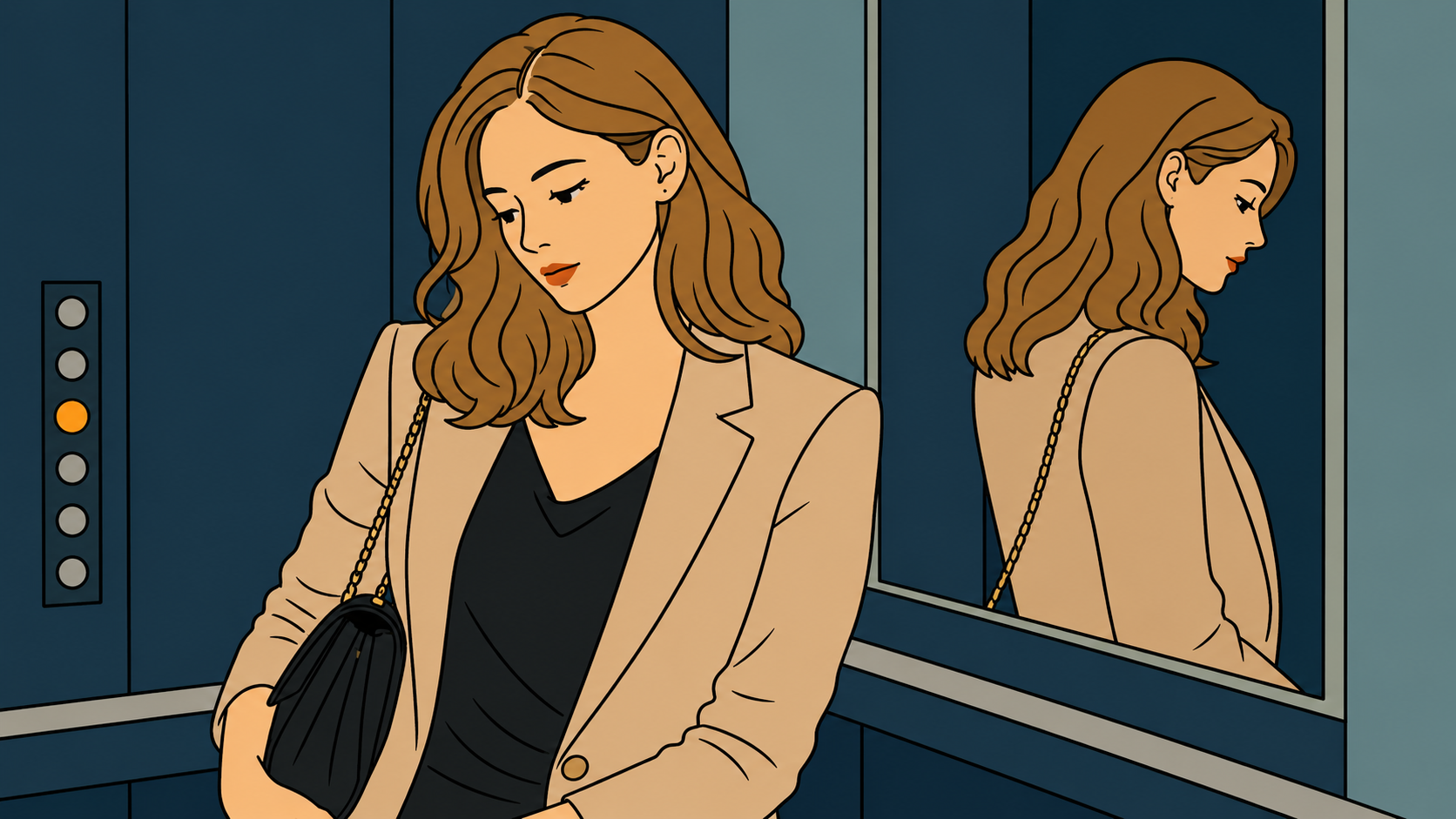

There’s a specific moment that happens after something goes well. Not the fear of being seen before things go well — after.
Not immediately after. A few hours later, or the next morning. The thing that went well is still real — the conversation landed, the work got seen, the decision turned out to be the right one. You have evidence. Concrete, recent evidence that something is working.
This won’t last.
You got lucky.
They don’t actually know you yet.
This is the version of the voice nobody expects. Not the one that shows up when things go wrong — that one makes a kind of sense. This is the one that shows up when things go right. And it is, somehow, louder.
When the Good Feeling Becomes the Problem
The voice doesn’t need failure to operate. It needs exposure.
Good things expose you. A conversation that went deep means someone saw more of you than usual. Work that landed means more people are paying attention. A decision that worked means you’re now responsible for what comes next. Each of these is real progress. Each of these is also, to the voice, a new surface area to defend.
This is the mechanism underneath the specific discomfort of things going well. It’s not that you don’t want good things. It’s that good things raise the stakes of the next moment. And the voice, whose entire function is to scan for threat, reads raised stakes as raised risk.
The better things go, the more there is to lose. The voice knows this before you do.
What You Learned About How This Works

At some point, early enough that you don’t remember learning it, you absorbed a specific equation.
Visibility equals vulnerability. Being seen — really seen, not just noticed — means giving someone the information they would need to hurt you. Being good at something means people will expect it again. Being liked means there’s now something to lose.
This equation wasn’t invented. It was learned. From a room, a person, a series of moments that taught you that the gap between being seen and being exposed was smaller than it looked.
The voice inherited that equation. It runs the calculation automatically, beneath conscious thought, every time something good happens. Not to sabotage you — to protect you. From the version of this that ended badly before.
Think about the first time you got something right and it was used against you. Not dramatically — subtly. A teacher who raised the bar the moment you cleared it. A parent who responded to your success with a new expectation rather than acknowledgment. A friend who became cooler toward you the moment you outpaced them. None of these required malice. They just required pattern recognition from a mind that was paying very close attention.
The mind filed it: doing well changes what people expect of you. Being visible changes how they treat you. Being known gives them material.
That filing happened automatically, without your consent, at an age when you didn’t have the framework to question it. The voice was built from those files. It runs on them still. Not because you chose this — but because the mind that built it was trying, in the only way it knew, to keep you safe.
The problem is that the version that ended badly was then. The voice hasn’t updated its data.
The Specific Feeling of Being Seen Too Clearly
There’s a register of discomfort that’s hard to name because it arrives inside something that should feel good.
Someone understands you more accurately than you expected. A piece of work reflects something real about how you think. A conversation goes somewhere you didn’t plan and you realize, halfway through, that you’ve said something true — something you didn’t know you were going to say until you said it.
And then, immediately after, a specific closing. A pulling back. Not from them — from yourself. A recalibration toward something safer, something more managed. The impulse to qualify what you just said, to make it smaller, to give the other person an exit from the version of you that just appeared.
This is the voice in real time. Not the late-night replay — the live edit. The one that runs during the experience itself, monitoring for overexposure, ready to correct.
A friend once told you, over dinner, that she’d never seen you talk about your work like that — like it actually mattered to you. You felt the words land somewhere real. Then, almost on instinct, you added a joke about how it probably wouldn’t go anywhere anyway. She laughed. The moment closed. You spent the rest of the meal wondering why you’d done that.
It is very good at its job. It has been doing this job for a long time.
The Version That Runs in Real Time
Most people are familiar with the late-night voice. The one that arrives after everyone leaves and runs the replay. That version is recognizable enough to have a name, a genre, a shared cultural shorthand.
The live version is harder to catch.
It runs during the conversation, not after. It edits in real time — flagging what’s too much, too revealing, too close to something true. It doesn’t wait for the room to empty. It operates in the middle of the experience itself, monitoring the gap between what you’re actually feeling and what you’re allowing to show.
You’re in a conversation that’s going somewhere real. You can feel it — the particular quality of attention that means someone is actually present, actually interested, actually tracking what you’re saying. And something in you, almost simultaneously, begins to manage it. Introduces a joke that deflects. Pivots to a safer topic. Asks a question about them that moves the focus away from you.
Not because you want to. Because the voice decided, faster than conscious thought, that this level of visibility required a correction.
The late-night voice is the debrief. This is the live edit. And it has been running, mostly unnoticed, for a very long time.
The Paradox You’re Already Living

Here’s what makes this particular pattern difficult to work with.
The voice, in its own terms, is not wrong. Visibility does carry risk. Being known does make you more vulnerable. The equation it inherited — even the outdated version — was based on real data from real moments. It learned what it learned from something that actually happened.
The problem isn’t that the voice is lying. The problem is that it’s applying an old map to a territory that has changed.
The person who taught you that being seen was dangerous — or the situation that proved it — is not the same as the person in front of you now. The room you’re in is not the room that trained the voice. But the voice doesn’t distinguish. It reads the signal — exposure, visibility, someone getting close — and runs the same response it always runs. Because that response worked. Once. In a different context, with different stakes, for a version of you that needed it.
This is why the standard advice — “just let people in,” “stop self-sabotaging,” “learn to receive” — lands so poorly. It addresses the behavior without touching the logic underneath it. The voice isn’t running a behavior. It’s running a risk assessment. And until the risk assessment updates, the behavior it produces will keep making sense from the inside, even when it looks irrational from the outside.
The update doesn’t happen through deciding. It happens through repeated evidence — moments where the exposure didn’t end the way the voice predicted. Where being seen didn’t produce the consequence the old data said it would. Those moments accumulate slowly. The voice is a cautious updater. It needs more than one contradiction before it revises its model.
Which means the work isn’t silencing it. It’s giving it new data, slowly, in contexts where the risk is real but manageable.
You don’t need it the same way anymore. The voice hasn’t been told.
Content in this post was created with AI assistance.