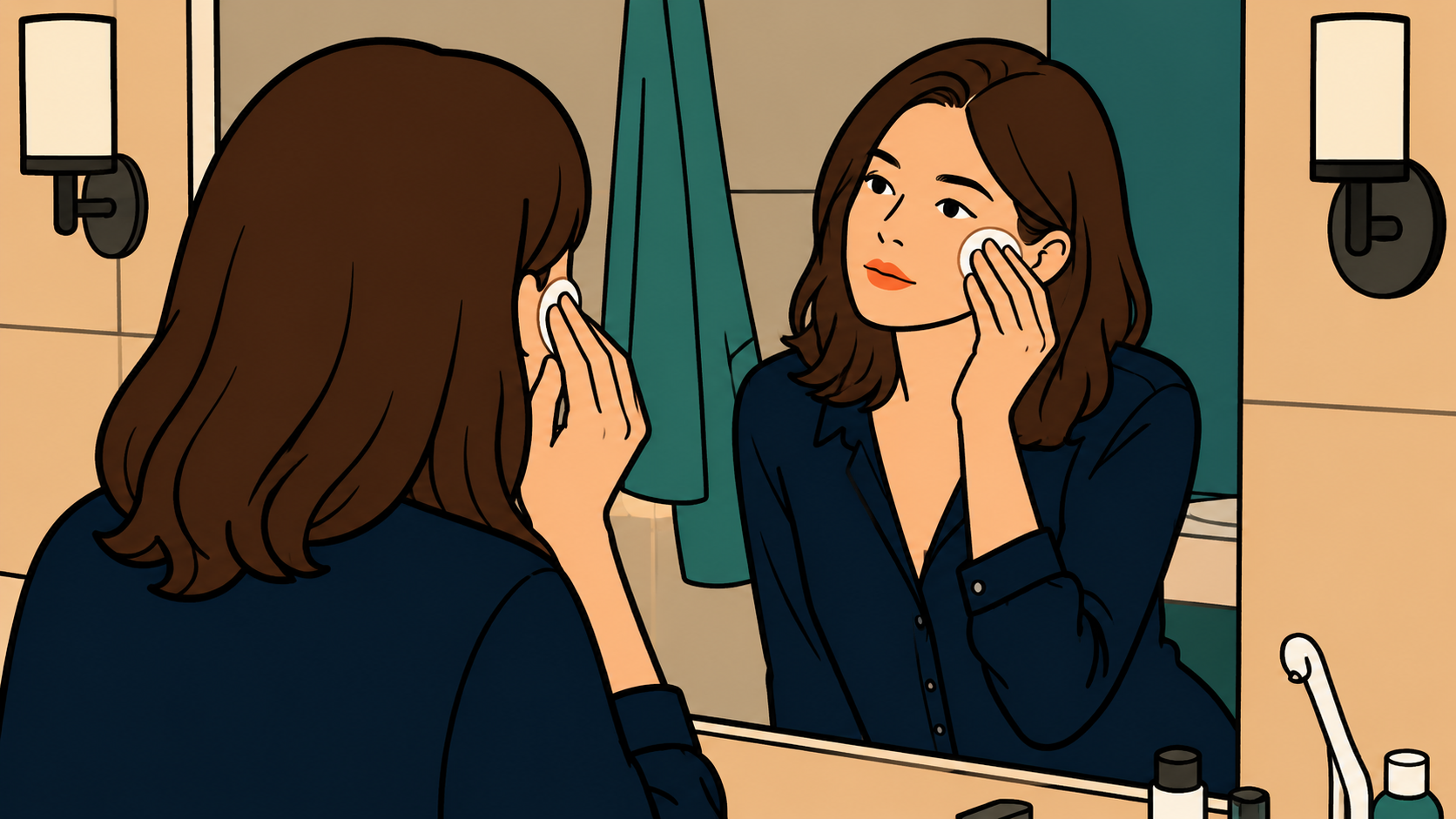

Hiding your true self isn’t deliberate. That version just doesn’t surface until the room empties.
Not because you’re concealing her. Because she only surfaces in specific conditions. After the door closes. After the last message is sent. After the particular kind of quiet that arrives when there’s no one left to be anything for.
She’s the version of yourself you hide even from yourself — the one who sits with the thing you said three weeks ago that still hasn’t resolved. Who knows exactly which relationships are costing more than they’re giving, and says nothing. Who has an opinion about your own life that you haven’t said out loud to anyone, including yourself.
The voice knows her better than anyone. Because the voice is the only one who’s always there when she appears.
The Gap You’ve Learned to Manage
Most people have a version of this gap.
The person you are in a room full of people and the person you are when the room empties — hiding your true self is what happens in between. It’s not performance, exactly — or not only performance. It’s calibration. You read the room, adjust the register, present the version of yourself most likely to land well in that particular context. Everyone does this. It’s not dishonesty. It’s how social navigation works.
But for some people, the gap is wider than it looks from the outside.
The calibration happens faster, more automatically, with less conscious involvement. By the time you’ve registered that you’re in a social situation, the adjustment is already running. The version of you that shows up has been edited before she arrives — certain things removed, certain things amplified, certain things quietly placed out of sight.
What gets removed first is usually the heaviest thing. The opinion that would complicate the dynamic. The tiredness that would require explaining. The specific feeling about a specific person that has no clean way to enter the conversation. These aren’t secrets, exactly. They’re just things that would cost more to say than to carry.
Someone asked how you were really doing, at dinner, in the tone people use when they actually want to know. You felt the true answer rise for half a second — and then watched yourself say fine, already reaching for the next topic before anyone could notice the gap.
So you carry them. You’ve been carrying them for so long that the weight has become familiar. You don’t always know what got edited until you’re alone again and it comes back — sometimes as relief, sometimes as the voice, sometimes as both at once.
What Lives in the Space Between
The between-space has a specific texture.
It’s not quite relief — though there’s something that functions like relief when the social performance ends and you can stop holding the shape. It’s not quite loneliness — though there’s something that functions like loneliness in the specific quality of being the only one who knows what the last few hours actually cost.
It’s more like decompression. The slow return of things that went elsewhere while you were managing the room.
Some of it comes back as tiredness. Not physically tired — the particular tiredness that comes from having been slightly not-yourself for an extended period. The tiredness of translation. Of taking what’s actually happening inside and rendering it into something that works in the context you were in.
Some of it comes back as clarity. Opinions that were vague during the evening arrive fully formed once the room empties. The thing you actually think about the conversation, the person, the decision — the unedited version — surfaces now that there’s space for it. Sometimes the clarity is uncomfortable. You held a version of events during the evening that let everyone stay comfortable, including you. The alone-version is less accommodating.
Some of it comes back as a specific kind of inventory. You go over what was said, what wasn’t, what you agreed to that you didn’t quite mean, what you let pass that you probably shouldn’t have. It’s not always critical — sometimes it’s just accounting. But it’s always honest in a way the evening itself wasn’t quite allowed to be.
And some of it comes back as the voice.
The Version Only the Voice Recognizes
The voice has been keeping records.
Every moment you edited yourself — every time you made yourself smaller, softer, more agreeable than you actually were — it noted the gap. Every time you said something that wasn’t quite true, or didn’t say something that was, it filed it. Not to punish you. To build a case.
The case is this: there is a distance between who you are and who you present. And the voice, whose job is to scan for threat, reads that distance as liability.
Its logic runs like this. If people knew the unedited version — the one with the opinions, the tiredness, the cost of the last few weeks — they might respond differently. The gap between what they think they’re getting and what they’re actually getting is a risk. And risk, to the voice, requires management.
So it manages.
There’s a specific version of this that happens after a good evening. The kind where you were on — present, warm, exactly the right amount of yourself. The voice doesn’t let that land cleanly either. It goes over the moments where the unedited version almost surfaced. The opinion you nearly said. The tiredness you almost let show. It catalogs the near-misses not as victories but as evidence of how close the gap came to being visible.
It replays the moments where the gap was visible — where something unedited slipped through and you could feel the room shift. It constructs the argument for why the edited version is safer. It makes the case, methodically and without malice, for staying small.
The Common Thread You’ve Been Avoiding

Here’s what the voice won’t tell you directly.
The gap isn’t the problem. The gap is information.
The part of you that’s been hiding — the one with the unfiltered opinions and the real tiredness and the things you haven’t said out loud — isn’t a problem to be solved. Hiding your true self has a cost, and the voice has been keeping the receipt. She’s not the version you need to hide or integrate or fix. She’s the version that knows things the edited version has agreed to not know.
The voice frames the gap as evidence of something wrong. A discrepancy that needs to be managed, minimized, kept out of sight. But the gap is also showing you exactly where the editing is heaviest — which relationships require the most calibration, which contexts ask you to be least yourself, which version of you is being consistently left out of the room.
That’s not a flaw in you. That’s data.
The question the voice never asks — because it’s not designed to ask it — is whether the gap is worth the cost. Not whether you can manage it better. Whether the management itself is the thing that’s exhausting you.
The Almost You’ve Been Living

There’s a specific kind of loneliness that has nothing to do with being alone.
It’s the loneliness of being in a room full of people and knowing that the version of you they’re responding to is real, but not complete. That the conversation is genuine, but edited. That the connection exists, but to a version of you that has had things removed.
The voice knows this loneliness intimately. It was present for every moment the editing happened. It watched you make yourself smaller in rooms where smaller felt safer. It watched you agree when you didn’t, stay quiet when you had something to say, present ease when what you actually felt was something more complicated.
It doesn’t tell you this to be cruel. It tells you this because it is, in its own way, the only witness to what the editing has cost.
The version of you that only shows up alone isn’t hiding your true self anymore. She’s been waiting.
This post was planned and edited by a human, with AI assistance.