

February arrives and the work refuses to move. Not stopped — held. The deadlines are reasonable, the inputs are in place, and still nothing ships.
The dormancy meaning here has a name: Chuk (축: chuk, frozen earth), the second of the twelve earthly branches, the station where last year’s water is locked inside the soil and release has not yet been authorized.
Ja (자: ja, midnight water) assembles the next cycle in secret. Chuk (frozen earth) is what holds that assembly in place until release is permitted. The ground is structurally incapable of giving right now, and a chart carrying Chuk (frozen earth) at its center runs on that same holding logic regardless of what the person prefers.
What the Frozen Ground Cycle Meaning Actually Records

Chuk (축: chuk, frozen earth) still carries water in its hidden stems, the residue of the season just past, but as a storage chamber it belongs to Metal (금: geum). Four branches act as storage chambers in K-Saju — Jin (진: jin, dragon earth) stores Water (수: su), Mi (미: mi, summer earth) stores Wood (목: mok), Sul (술: sul, late autumn earth) stores Fire (화: hwa), and Chuk (축: chuk) stores Metal — the most compressed and sealed of the four. Chuk (축: chuk) holds water in a state that is least visible: contained and frozen.
The hour is 1 to 3 AM. At the monthly level, it corresponds to the period between Sohan (소한: so-han, minor cold) and Ipchun (입춘: ip-chun, beginning of spring) in the traditional calendar, with slight variation each year. The element is Earth (토: to), specifically yin earth — not the mountain of Mu (무: mu, yang earth), but the field of Gi (기: gi, yin earth), frozen hard. A day or year associated with Chuk (축: chuk, frozen earth) tends to pull the chart’s center of gravity downward, toward storage and containment rather than outward expression.
What Chuk (frozen earth) records is not emptiness. It is compressed inventory. Everything accumulated through the previous year is now stored below the frost line, intact but inaccessible. The dormancy meaning here is not personality. It is a structural month in which the soil physically cannot release what it holds.
The Three Stems Inside Chuk’s Chamber
The real mechanism lives inside Chuk’s Jijanggan (지장간: ji-jang-gan, the hidden stems concealed within a branch). Each earthly branch carries one to three heavenly stems inside it, and this internal content is what K-Saju reads, not the surface animal sign.
Chuk (frozen earth) carries three hidden stems: Gye (계: gye, yin water, the dew), Sin (신: sin, yin metal, the gem), and Gi (yin earth). These elements are not arranged as a fixed storage order. Rather, they coexist within the branch as layered components — water present, metal contained, and earth providing the dominant structure that seals the chamber.
The chart that holds Chuk (frozen earth) is not reading “Ox energy.” It is reading a frozen reservoir containing residue water from the previous season, finished Metal (금: geum) from the autumn harvest, and the earth that locks both in place.
Four interactions govern how Chuk (frozen earth) behaves with the rest of a chart.
JaChukHap (자축합: ja-chuk-hap, combination forming earth). When Ja (midnight water) and Chuk (frozen earth) appear together, the water of Ja (자: ja, midnight water) is drawn into the earth of Chuk (축: chuk, frozen earth), where the interaction is traditionally understood to consolidate toward an earth-dominant expression. This is not a gentle combination. It is the moment last year’s water finishes freezing solid. A chart with this pairing runs on deep-storage logic — resources accumulate but do not circulate easily.
SaYuChuk SamHap (사유축 삼합: sa-yu-chuk sam-hap, three-combination producing metal). When Sa (사: sa, late spring fire), Yu (유: yu, autumn metal), and Chuk (frozen earth) all appear together in a chart, the three branches combine into a powerful metal structure. Chuk (축: chuk, frozen earth) participates as one component in the Sa–Yu–Chuk metal combination, contributing to the consolidation of metal when all three branches are present. This is why Chuk (frozen earth) is not a weak winter branch — it is the completion point of the metal production cycle, and a chart with this three-harmony carries metal output far stronger than any single Yu (autumn metal) can produce alone.
ChukMiChung (축미충: chuk-mi-chung, earth-earth rupture). Chuk (frozen earth) and Mi (summer earth) are both earth but at opposite seasons — frozen winter earth versus scorched summer earth. When they meet, both storage chambers rupture. The hidden stems inside each branch are forced into the open before their natural release time. In practice, this looks like the stored contents are forced into movement earlier than their natural timing, often in the year a Mi (summer earth) Sewoon (세운: se-woon, the annual cycle) lands on a Chuk-heavy chart.
ChukSulHyeong (축술형: chuk-sul-hyeong, earth-earth friction). Less explosive than the clash, but persistent. Chuk (frozen earth) and Sul (late autumn earth) grind against each other and slowly degrade the contents of both storage chambers. Metal rusts. Water leaks. Nothing ruptures outright, but nothing holds either.
These four interactions determine how Chuk actually functions in a given chart. Chuk (frozen earth) does not mean something on its own. It holds, and how a chart pushes or pulls on the holding determines what the reading says.
Three Ways the Frozen Storage Breaks Down

Before tracing the failure modes, the dormancy meaning requires one clarification: breakdown in Chuk does not mean the branch is weak. It means the structure holding the stored content has lost calibration. The Gye water, Sin metal, and Gi earth inside Chuk remain intact. What fails is the seal — the timing that decides when each hidden stem emerges.
Chuk (frozen earth) has three characteristic failure modes, each with a different structural cause.
over-holding: The chart has Chuk (frozen earth) prominent with no release mechanism — no Mi (summer earth) on the horizon to rupture it open, no fire stem to warm the soil, no partial Sa-Yu-Chuk combination that at least converts the stored content into metal. Everything comes in and nothing goes out. Externally this looks like someone who saves, accumulates, maintains, and cannot spend the accumulated resource even when the accumulation has itself become the problem. Money sits. Ideas sit. Relationships sit in preserved stasis. The reading is not laziness. It is storage with no authorized release date, and the person is doing exactly what the structure permits.
forced opening: The opposite failure. The chart or the year’s Sewoon (annual cycle) brings Mi (summer earth) into collision with Chuk (frozen earth) before the internal content is ready. The frozen ground here flips — instead of holding, it is cracked open by rupture. Hidden stems spill into the chart in the wrong order. The Gye (yin water) inside Chuk (frozen earth) rushes out before the Sin (yin metal) has settled, and the person experiences the sensation of losing something they did not know they were storing. Finances rupture. Suppressed conflicts surface mid-month. A stored emotion emerges on a Tuesday with no apparent trigger.
cold leakage: The subtlest failure. No clash, no harmony, no combination — just Chuk (frozen earth) sitting alone with no thermal support from fire branches. The Gye (yin water) inside the storage does not freeze cleanly. It seeps. In chart terms, this is the person whose resources look intact but quietly drain. Energy depletes without obvious cost. A slow cold runs through the system. Unlike pattern one, something is leaving — it is just leaving so slowly that the loss is invisible until the reservoir is measurably lower than it was last year.
Storage is not stagnation, and the difference is where most readings collapse. A chart in over-holding needs a completely different strategic response from a chart in cold leakage. Over-holding asks for a permitted release. Cold leakage asks for thermal support. Forced opening asks for damage control. The reading error here parallels the one made with the Korean flag itself — treating structural code as decoration instead of diagnostic.
Where Chuk Appears in Your Chart
The dormancy meaning lands differently depending on where Chuk (frozen earth) sits in the chart’s four positions — Yeonji (연지: yeon-ji, birth year position), Wolji (월지: wol-ji, birth month position), Ilji (일지: il-ji, birth day position), Siji (시지: si-ji, birth hour position). Each position changes what the frozen ground is holding.
Yeonji (연지: yeon-ji): Chuk (frozen earth) at the year level means the generational storage is cold. The family line or cohort is holding resources that have not yet been authorized for release. A Chuk year branch often reads as inherited patience — not chosen, inherited. The 2021 Sin-Chuk year (신축년: sin-chuk-nyeon) placed this logic at the annual scale for the entire world, and the delays and held-back transitions of that year can be interpreted as reflecting this pattern at a broader scale.
Wolji (월지: wol-ji): This is the most structurally heavy position for Chuk (frozen earth). Month branch sets the chart’s elemental center of gravity, and Chuk (frozen earth) as month places the whole chart in late-winter earth logic. Decisions run slow. Releases are delayed. The person operates on storage rhythm by default. This is also the position where ChukMiChung (earth-earth rupture) carries the most weight in a natal chart when a Mi (summer earth) year arrives.
Ilji (일지: il-ji): Chuk (frozen earth) at the day level describes the person’s immediate environment and closest relationship. The partner, the home, the daily body — all run cold-storage logic. Slow to warm, slow to release, very difficult to displace once settled.
Siji (시지: si-ji): Chuk (frozen earth) at the hour level describes late-life accumulation and the output one produces at the end of sustained effort. Careers that end with deep-archive legacies rather than public visibility often show Chuk (frozen earth) at this position.
Daewoon (대운: dae-woon, the ten-year major cycle) can also land on Chuk (frozen earth). When it does, the ten years run on compressed-inventory logic regardless of what the natal chart wants. This is the decade where dormancy overrides personality, preference, and plan.
The Limit of What Chuk Can Tell You
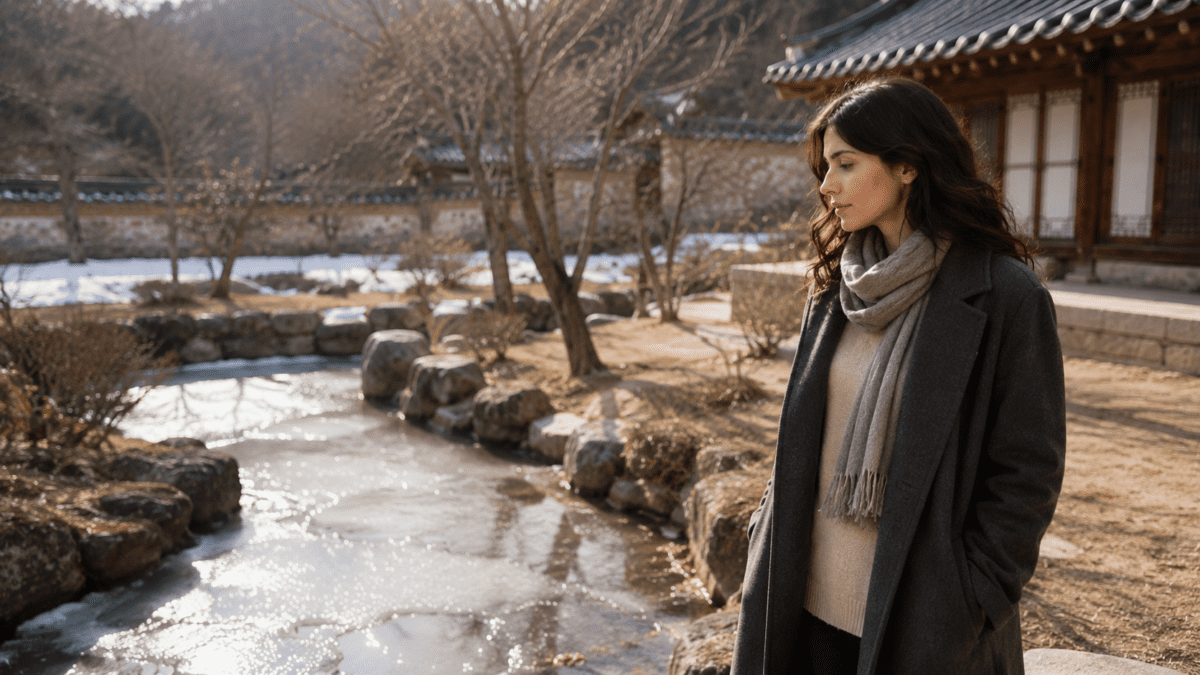
Chuk (frozen earth) gives a clear reading of three things: when release is structurally blocked, what is being stored, and which interaction is likely to force the opening. The midnight assembly of the next cycle is exactly what this station now stores. That is what the data can do.
What the data cannot tell you is how you will feel while you are inside the storage. Two people with identical Chuk (frozen earth) placements will experience the same structure differently — one as productive silence, the other as suffocation. The chart shows the room. It does not show the wallpaper. It does not show what you bring to the room from the years before this one, or what specific memory your nervous system has attached to winter, or whether the thing being held is something you wanted to keep.
I read charts, and I can say with confidence when Chuk (frozen earth) is active, how long it will hold, and which interaction will eventually break it. I cannot say whether the break will feel like relief or loss. That variable sits outside the structural data, in the territory of personal history, somatic memory, and the specific content your chart chose to store this cycle. Any K-Saju reader who claims otherwise is selling something the system does not contain.
The strategic response to Chuk (frozen earth), then, is narrow but precise. Do not force the opening. Do not confuse storage with stagnation. Track what is being held — financial, relational, creative inventory — and audit it quarterly rather than monthly.
Identify whether the current failure pattern is over-holding, forced opening, or cold leakage, because the response to each is different. If the chart shows a clash arriving within the next two years, begin controlled release now, before the structure performs the release for you.
The chart names the station. It does not name the weather inside it. If February comes and the door you are meant to open has not yet opened, you are not slow — the ground has not yet permitted it.
Content in this post was created with AI assistance.