

To understand off the beaten path Seoul, start with Bukchon: you arrive, you photograph the steep lane with the hanok rooftiles at the top, you descend, you photograph it again from a different angle. Other people are doing the same thing beside you. A sign at the entrance to one alley asks you to be quiet for the residents. Another asks you not to enter. The street maps are color-coded. The photo spot is marked.
This is not a complaint about Bukchon Hanok Village. It’s a useful place to understand what it does and what it stopped being able to do once it became what it is.
Foreign visitors who find their way to the Ikseon-dong–Seosunra-gil circuit are often people who have done Bukchon already. They didn’t dislike it. They just left wanting something the managed experience wasn’t built to provide — something that feels less like a destination and more like a place that doesn’t know you’re coming.
This isn’t a category on any travel app. It’s a quality that certain streets have before enough people find them, and occasionally after, if the infrastructure never caught up. Seosunra-gil is in that second group. The stone wall and the two-story limit did more for its atmosphere than any tourism strategy could have.
What the Managed Experience Costs
Bukchon Hanok Village receives millions of visitors a year. That number is the product of a decade of tourism development — wayfinding, multilingual signage, photography guidelines, suggested routes, visitor centers. It works. The village is accessible, legible, and thoroughly documented.
What it can no longer offer is the experience of arriving somewhere unguided.
The visitor who follows color-coded maps and stops at designated photo spots is having a real experience — but it’s the experience the infrastructure designed for them. Every variable has been managed. The surprise has been replaced by confirmation: the place looks like the photos because the photos were taken at the spots the signs direct you to.
Foreign travelers increasingly articulate this distinction without having the language for it. They say they want to feel like a local. What they mean is closer to: they want to move through a place without the place visibly managing their movement. They want the decisions to be their own — where to stop, what to photograph, whether to turn left or right at the corner.
Bukchon can no longer offer that. It was traded for accessibility, which was a reasonable trade. But the demand it created didn’t disappear. It redirected.
The visitor who leaves Bukchon at noon and opens a map is looking for something they can’t quite name. A couple checks Google Maps three times in one alley before realizing they stopped needing it ten minutes ago. Not another hanok village. Not a museum. Something that feels like a neighborhood still in the middle of being itself. They type “Ikseon-dong” because someone mentioned it, or because it appeared in a list, or because it’s close and they have the afternoon.
They arrive, find it busier than expected, keep walking. Two minutes later they’re on Seosunra-gil. That’s how the redirect works — not by design, but by proximity and dissatisfaction moving in the same direction.
What They’re Actually Looking For
Authentic is the word foreign travelers use, and it’s worth examining what they mean by it.
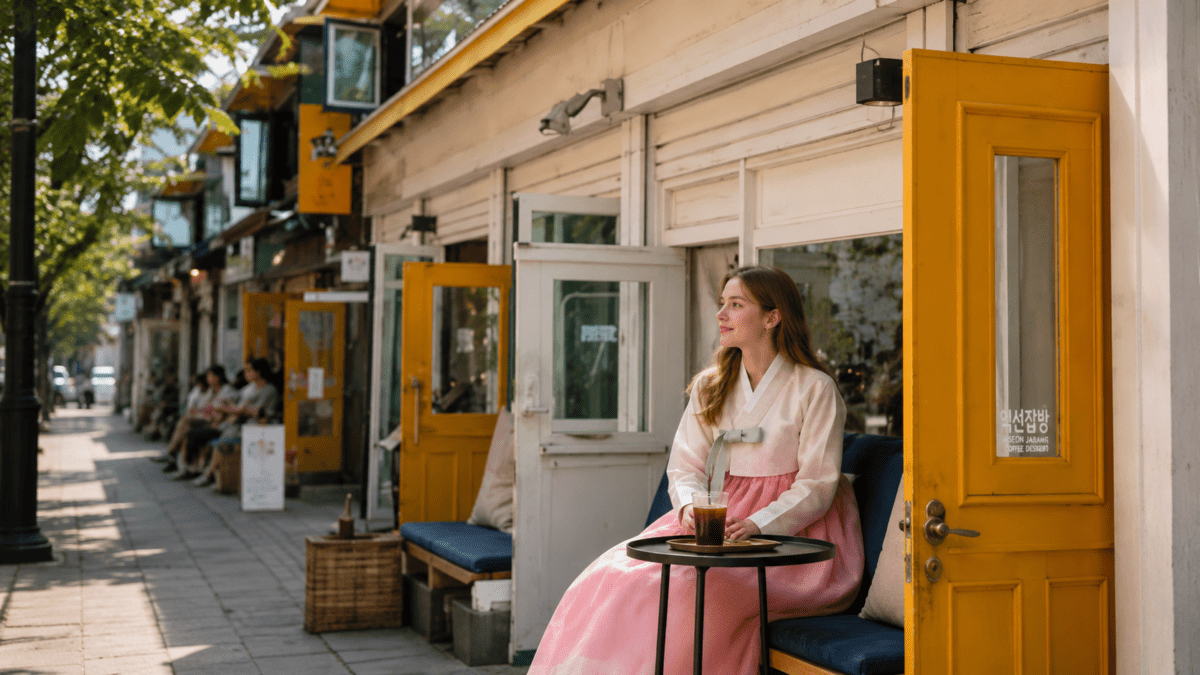
They don’t mean unchanged. The hanok cafes of Ikseon-dong and the craft beer pubs of Seosunra-gil are thoroughly modern businesses operating inside traditional structures. Nobody is pretending the building is still a residence. The renovation is visible, the espresso machine is visible, the pricing is twenty-first century.
What they mean by authentic is closer to: not arranged for them specifically. A place that would exist whether or not they showed up.
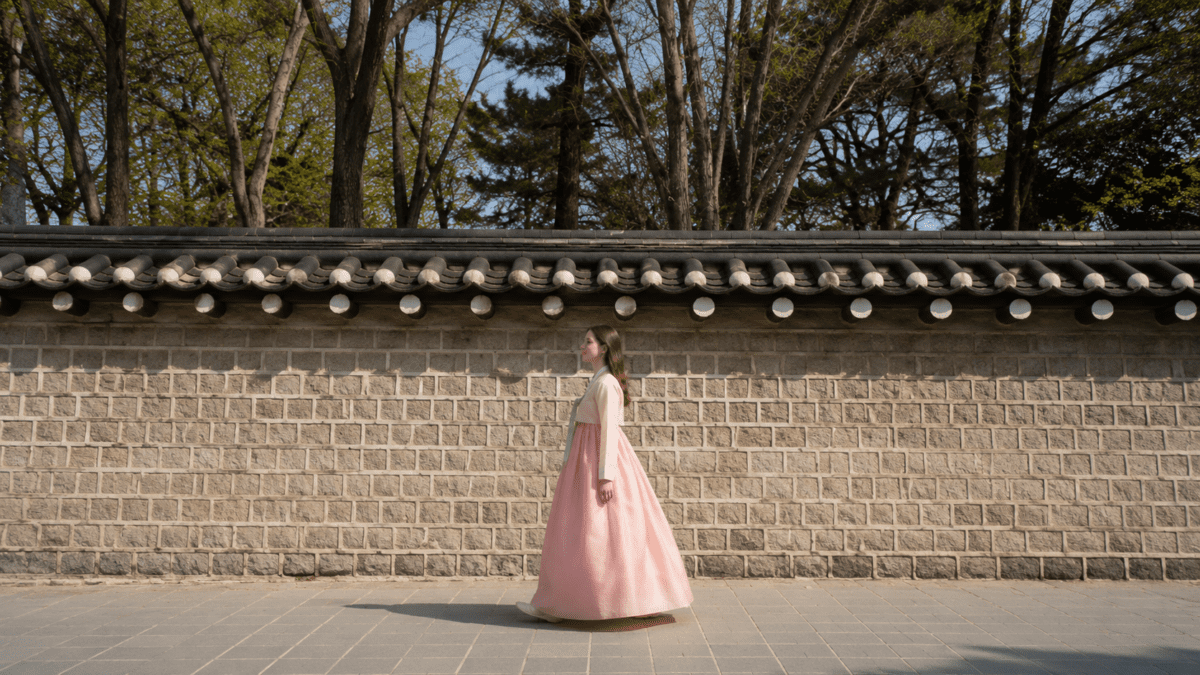
Seosunra-gil passes that test. The stone wall exists because of a UNESCO preservation regulation, not because someone thought tourists would like it. The two-story buildings exist because of zoning law, not aesthetic curation. The pojangmacha in Ikseon-dong set up at 4 PM because that’s when their customers arrive — and their customers were Korean before they were foreign.
The foreign visitor who arrives at 6 PM on a Friday is entering a circuit already in motion — one that was running before they arrived and will keep running after they leave. The outdoor tables are filling with people who work nearby. The queue at the galmaegissal pojangmacha is mostly Koreans in their 20s who came specifically for that. The foreign visitor joins something already happening. That’s the experience they were describing when they said authentic.
Off the beaten path Seoul, in practice, means a place still running on its own logic.
Why This Specific Place Works
Three things make the circuit work for foreign visitors in a way most Seoul neighborhoods don’t.
The first is access. Jongno 3-ga station sits underneath both streets and connects three subway lines. A visitor staying anywhere in central Seoul can reach the circuit in under twenty minutes. The threshold for discovery is low enough that it happens by accident — someone exits the wrong gate, turns in the wrong direction, and finds themselves on Seosunra-gil before they intended to.
The second is scale. The circuit is walkable end to end in fifteen minutes. Ikseon-dong’s main lane, the connecting alleys, Seosunra-gil along the wall — compact enough to understand on a single visit, varied enough that the understanding keeps revising itself as you move through it. A neighborhood you can read in an afternoon stays readable on a second visit.
The third is the day-to-night shift. A visitor who arrives at 3 PM and stays until 10 PM sees two different neighborhoods without going anywhere. The hanbok rental and afternoon coffee of Ikseon-dong give way to pojangmacha smoke and stone wall evening without requiring any planning. The circuit delivers the contrast automatically.
The transition doesn’t announce itself. At 3 PM, a couple in hanbok moves through Ikseon-dong’s main alley, stopping every few meters to photograph the rooflines. By 5 PM, they’ve returned the hanbok and are sitting at a pojangmacha table that wasn’t there two hours ago. The galmaegissal arrives on a paper plate. Someone at the next table leans over and points at their order — the universal gesture for I’ll have that too.
By 8 PM they’re on Seosunra-gil, walking the wall with something in hand, slower now, in the way of people who didn’t plan to stay this long and aren’t ready to leave. No itinerary produced that evening. The neighborhood did.
None of these three things were designed for foreign visitors. They emerged from the physical and commercial logic of the neighborhood. That’s what makes this off the beaten path Seoul — and that’s precisely why it works.
How They Find It
The discovery pattern is consistent enough to be called a system, even though nobody built it.
It starts with Ikseon-dong. The neighborhood has enough English-language coverage — travel blogs, a handful of guidebook entries, social media recommendations — that it appears on the itinerary of visitors who research Seoul beyond the standard circuit. Gyeongbokgung, Myeongdong, Hongdae, and then Ikseon-dong, because someone on a forum said it was worth the detour.
Seosunra-gil enters the itinerary when Ikseon-dong fills up. The visitor who arrives at 5 PM on a Saturday, finds the main lane congested, and starts walking to find space — that visitor turns a corner and finds the stone wall. The discovery feels personal because it was unguided. That feeling is accurate. Nobody sent them there.
What they find is off the beaten path Seoul hiding in plain sight — one subway stop from the palace district, ten minutes from Ikseon-dong, visible from the street if you happen to be on the right one. The wall was always there. The low buildings were always there. The visitors just needed enough density in the adjacent neighborhood to push them around the corner.
The circuit doesn’t require advance planning. It requires showing up at the wrong stop and walking in the right direction.
This post was planned and edited by a human, with AI assistance.