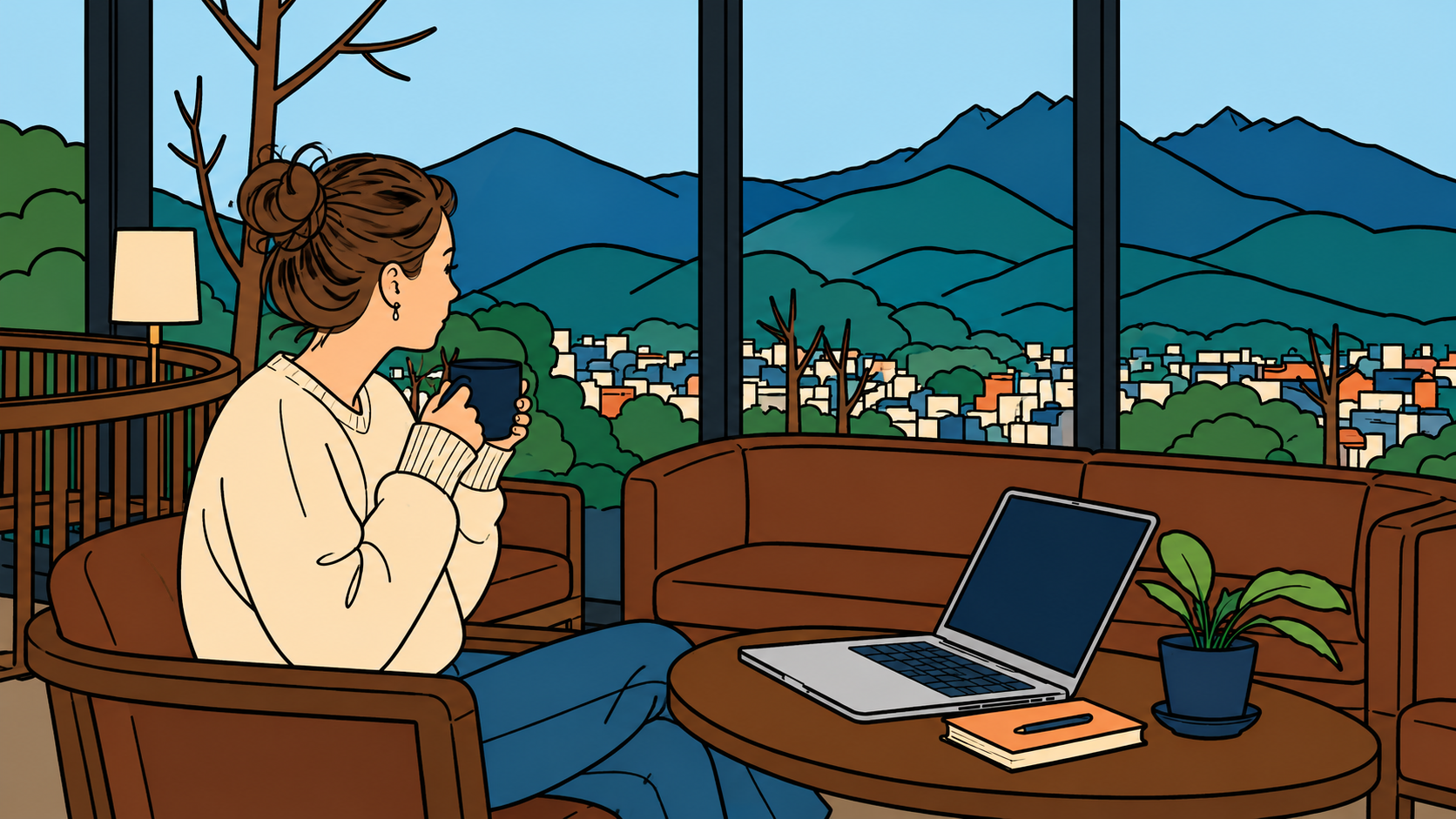

She didn’t come for the coffee.
She came because the apartment was too quiet in the wrong way — the kind of quiet that has weight, that makes small tasks feel impossible and rest feel unearned. She came because the café two blocks away has a specific corner table that gets afternoon light at an angle that makes everything feel slightly more manageable. She came because somewhere between ordering and sitting down, the pressure that had been sitting on her chest since morning tends to loosen.
The coffee is fine. That’s not why she’s here.
This is the thing that Korean cafe ambience keeps demonstrating, quietly, across millions of visits per day in a country with more cafés per capita than almost any city on earth: the drink is incidental. What people are buying when they walk through that glass door is something harder to name, harder to price, and considerably more valuable than any beverage on the menu.
The Drink Is the Smallest Part
Consider what actually gets exchanged in a Korean café transaction.
You pay somewhere between five and eight dollars. In return, you receive a drink that will be finished in twenty minutes, a seat that is yours for as long as you want it, access to reliable wifi, a power outlet within reach of most tables, a sound environment calibrated to make sustained attention possible, lighting designed for screens rather than turnover, and the implicit social contract that nobody is going to interrupt you, check on you, or ask you to leave.
The drink is the entry token. Everything else is the actual product.
Most café operators in most countries don’t frame it this way — the product is the coffee, the experience is a secondary consideration, the seat is a temporary convenience. Korean café experience has inverted this logic so completely that the inversion is now invisible. Nobody questions it. Nobody explains it. It is simply the arrangement, absorbed through use, passed between regulars and newcomers through the unspoken language of the room itself.
A visitor from a city where the table-turnover model dominates will feel it within the first hour — a low-grade surprise that gradually becomes something else. The surprise that nobody came to check on them turns into the realization that the table is actually theirs. That realization turns into something harder to name: a quality of presence that isn’t available in most public spaces, the experience of being somewhere without performing being somewhere.
That’s what the receipt paid for. The drink just made it possible.
Buying a State of Mind
The product that Korean cafés actually sell is a condition.
Not relaxation, exactly — plenty of people in Korean cafés are working harder than they would at a desk, running through exam material with the focused intensity of someone who has a deadline that isn’t moving. Not productivity, exactly — others are doing nothing in particular, scrolling slowly, watching the street through the window, existing at a pace the rest of their day doesn’t allow.
The condition is something between and beneath both of those: a state in which the usual social obligations have been temporarily suspended. You are not required to be useful. You are not required to be available. You are not required to perform rest or perform work. You paid for the right to be here, and what you do with that right is entirely your own business.
Korean cafe ambience has made this condition reliably purchasable. Walk in, order something, find a seat. The condition activates almost automatically — not because the café is particularly special, but because the social contract is consistent enough that the body learns to trust it. You know what will happen. You know what won’t happen. That predictability is itself part of the product.
This is rarer than it sounds. Most public spaces come with implicit performance requirements. A park requires you to appear purposeful or at leisure. A library requires silence and a credible reason for being there. A restaurant requires the performance of eating. The Korean café requires only that you ordered something, and once that condition is met, the space is yours to use however you need.
What people are buying, in the end, is permission. The Korean café experience sells it reliably, at the cost of a single drink, to anyone who walks in.
Focus as a Purchasable Condition
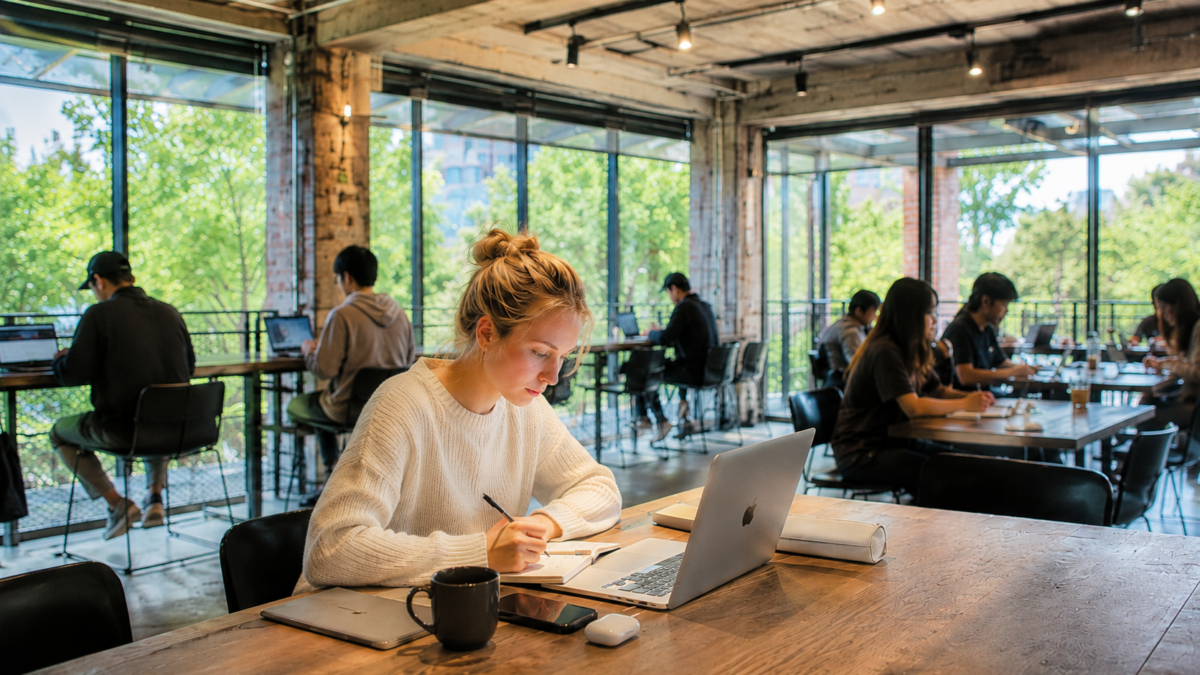
There is a version of focus that cannot be generated from inside.
It requires the right conditions — a specific quality of environment, a particular balance of presence and anonymity, enough ambient noise to push against without being overwhelmed by it. For many people, that combination is genuinely difficult to find. The home has too many competing claims on attention. The office has too much visibility. The library has a particular quality of silence that some minds find harder to work in than a moderate hum.
The Korean café experience has, largely by accident and partly by design, produced the conditions that generate this kind of focus at scale. The ambient noise sits at roughly the level research identifies as optimal for sustained cognitive work. The social environment provides enough human presence to signal that activity is appropriate, without the interpersonal obligation that comes with working around people you know. The lack of staff interruption removes the low-grade anxiety of being monitored.
The result is that focus — the specific, productive, sustained variety that most people spend significant effort trying to manufacture — becomes something you can purchase for the cost of an Americano. You don’t generate it yourself. You walk into a room where the conditions for it already exist, and you sit down inside them. The same logic applies to most structural shifts in life — the conditions underneath change before the results do.
This is not unique to Korea, but Korea has systematized it. The consistency of the Korean café experience across thousands of independent operators — the shared understanding of what the space is for, how long you can stay, what the staff will and won’t do — means that the focus-generating conditions are reliably available in almost any neighborhood, at almost any hour. You don’t have to find the right café. Almost any café will do.
Why This Model Works Here and Not Everywhere
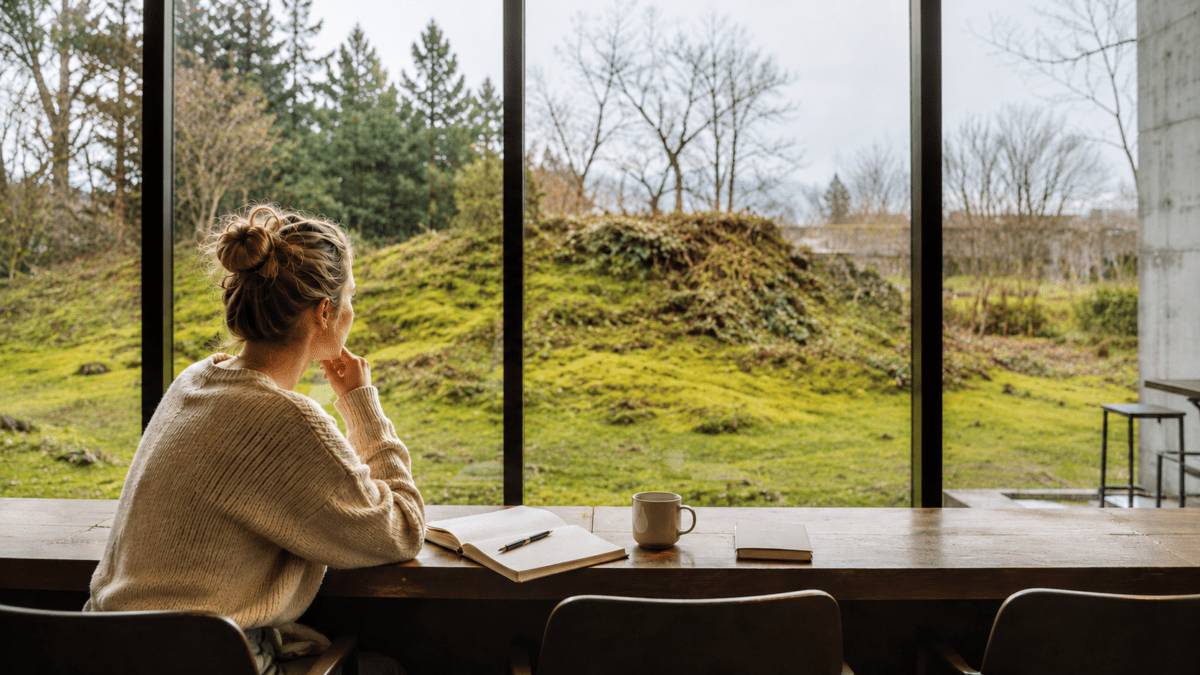
The Korean café model has been observed, admired, and partially imitated in cities around the world. It hasn’t fully transferred. The reasons are structural.
The model requires a specific alignment of conditions that Korean urban life happens to produce. Density creates demand — when apartments are small and shared and the street offers no shelter, the need for a third space is acute rather than optional. Cultural norms around public behavior create the social contract — the understanding that staying is acceptable, that silence is not unfriendly, that a table occupied by someone working is not a table being wasted. And the economics of the Korean café industry, built around atmosphere as the primary asset, create the supply.
Remove any one of these and the model degrades. A café in a city with larger apartments and more private space finds its third-place function less urgently needed. A café in a culture where extended occupation reads as inconsiderate finds the social contract harder to maintain without explicit rules. A café operator whose business model depends on table turnover cannot afford the design investment that makes extended occupation feel like a feature rather than a problem.
Korean cafe ambience works here because Korea built the conditions for it — not intentionally, not through any particular policy or design philosophy, but through the accumulation of density and habit and spatial necessity that made the café the obvious answer to a problem that urban Korean life kept producing.
The woman in the corner with the afternoon light found her table because thousands of people before her needed the same thing. The café learned what it was for by watching them. By the time she arrived, the arrangement was already in place, tested and refined by years of use, waiting for her to walk in and order something.
She did. The pressure on her chest loosened. The afternoon opened up.
That’s the Korean café experience. It doesn’t require explanation. It just requires a glass door and someone willing to push it open.
This post was planned and edited by a human, with AI assistance.