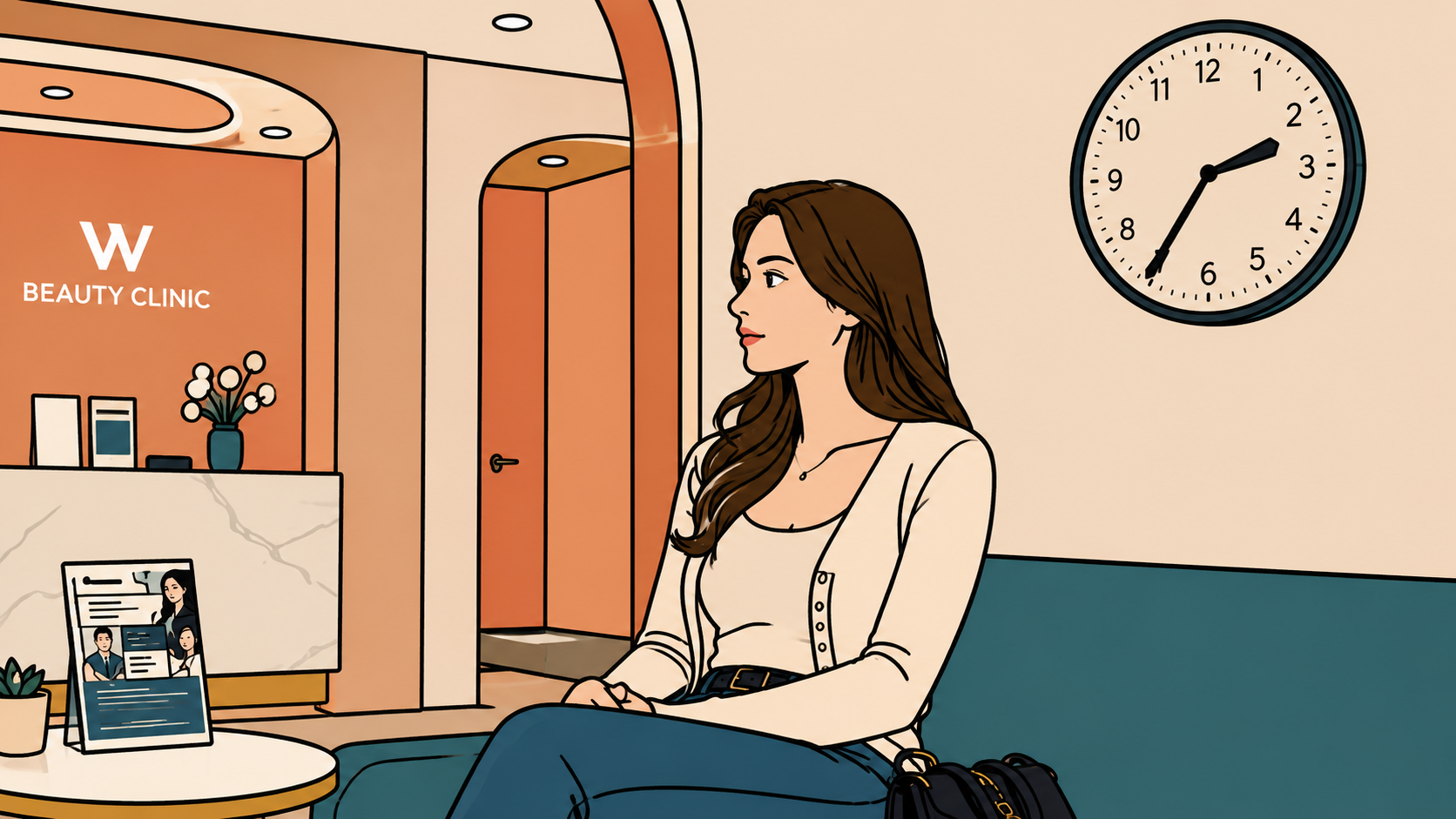

The moment you sit in the waiting room of a korean dermatology clinic in Gangnam, time stops measuring itself in the way you’re used to.
The clock on the wall still shows 2 o’clock, but the next twenty minutes will teach you something completely different about how Korean beauty procedures operate.
You’re here for a Korean beauty procedure—something that takes as long as a coffee break but reshapes how you move through the city afterward. The waiting room is warm. The ceiling is bright. The nurse’s hands are cool against your skin as she takes your blood pressure. A woman in the corner sits with her eyes closed, already inside the procedure’s space before she’s even walked into the treatment room. Everything in this room speaks a language your body doesn’t yet understand. You will, though. In twenty minutes.
What Happens in Twenty to Forty Minutes
If your appointment is at 2 p.m., you walk into the treatment room by 2:05 and the entire Korean beauty procedure is finished by 2:35.
The speed of Korean beauty procedures isn’t a marketing claim. It’s structural. You don’t sit in the lobby for forty-five minutes watching other people scroll through their phones. The clinic has designed itself around this precise rhythm. The door opens almost immediately.
You lie on the bed—it’s warm and surprisingly comfortable—and the consultation happens in about ninety seconds. The doctor explains the procedure in a sequence so familiar she could do it with her eyes closed: “You’ll feel warmth moving through the deeper layers. This area here is more sensitive, so you might feel a slight pricking, but it won’t be sharp. The Korean beauty procedure itself takes about twenty to twenty-five minutes, depending on the area.”
Many people have lain on this exact bed before you. Many will lie on it after. The clinic doesn’t acknowledge the repetition—it would spoil something—but you can feel it in how quickly everything happens. What you’re experiencing for the first time, the doctor has anticipated hundreds of times. The rhythm is so established that it almost feels choreographed, but only if you’re paying attention. Most people aren’t. They’re already somewhere else in their heads, already three minutes into their afternoon, already imagining what comes next.
From the moment the Korean beauty procedure starts—the instant the device makes contact with your skin—time stops being measured in minutes at all. It becomes something else. Depth. Distance. The space between the surface and whatever is underneath.
The Sensation You Feel Is the Signal

Warmth arrives first when undergoing korean dermatology, and it’s different from any warmth you’ve felt before.
There’s no anesthesia involved in this Korean beauty procedure, which means every sensation reaches you completely intact, unfiltered, undiluted. The energy from the device doesn’t linger on the surface of your skin. It searches downward, traveling through layers you can’t name, moving toward something deeper. Feeling this movement matters more than anything the doctor could explain. It’s like someone is gently heating the tissue beneath your skin, but that comparison fails as soon as you try it. It’s more precise than that. More intentional.
Then comes the pricking sensation. Sharp but not painful. Immediate but not invasive. This is where most people tense up, where they expect pain and prepare to endure it, but the doctor’s voice—calm, almost bored—keeps narrating what’s happening inside your body. “That’s the deeper layer responding. That means the energy is reaching where it needs to be.” Your body starts to understand. This pricking isn’t a warning. It’s not pain the way pain announces itself. It’s a signal. The signal that the Korean beauty procedure is actually working, that something is being triggered inside you.
The cooling sensation comes next, and it’s the third part of a conversation your body is having with the device. Warmth, then pricking, then cool. Warmth, pricking, cool. Over and over.
The pattern emerges and suddenly it’s not uncomfortable anymore. It’s information. Your deepest layers are warming, something is shifting down there in the tissue you can’t see, and the surface is being protected, kept safe. When this contrast fully reaches you—when your body understands that warmth and coolness aren’t fighting but working together—you finally get what’s actually happening. This isn’t an invasion. It’s precision. It’s engineering that happens to use your body as its medium.
Sensation replaces explanation. What the doctor says is almost secondary. Your body’s response—the exact texture and timing of what you feel—that’s the real story.
No Anesthesia Needed Because the Discomfort Isn’t Pain
When a Korean clinic says “no anesthesia,” it lands strange on the ear. In most countries, you expect pain before you expect comfort.
But the clinic makes a distinction that matters: korean dermatology creates discomfort, not pain. These are structurally different things. Dermatologists understand this. That’s why they explain instead of sedate. “It will feel warm—almost hot, but not burning. There will be some sensitivity in the thinner-skinned areas. Some people describe a slight pricking. But none of this is pain. None of this is unbearable.” The word unbearable gets emphasized, underlined, stressed. Not because it’s cruel, but because it matters. You need to know that you have a choice here. You’re not locked into suffering.
There’s something profound in staying conscious during the Korean beauty procedure. You feel everything that happens, and this is intentional. You can raise your hand if something genuinely feels wrong. The nurse means this. When she says “Tell us if it gets too intense,” she’s not being polite. She’s telling you that you have actual control. The procedure can stop. Your body’s comfort isn’t negotiable, even if the sensation isn’t comfortable. That distinction—between sensation and comfort, between signal and suffering—runs through the entire Korean beauty procedure.
In practice, very few people raise their hands. The discomfort is far shorter than the body expects. The pricking sensation lasts maybe two or three minutes total across the entire treatment. The rest is the rhythm of warmth and coolness cycling. You move into a place where you’re tolerating something, yes, but it’s nothing like enduring pain. It’s more like standing in strong wind—uncomfortable, undeniable, but completely survivable.
And staying conscious does something unexpected. Your body adapts. The first cycle of warmth feels shocking. By the second cycle, your nervous system has started to understand. By the fifth cycle, your body isn’t bracing anymore. It’s participating. This wouldn’t happen if you were asleep or numbed. The Korean beauty procedure depends on you being awake for it.
The Procedure Ends, Life Continues in the Same Moment
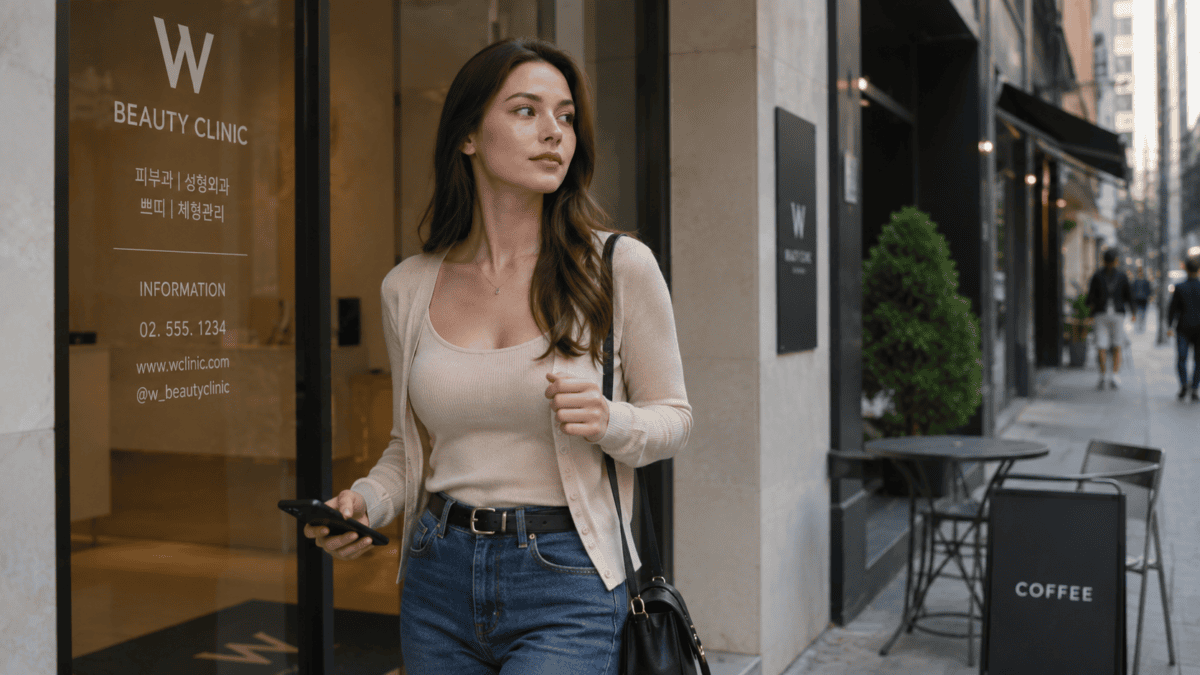
The strangest part of Korean beauty procedures comes when you step out of the treatment room, and it’s the abruptness of the transition.
You stand up from the bed, and in that moment—between lying down and standing up—the Korean beauty procedure is over. Complete. Done. The smell of antiseptic moves through the room as the nurse applies cooling cream to your face, moving in practiced circles. “Make sure to use sunscreen. That’s really the only thing.” No special recovery protocol. No bandages. No ice masks or compression anything. No instructions about avoiding activity or heat. Just sunscreen.
“Can I shower today?” you ask, because this seems wrong. Something must require waiting.
“Yes, it’s fine,” the nurse answers. “Shower normally. Just be gentle with that area for a day or two.”
You leave the treatment room at 2:37. By 2:42, you’re standing in front of the waiting room mirror. Your face is slightly flushed—the kind of flush you get from lying in the sun for an hour. Makeup covers it easily. Someone walks past you heading into a treatment room. Someone else is checking out at the desk, already reaching for their phone before they’ve left the clinic space.
The Korean beauty procedure has taken the least intrusive path out of Gangnam Station. You emerge onto the street at 2:45, and the city noise hits you—construction, voices, delivery scooters beeping. This is the same city you left forty-five minutes ago, except now your skin is subtly different and the afternoon is waiting exactly as it was before.
By 3 p.m., you’re sitting in a café three blocks away with a coffee cooling in front of you. Your meeting at 4 p.m. will happen. Your evening plans won’t shift. Your body has started something—a chain of changes that will unfold over weeks—but your life has simply continued.
This is what makes the Korean beauty procedure so different from everything else. It asks nothing of your schedule. The transformation happens quietly, in the background, while you’re doing other things. Weeks from now, people will notice that you look different and you won’t quite remember when the change happened or how. It will have arrived so gradually, so quietly, that it seems less like something that was done to you and more like something that was always becoming.
The twenty minutes now dissolve completely into your ordinary afternoon. Your afternoon just happened to contain something that rewrote what comes next.
This post was planned and edited by a human, with AI assistance.