
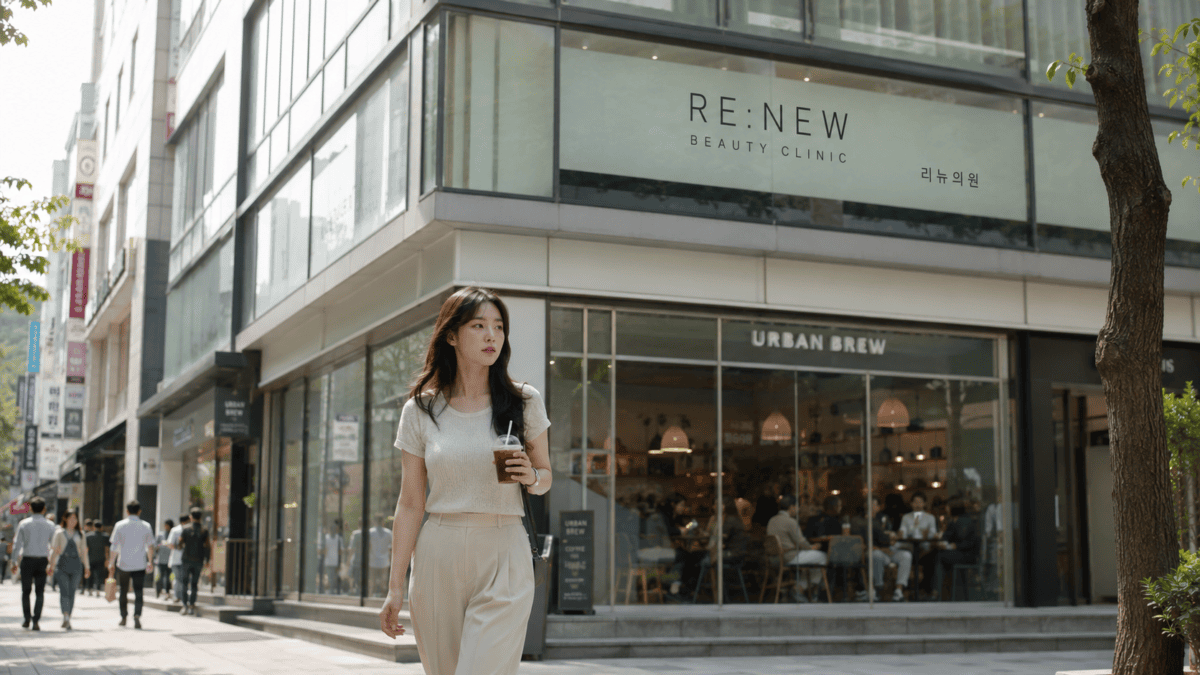
Stand on any corner in Gangnam and count the floors of a single building. Coffee on the ground floor. A dermatology clinic on the fourth. A pharmacy tucked beside the elevator. This stacking isn’t accidental. It’s the physical shape of a beauty culture that decided its procedures should fit inside an ordinary afternoon, not interrupt it.
The glass doors slide open and close all day. A woman steps out of the elevator holding an iced americano, checks her phone, and walks toward the subway without anyone glancing twice. Nothing about her says she just had something done. That invisibility is the point, and Seoul built its streets to make it possible.
The Building Layout Tells You Everything About Korean Efficiency
Look up. In most Gangnam towers, the directory reads like a compressed map of a single afternoon: café, clinic, pharmacy, nail salon, another clinic. The elevator stops at each floor with a soft chime, and the people getting on and off move between these spaces the way you’d move between rooms in a house.
The vertical density does something to time. You don’t drive across a city for one appointment, then drive home to recover. You take an elevator. The café where you kill twenty minutes beforehand is sixty seconds from the treatment room. The pharmacy where you pick up sunscreen afterward shares a wall with the lobby. Quick recovery procedures work here partly because the architecture removes every gap where recovery might otherwise expand to fill the space.
The smell changes as the elevator rises. Coffee and warm pastry on the ground floor. Then the faint antiseptic cleanness of the fourth. Then nothing in particular by the time you reach the offices above. Each floor holds its own atmosphere, and the building lets you pass through all of them in the span of a lunch break.
Someone in a suit rides down while someone in gym clothes rides up. The doors open onto a hallway where a clinic’s frosted-glass entrance sits directly across from an accounting firm. Nobody finds this strange. The proximity is so normal that it has stopped being visible to the people who live inside it.
Why Clinics Sit Between Cafés and Offices
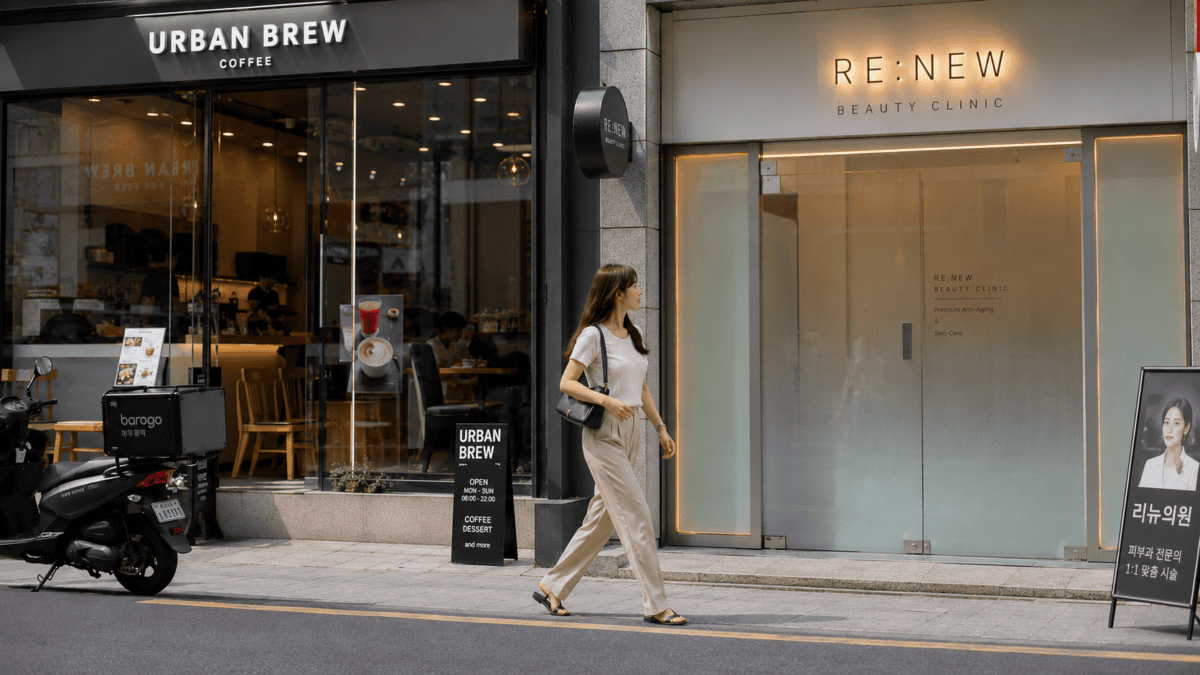
Walk the blocks around Sinsa or Apgujeong and notice where the clinics are. Not hidden on quiet side streets. Not clustered in some medical district you’d have to seek out. They sit at eye level, between the coffee shop everyone already visits and the office tower where everyone already works. This is beauty culture at street level.
This placement is a decision about daily life, not about visibility. A clinic wedged between a café and an office is a clinic you can reach on a Tuesday without rearranging your day. You finish a meeting, walk down two blocks, and the frosted door is right there beside the bakery you pass every morning. Quick recovery procedures depend on this kind of casual reach. The moment a treatment requires a special trip, it stops being part of ordinary life and becomes an event.
The street itself is warm in the late afternoon. Delivery scooters weave past. The smell of grilled meat drifts from a basement restaurant, mixing with the sweetness of a bubble tea stand. Between all of it, the clinics sit quietly, their signs no louder than the dry cleaner’s next door. You could pass one every day for a year and never register it as anything more than another door in the wall.
That ordinariness is engineered. When a clinic looks like part of the neighborhood rather than a destination, walking in feels like buying coffee. The city has arranged its surfaces so that the decision to have something done carries no more weight than the decision to stop for lunch. These treatments fit into this landscape because the landscape was shaped to hold them without ceremony.
Inside the café next door, the espresso machine hisses and someone calls out a name. Two women share a table by the window, one of them touching her jaw absently, the other scrolling through photos on her phone. The clinic’s frosted door opens behind them and closes again. Neither looks up. The sounds of the street and the sounds of the treatment room have learned to sit side by side, and no one hears the seam between them anymore.
A woman leaves the coffee shop, glances at the clinic beside it, and keeps walking. Tomorrow she might not. The door will be in the same place either way.
The 24-Hour Guideline: How Quick Recovery Procedures Actually Work
Ask any clinic in Seoul about aftercare and the answer collapses into a single number. Twenty-four hours. That’s the window. The slight flush fades, the faint puffiness settles, and by the next afternoon there is nothing left to manage. This is the quiet engine underneath everything: quick recovery procedures are built around the certainty that tomorrow arrives clean.
The redness you see in the mirror leaving the clinic is not a wound healing. It’s the surface responding, warm and pink like skin after a brisk walk in cold air. Touch your cheek and it feels ordinary, maybe slightly heated. By evening the warmth is gone. By morning the mirror shows you the same face you brought in, with nothing to explain to anyone.
There are no bandages to change. No compression to wear. No sequence of ointments timed across a week. The nurse said sunscreen, and sunscreen was the whole instruction. This is what a twenty-four-hour recovery actually means in practice: the treatment ends and your body quietly closes the loop while you sleep, eat, and move through a normal night.
The absence of aftercare is its own kind of design. Somewhere in the structure of this system, someone decided that the measure of success was how little the following day would notice. No pharmacy bag full of supplies. No mirror check every few hours. Just the ordinary passage of one night, and then the reset.
A System That Assumes You’re Returning to Work

Everything about the timing assumes one thing: you have somewhere to be tomorrow. The appointment slots cluster around lunch hours and early evenings. The clinics stay open past the end of the workday. The whole rhythm is tuned to people who will be at their desks the next morning as if nothing happened.
This assumption shapes the experience from the first phone call. No one asks how much time you’ve set aside to recover, because the answer is understood to be none. The consultation is brief. The treatment is short. The exit is designed to drop you back onto the street facing the same afternoon you left. This beauty culture exists inside a working city, and the working city set the terms.
You can feel it in the small choices. Cooling cream instead of anything that needs to stay on. The advice to shower normally that same night. The gentle assumption that you’ll wear makeup tomorrow, sit in meetings, ride the crowded subway home, and no one around you will know. The city noise closes over you the moment you step outside—scooters, construction, a hundred conversations—and you rejoin it without a seam.
The building empties in the evening the way any office building empties. People with treated skin and people with ordinary skin ride the same elevator down, spill onto the same sidewalk, and disappear into the same lit-up night. The clinic goes dark on the fourth floor. The café below is still open. Tomorrow the elevator will fill again, chiming softly at each floor, carrying the next afternoon up and back down.
The last thing you notice, walking toward the station, is how normal the air feels against your face. Warm from the day, cool where the evening has started to move in. Nothing pulls at your skin. Nothing marks you. The city simply keeps going, and you keep going inside it.
This post was planned and edited by a human, with AI assistance.