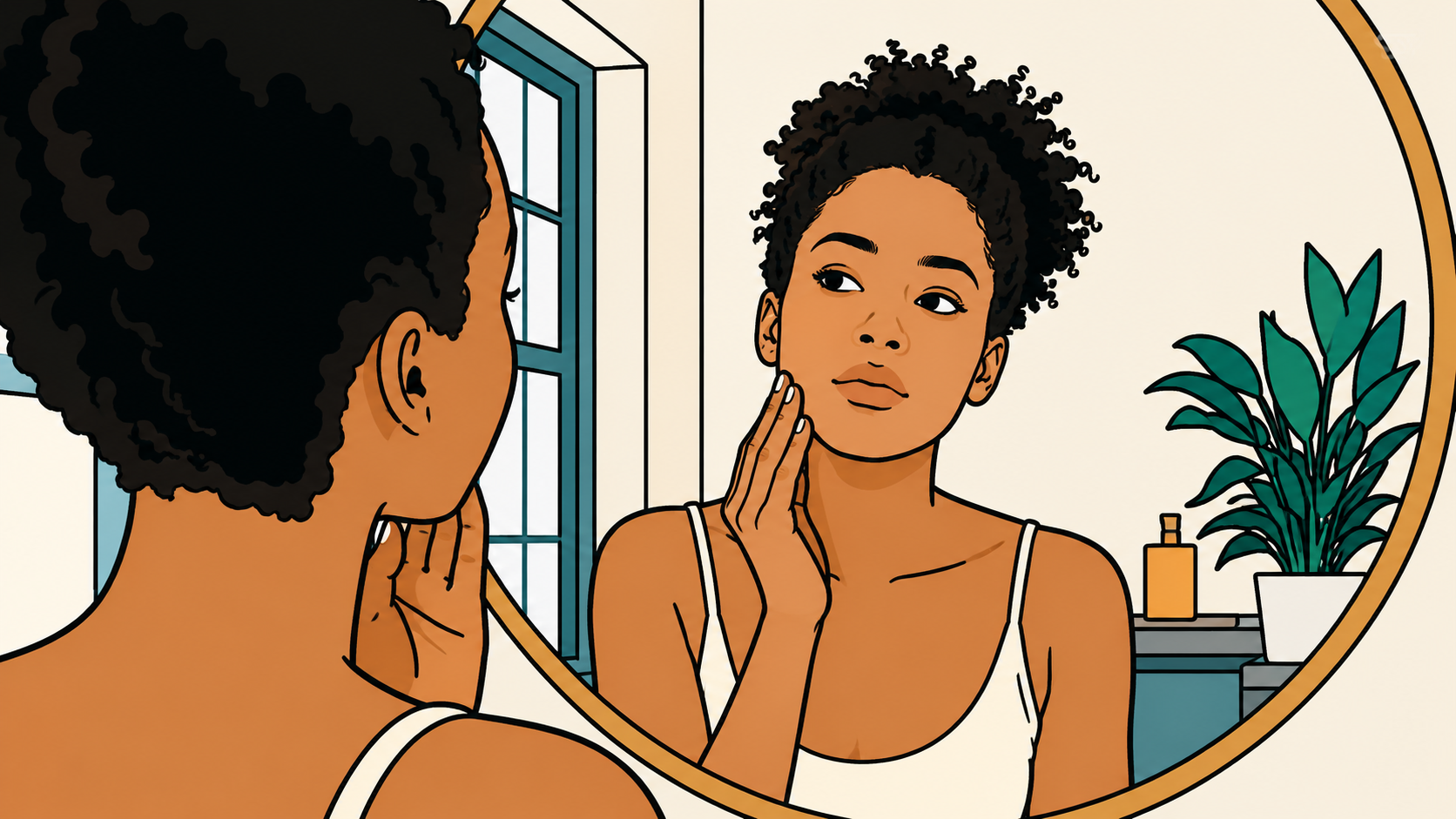

A woman studies her reflection in an elevator mirror on the way up to a Gangnam clinic.
She isn’t looking for wrinkles. She’s looking for a tired face — the shadow under her eyes, the faint heaviness along her jaw, the way her whole face reads as depleted before she’s said a word.
She doesn’t want to look younger. She wants to look like she slept. This small shift in what she’s searching for is the whole story of the anti-burnout aesthetic, and it happened so quietly that almost no one noticed the standard move.
For a long time the enemy was age. Now the enemy is exhaustion. The two look different in the mirror, and the treatments that answer them are chasing different things entirely.
When Did Tiredness Become the Problem Instead of Age?
There was a time when beauty work meant fighting the calendar. Erase the line, fill the fold, turn back the year. The goal was always younger, and younger was measured against some version of a twenty-year-old face.
Somewhere that changed. Walk into a clinic now and listen to what people actually ask for. They rarely say they want to look younger. They say they look tired. They say they look drained, worn down, like the week is written across their face. The complaint isn’t about age at all. It’s about depletion, and depletion is what the anti-burnout aesthetic set out to address.
This shift tracks something real about how people live. The days are long. The screens don’t turn off. The line between work and rest thinned out until it nearly disappeared, and faces started to carry the evidence. A twenty-eight-year-old can look exhausted. A forty-year-old who sleeps well can look luminous. Age stopped being the reliable marker, and something else took its place.
Think of the last time you caught your own reflection after a bad stretch of weeks. Late nights, early alarms, too many screens glowing in the dark. The face looking back wasn’t older. It was emptier, dimmer, as if someone had turned the brightness down a notch. That specific look—not aged, just spent—is what walked into clinics and asked for something new.
You can hear it in how the concern gets described. Not “I’m getting old” but “I don’t recognize how tired I look.” The mirror stopped being a measure of years and became a measure of reserves. What’s left in the tank shows up first in the face, and people started treating that reading as the thing worth changing.
“You Look Rested” Became the Highest Compliment
Notice what people say to each other now when they mean something kind. Not “you look so young.” That lands slightly wrong, almost like a question about age. The compliment that actually pleases is different. You look rested. You look refreshed. You look like you’ve been taking care of yourself.
There’s a reason those words feel better. To look rested is to look like someone who has their life in order, who sleeps, who isn’t drowning. It signals control rather than youth. In a culture where everyone is quietly overextended, the person who looks unbothered by it all is the one who seems to be winning. The anti-burnout aesthetic is built on exactly this reading.
The words carry a quiet story. Rested means you had time. Refreshed means you recovered. These are luxuries in a city that never fully powers down, and looking like you possess them says more than looking young ever could. A smooth, unlined face reads as inexperienced. A rested face reads as capable.
Listen in any café near the clinics and the language repeats. Someone leans across the table, studies a friend’s face, and says it with a little surprise—you look so refreshed, did you go away somewhere? The question is always the same, and the answer is almost always no. There was no trip. There was just a quiet correction, and the result reads exactly like a week by the sea.
A woman leaves a clinic and a friend tells her she looks great, really great, like she just got back from somewhere. She didn’t go anywhere. She had twenty minutes on a Tuesday. But the compliment lands on exactly the note she wanted, the sense that the wear has lifted and something underneath has come back up to the surface.
The Tired Face Problem: Dark Eyes, Dull Skin, Soft Jawlines

Exhaustion isn’t abstract. A tired face writes itself in three specific places, and everyone reads them without being taught how.
The eyes go first. The skin beneath them darkens and hollows, and a shadow settles there that makeup covers but never quite erases. Then the skin loses its light. A rested face catches the light and gives some back. A depleted one absorbs it, going flat and dull, the way a room looks when a bulb is dying. And the jawline softens. The clean edge that reads as vitality blurs, the lower face loses its definition, and the whole structure seems to sink a little under its own tiredness.
These three signals move together, and people register them as a single impression before they can name the parts. You don’t consciously think dark eyes, dull skin, soft jawline. You just think she looks worn out. The anti-burnout aesthetic works by reversing that impression at its source rather than chasing each symptom on its own.
The reversal is subtle. Lift along the jaw and the lower face finds its edge again. Wake up the skin and the light comes back. Ease the heaviness around the eyes and the shadow lifts. None of it makes a person look younger, exactly. It makes them look like the tiredness drained out overnight, like they finally caught up on everything the year took.
You see it in the before and after, but not in the way you’d expect. The face isn’t smoother. It’s brighter. The edges are cleaner. The person looks less like a fixed version of themselves and more like the rested version they are on their best mornings, the one they keep meaning to become.
How the Anti-Burnout Aesthetic Became the Answer

The same procedure that once got sold as anti-aging now answers a completely different question. Not “how do I look younger” but “how do I stop looking so tired.” The tired face, not the aging face, became the thing to fix. The technology barely changed. The meaning around it did.
This is what makes the anti-burnout aesthetic a genuine shift rather than a rebrand. It reframes the whole relationship between a person and their face. The goal is no longer to erase time. It’s to recover from it, to reset the reading, to walk out looking like the version of yourself that got enough sleep and enough rest and enough of everything the week ran short on.
A generation raised on burnout found a beauty standard shaped to fit it. Young was never the thing they lacked. Rest was. So the aesthetic quietly reorganized itself around the thing that was actually missing, and the treatments followed the demand into a new meaning. What people buy now is the look of recovery, sold in twenty-minute pieces on ordinary afternoons.
The shift shows up in the small talk too. Old compliments about looking youthful started to feel dated, almost tone-deaf, while a comment about looking well-rested landed clean every time. People stopped asking their doctors to erase the years and started asking them to undo the week. Same chair, same device, same warm sensation moving under the skin—but the thing being chased had quietly become something else entirely.
The woman from the elevator walks back out onto the street. Her face is warm, faintly flushed, and by tomorrow it will read the way she wanted. Not younger. Just rested, finally, like the week never touched her. The city moves around her, tired in all the usual places, and she moves through it looking like she found a way out that no one else can quite see.
This post was planned and edited by a human, with AI assistance.