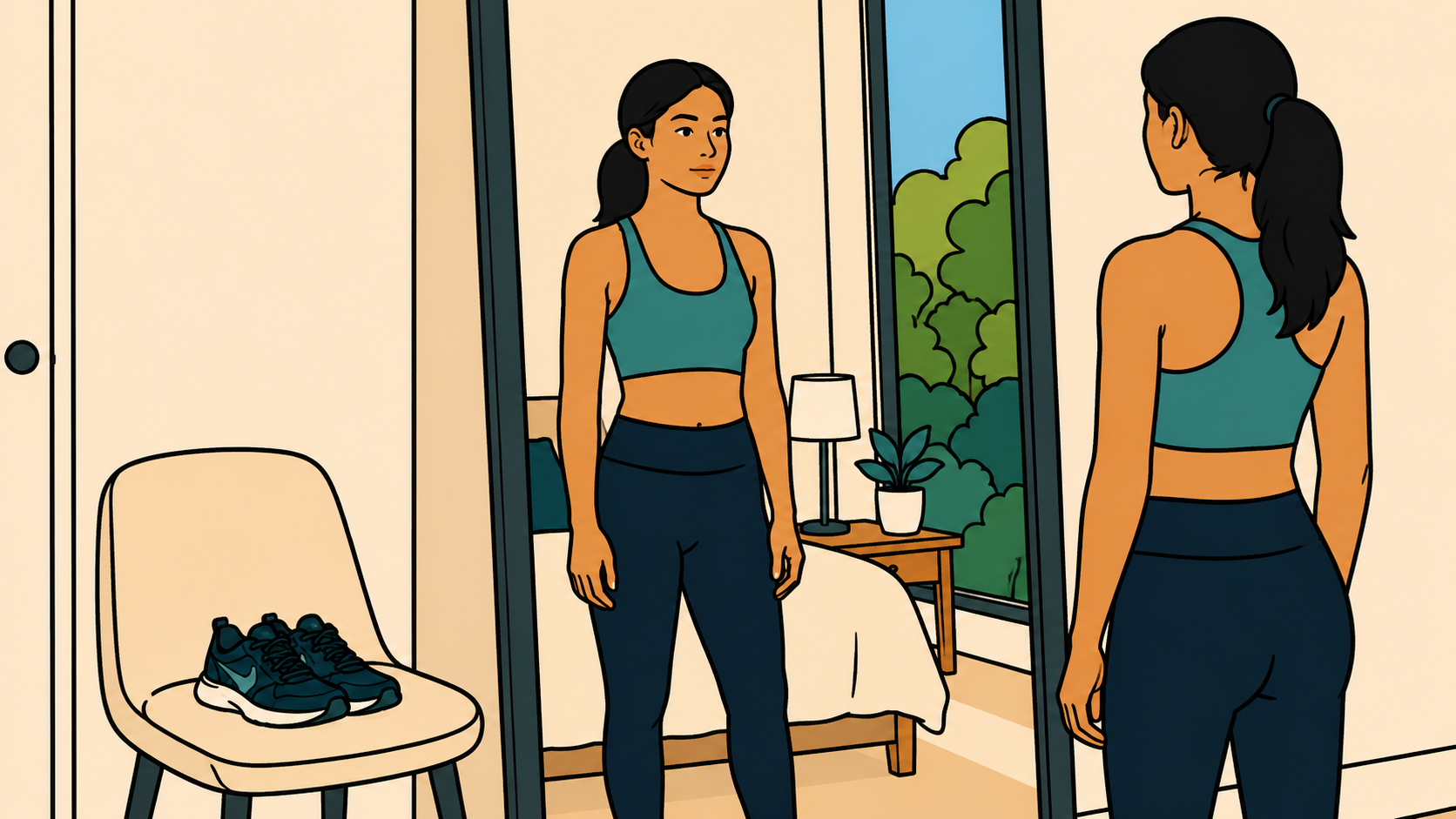

You’re waiting for burnout to end. You sleep enough, but wake up tired. You meet people, but feel more drained afterward. You know what you should do, but your body doesn’t move. So you do what people told you would fix it: more rest, better boundaries, therapy, exercise.
And yet the exhaustion persists, the stagnation continues, the three areas remain frozen. You’re waiting for recovery. But recovery assumes the old structure will be restored. What if the old structure isn’t supposed to be restored?
The moment this question lands, everything shifts. Not your circumstances. Not your effort level. The question itself. Because understanding burnout as transition rather than crisis changes what you’re actually trying to do.
Your late twenties didn’t break you. Your energy structure is reorganizing. And that reorganization has a direction. This is what the women who move through this phase learn: burnout is not something to recover from. It’s a signal that structural change has already begun. Your job isn’t to fix what broke. Your job is to recognize what’s breaking open and allow it.
When Recovery Model Fails
The recovery model assumes damage. Burnout = damage from overwork. Solution = rest and restoration. You return to baseline. This logic works for circumstantial burnout — the specific job, the specific relationship, the specific stressor that pushed you past your limit.
But structural burnout operates differently You’re not damaged. You’re in transition. And a transition isn’t fixed by returning to the previous state. A caterpillar doesn’t recover from becoming a chrysalis by going back to being a caterpillar. It moves forward by dissolving what it was.
This is why rest alone doesn’t work. Why therapy focused on managing stress misses the point. Why setting better boundaries still leaves you exhausted. You’re applying recovery logic to a transition process. The two operate on opposite principles.
Recovery tries to restore what was. Transition asks you to release what no longer fits. And you cannot move forward while trying to go back. This is the invisible wall most people hit. Not because they’re not trying hard enough. Because they’re trying the right effort in the wrong direction.
The burnout as transition framework asks something different. It asks: What is my system trying to become? What am I being asked to release? What new capacity is trying to emerge? These questions don’t lead back to baseline. They lead forward to a new configuration entirely.
The Three Areas Don’t Move Until Framework Shifts
You’ve noticed this: individual solutions don’t work. You fix your sleep, your body still doesn’t recover. You set better boundaries at work, your career still stalls. You show up for your friends, relationships still feel hollow. This isn’t because the solutions are bad. It’s because the framework is wrong. You’re treating three separate problems when it’s one structural reorganization affecting all three simultaneously.
The breakthrough comes when you stop trying to fix each area separately and start recognizing them as expressions of the same process. The career stagnation, the relationship fatigue, the body’s refusal to recover — they’re not asking for individual fixes. They’re asking for framework shift.
Your career doesn’t move forward because the old ambition structure no longer works. It won’t move until you’ve recognized what the new phase is actually asking you to build. Your relationships don’t deepen because you’re still operating from an exhausted reserve of effort. They shift when you learn to relate from consistency and depth instead of endless expansion and performance. Your body doesn’t recover because rest assumes the old energy pattern will return. It rebuilds when you stop fighting the new energy structure and begin to align with it.
This is concrete and specific. It’s not spiritual vagueness. It’s about recognizing which capacities are being asked to emerge and reorganizing your actual choices around them. It often looks like choosing depth over speed, even when it feels slower. The woman whose career stalls at promotion-seeking learns that this phase asks for depth-building instead. The woman whose friendships turned to obligation learns that she has nothing left to prove and everything to offer through simple, consistent presence. The woman whose body won’t recover learns that rest now means integration and consolidation, not escape.
These aren’t minor adjustments. They’re fundamental shifts in how you operate. And they happen not through willpower but through recognition. The moment you see what’s actually being asked, behavior reorganizes naturally. You stop chasing what doesn’t fit. You start building what does.
The Strategic Choices That Follow

Once framework shifts, choices become clear. Not easy. Clear. And that changes everything.
A woman in career transition stops applying for promotions she no longer wants. She’s not giving up ambition. She’s redirecting it toward mastery and contribution instead of visibility. That’s not resignation. That’s alignment. Her career doesn’t suddenly boom. But the exhaustion from pushing against the wrong direction stops. And from that stillness, actual work begins.
A woman in relational reorganization stops maintaining friendships from obligation. She’s not becoming cold or selfish. She’s honest about her capacity. She sees fewer people, but stays longer in conversations. She stops performing closeness and starts allowing it. Relationships either deepen into something real or they dissolve into what they actually are: seasonal connections that served their purpose. Her social life doesn’t look like it did. It feels sustainable.
A woman in body transition stops trying to recover through more discipline. She stops the 5 AM workouts that deplete her. She stops the intermittent fasting that doesn’t nourish her. She starts listening to what her body is asking for in this phase: rest that feels like integration, movement that feels like meditation, food that feels like communion.
Her body starts responding differently. Not instantly, but noticeably. Her sleep begins to deepen, her digestion becomes more stable, and she feels less at war with herself. She’s not healing through heroic effort. She’s healing through stopping the war against her own structure. Her body doesn’t return to 25. It moves into 30 with a different kind of vitality.
These choices aren’t small. They’re reversals of everything that once worked, and that’s exactly why they feel so unsettling. You’re not just making minor adjustments — you’re being asked to rethink the entire way you’ve been operating.
Aligning with the new structure means gradually letting go of patterns, habits, and identities that used to define how you moved through the world. There’s no going back to the person who could do what that person did. But there’s also no going back to the exhaustion of forcing yourself to keep operating in a way that no longer fits.
The woman sits with her phone. She’s canceled the 5 AM workout. She’s told her boss she’s not applying for the promotion. She’s texted her friend: “I need to show up differently.”
She doesn’t feel fixed.
But she’s no longer fighting what’s happening. And the moment she stops fighting, her body stops holding. Her career stops demanding. Her relationships stop performing.
Not all at once. But enough to know you’re no longer stuck.
From Signal to Strategy

What started as a signal — the simultaneous collapse across three areas — becomes a map. The stagnation shows you exactly where the framework is misaligned. Career stalls where the old ambition structure no longer fits. Relationships pause where you’ve exhausted endless expansion without building real depth. The body locks where you’re still trying to operate from energy that’s been asked to transform.
The signal was trying to get your attention. And it did. The rest is strategy: recognizing what wants to emerge and making choices that align with it rather than against it.
This is burnout as transition. Not something to recover from. Something to move through. Not a failure of your effort. A signal that your system is reorganizing toward a different configuration entirely. And that reorganization, once recognized and aligned with, leads the three areas forward into a new phase where they don’t just function — they integrate.
This post was planned and edited by a human, with AI assistance.