

She came to Korea for a week. Temples, palaces, street markets — the usual plan. But somewhere between booking flights and packing bags, she’d fallen into a YouTube rabbit hole about Korean food. One video led to another, and then to a comment she couldn’t stop thinking about: faster than McDonald’s. Tastes like home cooking.
She smiled at that. Sure.
But the thought stayed. So on her second day in Seoul, she went looking for a Korean fast food restaurant — not a chain, not a tourist spot. A gukbap (국밥: guk-bap) place. Rice and broth in one bowl, the kind Koreans eat every day. Just to see if the comment was telling the truth.
The Bowl That Was Already Coming
The restaurant was clean and orderly — bright lights, wooden tables, a menu board on the wall. She found a seat and pulled chopsticks and a spoon from the drawer built into the table. No one handed them to her. No one needed to. A server came over. She pointed at the menu. Gukbap, please.
The server nodded and disappeared.
A moment later, two small plates arrived. Kimchi, already cut and ready. Kkakdugi, cold and firm. No explanation, no extra charge. Just there, the way banchan (반찬: ban-chan, side dishes of meat, fish, or vegetables eaten alongside rice) always arrives — because a meal without them isn’t quite a meal. A bowl of rice followed, set quietly to the side.
Then the dolsot (돌솥: dol-sot, stone pot) came. A stone bowl, heavy and dark, broth still trembling from the walk over. Steam rose straight up. The smell hit first — deep, savoury, something that had been cooking for a long time. A handful of green onion floated on top, already wilting in the heat.
She looked at the table. Complete. Hot. Ready.
She hadn’t timed it. She was still holding the moment of ordering in her head, but the food had already arrived ahead of it. It felt slightly out of order.
Not like something she waited for, but something she had walked into after it was already done.
But she knew — faster than any burger she’d ever ordered. What surprised her more was what the speed didn’t cost. Nothing was thin, nothing was rushed-tasting, nothing felt like a shortcut. The broth had weight. The rice had been cooked properly. The kimchi had been fermenting long before she’d booked her flight.
She lifted her spoon. The first mouthful was quieter than she expected. Not a performance. Just food that knew what it was doing. The broth was clean but not empty — something underneath it that took time to build, the kind of depth that doesn’t come from a packet or a shortcut. She took another spoonful without thinking about it.
She’d come to check whether a comment on the internet was telling the truth. One spoonful in, she already knew.
Korea Solved This Centuries Ago
In Joseon Korea, the roadside tavern —a jumak (주막: ju-mak, a pre-modern inn and eatery that provided meals, alcohol, and lodging to travelers)— was where the road stopped for a while. Scholars heading to the capital for state exams, merchants hauling goods between provinces, farmers moving between harvests. People with distance still ahead of them and no time to sit long.
Inside the jumak, the smell of broth reached you before the door did. Travelers of every kind shared the same low wooden tables — a scholar with ink-stained fingers, a merchant still dusty from the road, a farmer with nowhere particular to hurry except forward. The fire under the pot had been going since before any of them woke up. Bones and water, heat and time. By midday, the depth in that broth was something no amount of rushing could replicate.
Rice was cooked early and kept ready the only way available — when it began to cool, the cook lowered it back into the hot broth, let the heat pull it back, then lifted it out again when the next guest arrived. It was never quite off the fire. Banchan was prepared before the first traveler arrived. When a guest sat down, the work was already finished.
Scoop the rice. Ladle the broth. Set the sides.
The meal arrived before the traveler had settled in. That was the point. Not a shortcut — a system designed so that hunger never had to wait.
This is the logic Korea built centuries before the concept of Korean fast food existed — not by making meals smaller or simpler, but by finishing the work before anyone arrived. The same logic runs every gukbap kitchen today. The pot is different. The system is not.
The Work Nobody Sees
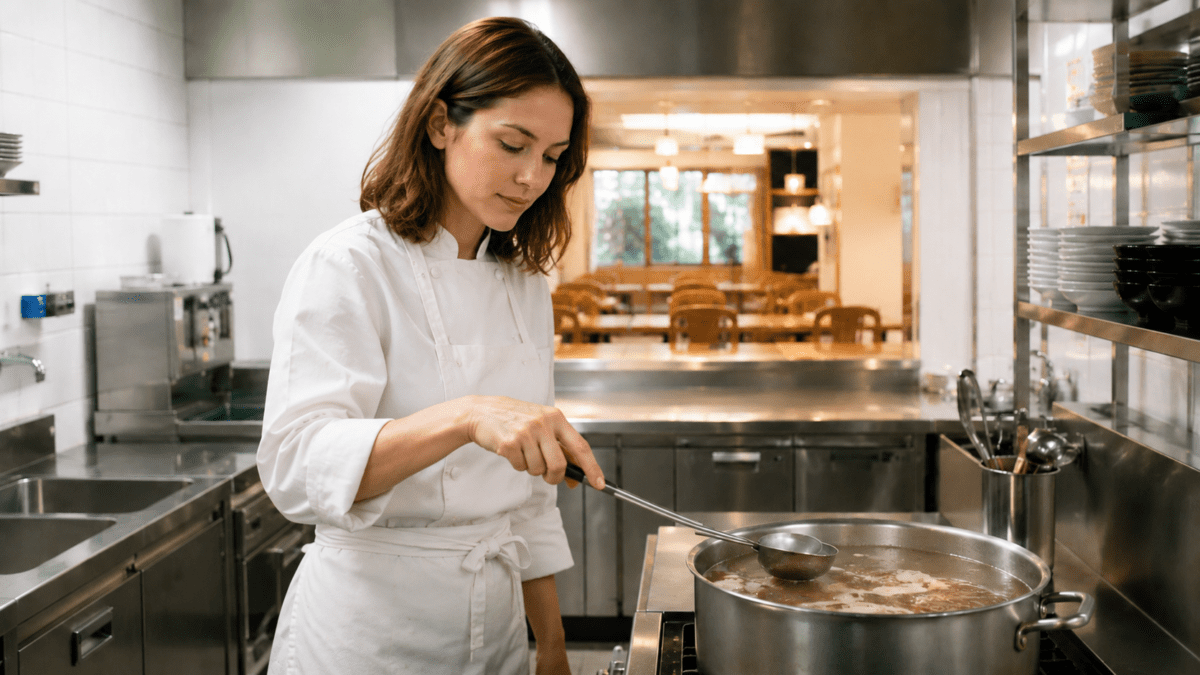
Somewhere before the city wakes up, a pot goes on.
It might be the night before. It might be well before dawn. The timing differs by kitchen, by cook, by the cut of meat in the pot. What doesn’t differ is the principle: by the time the first customer arrives, the hardest work is already done.
The broth has been building for hours. Fat rises and gets skimmed. The colour deepens from pale to rich. The smell moves from raw to something that fills the room without announcing itself. None of this happens quickly. None of it can.
Outside, the street is still empty. The first delivery trucks haven’t arrived. The convenience store on the corner is quiet. Inside the kitchen, the cook moves without hurry — checking the heat, adjusting the flame, tasting once and setting the ladle back down. There is no rush because there is no need to rush. The work is already where it needs to be.
When the doors open, the cook isn’t starting. She finished hours ago.
Korea’s ppalli-ppalli (빨리빨리: ppal-li ppal-li, fast-fast, the Korean instinct for speed and immediacy) culture is often read as impatience. It isn’t. It’s the discipline of preparation — the understanding that speed at the table is only possible because of stillness in the kitchen long before. Elevators close before you finish stepping in. Delivery arrives before you’ve put your phone down. But none of that speed comes from nowhere. Someone, somewhere, started early.
Gukbap is ppalli-ppalli made edible. The urgency is real. So is the patience behind it. The customer who walks in at seven sees only the speed. What they don’t see is everything that made it possible — the hours, the heat, the cook who never waited for anyone to arrive before getting started.
Not a Shortcut. A System.
A burger is fast because the process is short. The patty hits the grill after you order. The bun toasts after you order. The assembly begins after you order. Every step waits for the customer.
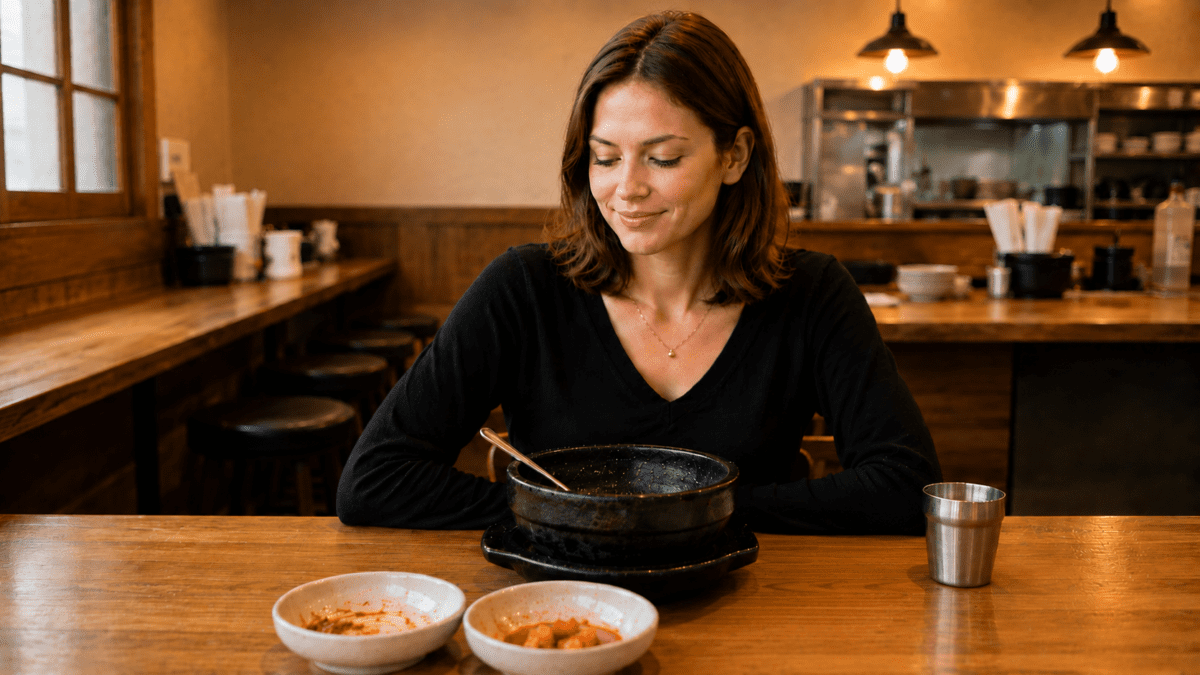
Gukbap works from the other direction. By the time you sit down, nothing remains to be cooked. The broth has already done its work. The rice is ready. The banchan arrived without being ordered, without extra charge, without explanation. They came because a meal without them isn’t quite a meal.
This is what separates Korean fast food from every other version of fast. Western chains built speed by shortening the process — smaller portions, simpler ingredients, steps removed. The result is quick. It is also, often, exactly what it looks like. Korea built speed differently. Not by taking things away, but by finishing the work before anyone arrived. One system starts when you order. The other was already running before you walked through the door.
She finished the last of the broth. Looked at the empty dishes around her. The kimchi plate was clean. The kkakdugi was gone. The rice bowl had been emptied without her noticing when.
It had been fast. It had also been warm, complete, and quietly satisfying in the way that only food made with real effort can be. Not a meal that asked to be noticed. Just a meal that did what it came to do.
Western fast food trades depth for speed. Korean fast food never accepted that trade. The speed is real. So is everything else — the broth, the balance, the banchan that came without asking. A system running without compromise for centuries.
This post was planned and edited by a human, with AI assistance.