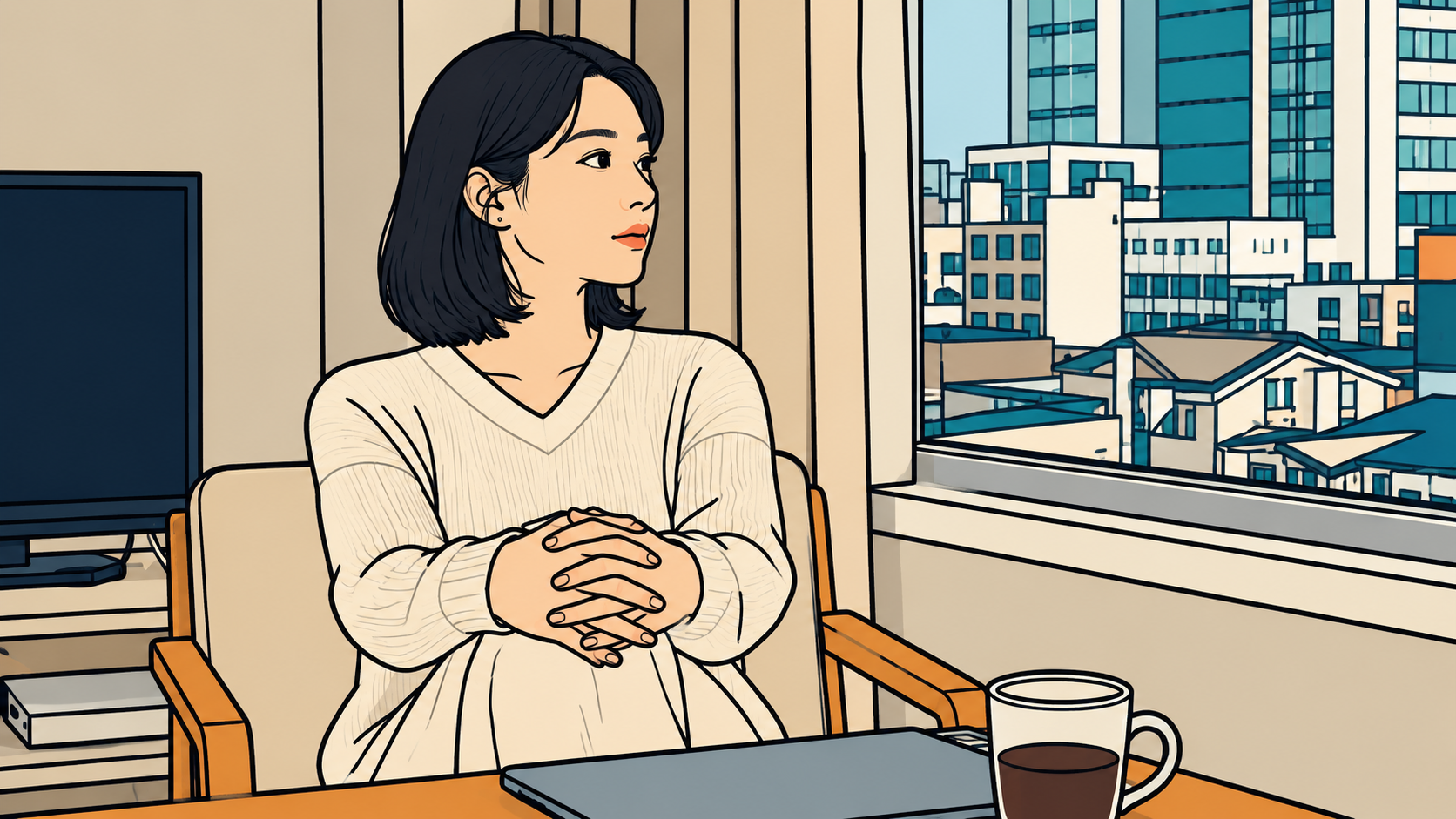

The day had nothing in it. No meetings, no errands that couldn’t wait, no one expecting anything by a particular hour. By noon you’d noticed the quiet. By evening the quiet had a texture — a low, specific discomfort that didn’t match the fact that nothing was actually wrong.
You couldn’t have named it then. But underneath the restlessness was a question that had been running in the background for years: what did I actually do today? For a lot of people, that question isn’t casual. It’s productivity guilt — the sound of self-worth and output wired to the same switch, so quietly, over so long, that neither one remembers being separate.
The Day With Nothing to Show for It
An unstructured day is supposed to feel like a gift. Instead it feels like being watched.
You open the laptop without a reason. Close it. Reorganize a drawer that was already fine. Answer an email that could have waited three days, and feel a small, disproportionate relief when it’s sent, because now there’s something. A thing that happened. Proof.
The discomfort isn’t boredom. Boredom wants stimulation. This wants evidence. By late afternoon you’ve done four small tasks you invented specifically so the day would have a shape, and none of them mattered, and all of them helped, briefly. You keep half an eye on the clock the whole time, not because anything is due, but because the hours feel like they’re being spent whether or not you have anything to show for them. The invented tasks were never really about the drawer or the inbox. They were about buying back the feeling that the day got used.
Then evening comes and the counting starts on its own. Not a to-do list — an audit. You run back through the hours looking for the part that counts, replaying them the way you’d defend a receipt you weren’t sure you’d kept, and when you can’t find enough of it, something tightens. You start reaching for the small things — the drawer, the sent email — and offering them up as evidence, and even as you do it you can feel how thin they are. An empty day should feel like rest. For you it feels like exposure.
Nobody assigned this. That’s the strange part. There’s no one in the room at 9 p.m. on a Sunday keeping score. The pressure comes from somewhere that stopped needing anyone else to apply it a long time ago.
The Scoreboard You Never Agreed to Keep

Somewhere along the way, doing became the currency you pay for the right to sit down.
It runs like a scoreboard. Tasks are points. A productive morning buys an afternoon you’re allowed to enjoy. A wasted hour goes into a deficit you cover later — tonight, this weekend — and the debt always rolls forward. You don’t rest because you’re tired. You rest because you’ve earned enough to withdraw a little. By then it isn’t two things you’re tracking separately. Productivity guilt has fused them into one balance, and it reads as slightly overdrawn most of the time.
From the outside this looks like drive, and people admire it. High-functioning. Reliable. The one who gets things done. What they don’t see is a discipline that never turns off — an engine with no idle setting, either producing or accruing guilt, with no third state where you simply exist and that’s fine.
And the relief it pays out never keeps. You finish the thing, and for a moment the pressure lifts, clean and specific — you did it, you’re allowed. Then, faster each time, the floor resets. The list that felt complete at six regenerates by eight, and you catch yourself planning tomorrow’s version of it before tonight has ended. Whatever you produced bought a shorter and shorter stretch of okay, so you produce again, sooner, to top it back up. That’s the tell. The scoreboard doesn’t tell you you’re enough. It tells you to check again tomorrow.
What “Did I Do Enough Today” Is Actually Asking
The question sounds practical. It isn’t.
“Did I do enough today” wears the costume of planning — a reasonable review, a responsible person taking stock. But listen to where it lands. It doesn’t end with a count of tasks. It ends with a verdict about you. Enough is never really about the work. It’s about whether you get to feel okay tonight, and the work is just the thing standing in for the answer.
On a good day the verdict comes back clear and you barely notice you asked. On a slow one it hangs there, and the hanging is the whole problem. You’ll do almost anything to make it settle — one more email, one more errand — not because the task matters, but because the verdict won’t close until something gets done.
And the audit runs the same way on every day, as if every day were built for the same thing. It has no category for the stretch where you’re recovering, or consolidating, or quietly becoming the person who does the next thing — because not every season is built for producing, even though the tally behaves as if it were. A slow day and a failed day look identical to a scoreboard. Both read zero. So the ordinary low gets filed as a personal shortfall, and you spend the evening answering a charge nobody actually brought.
Where Productivity and Self-Worth Got Wired Together

Here’s the part that’s hard to catch: you never decided any of this.
Nobody sits down one afternoon and resolves to make their worth conditional on their output. It assembles slowly, from a hundred small confirmations. The grade, the review, the nod that came for the finished thing and never for the person who was tired underneath it. The praise that arrived for results and went quiet otherwise. The attention that showed up when you achieved and withdrew when you didn’t. Somewhere in there, a nervous system learned a rule it was never taught out loud: you’re valued for what you produce, so produce, or find out what you’re worth without it.
Psychologists have a name for worth measured by what you can achieve, and a long record of what it costs. The same effort that makes you capable becomes the thing you can’t put down, because putting it down means facing the exact question the producing exists to avoid.
That’s the difference between productivity and self-worth fused, and productivity that’s simply a skill you happen to have. For most people the two are meant to sit apart — you do things, and separately, you are a person. When productivity guilt merges them, a slow day stops being a slow day and becomes a referendum. Underperform, and it isn’t the work that feels like it failed. It’s you. You didn’t decide your worth was your output. You just lost the ability to feel it any other way.
So go back to that quiet evening, the one where nothing was wrong and something still pressed. You already know it wasn’t boredom, wasn’t laziness, wasn’t the day being wasted in any way that would hold up if you said it out loud. It was the tally coming up short, and the tally being wired to something much larger than a list. The empty day is the one that exposes it — no tasks to drown it out, nothing to withdraw against, just you and the question the busyness usually answers before it can be asked, the one place where productivity and self-worth can’t quietly cover for each other.
So here’s the thing left running after the day finally goes quiet. When you picture a day with nothing to show for it, is the discomfort about the day — or about who you’re afraid you might be without it?
This post was planned and edited by a human, with AI assistance.